Singapore Government Sees Minimal Impact on Revenue from E-cigarette Ban

Regulations by 2FIRSTS.ai
Jan.15.2024
Singapore Government Sees Minimal Impact on Revenue from E-cigarette Ban
Singapore Government Not Worried About Impact of E-Cigarette Ban on National Revenue, Focus on Public Health Protection.

Recently, according to Indonesian media outlet ddtc, the Singaporean government has stated that it is not overly concerned about the impact of the e-cigarette ban policy on national revenue.


Singapore Finance Minister Lawrence Wong has stated that the ban on e-cigarettes will indeed reduce potential tax revenue. However, he further asserts that this policy is a top priority for safeguarding public health.


The potential loss of tobacco consumption tax revenue, resulting from the decrease in consumption of tobacco products, is not a factor considered in this decision.


Mr. Huang made the aforementioned statement while responding to inquiries from congressional members. Mr. Lin inquired about the total potential loss in consumption tax revenue since 2018 due to the e-cigarette ban.


Huang Xuncai explained that the government is concerned about public health. Therefore, the government is seeking to protect the public from the dangers of e-cigarettes.


He explained that the potential harm caused by legalizing e-cigarettes is just as significant as with other tobacco products. Therefore, the government insists it will not change its policy of prohibiting e-cigarettes.


He stated that the government has no plans to change its policies "as we prioritize safeguarding public health and preventing harm, especially to Singapore's youth.


The Singaporean government has imposed a ban on e-cigarettes, categorizing their use as illegal in the country. Offenders could face fines of up to SGD 2,000. Anyone involved in importing, distributing, or selling these products may be subject to even harsher penalties, including imprisonment.


The Singapore government announced in December 2023 that it will strengthen inspections at the country's sea, land, and air entry points as part of efforts to curb the illegal importation of e-cigarettes. In addition, the government has also reinforced regulations on the sale of e-cigarettes through social media and online shopping websites.


We welcome news tips, article submissions, interview requests, or comments on this piece.

Please contact us at info@2firsts.com, or reach out to Alan Zhao, CEO of 2Firsts, on LinkedIn


Notice

1.  This article is intended solely for professional research purposes related to industry, technology, and policy. Any references to brands or products are made purely for objective description and do not constitute any form of endorsement, recommendation, or promotion by 2Firsts.

2.  The use of nicotine-containing products — including, but not limited to, cigarettes, e-cigarettes, nicotine pouchand heated tobacco products — carries significant health risks. Users are responsible for complying with all applicable laws and regulations in their respective jurisdictions.

3.  This article is not intended to serve as the basis for any investment decisions or financial advice. 2Firsts assumes no direct or indirect liability for any inaccuracies or errors in the content.

4.  Access to this article is strictly prohibited for individuals below the legal age in their jurisdiction.


Copyright


This article is either an original work created by 2Firsts or a reproduction from third-party sources with proper attribution. All copyrights and usage rights belong to 2Firsts or the original content provider. Unauthorized reproduction, distribution, or any other form of unauthorized use by any individual or organization is strictly prohibited. Violators will be held legally accountable.

For copyright-related inquiries, please contact: info@2firsts.com


AI Assistance Disclaimer


This article may have been enhanced using AI tools to improve translation and editorial efficiency. However, due to technical limitations, inaccuracies may occur. Readers are encouraged to refer to the cited sources for the most accurate information.

We welcome any corrections or feedback. Please contact us at: info@2firsts.com

Smoke-Free Business Hits 42% of Q2 Net Revenue as PMI’s First TNFD Report Covers Single-Use Electronics, Critical Raw Materials and IQOS Repairs
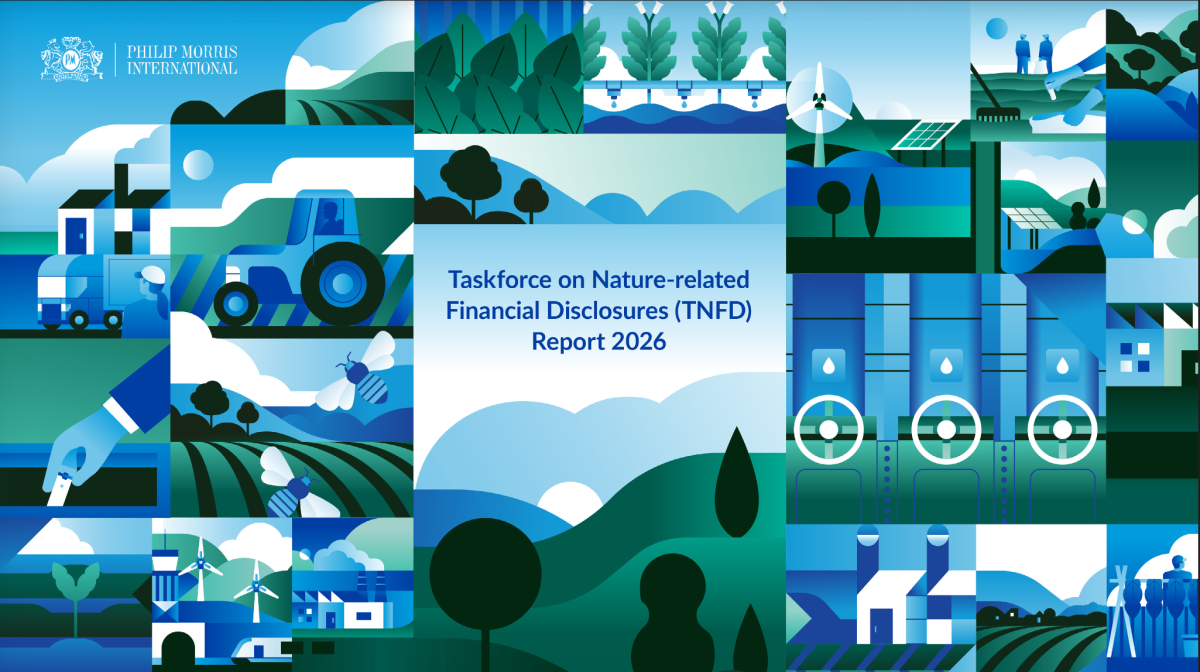
Philip Morris International has published its first report aligned with the Taskforce on Nature-related Financial Disclosures, bringing its electronics supply chain and the use and end-of-life stages of smoke-free devices and consumables into its nature-related assessment. PMI said its smoke-free business accounted for about 42% of total net revenues in the second quarter of 2026. The report says non-circular electronic products, particularly single-use items, can increase consumption of limited natural resources and also details an IQOS repair pilot. A 2040 circularity scenario tests assumptions including a 50% reduction in product waste-related costs, 10% raw-material savings and a 25% substitution rate for refurbished products versus new products.
Sep.23
Special Report|AIR H1 Revenue Rises 3.7% as Shisha Volumes Fall 9%, Testing Its Shift Beyond Traditional Hookah
AIR’s first half-year results as a listed company offer a new test of how far a traditional hookah business can transform. H1 2026 revenue rose 3.7%, even as Flavored Shisha Molasses shipments fell 9%, with pricing and mix supporting growth. Traditional shisha still generates almost all revenue, while OOKA, Crown Switch, Greentank and U.S. regulatory spending point to accelerating diversification. The next test is whether those investments can become a second business of meaningful scale and profitability.
Capital Markets
Aug.21
German Tobacco Tax Revenue Falls 10.8% Through August as Tax-Paid Cigarette Volume Drops 12.6%
Germany collected €9.789 billion in total tobacco tax revenue from January through August 2026, down 10.8% from a year earlier, according to the Federal Ministry of Finance. Germany's tobacco tax base covers not only cigarettes and fine-cut tobacco but also heated tobacco and vaping liquids taxed as tobacco substitutes. The German Association of the Tobacco Industry and Novel Products, or BVTE, citing federal statistical data, said tax-paid cigarette volume fell 12.6% to 40.6 billion sticks. BVTE is using the latest figures to argue against further tax increases planned from 2027 through 2030, while Germany's parliament is scheduled to hold a first reading of the bill on September 24.
Sep.23
UK Vape Duty Starts in October as Hayati, DOJO and Others Launch Lower-Capacity Products With Lower Per-Unit Tax
The UK's Vaping Products Duty will take effect on October 1, 2026, at a flat rate of £2.20 per 10ml of vaping liquid. Ahead of implementation, DOJO, PIXL and Hayati have introduced or been reported to be adding lower-capacity tiers alongside larger products. DOJO has added a 6ml BLAST7K Fresh below its 10ml BLAST10K Fresh, PIXL offers both a 12ml 8000 and a 6ml 5K, while retailer Ninja Vapes says Hayati is preparing a 7ml 4K alongside its existing 12ml 6K. The pattern points to a growing lower-capacity tier in the UK market, although the brands have not all explicitly linked the changes to the new duty.
Sep.23
China STMA Deputy Administrator Meets KT&G COO as Heated Cigarette Rules Advance
Wang Gongcheng, deputy administrator of China’s State Tobacco Monopoly Administration, met KT&G Chief Operating Officer Lee Sang-hak in Shanghai on September 1, according to Oriental Tobacco News. The meeting comes as China seeks public comment on a draft mandatory national standard for heated cigarettes. The report did not disclose the subjects discussed or indicate whether heated tobacco products or market access were addressed.
News
Sep.02
STIIIZY Redesign Fails to Escape PAX Labs Patent Import Ban as Section 337 Case Also Involves China ALD
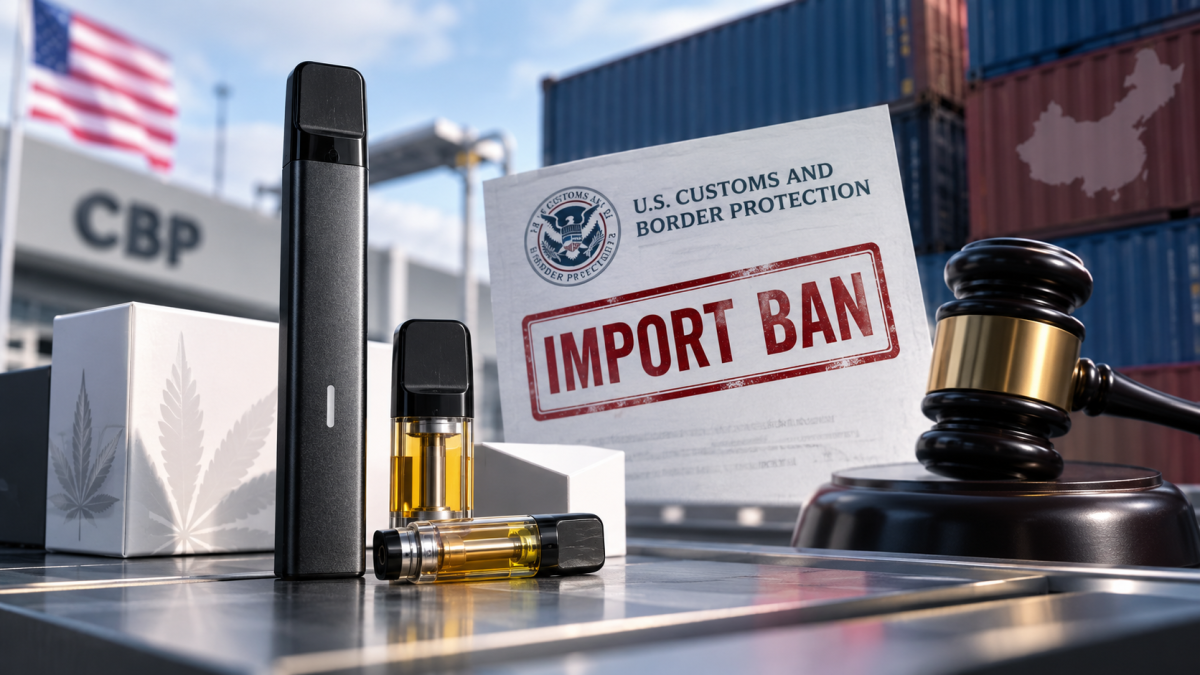
U.S. Customs and Border Protection ruled that STIIIZY had not shown that the redesigned cannabis-vape products covered by its latest request fall outside an ITC limited exclusion order tied to PAX Labs patents. CBP accepted some of STIIIZY’s claim-construction and non-infringement arguments, but the company did not address two additional claims in the same patent. Earlier STIIIZY redesigned cartridges and certain associated components imported with them had received separate CBP clearance.
Sep.16