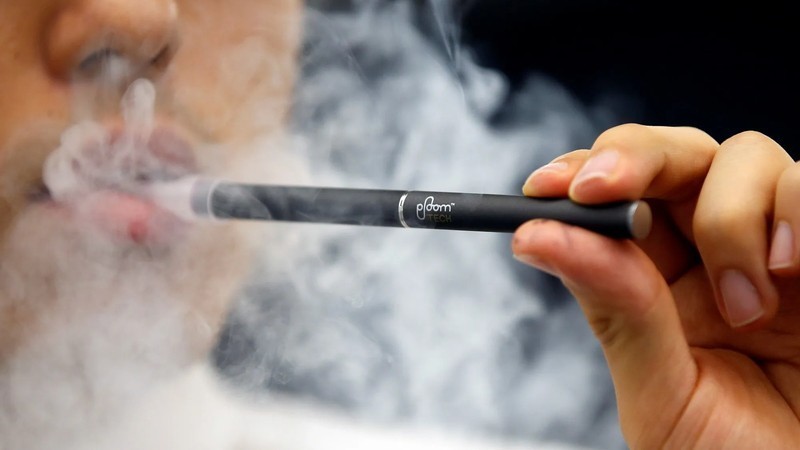
PMI Plans IQOS Launch in South Carolina as State Proposes Low Tax Rate for HNB Products

Apr.24.2025
PMI Plans IQOS Launch in South Carolina as State Proposes Low Tax Rate for HNB Products
South Carolina lawmakers have introduced a bill proposing a lower tax rate for heated tobacco products compared to traditional cigarettes, drawing opposition from public health groups. Philip Morris International supports the bill and plans to launch its IQOS product in the state, emphasizing it is intended for adults only. The bill has passed a House subcommittee review, but full passage this legislative session remains unlikely.

Key Points:

The state of South Carolina is considering establishing a separate tax rate for heated tobacco products, with a tax burden much lower than traditional cigarettes. 

Public health organizations are concerned about the risk of youth exposure and oppose a lower tax rate, while industry supporters argue that heated tobacco products are a safer alternative. 

PMI plans to sell the IQOS product in the state, targeting only adult smokers. 

The bill has passed its initial review with only one opposing vote, but due to time constraints, the likelihood of it being passed in the near future is low. Currently, IQOS is only legally sold in Texas, with no sales record in South Carolina. 


According to Live5news report on April 24th, the South Carolina legislature held a preliminary hearing on a bill (H.4303) regarding heated tobacco products, proposing a separate tax rate for these products much lower than that of traditional cigarettes. This has sparked opposition from public health groups, while also gaining support from some legislators and industry representatives.


Currently, only Philip Morris International's (PMI) heated tobacco product IQOS has obtained FDA authorization for sale in the market. Texas is the only state where this product can be purchased. South Carolina currently has no record of sales of such products, but supporters of the legislation believe market entry is imminent.


Beth Johnson, representative of the American Cancer Society, stated that even though South Carolina has not yet started selling heated tobacco products, their introduction is imminent and policy intervention should be carried out early to prevent youth exposure. The association opposes setting a tax rate lower than traditional cigarettes for heated tobacco products, emphasizing that price policy is an effective tool for reducing tobacco use.


Johnson told the lawmakers during the hearing that


"We hope that you treat these products equally to traditional cigarettes and tax them at the same rate."


Philip Morris International (PMI) representative Jake Jacobs stated at a hearing that they hope to sell heated tobacco products in convenience stores and retail outlets in the state in the future, promising to market exclusively to adult smokers.


However, the bill also faced criticism from some lawmakers. Republican representative Heather Crawford from Horie County expressed concerns about it.


"I am concerned that the way we are promoting this product to the public as being '95% safe' may inadvertently encourage a new generation to develop an unsafe habit."


The bill passed its initial vote in the subcommittee of the State House Appropriations Committee on April 23. With less than two weeks left in the 2025 legislative session, the likelihood of the bill reaching the governor's office during this session is low.


We welcome news tips, article submissions, interview requests, or comments on this piece.

Please contact us at info@2firsts.com, or reach out to Alan Zhao, CEO of 2Firsts, on LinkedIn


Notice

1.  This article is intended solely for professional research purposes related to industry, technology, and policy. Any references to brands or products are made purely for objective description and do not constitute any form of endorsement, recommendation, or promotion by 2Firsts.

2.  The use of nicotine-containing products — including, but not limited to, cigarettes, e-cigarettes, nicotine pouchand heated tobacco products — carries significant health risks. Users are responsible for complying with all applicable laws and regulations in their respective jurisdictions.

3.  This article is not intended to serve as the basis for any investment decisions or financial advice. 2Firsts assumes no direct or indirect liability for any inaccuracies or errors in the content.

4.  Access to this article is strictly prohibited for individuals below the legal age in their jurisdiction.


Copyright


This article is either an original work created by 2Firsts or a reproduction from third-party sources with proper attribution. All copyrights and usage rights belong to 2Firsts or the original content provider. Unauthorized reproduction, distribution, or any other form of unauthorized use by any individual or organization is strictly prohibited. Violators will be held legally accountable.

For copyright-related inquiries, please contact: info@2firsts.com


AI Assistance Disclaimer


This article may have been enhanced using AI tools to improve translation and editorial efficiency. However, due to technical limitations, inaccuracies may occur. Readers are encouraged to refer to the cited sources for the most accurate information.

We welcome any corrections or feedback. Please contact us at: info@2firsts.com

South Korea's Synthetic Nicotine Tax Take Estimated at Just 1.3% of Forecast as Imports Plunge Nearly 97%
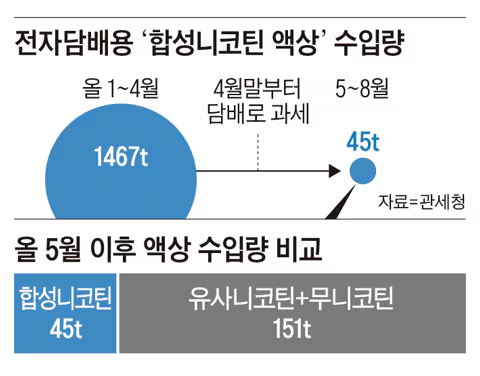
After synthetic nicotine was placed under tobacco regulation on April 24, 2026, South Korea’s tax collections from synthetic-nicotine vaping products fell far short of government projections. The Chosun Ilbo reported on November 18 that Ministry of Health and Welfare data showed national health promotion charges on synthetic-nicotine liquid e-cigarettes totaled 765 million won from April 24 through September. Using statutory rates, the newspaper estimated combined major taxes and charges at about 2.622 billion won—on a monthly basis roughly 1.3% of an earlier forecast after temporary tax reductions. Customs data showed synthetic-nicotine imports dropped from about 1,467 metric tons in January–April to 45 metric tons in May–August, a nearly 97% decline. Imports of nicotine-analog and nicotine-free liquids totaled 151 metric tons in May–August, exceeding synthetic-nicotine imports in the same period, though both categories were also below January–April volumes.
Regulations
Nov.19
Spain's Cabinet Approves Tobacco-Only Vape Flavor Rules, With Nicotine Pouch Cap Reportedly Raised to 4mg From Proposed 0.99mg
Spain's Cabinet approved a royal decree on November 24 amending regulations governing tobacco and related products. The decree bans non-tobacco e-cigarette flavors and introduces technical requirements for nicotine pouches and heated herbal products. Spanish media reported that the nicotine content limit for pouches has been revised to 4mg per pouch from the 0.99mg proposed in the original draft. Six EU member states previously submitted detailed opinions on Spain's proposal. Spanish economic consultancy Afi estimates that the e-cigarette and nicotine pouch sectors generated €382 million in value added and supported more than 5,400 jobs in 2025.
Regulations
Nov.25
Pennsylvania Vape Directory Enforcement Starts Oct. 19, Barring Retail Sales of Unlisted Products
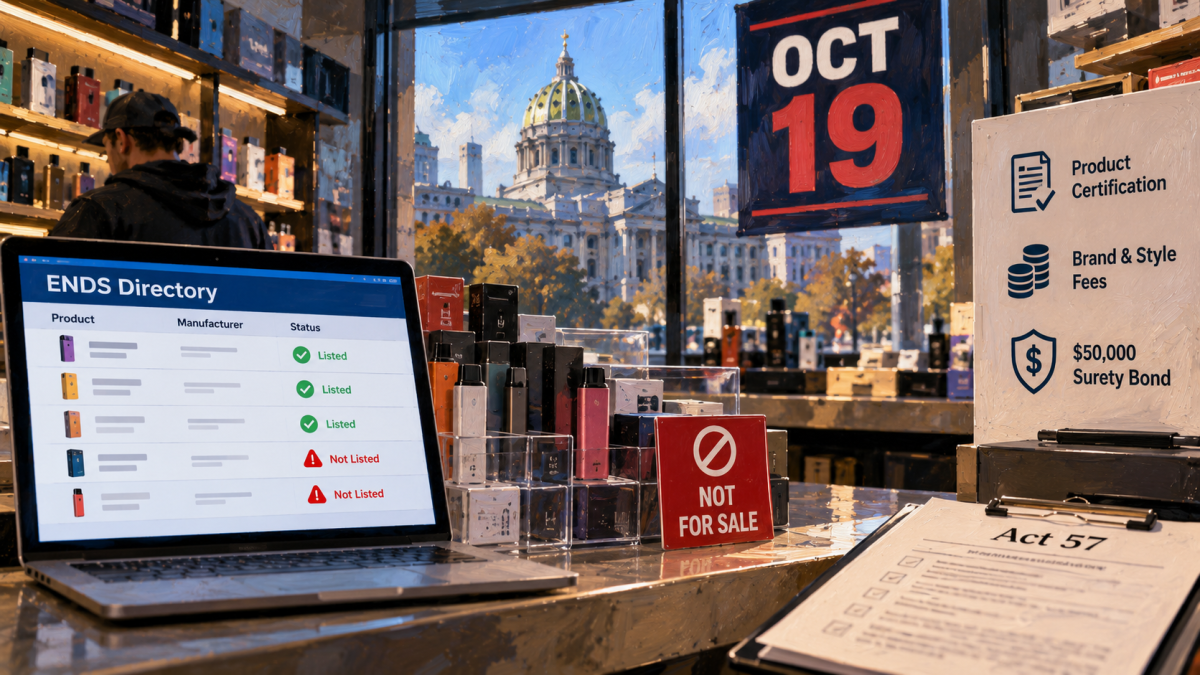
Pennsylvania's Act 57 vape directory regime will reach the end of its 120-day inventory transition period on Oct. 19. Nicotine-containing e-cigarettes intended for retail sale in the state that are not listed on the Attorney General's ENDS directory will then be barred from retail sale and treated as contraband subject to seizure, forfeiture and destruction. Manufacturers face annual product certification, brand- and style-based fees and a minimum $50,000 surety bond, while retailers and wholesalers must source through licensed channels and monitor the directory.
Regulations
Oct.08
Product | American Standard 50K Vape Emphasizes U.S. Assembly and Replaceable Pods as Brand Appears in Tennessee's November Directory
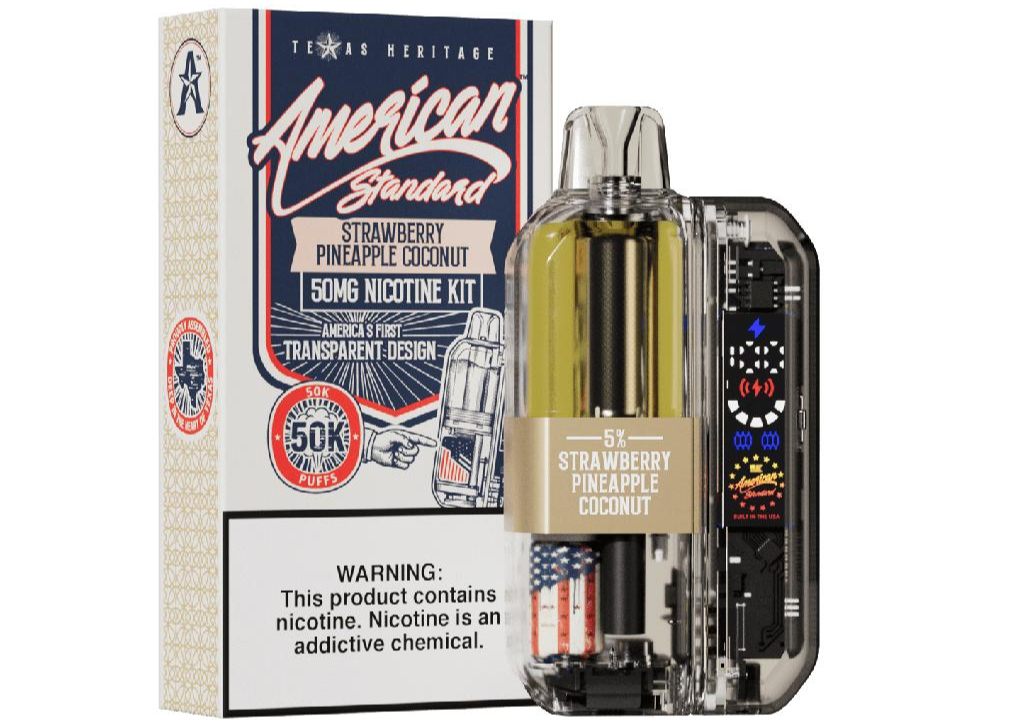
U.S. vaping brand American Standard positions itself around domestic e-liquid production, pod filling and final assembly. Its 50K device combines a 23mL transparent prefilled pod with an 850mAh reusable battery and an advertised maximum of 50,000 puffs. The company's website lists the complete kit at $18.99 and replacement pods at $13.99. In November 2026, a third-party mirror of Tennessee's vapor product directory displayed 14 American Standard brand records under Aftermath Distribution, some corresponding to flavors sold in the 50K range. U.S. trademark filings also identify Aftermath Distribution LLC as the applicant for both AMERICAN STANDARD and THIS BAR BY AMERICAN STANDARD. The brand does not appear on the FDA's authorized e-cigarette list, while its specific PMTA application status remains unverified.
product
Nov.24
Italy Proposes Earlier Vape and HTP Tax Hikes, New Rules for E-Liquid Pricing, Exclusive Deals and Distribution
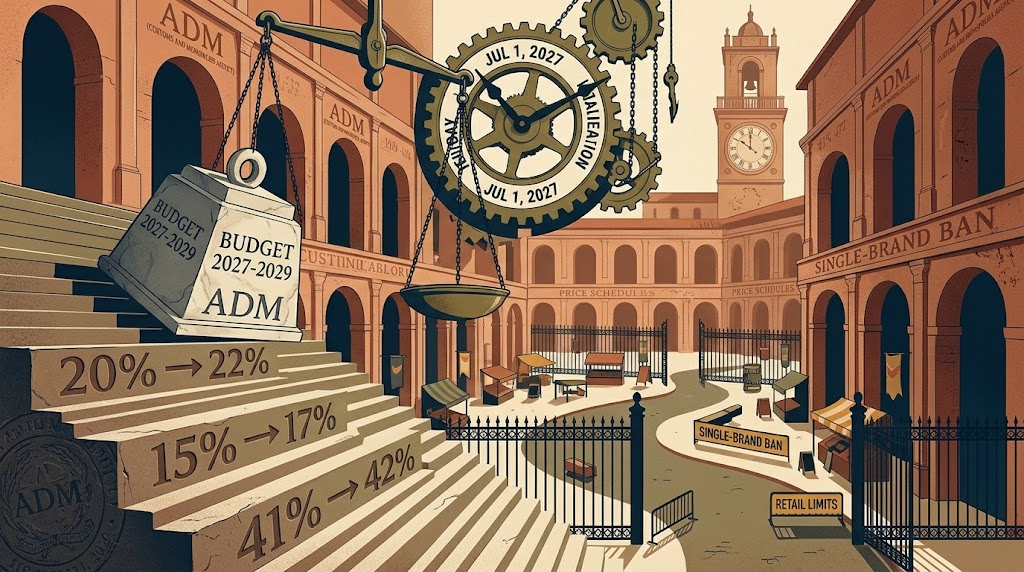
Italy's proposed 2027–2029 budget would bring forward scheduled tax increases for e-cigarette liquids and heated tobacco products from January 1, 2028, to July 1, 2027. The consumption tax coefficient for nicotine-containing e-liquids would rise from 20% to 22%, that for nicotine-free liquids and applicable flavorings from 15% to 17%, and the heated-tobacco coefficient from 41% to 42%. The bill would also introduce official retail price schedules for e-liquids, restrict exclusive agreements between retailers and suppliers, and limit single-brand-dominated displays, sales incentives and bundled offers. Importing, authorized warehousing and retailer sourcing arrangements would also change. The proposals remain subject to parliamentary approval and subsequent implementing regulations.
Regulations
Nov.04
U.S. Health Groups Seek to Overturn FDA Enforcement Discretion for Pending PMTAs as Altria's Helix, NJOY and AVM Move to Intervene
American Vapor Manufacturers (AVM) and Altria subsidiaries Helix Innovations and NJOY filed separate motions on October 7, 2026, seeking to intervene on the FDA's side in a lawsuit challenging its enforcement guidance for certain e-cigarette and nicotine pouch products with pending premarket tobacco product applications (PMTAs). Seven public health and tobacco-control organizations, including the Campaign for Tobacco-Free Kids, sued the agency in July to overturn the policy. AVM argues that vacating the guidance could disrupt orders, inventory, retail distribution and investments in regulatory submissions.
Regulations
Oct.09