On May 10th, researchers from Australia found through data analysis that nearly half (48%) of tobacco industry lobbyists had previously or later served in federal government or state and regional positions. This report was published by The Guardian.
Melissa Jones, a researcher at the New South Wales Cancer Council, who participated in the study, stated that she and her colleagues spent several months researching the relationship between tobacco companies and various levels of government in Australia.
It's like assembling a complex puzzle with 5,000 pieces, many of which are missing or blank.
A study led by Dr. Christina Watts, a tobacco control expert at the University of Sydney, aims to uncover the phenomenon of the revolving door in Australia's tobacco industry.
The "revolving door" phenomenon refers to government officials or senior civil servants quickly moving from their administrative roles to working in private enterprises or interest groups related to their previous work, or vice versa. This phenomenon suggests a close relationship and exchange of interests between the government and the private sector.
Tobacco companies are using these "former government officials" to gain internal knowledge about government and industry, in order to influence health policies.
This study calls for increased transparency and oversight in legislation in order to eliminate the tobacco industry's influence on politics.
This is a system tilted in favor of profit-driven private entities in an unhealthy industry. They're attempting to dismantle stronger regulations and undermine evidence-based public health policies.
Jones stated that Canada has a cooling-off period of five years, while Australia's cooling-off period is only 12 to 24 months. In the United States, if lobbyists violate lobbying laws, they could be imprisoned. Ireland has strict lobbying laws that require disclosure of any meetings between lobbyists and government officials, as well as letters, emails, or tweets aimed at influencing policy.
Their system is monitored and enforced by independent regulatory bodies with the power to impose strict penalties on any violations.
However, Australian federal law does not require disclosure of meetings or communications between them, and the laws of each state and territory are not uniform.
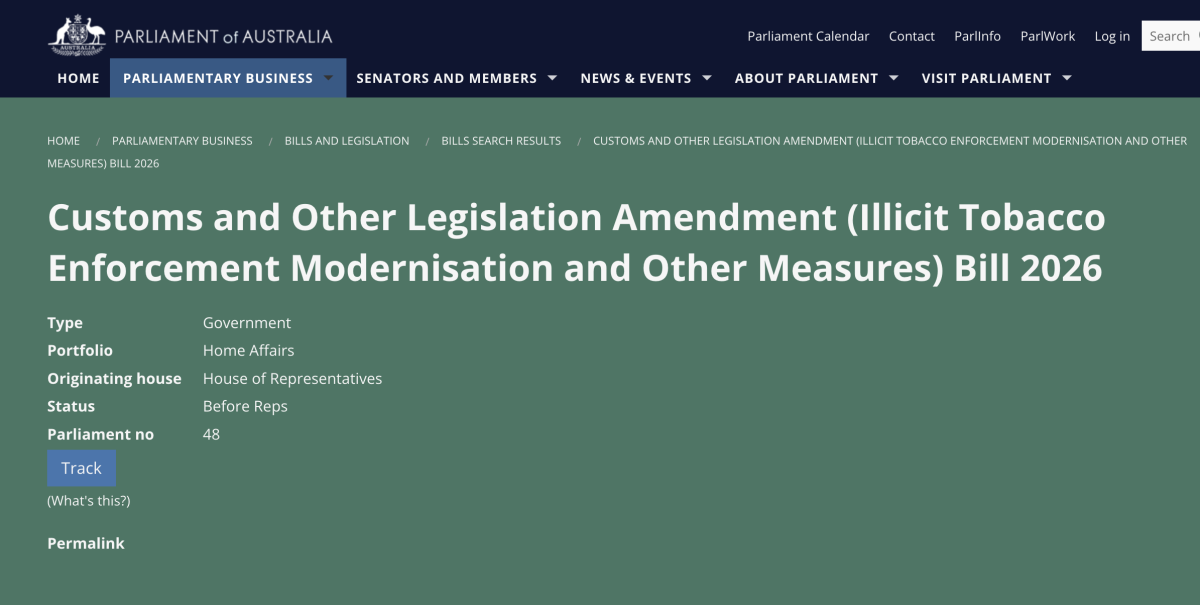
The Australian government plans to regulate this type of behavior.
The "National Tobacco Strategy 2023-2030" includes a priority to establish a requirement for the tobacco industry and related stakeholders to regularly report information, including marketing expenses and any related activities such as lobbying, charity work, and political donations.
Reference:
A recent study has revealed that nearly half of all tobacco lobbyists in Australia have previously worked in government positions.
Disclaimer
This article is provided solely for professional research, industry discussion, and informational purposes. Any references to brands, companies, products, technologies, or policies are made for factual reporting and analytical purposes only, and do not constitute endorsement, recommendation, promotion, or advertising by 2Firsts.
Nicotine-containing products, including but not limited to cigarettes, e-cigarettes, heated tobacco products, and nicotine pouches, carry significant health risks. Readers are responsible for complying with all applicable laws and regulations in their respective jurisdictions, including age restrictions and access limitations.
The information contained in this article should not be regarded as investment, legal, medical, regulatory, or commercial advice. While 2Firsts strives to ensure the accuracy and reliability of its content, it does not assume liability for any direct or indirect loss arising from errors, omissions, inaccuracies, or reliance on the information contained herein.
This article is not intended for individuals below the legal age for accessing tobacco or nicotine-related information in their jurisdiction.
Copyright Notice
This article is either original content produced by 2Firsts or content reproduced, translated, summarized, or adapted from third-party sources with attribution where applicable. The intellectual property rights of the original content remain with 2Firsts or the respective original rights holders.
No individual or organization may copy, reproduce, distribute, republish, modify, translate, or otherwise use this content without prior authorization. Any unauthorized use may result in legal action.
For copyright-related inquiries, corrections, or removal requests, please contact: info@2firsts.com.
AI-Assisted Translation and Editing Notice
Portions of this article may have been translated, edited, or reviewed with the assistance of artificial intelligence tools to improve efficiency and readability. Due to the limitations of AI-assisted translation and editing, discrepancies, omissions, or inaccuracies may exist when compared with the original source.
Where applicable, readers are advised to refer to the original source for the most complete and accurate information. If you identify any errors or believe that any content infringes upon your rights, please contact us at info@2firsts.com, and we will review and address the matter promptly.