Support for Banning Disposable E-Cigarettes to Protect Children

Regulations by 2FIRSTS.ai
Nov.27.2023
Support for Banning Disposable E-Cigarettes to Protect Children
The Northern Ireland council supports banning disposable e-cigarettes, as over 21% of teenagers have reported using them.

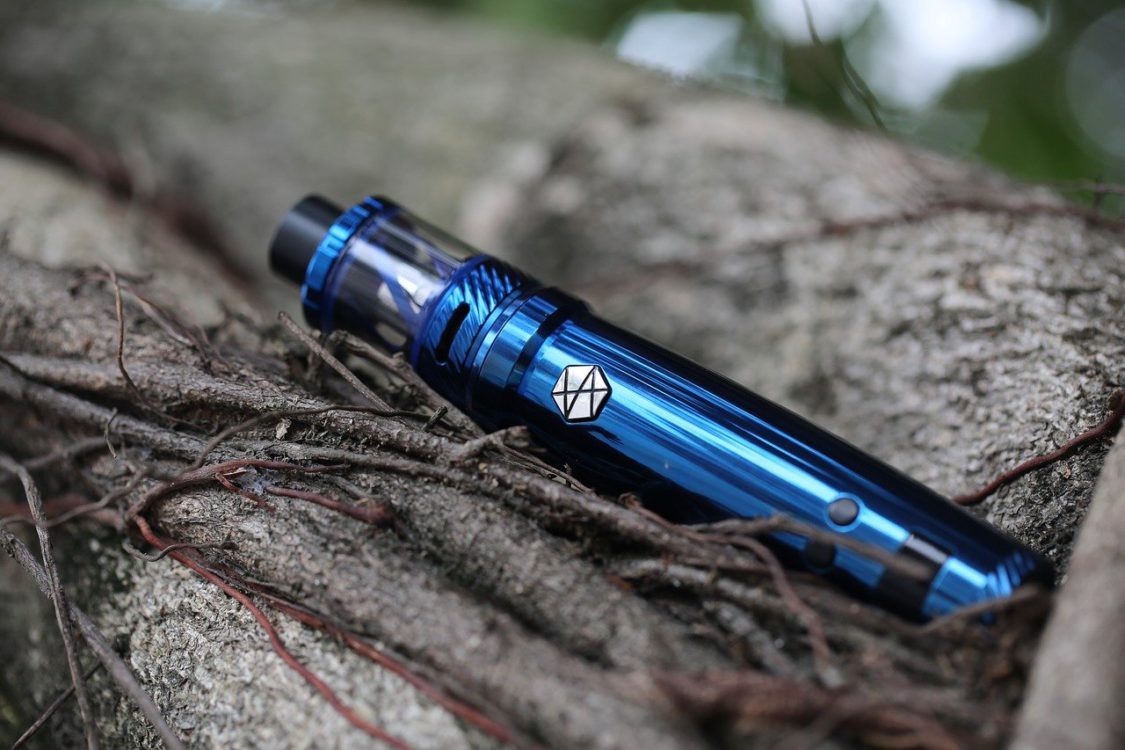
According to a report by Armagh, the Newry, Mourne, and Down District Council (NMDDC) in Northern Ireland supports a proposed ban on disposable e-cigarettes, referring to them as "child-targeted" products similar to "banana milkshakes.


According to a parliamentary report, a document released by the Department of Social Health in October revealed that over 21% of teenagers aged 11 to 16 in Northern Ireland have reported using e-cigarettes. Member of Parliament Michael Rice highlighted concerns that children as young as 13 or 14 are accessing these products too easily.


I am looking forward to hearing feedback from the British government on this consultation," he said.


A parliamentary report has revealed that more than 21% of teenagers between the ages of 11 and 16 in Northern Ireland have reported using e-cigarettes, according to a document released by the Department of Health and Social Care in October.


The report also states that the number of British teenagers using e-cigarettes has doubled in the past three years.


The Westminster government is drafting a document in an effort to ban disposable e-cigarettes. Disposable e-cigarettes have an average retail price of £6, while reusable e-cigarette kits are priced at £40.


We welcome news tips, article submissions, interview requests, or comments on this piece.

Please contact us at info@2firsts.com, or reach out to Alan Zhao, CEO of 2Firsts, on LinkedIn


Notice

1.  This article is intended solely for professional research purposes related to industry, technology, and policy. Any references to brands or products are made purely for objective description and do not constitute any form of endorsement, recommendation, or promotion by 2Firsts.

2.  The use of nicotine-containing products — including, but not limited to, cigarettes, e-cigarettes, nicotine pouchand heated tobacco products — carries significant health risks. Users are responsible for complying with all applicable laws and regulations in their respective jurisdictions.

3.  This article is not intended to serve as the basis for any investment decisions or financial advice. 2Firsts assumes no direct or indirect liability for any inaccuracies or errors in the content.

4.  Access to this article is strictly prohibited for individuals below the legal age in their jurisdiction.


Copyright


This article is either an original work created by 2Firsts or a reproduction from third-party sources with proper attribution. All copyrights and usage rights belong to 2Firsts or the original content provider. Unauthorized reproduction, distribution, or any other form of unauthorized use by any individual or organization is strictly prohibited. Violators will be held legally accountable.

For copyright-related inquiries, please contact: info@2firsts.com


AI Assistance Disclaimer


This article may have been enhanced using AI tools to improve translation and editorial efficiency. However, due to technical limitations, inaccuracies may occur. Readers are encouraged to refer to the cited sources for the most accurate information.

We welcome any corrections or feedback. Please contact us at: info@2firsts.com

Malaysia’s Vape Rules Face Review as Health Minister Dzulkefly Ahmad Addresses Dropped Nicotine Appeal
According to Free Malaysia Today on August 26, 2026, Malaysia’s Health Minister Dzulkefly Ahmad said the Health Ministry would explain the government’s decision to withdraw its appeal against a High Court ruling involving the exemption of liquid nicotine used in vape products from the Poisons List. The High Court previously ruled that the exemption decision was irrational. Dzulkefly said withdrawing the appeal did not mean the government would stop regulating vaping, and that future regulatory approaches would continue under existing legal frameworks.
Aug.28
Smoke-Free Business Hits 42% of Q2 Net Revenue as PMI’s First TNFD Report Covers Single-Use Electronics, Critical Raw Materials and IQOS Repairs
Philip Morris International has published its first report aligned with the Taskforce on Nature-related Financial Disclosures, bringing its electronics supply chain and the use and end-of-life stages of smoke-free devices and consumables into its nature-related assessment. PMI said its smoke-free business accounted for about 42% of total net revenues in the second quarter of 2026. The report says non-circular electronic products, particularly single-use items, can increase consumption of limited natural resources and also details an IQOS repair pilot. A 2040 circularity scenario tests assumptions including a 50% reduction in product waste-related costs, 10% raw-material savings and a 25% substitution rate for refurbished products versus new products.
Sep.23
Australia’s Victoria Steps Up Illegal Tobacco Enforcement With Store Closures and Penalties of Up to A$2.5 Million
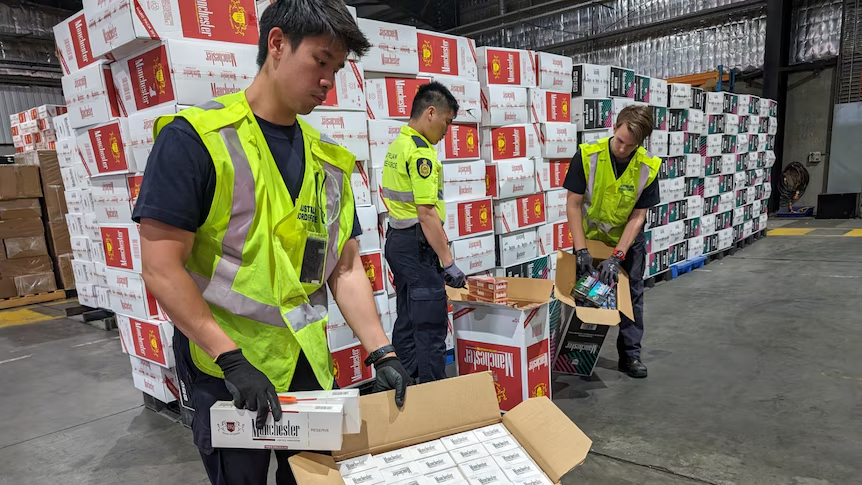
Australia’s state of Victoria has activated new powers allowing Tobacco Licensing Victoria and police to shut premises suspected of selling, supplying or possessing illicit tobacco for up to 90 days. Longer closures can be ordered by a magistrates’ court. Businesses subject to closure orders must generally cease all trading and will be placed on a public list. Breaching a closure order can carry penalties of up to A$2.5 million and 20 years in prison.
Sep.10
Special Report|AIR H1 Revenue Rises 3.7% as Shisha Volumes Fall 9%, Testing Its Shift Beyond Traditional Hookah
AIR’s first half-year results as a listed company offer a new test of how far a traditional hookah business can transform. H1 2026 revenue rose 3.7%, even as Flavored Shisha Molasses shipments fell 9%, with pricing and mix supporting growth. Traditional shisha still generates almost all revenue, while OOKA, Crown Switch, Greentank and U.S. regulatory spending point to accelerating diversification. The next test is whether those investments can become a second business of meaningful scale and profitability.
Capital Markets
Aug.21
UK Vape Duty Starts in October as Hayati, DOJO and Others Launch Lower-Capacity Products With Lower Per-Unit Tax
The UK's Vaping Products Duty will take effect on October 1, 2026, at a flat rate of £2.20 per 10ml of vaping liquid. Ahead of implementation, DOJO, PIXL and Hayati have introduced or been reported to be adding lower-capacity tiers alongside larger products. DOJO has added a 6ml BLAST7K Fresh below its 10ml BLAST10K Fresh, PIXL offers both a 12ml 8000 and a 6ml 5K, while retailer Ninja Vapes says Hayati is preparing a 7ml 4K alongside its existing 12ml 6K. The pattern points to a growing lower-capacity tier in the UK market, although the brands have not all explicitly linked the changes to the new duty.
Sep.23
JUUL Purchasers Ask Ninth Circuit to Preserve Antitrust Classes in Case Over Altria’s $12.8 Billion Investment
Private antitrust litigation stemming from Altria's 2018 $12.8 billion investment for a 35% economic interest in JUUL is advancing before the U.S. Court of Appeals for the Ninth Circuit. Direct purchasers, indirect purchasers and indirect resellers of JUUL products filed answering briefs this week seeking to preserve class certifications granted by a California federal court in February. Altria and JUUL argue that individual consumers and large distributors differ too much in purchasing terms to remain in a single direct-purchaser class, while a separate dispute concerns whether California antitrust law can apply to indirect purchasers across 27 jurisdictions. A September trial has been put on hold during the appeal.
Sep.23