According to a recent report from the Swiss media outlet finanznachrichten, a survey conducted by the Swiss Anti-Tobacco Alliance (AT Schweiz) has found that the majority of disposable e-cigarettes sold in Switzerland are in violation of legal regulations, as they contain more e-liquid than is allowed by law.
These disposable e-cigarettes are mostly manufactured in China and sold online at extremely low prices, with no age restrictions during the sales process. These non-compliant products are not only sold in small online stores, but even the e-commerce giant Galaxus has sold hundreds of thousands of these non-compliant products.
The Swiss Anti-Tobacco Action Alliance is urging authorities to immediately enforce the law, despite being aware of the issue, as there is currently no regulation on e-cigarettes. The current Swiss regulations are based on the 2014 EU directive, which stipulates that for any e-cigarette with a so-called "closed system", the amount of e-liquid it contains cannot exceed 2 milliliters, and the nicotine content cannot exceed 20 milligrams per milliliter.
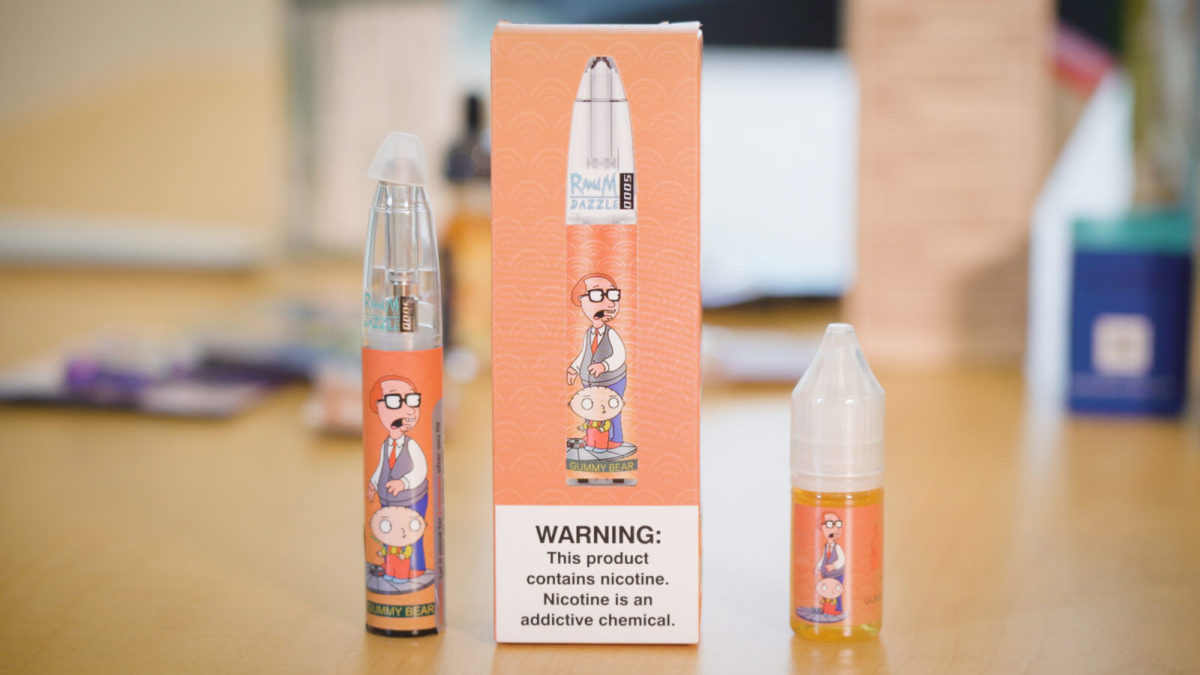
The pods of these e-cigarettes can only hold up to 600 puffs, equivalent to 2 milliliters of e-liquid. However, currently e-cigarettes being sold online promise to last for 16,000 puffs, with a tank capacity of 30 milliliters of e-liquid, which is 15 times the legal limit. A study by the Swiss Tobacco Control Alliance found that more than half of disposable e-cigarettes being sold in the Swiss market do not meet this standard, rendering their sale illegal.
Despite questioning from National Councillor Laurence Fehlmann Rielle (SP/GE) in 2023, the country has still not taken any targeted measures to address this public health issue. Excessive nicotine levels remain a problem with disposable e-cigarettes, and the new Federal Tobacco Products Act (TabPG) is set to come into effect, which only adopts existing standards.
The Swiss Anti-Tobacco Action Alliance conducted an investigation into Swiss websites selling e-cigarettes, and found that nearly all of the 100 websites surveyed were selling products that exceeded legal standards. This includes the major Swiss e-commerce player Galaxus, which is majority owned by Migros.
How could one of Switzerland's largest online marketplaces be selling prohibited products?
It is clear that the founding principles of Migros by Gottlieb Duttweiler, which included a ban on selling tobacco and alcohol, have long been forgotten. These websites offer extremely attractive prices, especially affordable for young people. For example, the Puff Turbo 16'000 is priced at 26.90 Swiss francs on the wevappy.ch website and contains the equivalent of 1,200 regular cigarettes worth of nicotine!
Selling disposable e-cigarettes is extremely profitable. Because most of these products are produced in China, and can be ordered directly from the manufacturers at very low prices, retailers can earn net profits of 80%-90%. This is undoubtedly a huge income, with a large portion of it coming from the sale of illegal products. However, when it comes to inspections and potential fines for these products, there is still no information available according to the Swiss Action on Smoking and Health Alliance.
Why did the Federal Council and the Federal Public Health Office ignore the facts revealed in this report?
The answer is quite simple: the federal government does not have a market surveillance system in place. In recent years, the role of tobacco in public health strategies has been gradually marginalized. Furthermore, the response provided by the federal council to Congressman Lawrence Feldman-Ruehle in 2023 was incomplete and there are no signs of any systematic checks being implemented.
Due to the fact that nicotine is a highly addictive substance, especially harmful to young people, the federal government must ensure that regulations are followed as soon as possible. In response to the lack of action by federal authorities, the Swiss Anti-Tobacco Action Alliance has decided to directly present the list of companies operating these websites to each state government and urge them to take immediate action.
We welcome news tips, article submissions, interview requests, or comments on this piece.
Please contact us at info@2firsts.com, or reach out to Alan Zhao, CEO of 2Firsts, on LinkedIn
Notice
1. This article is intended solely for professional research purposes related to industry, technology, and policy. Any references to brands or products are made purely for objective description and do not constitute any form of endorsement, recommendation, or promotion by 2Firsts.
2. The use of nicotine-containing products — including, but not limited to, cigarettes, e-cigarettes, nicotine pouchand heated tobacco products — carries significant health risks. Users are responsible for complying with all applicable laws and regulations in their respective jurisdictions.
3. This article is not intended to serve as the basis for any investment decisions or financial advice. 2Firsts assumes no direct or indirect liability for any inaccuracies or errors in the content.
4. Access to this article is strictly prohibited for individuals below the legal age in their jurisdiction.
Copyright
This article is either an original work created by 2Firsts or a reproduction from third-party sources with proper attribution. All copyrights and usage rights belong to 2Firsts or the original content provider. Unauthorized reproduction, distribution, or any other form of unauthorized use by any individual or organization is strictly prohibited. Violators will be held legally accountable.
For copyright-related inquiries, please contact: info@2firsts.com
AI Assistance Disclaimer
This article may have been enhanced using AI tools to improve translation and editorial efficiency. However, due to technical limitations, inaccuracies may occur. Readers are encouraged to refer to the cited sources for the most accurate information.
We welcome any corrections or feedback. Please contact us at: info@2firsts.com