The Environmental Impacts of Disposable E-Cigarettes

Aug.22.2023
The Environmental Impacts of Disposable E-Cigarettes
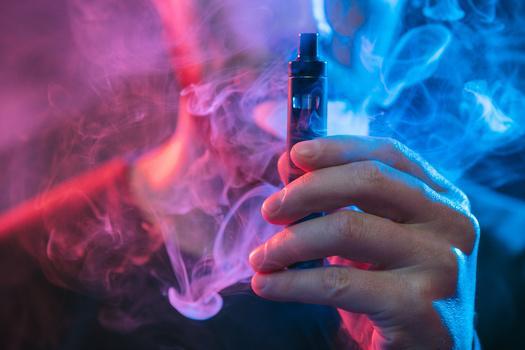
Disposable e-cigarettes pose a growing environmental threat with 4.5 products discarded every second in the US, a report finds.

According to a recent report by the American public interest research organization, the Education Foundation, disposable e-cigarettes are increasingly becoming a serious environmental threat. The report states that in the United States, 4.5 disposable e-cigarette products are tossed away every second. These devices cannot be refilled, are non-recyclable, and have a negative impact on the environment.


A report indicates that disposable e-cigarette devices equipped with lithium-ion batteries cannot be included in most electronic waste recycling programs. While environmental departments are willing to recycle most e-cigarettes, they will not do so for disposable e-cigarettes because the batteries cannot be removed. Even after disposal, the Environmental Protection Agency still considers them hazardous waste due to their nicotine e-liquid content.


Recently, the US Food and Drug Administration (FDA) has sent warning letters to nearly 200 retailers selling unauthorized products, including ElfBar and EscoBar, which are brands of disposable e-cigarettes.


A report indicates that large nationwide chain stores such as 7-11, British Petroleum, ExxonMobil, and Chevron have locations where they sell these unauthorized disposable e-cigarettes.


According to a report and statistical data, the rechargeable batteries found in disposable e-cigarettes contain more than 23 tons of lithium each year. If this lithium were not used in e-cigarette batteries, it could be utilized to manufacture batteries for over 26,000 electric vehicles.


References


Vape Disposal: Examining the Environmental Consequences of Disposable Vapes


Disclaimer

This article is provided solely for professional research, industry discussion, and informational purposes. Any references to brands, companies, products, technologies, or policies are made for factual reporting and analytical purposes only, and do not constitute endorsement, recommendation, promotion, or advertising by 2Firsts.

Nicotine-containing products, including but not limited to cigarettes, e-cigarettes, heated tobacco products, and nicotine pouches, carry significant health risks. Readers are responsible for complying with all applicable laws and regulations in their respective jurisdictions, including age restrictions and access limitations.

The information contained in this article should not be regarded as investment, legal, medical, regulatory, or commercial advice. While 2Firsts strives to ensure the accuracy and reliability of its content, it does not assume liability for any direct or indirect loss arising from errors, omissions, inaccuracies, or reliance on the information contained herein.

This article is not intended for individuals below the legal age for accessing tobacco or nicotine-related information in their jurisdiction.


Copyright Notice

This article is either original content produced by 2Firsts or content reproduced, translated, summarized, or adapted from third-party sources with attribution where applicable. The intellectual property rights of the original content remain with 2Firsts or the respective original rights holders.

No individual or organization may copy, reproduce, distribute, republish, modify, translate, or otherwise use this content without prior authorization. Any unauthorized use may result in legal action.

For copyright-related inquiries, corrections, or removal requests, please contact: info@2firsts.com.


AI-Assisted Translation and Editing Notice

Portions of this article may have been translated, edited, or reviewed with the assistance of artificial intelligence tools to improve efficiency and readability. Due to the limitations of AI-assisted translation and editing, discrepancies, omissions, or inaccuracies may exist when compared with the original source.

Where applicable, readers are advised to refer to the original source for the most complete and accurate information. If you identify any errors or believe that any content infringes upon your rights, please contact us at info@2firsts.com, and we will review and address the matter promptly.

Italian Court Ends Six-Year Cigarette Excise Dispute, Rejecting Damages Claim
Italy’s Lazio Regional Administrative Court has dismissed an appeal by Italian Tobacco Manufacturing and Manifattura Italiana Tabacco over the cigarette excise calculation mechanism, upholding the minimum tax burden rules and excluding compensation for smaller tobacco operators.
News
Jun.26 by 2Firsts Perspectives
From Nicotine Salts to Cocrystals: China’s Shenzhen Huabao institute explores a more stable form for sustained nicotine release
China-based Shenzhen Huabao Collaborative Innovation Technology Research Institute Co., Ltd. has filed a patent application for a nicotine-ascorbic acid cocrystal, exploring a new solid-state form of nicotine. The patent proposes applications across e-liquids, heated tobacco sticks, oral tobacco, chewing tobacco and snuff. In nicotine pouch tests disclosed in the filing, cocrystal formulations showed less than a 6% decline in nicotine content after three months of accelerated storage and a release profile combining early-stage release with sustained delivery over 60 minutes. The filing reflects exploration of nicotine forms beyond conventional nicotine base and nicotine salts.
Aug.13
South Korea’s New Vape Rules Raise Bar for E-Liquid Makers and China-Linked Supply Chains, Expert Says
South Korea’s new vape regulations are reshaping the e-liquid market, raising compliance requirements for manufacturers, retailers and overseas suppliers. In an interview with 2Firsts, Korean nicotine products specialist Sam Kim discusses licensing barriers, inventory impacts, China-linked supply chains, and emerging regulatory challenges around nicotine analogues, nicotine-free products and DIY mixing. The Korean case may offer broader insights as governments worldwide adapt to rapidly evolving nicotine products.
Jul.16
BAT’s Velo Study Finds 61% of Nicotine Users Feel More Comfortable Expressing Themselves When Others Do the Same
British American Tobacco’s (BAT) nicotine pouch brand Velo has released a global consumer study and launched its “Echoes of Tomorrowland” campaign with electronic music festival brand Tomorrowland. The research surveyed 2,009 nicotine users across the UK, Spain, Pakistan, Poland and Austria. Velo said 61% of respondents feel more comfortable expressing themselves when they see others doing the same, while 39% said building meaningful connections becomes harder with age. The campaign reflects how nicotine pouch brands are increasingly using music, communities and lifestyle marketing to build consumer engagement.
Aug.10
Product | OLIVEBAR Launches RAZ PRO 85K, Combining Up to 85,000 Puffs With a Transparent Pod Design
OLIVEBAR has introduced the RAZ PRO 85K disposable vape, featuring up to 85,000 puffs, a transparent e-liquid pod, and a Mega HD display. As competition in the ultra-high-puff disposable segment continues to intensify, the new device reflects an industry shift from simply increasing puff counts toward enhancing visual interaction and user experience.
Jul.03
 Arizona Rules Extend Across Alternative Nicotine Supply Chain, With Licensing From 2028
Arizona Rules Extend Across Alternative Nicotine Supply Chain, With Licensing From 2028
Arizona Governor Katie Hobbs has signed HB 4001, bringing alternative nicotine products under a new state regulatory framework that will require maker and distributor licensing from 2028 and ban packaging designs that could appeal to minors.
Regulations
Jun.23