North Carolina News reported on August 11th that over the past two years, Austin Collins has been consuming approximately 14 milligrams of nicotine per day, equivalent to 9 to 14 cigarettes, while using an e-cigarette. Now, by using nicotine pouches, his nicotine intake has more than doubled, at least equivalent to two packs of cigarettes.
Nicotine pouches are one of the latest ways for people to consume nicotine. Collins says that some nights he even falls asleep with a nicotine pouch in his mouth. He says, "They are truly a godsend.
About a year ago, he began using nicotine pouches to quit smoking because he noticed that e-cigarettes were affecting his breathing. "I'm only 25 years old, and running one mile is difficult for me.
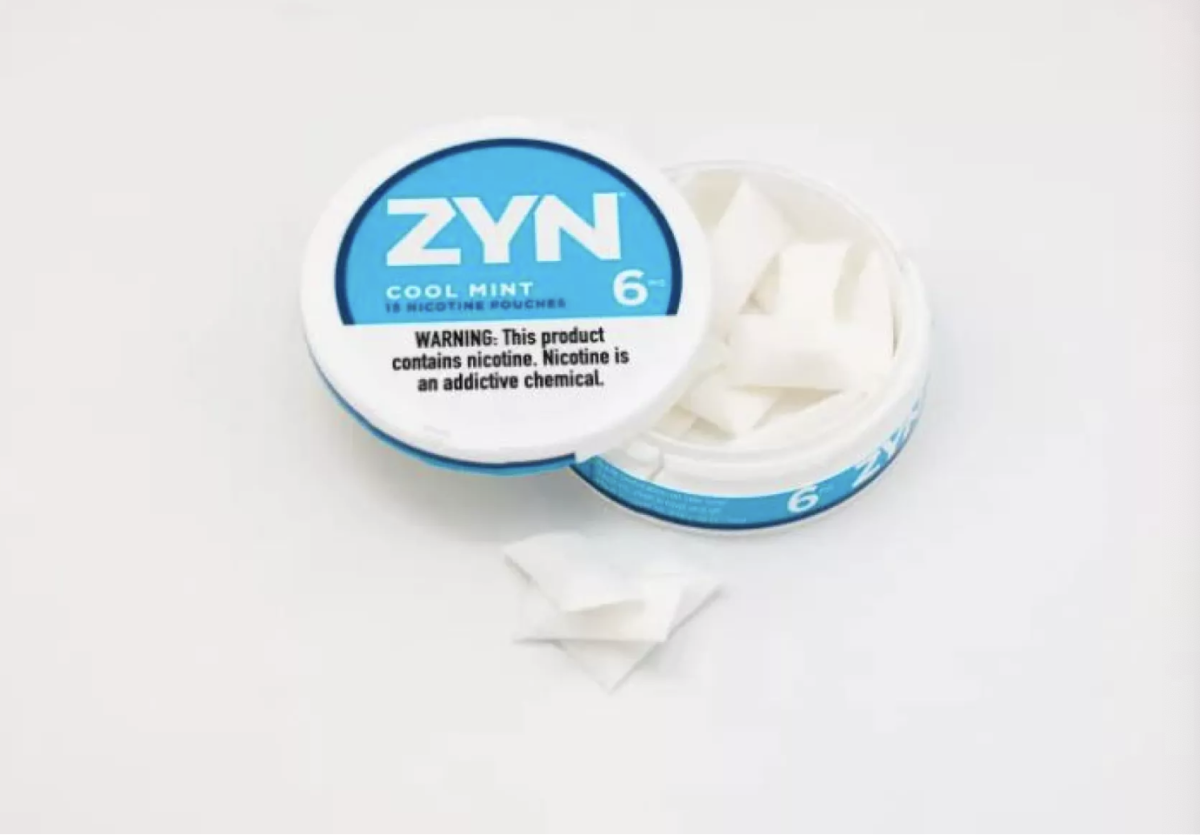
Nicotine pouches are smokeless tobacco pouches, similar in size to chewing gum. They are typically hidden behind the upper lip or lower lip of the user, containing nicotine salt and flavors such as mint or citrus. Despite their small and discreet nature, research shows that they can provide more nicotine than cigarettes.
In recent years, the popularity of nicotine pouches has sharply risen, especially led by one brand: Zyn. Online influencers, known as "Zynfluencers", have created a subculture by promoting posts on social media, with views reaching millions. Some even use "Zynonyms" (words or phrases related to the brand name), such as "George WashingZyn" and "Lord forgive me, for I have Zynned".
As Zyn becomes increasingly popular, some troubles have also emerged. Zyn's parent company, Philip Morris International, suspended online sales in June in response to a subpoena in Washington, D.C., regarding its compliance with the ban on flavored tobacco. This has led to supply shortages, with some lamenting it as the "great Zynpression.
Despite this, the company announced on July 23 that they are expecting to ship at least 560 million cans of nicotine pouches by 2024, which is a nearly 50% increase from the previous year. A can of 15 Zyn pouches is priced at around $5.
Despite a 641% increase in sales of nicotine pouches from 2019 to 2022, a new study shows that few American adults are actually using them. Researchers found that only 2.9% of adults in a nationally representative sample of approximately 39,000 people had used nicotine pouches. Some experts are concerned that the growth in sales may be driven by teenagers.
Senate Majority Leader Chuck Schumer (Democrat from New York) is calling for regulatory action against Zyn, making the product a focal point in the political and cultural battles of earlier this year. Schumer referred to it as a "troubling bag" and expressed concerns that these products seem to be "targeting young children, teenagers, and even younger individuals.
Republican Senator Thom Tillis and Representative Richard Hudson, of North Carolina's 9th District, both took to the X platform (formerly Twitter) to promote Zyn cans and push back against criticism.
Come and get it, Chuck," Tillis wrote. Georgia Republican Congresswoman Marjorie Taylor Greene responded, saying there needs to be a "Zynsurrection.
They once took away your freedom," wrote a user on a picture posted on X, with these words overlaid on a photo of flavor podJuul banned by the Federal FDA in 2022. On a photo of a Zyn can, there is text that reads, "Don't let them take it away again.
Experts are also comparing Zyn to Juul. They are concerned that these easy-to-hide, flavorful nicotine pouches could have the same appeal to teenagers as e-cigarettes.
Irfan Rahman, director of the Department of Environmental Medicine, Pulmonary Medicine, and Public Health Sciences at the University of Rochester Medical Center, said, "This is appealing to young people who can use oral nicotine pouches as a gateway to e-cigarettes and smoking.
Philip Morris International insists that it only markets and sells Zyn to individuals in the United States who are legally of age to purchase tobacco at 21 years old, and states that it does not use online influencers to promote the product.
Moira Gilchrist, Chief Communications Officer of Philip Morris International, stated in a video shared by the company in January, "We only sell these products to those who continue to smoke or use other nicotine products.
The 2023 national survey on youth tobacco use found that 1.5% of American middle and high school students reported currently using nicotine pouches.
However, Bonnie Halpern-Felsher, a child psychology professor at Stanford University who has studied youth tobacco use for 25 years, says her research shows that the marketing of Philip Morris International (PMI) is particularly appealing to teenagers.
Halpern-Felsher found that when teenagers are exposed to marketing of Zyn suggesting that the product helps individuals feel more comfortable in social situations, they are more likely to purchase it. As an increasing number of teenagers are experiencing depression and anxiety, using nicotine pouches as a social lubricant or stress reliever may be attractive to them.
Like Rahman, Halpern-Felsher is also concerned about adolescents who have never used nicotine starting with nicotine pouches. She explains that many people are unaware of the potential health risks associated with using nicotine pouches.
Halpern-Felsher stated, "If adolescents start with Zyn, regardless of whether it is healthier or less harmful than e-cigarettes. If they start from here, then it's not good.
Although Zyn has been on the market in the United States since 2014, scientists are still studying the long-term health effects of using nicotine pouches. Rahman said that some users have reported inflammation or recession of their gums, while others have complained of stomach issues after swallowing saliva while using the pouches.
A study in 2023 found that Zyn does not contain the carcinogenic chemical nitrosamines found in tobacco, but does have low levels of other chemicals that the FDA has indicated may be harmful.
The FDA has not yet authorized the sale of Zyn products or other oral nicotine pouches in the United States, nor has it approved nicotine pouches for smoking cessation. The agency has sent hundreds of warning letters to manufacturers, importers, and online retailers for selling unauthorized products.
Rahman said that for adults looking to avoid the harmful lung effects of e-cigarettes or smoking, using nicotine pouches might be a safer option, but "you close one Pandora's box and open another".
24-year-old Thomas Wyatt, who resides in Nashville, has switched to using Zyn because he believes e-cigarettes were weakening his lung function. Now, he uses five to seven pouches of Zyn a day, typically in mint flavor. He said that when he started using these pouches about two years ago, his gums would sting, but that sensation disappeared over time. When he recently visited the dentist, they mentioned that they did not see any gum issues caused by Zyn.
However, for teenagers, Halpern-Felsher says the health risks are higher. Teenagers are more susceptible to nicotine addiction than adults because their brains are still developing, she said. Studies suggest that early exposure to nicotine can lead to long-term cognitive and mental health impacts.
We welcome news tips, article submissions, interview requests, or comments on this piece.
Please contact us at info@2firsts.com, or reach out to Alan Zhao, CEO of 2Firsts, on LinkedIn
Notice
1. This article is intended solely for professional research purposes related to industry, technology, and policy. Any references to brands or products are made purely for objective description and do not constitute any form of endorsement, recommendation, or promotion by 2Firsts.
2. The use of nicotine-containing products — including, but not limited to, cigarettes, e-cigarettes, nicotine pouchand heated tobacco products — carries significant health risks. Users are responsible for complying with all applicable laws and regulations in their respective jurisdictions.
3. This article is not intended to serve as the basis for any investment decisions or financial advice. 2Firsts assumes no direct or indirect liability for any inaccuracies or errors in the content.
4. Access to this article is strictly prohibited for individuals below the legal age in their jurisdiction.
Copyright
This article is either an original work created by 2Firsts or a reproduction from third-party sources with proper attribution. All copyrights and usage rights belong to 2Firsts or the original content provider. Unauthorized reproduction, distribution, or any other form of unauthorized use by any individual or organization is strictly prohibited. Violators will be held legally accountable.
For copyright-related inquiries, please contact: info@2firsts.com
AI Assistance Disclaimer
This article may have been enhanced using AI tools to improve translation and editorial efficiency. However, due to technical limitations, inaccuracies may occur. Readers are encouraged to refer to the cited sources for the most accurate information.
We welcome any corrections or feedback. Please contact us at: info@2firsts.com