TPE24 | Interview with Spree Bar: A “PMTA-exempt” Vape Product Targeting US Convenience Store

2Firsts Events by Charlotte Yu
Feb.02.2024
TPE24 | Interview with Spree Bar: A “PMTA-exempt” Vape Product Targeting US Convenience Store
Henry Sicignano, President of the U.S. electronic cigarette company Charlie's Holdings Inc., introduced the company's newly distributed product, the Spree Bar, during a pre-TPE forum.

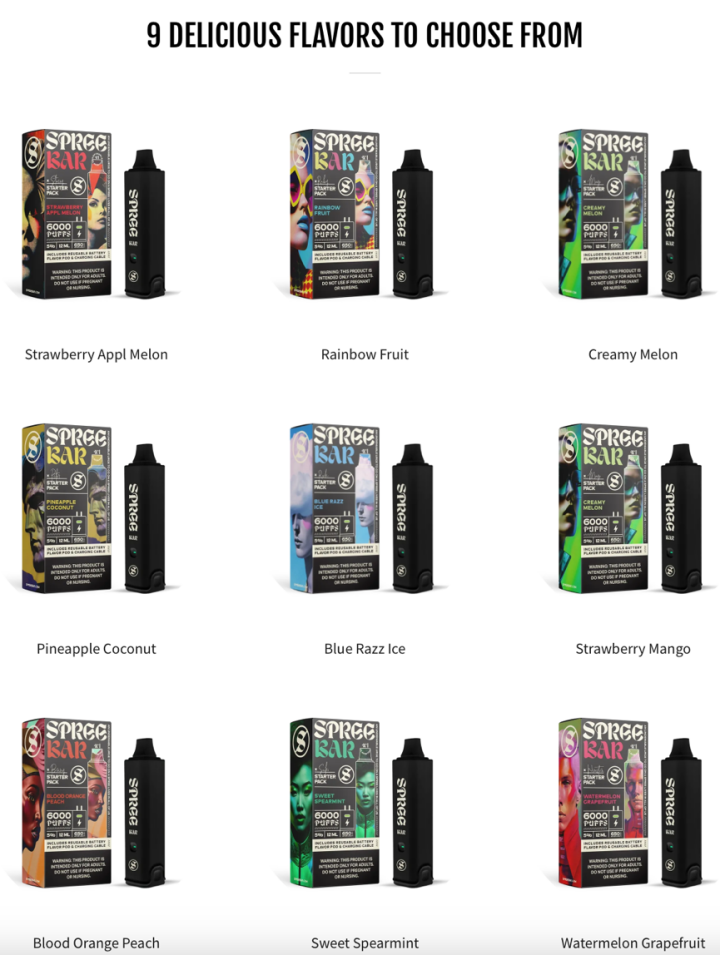
On Jan 30 afternoon at the TPE Educational Sessions preceding the three-day exhibition, Henry Sicignano, the president of Charlie's Holdings Inc., delivered a keynote speech introducing their newly distributed product, Spree Bar, a disposable vaporization product with a capacity of 6000 puffs and a detachable, rechargeable battery, as well as nine flavors available. On Feb 1, the second day of the TPE trade show, 2FIRSTS had an exclusive interview with Henry on this novel product.


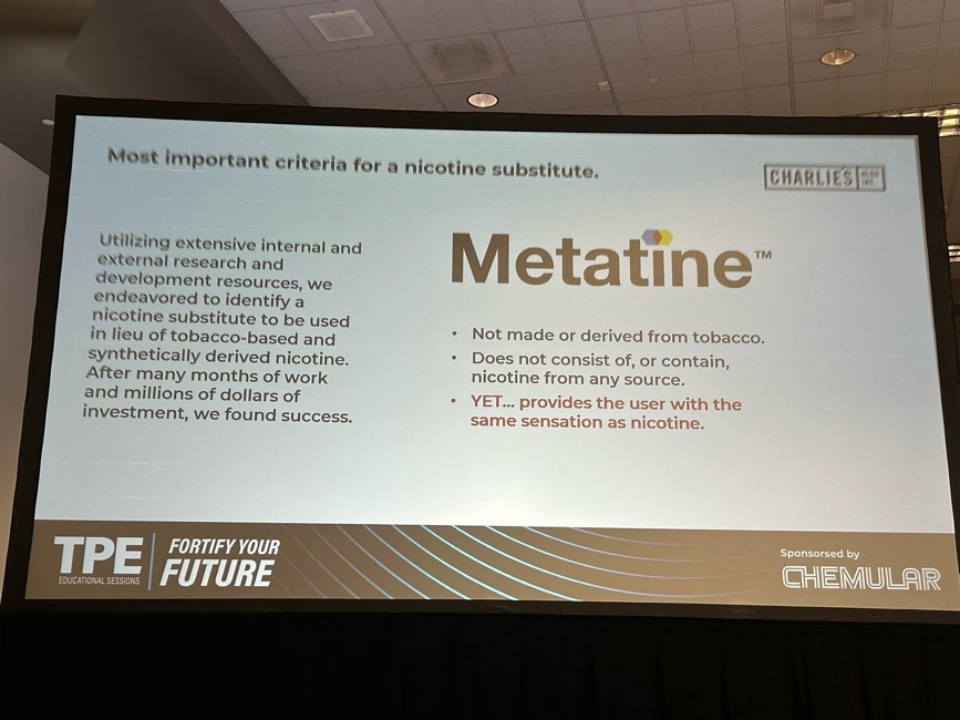
What sets Spree Bar apart is its active ingredient, a substance called Metatine, instead of Nicotine. Henry explained that Metatine is not the chemical name but a trademark of the substance, which is very much similar to " 6-methyl Nicotinamide".
 

TPE24 | Interview with Spree Bar: A “PMTA-exempt” Vape Product Targeting US Convenience Store
Concept of Metatine introduced at the TPE Educational Sessions | Source: 2FIRSTS


6-methyl Nicotinamide is an intermediate product in the synthesis of nicotine, according to an industry insider. Henry stated that they chose Metatine over 6-methyl nicotinamide because Metatine better brings the flavors coming along the e-liquid, providing consumers with a “nicotine vaping” experience.


As Metatine was still not subject to the regulatory scope of the FDA, the company took a decisive step to launch Spree Bar in last October. According to Henry, the product has achieved impressive sales results in the US, and they are preparing for a new marketing step in 2024 which will encompass around 15,000 convenience stores and supermarkets nationwide.


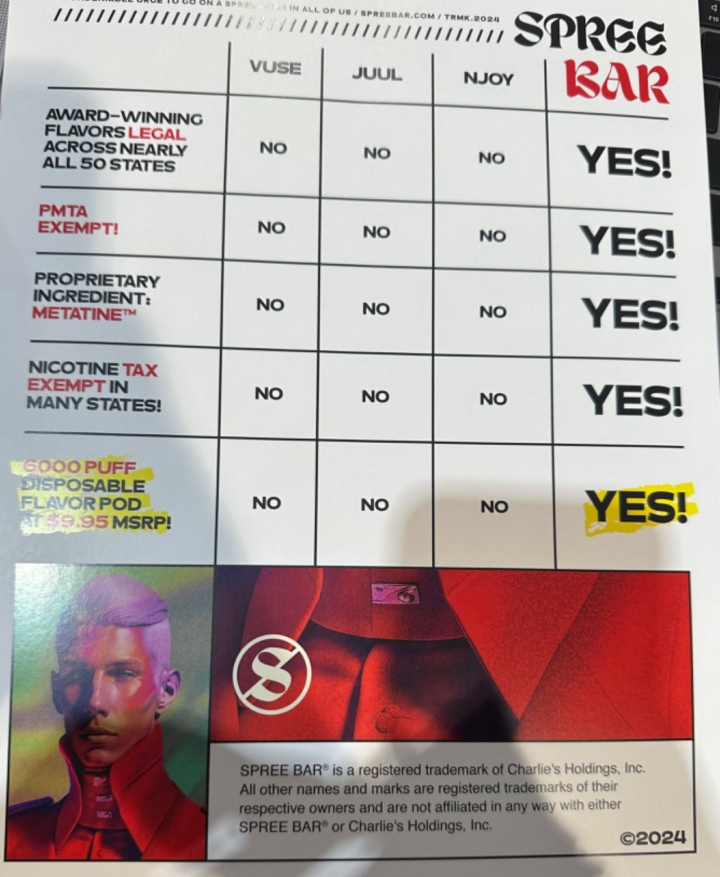
Henry presented a promotion flyer highlighting the characteristics of three currently available PMTA-approved products – VUSE, JUUL, and NJOY: tobacco flavor only, subject to tobacco tax, and relatively high prices. Being a "completely non-nicotine product," Metatine is neither synthesized nicotine nor a tobacco extract, making it for now still exempted from PMTA regulations and tobacco tax.
 

TPE24 | Interview with Spree Bar: A “PMTA-exempt” Vape Product Targeting US Convenience Store
Flyer highlighting differences between Spree Bar and other vape brands marketing in convenience stores | 2FIRSTS
TPE24 | Interview with Spree Bar: A “PMTA-exempt” Vape Product Targeting US Convenience Store
Nine available flavors provided by Spree Bar| Source: Official Store


The product has been selling legally with various flavors at lower prices in "virtually all 50 states*," as Henry explained. He described Metatine as "a market worth over a billion dollars."


(*Editor’s note: Flavor restrictions set by some US states target "flavored vapor products" rather than "flavored nicotine products." Spree Bar, as a vapor product, can not be marketed freely under the former condition.)


2FIRSTS found that their cartridge-only product is priced at $9.95 for retail, while a starter kit containing the battery, cartridge, and charging cable would cost around $20.


Henry mentioned that Spree Bar's product didn't undergo vivo toxicological testing before launch. However, he asserted that Metatine's toxicity must be lower than that of “oral nicotine” given the similarity between Metatine and nicotine. Additionally, the packaging includes a warning against use by pregnant women and prohibits sales to consumers under 21.
 

TPE24 | Interview with Spree Bar: A “PMTA-exempt” Vape Product Targeting US Convenience Store
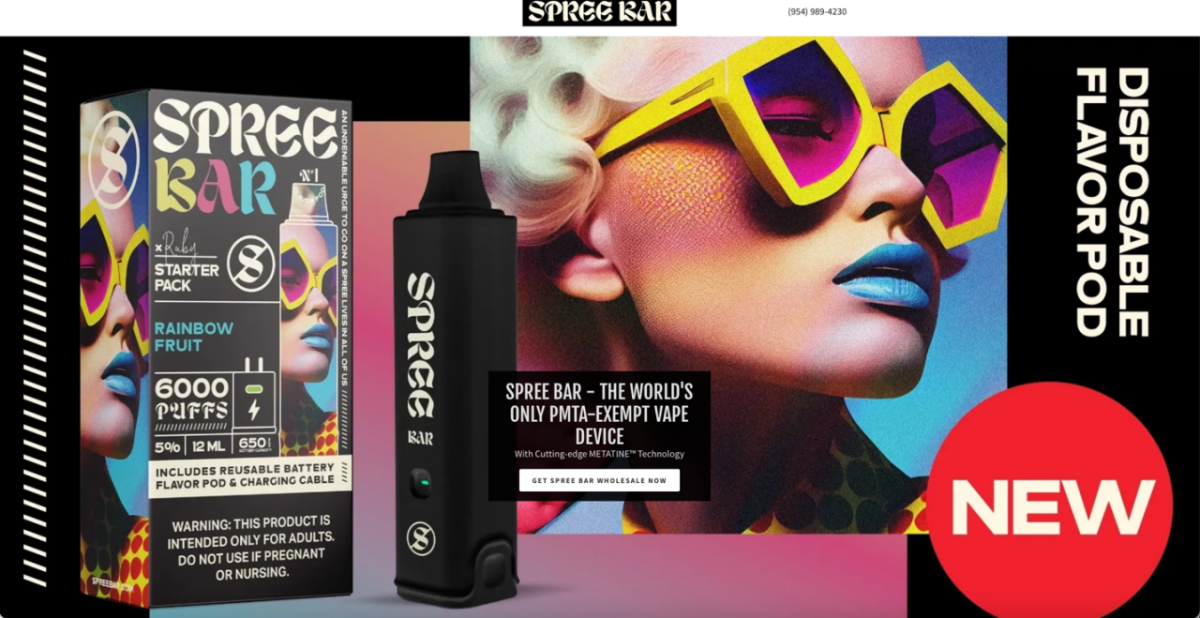
Stylish promotion image with an artistic portrait on it. | Source: Official Store


In terms of user experience, Henry stated that Spree Bar's product is "indistinguishable from nicotine e-cigarettes," facilitating the transition for e-cigarette consumers.


When asked if he's concerned about competitors introducing similar products to carve up their market share, Henry remains optimistic about Spree Bar's market prospects, believing that their over-a-year-long preparation before launch has likely secured a strong position in major Key Account channels before competitors could make similar moves.


Some Chinese e-liquid manufacturers are exploring this technology, while due to concerns about public opinion and regulatory risks, relevant products have not yet been introduced to the market, according to an insider.

We welcome news tips, article submissions, interview requests, or comments on this piece.

Please contact us at info@2firsts.com, or reach out to Alan Zhao, CEO of 2Firsts, on LinkedIn


Notice

1.  This article is intended solely for professional research purposes related to industry, technology, and policy. Any references to brands or products are made purely for objective description and do not constitute any form of endorsement, recommendation, or promotion by 2Firsts.

2.  The use of nicotine-containing products — including, but not limited to, cigarettes, e-cigarettes, nicotine pouchand heated tobacco products — carries significant health risks. Users are responsible for complying with all applicable laws and regulations in their respective jurisdictions.

3.  This article is not intended to serve as the basis for any investment decisions or financial advice. 2Firsts assumes no direct or indirect liability for any inaccuracies or errors in the content.

4.  Access to this article is strictly prohibited for individuals below the legal age in their jurisdiction.


Copyright


This article is either an original work created by 2Firsts or a reproduction from third-party sources with proper attribution. All copyrights and usage rights belong to 2Firsts or the original content provider. Unauthorized reproduction, distribution, or any other form of unauthorized use by any individual or organization is strictly prohibited. Violators will be held legally accountable.

For copyright-related inquiries, please contact: info@2firsts.com


AI Assistance Disclaimer


This article may have been enhanced using AI tools to improve translation and editorial efficiency. However, due to technical limitations, inaccuracies may occur. Readers are encouraged to refer to the cited sources for the most accurate information.

We welcome any corrections or feedback. Please contact us at: info@2firsts.com

Germany Probes 7.6 Million Illegal Vape Case With Estimated €33.3 Million Tax Loss; Four Chinese Manufacturer Employees Under Investigation, Some Packaging in Enforcement Images Resembles FUMOT Products
German prosecutors and customs authorities are conducting a criminal investigation into an alleged cross-border organised vape network. Authorities say that between January 2024 and March 2025, four employees of an unnamed Chinese e-cigarette manufacturer allegedly built a network of sales agents and wholesalers that brought more than 7.6 million nicotine disposable vapes into Germany, causing an estimated €33.3 million in excise-tax losses. The manufacturer has not been named. Some products visible in enforcement images have packaging resembling products from FUMOT’s portfolio. European regulatory records from 2024, FUMOT’s public overseas-sales materials and records involving German vape importer and distribution company Zamu-Pro GmbH also show FUMOT/RandM products and German distribution activity during the period covered by the investigation.
Sep.21
2Firsts Exclusive Analysis | RLX Q2 Revenue Rises 14.8%, Company Takes Control of Western European Distributor and Expands Multi-Category Strategy
business accounting for 68.5% of sales. A new controlling investment in a Western European distributor and plans to scale modern oral nicotine pouches point to a broader international strategy spanning channels and multiple product categories.
Special Report
Aug.14
NAS 2026 | Former FDA Tobacco Chief Mitch Zeller Calls for Shift From “End Game” to “End State”
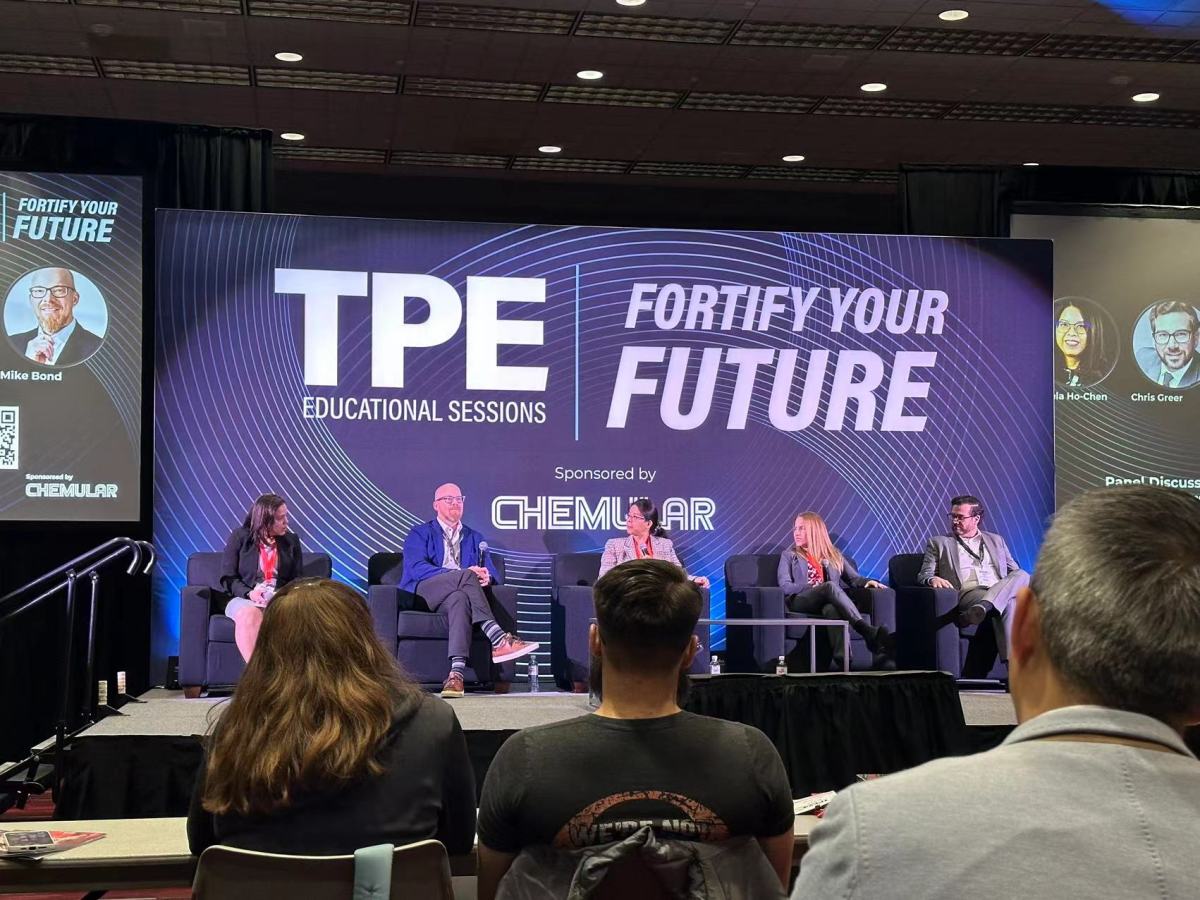
At the 2026 New Approaches Summit in New York, former FDA Center for Tobacco Products Director Mitch Zeller called for the tobacco harm reduction debate to shift from the traditional “end game” toward defining a desired “end state.” He also highlighted unresolved concerns around dual use, argued that biomarkers of exposure may be more meaningful than cigarettes-per-day in assessing risk reduction, and said nicotine misperceptions remain a major barrier to public health progress.
Sep.25
China’s Jinhua Tobacco Launches CNY 2.7 Million Procurement for E-Cigarette Violation Lead Monitoring Services
Jinhua Tobacco, a municipal tobacco company in China’s Zhejiang province, has launched a public tender for e-cigarette-related violation lead monitoring and consulting services. The project is valued at CNY 2.7 million and covers data resource integration and analytical consulting services for 36 months from contract signing. The procurement reflects the use of external data and analysis services to support local tobacco companies’ market oversight activities related to e-cigarettes.
Aug.07
Special Report | Altria Subsidiaries Sue FDA to Vacate 2021 PMTA Rule as Agency Moves to Speed Reviews
2Firsts reviewed the original federal court complaint filed by Altria subsidiaries Helix Innovations and NJOY on Sept. 2 challenging FDA’s 2021 PMTA rule. The lawsuit questions whether FDA’s review process complies with the Tobacco Control Act’s 180-day timeline, even as the agency moves to accelerate PMTA reviews and issues more marketing orders. Drawing on the complaint, FDA records, government audits and recent court rulings, 2Firsts examines the legal arguments, supporting evidence and potential implications for the U.S. tobacco review system.
Regulations
Sep.03
Reynolds Seeks to Join Altria Lawsuit Challenging FDA PMTA Rule and Calculation of 180-Day Deadline
Three R.J. Reynolds companies are seeking to intervene in a lawsuit filed by Altria subsidiaries Helix Innovations and NJOY challenging the FDA's 2021 PMTA final rule. The companies dispute how the agency uses Acceptance and Filing reviews and completeness determinations to establish when the Tobacco Control Act's 180-day decision period begins. Reynolds has also linked prolonged PMTA reviews to competition from unauthorized vaping products. The FDA, meanwhile, has been accelerating reviews and reducing its backlog.
Sep.14