Vietnam Proposes Ban on New Tobacco Products in 2024

Regulations by 2FIRSTS.ai
Apr.07.2024
Vietnam Proposes Ban on New Tobacco Products in 2024
Vietnam lacks regulations on new tobacco products, prompting the Health Ministry to call for a ban on e-cigarettes.

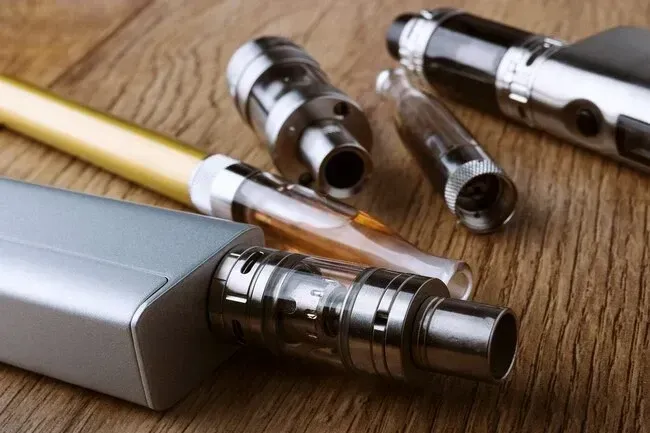
According to a report from plo.vn on April 7th, Vietnam currently lacks legal regulations for new tobacco products, including e-cigarettes. In a recent draft report submitted to the government, the Ministry of Health in Vietnam called for a ban on the production, sale, import, and promotion of e-cigarettes, heated tobacco products, and other new tobacco products.


The report summarizes the effectiveness of the implementation of the Tobacco Control Law over the past 10 years. It shows that the regular cigarette smoking rate among adult males has decreased by an average of 0.5% per year, dropping from 47.4% in 2010 to 41.1% in 2021. The smoking rate among adolescents aged 13 to 17 has also decreased by nearly half, from 5.36% in 2013 to 2.78% in 2019. Additionally, the proportion of passive smoking in homes, public places, and workplaces has also significantly decreased.


Despite these encouraging achievements, the use of new tobacco products (primarily e-cigarettes and heated tobacco products) is on the rise, particularly among young people. In 2019, 2.6% of teenagers aged 13 to 17 were using e-cigarettes. This number increased to 8.3% in the 2023 survey. Among adults, the e-cigarette usage rate in 2023 was 3.6%, compared to just 0.2% in the 2015 survey.


In addition, Vietnam's current legal regulatory mechanism is unable to prevent the use of new tobacco products. The Tobacco Harm Prevention and Control Law states, "Cigarettes refer to products made from all or part of tobacco raw materials, processed into cigarettes, cigars, tobacco, tobacco, or other forms of products." Therefore, regardless of processing, cigarettes are products made from tobacco and there are no regulations on accompanying accessories. This law does not regulate new generation tobacco products, so e-cigarettes and heated tobacco products do not fall under the definition of tobacco products as defined by the Tobacco Harm Prevention and Control Law.


The Health Department stated that due to the lack of clear definitions for these products, there are currently differing opinions between regulatory agencies, public health organizations, and companies. At the same time, regulating these products also faces numerous challenges.


At the same time, Vietnam currently lacks strong regulations or penalties in place to prevent the production and sale of new tobacco products. Therefore, the Vietnamese Ministry of Health plans to submit a resolution at a parliamentary meeting in October 2024 to ban the production, sale, import, and advertising of new tobacco products. This legislation will clearly define concepts such as e-cigarettes and heated tobacco products, and include provisions to prohibit the production, sale, import, and advertising of new tobacco products like e-cigarettes, as well as outline the responsibilities of relevant agencies and organizations.


We welcome news tips, article submissions, interview requests, or comments on this piece.

Please contact us at info@2firsts.com, or reach out to Alan Zhao, CEO of 2Firsts, on LinkedIn


Notice

1.  This article is intended solely for professional research purposes related to industry, technology, and policy. Any references to brands or products are made purely for objective description and do not constitute any form of endorsement, recommendation, or promotion by 2Firsts.

2.  The use of nicotine-containing products — including, but not limited to, cigarettes, e-cigarettes, nicotine pouchand heated tobacco products — carries significant health risks. Users are responsible for complying with all applicable laws and regulations in their respective jurisdictions.

3.  This article is not intended to serve as the basis for any investment decisions or financial advice. 2Firsts assumes no direct or indirect liability for any inaccuracies or errors in the content.

4.  Access to this article is strictly prohibited for individuals below the legal age in their jurisdiction.


Copyright


This article is either an original work created by 2Firsts or a reproduction from third-party sources with proper attribution. All copyrights and usage rights belong to 2Firsts or the original content provider. Unauthorized reproduction, distribution, or any other form of unauthorized use by any individual or organization is strictly prohibited. Violators will be held legally accountable.

For copyright-related inquiries, please contact: info@2firsts.com


AI Assistance Disclaimer


This article may have been enhanced using AI tools to improve translation and editorial efficiency. However, due to technical limitations, inaccuracies may occur. Readers are encouraged to refer to the cited sources for the most accurate information.

We welcome any corrections or feedback. Please contact us at: info@2firsts.com

BAT’s Velo Study Finds 61% of Nicotine Users Feel More Comfortable Expressing Themselves When Others Do the Same
British American Tobacco’s (BAT) nicotine pouch brand Velo has released a global consumer study and launched its “Echoes of Tomorrowland” campaign with electronic music festival brand Tomorrowland. The research surveyed 2,009 nicotine users across the UK, Spain, Pakistan, Poland and Austria. Velo said 61% of respondents feel more comfortable expressing themselves when they see others doing the same, while 39% said building meaningful connections becomes harder with age. The campaign reflects how nicotine pouch brands are increasingly using music, communities and lifestyle marketing to build consumer engagement.
Aug.10
Australia Adds 6-Methylnicotine to Schedule 9 Prohibited Substances, Effective October 1
Australia's Therapeutic Goods Administration published a final decision on September 25 to classify 6-methylnicotine as a Schedule 9 prohibited substance under the Poisons Standard, effective October 1, 2026. TGA said the chemical has been reported in e-cigarette liquids sold in Australia and marketed as nicotine-free or nicotine alternatives, while evidence also indicates its use in preparations such as oral pouches. The government originally proposed a Schedule 7 classification but ultimately adopted the stricter Schedule 9 designation, citing acute toxicity, dependence risk, use in unapproved consumer products and misleading marketing.
News
Sep.29 by 2Firsts Perspectives
IVG Parent Secures HMRC Excise Warehouse and Duty Stamp Approvals Ahead of UK Vape Tax
Acme Vape Ltd, the company behind UK vaping brand IVG, has received HM Revenue & Customs approval to operate an excise warehouse for vaping products and participate in the Vaping Duty Stamps Scheme. The UK's Vaping Products Duty will take effect on October 1, 2026, at a flat rate of £2.20 per 10ml of vaping liquid. Acme Vape Ltd says its approved warehouse in Preston will become operational under the new regime on the same date.
Regulations
Sep.18 by 2Firsts Perspectives
Hunan China Tobacco Industry files heated tobacco device patent featuring adult-user identification through pressure sensing
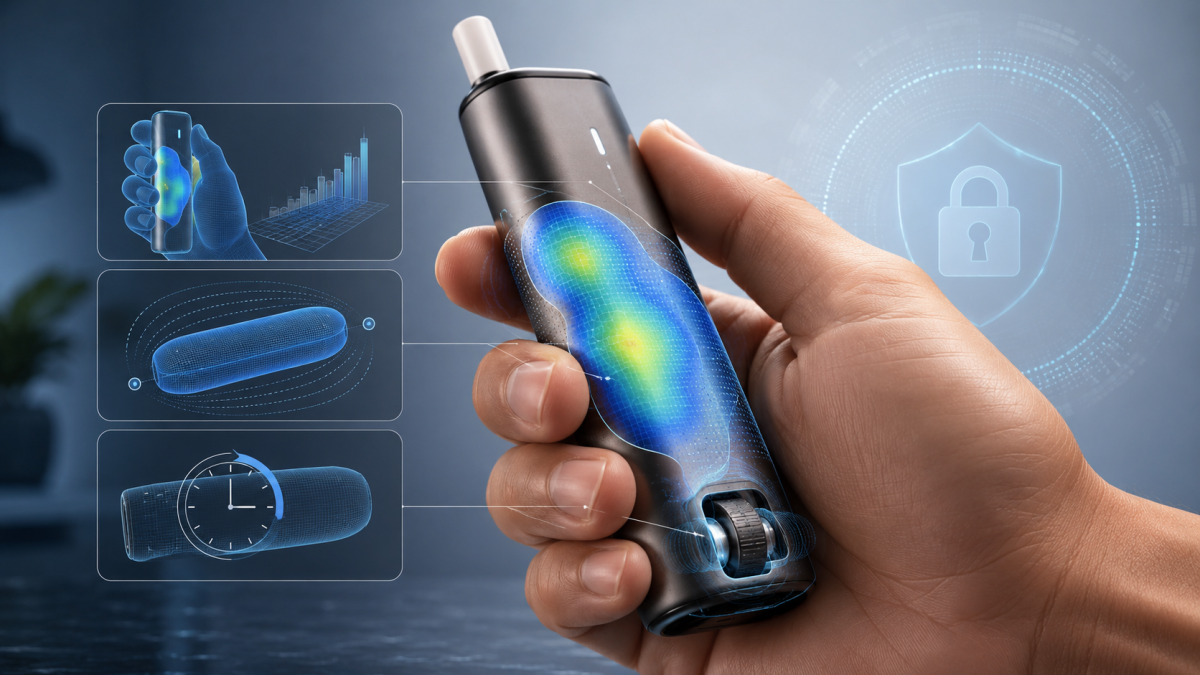
China-based Hunan China Tobacco Industry Co., Ltd. and Shenzhen Baisha Technology Co., Ltd. have filed a patent application covering an adult-user identification mechanism for heated tobacco devices. The patent proposes using flexible pressure sensors installed in the device grip area to collect pressure distribution patterns generated when users hold the device. The system evaluates factors including effective contact area, grip shape and contact duration, and combines roller movement detection to determine whether unlocking conditions are met. The filing reflects exploration of device-level user recognition and smarter interaction technologies for heated tobacco products (HTPs).
Aug.05
JUUL2 Sued Within a Week of FDA Authorization as AJ Marketing Alleges Infringement of Programmable Vape Patent
Less than a week after JUUL2 received U.S. FDA marketing authorization on August 28, 2026, JUUL Labs was sued for patent infringement in federal court in Delaware. AJ Marketing LLC filed the complaint on September 3, alleging that both JUUL 1 and JUUL2 infringe U.S. Patent No. 8,851,068 B2. The patent covers aspects of programmable electronic vaporization devices, including controls over dose delivery, usage frequency and operating parameters. The plaintiff is seeking reasonable royalties and ongoing royalties tied to the remaining life of the patent. JUUL has not yet publicly responded to the case.
Sep.10
IKE Tech Launches IKE 2.0 Compliance Platform for Nicotine Products
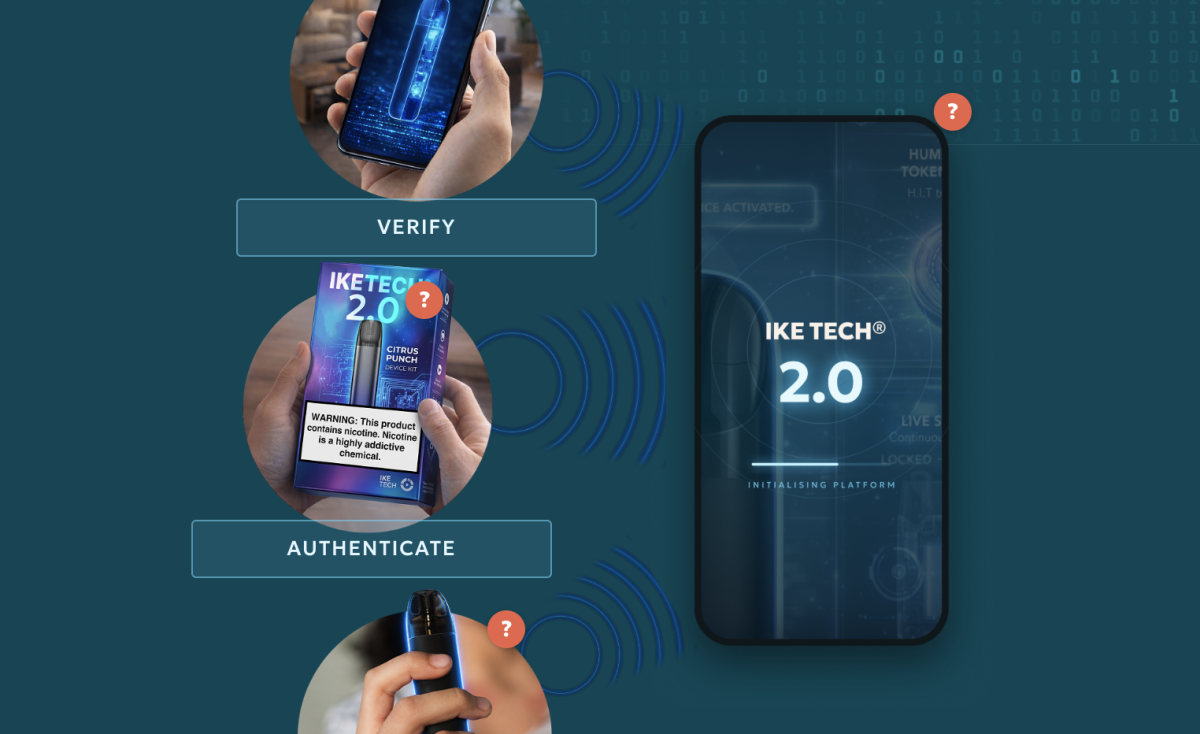
IKE Tech launched IKE 2.0 on September 28, initially targeting nicotine products with a platform that combines user identity verification, product authentication, configurable policy controls and data analytics. Products can be authenticated through direct device integration or NFC smart tags. IKE Tech was formed with participation from Ispire's Aspire North America, Berify and Chemular, with Ispire currently holding a 40% interest. Its age-verification component PMTA was accepted by the FDA in 2025 and remains under review. The company did not disclose customer names, commercial deployment volumes, pricing or revenue tied to IKE 2.0.
News
Sep.29 by 2Firsts Perspectives