Warning against New Nicotine Product Infiltrating Schools in New Zealand

Regulations by 2FIRSTS.ai
Apr.17.2024
Warning against New Nicotine Product Infiltrating Schools in New Zealand
New Zealand health professionals warn about the growing presence of ZYN nicotine pouches in schools, posing addiction risks.

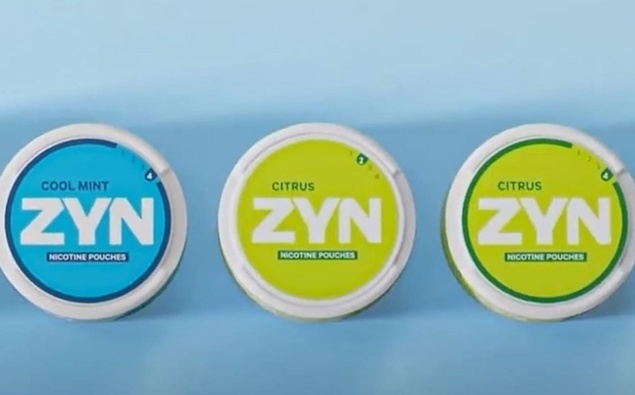
According to a report from The New Zealand Herald on April 17th, health professionals in New Zealand are issuing warnings about a new type of nicotine product that is infiltrating schools in New Zealand. ZYN is a brand of smokeless nicotine pouches that is gradually becoming mainstream through social media influencers on platforms such as TikTok and Instagram.


This product, based in Sweden, aims to be a replacement for smoking or e-cigarettes to help users quit nicotine.


Richard Edwards, professor at the University of Otago and co-director of Aspire2025, expressed concern to the Pioneer Press about the widespread acceptance of these products among young people.


While these products may not be as harmful as smoking, they may still be just as addictive, leading to widespread use among young people and creating a widespread dependency on nicotine.


Edwards warned that unlike other nicotine pouch brands such as Snus, ZYN brand does not contain tobacco. These nicotine pouches resemble small tea bags and are placed between the lip and gum. They are typically sold in brightly colored cans of 15 to 20, and come in various flavors including berry, coffee, and citrus.


New Zealand banned the sale of nicotine pouches in 2020, but importing them from overseas remains legal as long as they are not sold within the country. Despite the ban, The Pioneer newspaper has learned that these products are now making their way into schools nationwide, with reports of students selling them to their peers.


However, Sean Teddy, the head of operations and integration at the Ministry of Education, stated that the schools have not raised any concerns about this issue with the department.


He emphasized,


According to the revised Smoke-free Environments and Regulated Products (Vaping) Amendment Act 2020, smoking or using e-cigarettes on school grounds, kura kaupapa (Māori language schools), early childhood education centers, and kōhanga reo (Māori language immersion preschools) is illegal.


In an earlier statement, Deputy Health Minister Casey Costello hinted that she hopes to introduce oral nicotine products, including snus and chewing tobacco, to provide smokers with more and safer alternative smoking options.


However, Edwards believes that the introduction of oral nicotine products may not work as expected. Edwards is concerned that these oral nicotine products may not target the intended demographic. He said, "The biggest users of e-cigarettes are young people...we want 50-year-old smokers." He expressed that allowing these products to enter the market without restrictions could lead to more young people becoming dependent on nicotine.


Edwards believes that these products should not be introduced unless there are very strong reasons to do so. He suggests that a distribution model similar to that of pharmacies selling only prescription drugs could be implemented, thereby more strictly regulating distribution. However, if these products are widely available in locations such as convenience stores and gas stations, we may see another product being widely used among young people.


We welcome news tips, article submissions, interview requests, or comments on this piece.

Please contact us at info@2firsts.com, or reach out to Alan Zhao, CEO of 2Firsts, on LinkedIn


Notice

1.  This article is intended solely for professional research purposes related to industry, technology, and policy. Any references to brands or products are made purely for objective description and do not constitute any form of endorsement, recommendation, or promotion by 2Firsts.

2.  The use of nicotine-containing products — including, but not limited to, cigarettes, e-cigarettes, nicotine pouchand heated tobacco products — carries significant health risks. Users are responsible for complying with all applicable laws and regulations in their respective jurisdictions.

3.  This article is not intended to serve as the basis for any investment decisions or financial advice. 2Firsts assumes no direct or indirect liability for any inaccuracies or errors in the content.

4.  Access to this article is strictly prohibited for individuals below the legal age in their jurisdiction.


Copyright


This article is either an original work created by 2Firsts or a reproduction from third-party sources with proper attribution. All copyrights and usage rights belong to 2Firsts or the original content provider. Unauthorized reproduction, distribution, or any other form of unauthorized use by any individual or organization is strictly prohibited. Violators will be held legally accountable.

For copyright-related inquiries, please contact: info@2firsts.com


AI Assistance Disclaimer


This article may have been enhanced using AI tools to improve translation and editorial efficiency. However, due to technical limitations, inaccuracies may occur. Readers are encouraged to refer to the cited sources for the most accurate information.

We welcome any corrections or feedback. Please contact us at: info@2firsts.com

China’s Jiangsu Tobacco Monopoly Bureau and Drug Regulator Target Illegal Vape Sales Disguised as Medical Devices, Define Six Violations
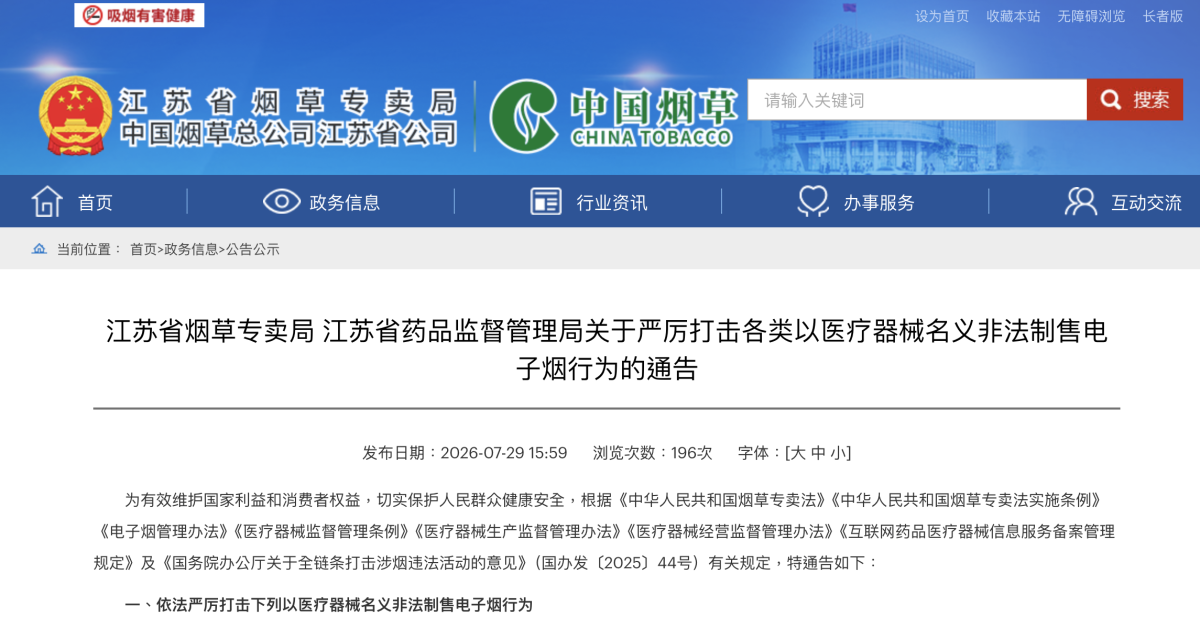
China’s Jiangsu Tobacco Monopoly Bureau and Jiangsu Provincial Medical Products Administration have issued a joint notice targeting illegal production and sales of vape products disguised as medical devices. The notice identifies six categories of violations, including obtaining medical licenses through false materials, misusing medical device credentials, expanding production beyond approved scopes, and using medical device-related online platforms to promote or sell vape products. The action is based on China’s tobacco and medical device regulations and aims to strengthen vape oversight and consumer protection.
Aug.04
CCPIT Says Trade Friction Index for China-Related Electronics Sector Remains High, With Vape Products Among Areas of Focus
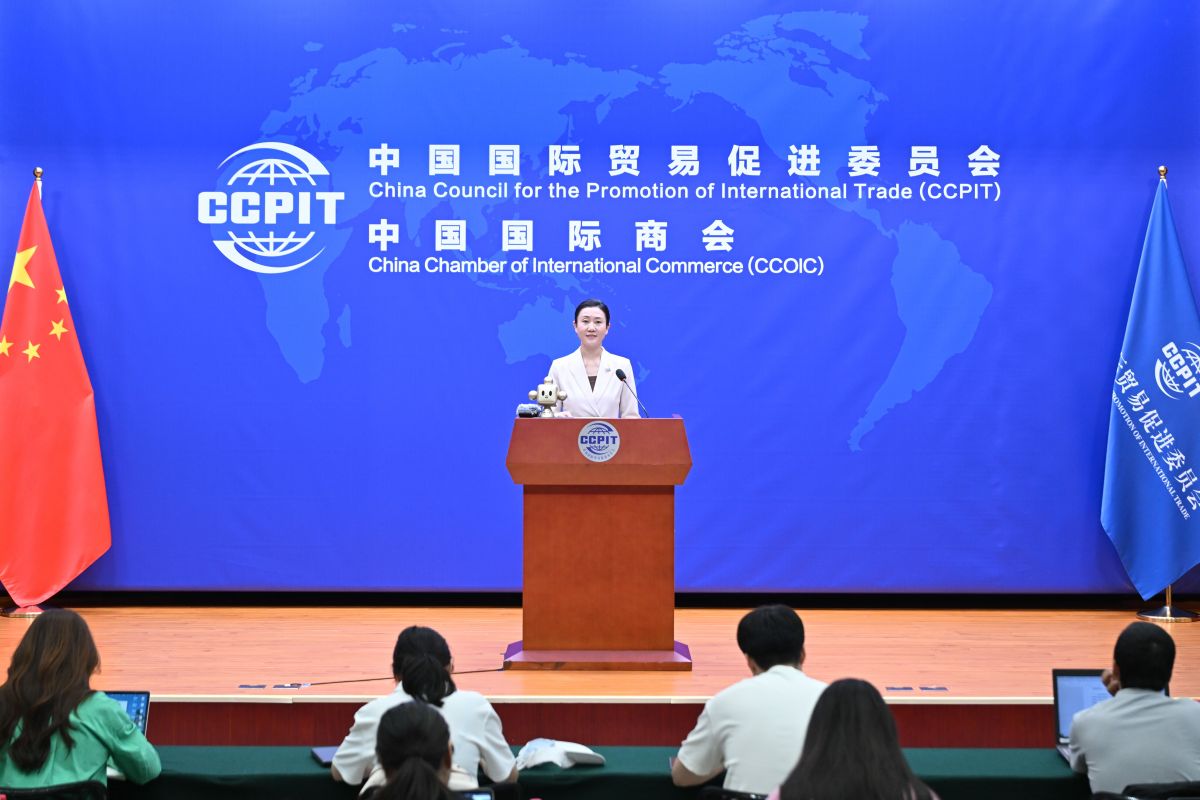
China Council for the Promotion of International Trade (CCPIT) held its July regular press conference on July 31, 2026, releasing the May 2026 Global Economic and Trade Friction Index. CCPIT spokesperson Yang Fan said the global trade friction index stood at 95 in May, remaining at a medium-to-high level. By industry, the electronics sector recorded the highest trade friction index among 13 monitored industries. In China-related trade frictions, the index stood at 93, with electronics products including drones, chips and vape products among areas where friction remained elevated.
Aug.03
German Tobacco Tax Revenue Falls 10.8% Through August as Tax-Paid Cigarette Volume Drops 12.6%
Germany collected €9.789 billion in total tobacco tax revenue from January through August 2026, down 10.8% from a year earlier, according to the Federal Ministry of Finance. Germany's tobacco tax base covers not only cigarettes and fine-cut tobacco but also heated tobacco and vaping liquids taxed as tobacco substitutes. The German Association of the Tobacco Industry and Novel Products, or BVTE, citing federal statistical data, said tax-paid cigarette volume fell 12.6% to 40.6 billion sticks. BVTE is using the latest figures to argue against further tax increases planned from 2027 through 2030, while Germany's parliament is scheduled to hold a first reading of the bill on September 24.
Sep.23
RLX Technology Dropped From FTSE All-World as International Business Reaches 68.5% of Q2 Revenue
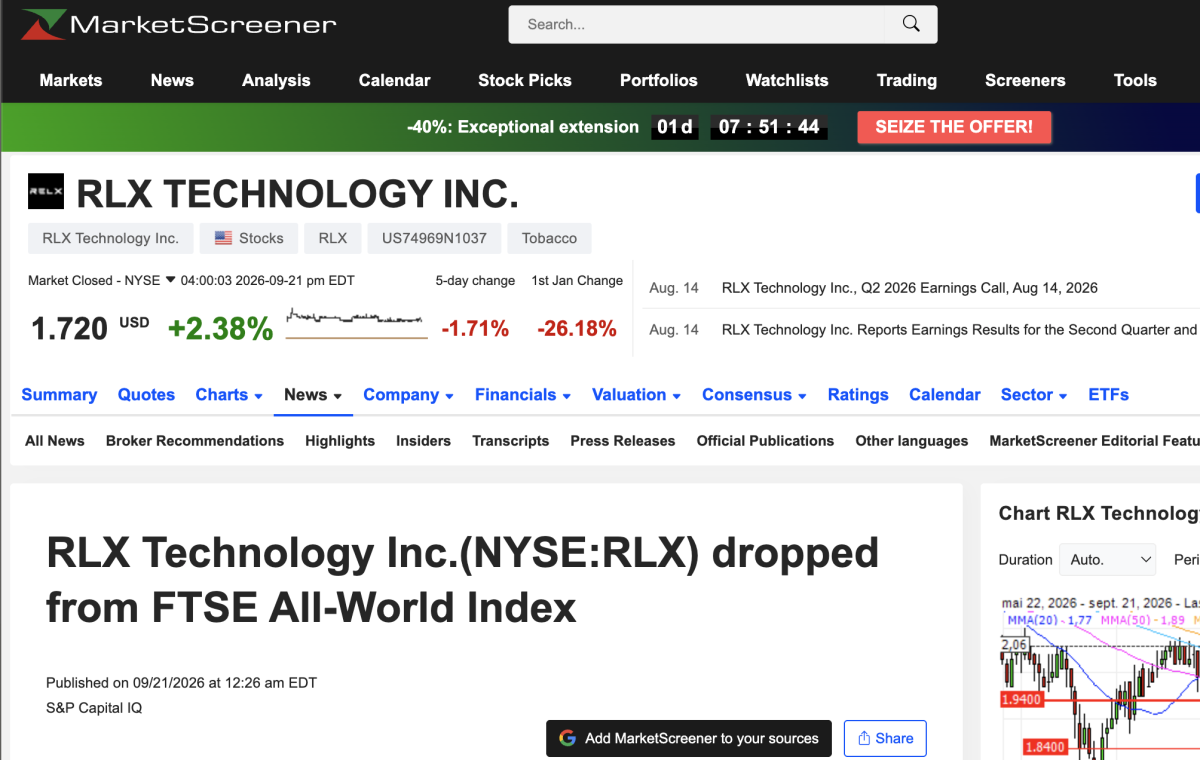
RLX Technology (NYSE: RLX) has been removed from the FTSE All-World Index, effective September 21. FTSE Russell records show RLX was already part of its global equity index universe by 2022, when its American depositary receipts were classified as China Large Cap securities. Trading volume rose to about 44.77 million shares on September 18, roughly 23 times the previous session's volume. RLX reported RMB1.0105 billion in second-quarter revenue, up 14.8% year over year, with international operations contributing 68.5%. The company also acquired a 51% stake in one of Western Europe's largest distributors of next-generation smoke-free and FMCG products in July.
Sep.22
Malaysia Police Seize RM12.7 Million in Illegal Vapes and Cigarettes as Probe Points to Sea Shipments From China
Police in Malaysia’s Selangor state seized illegal vape products and contraband cigarettes worth about RM12.7 million (approximately $3 million) in two enforcement operations. According to New Straits Times and The Star, the vape-related operation uncovered 131,036 boxes of vape products, 4,900 bottles of e-liquid and 25,510 vape devices, valued at about RM9.4 million. Police said preliminary investigations indicated that some illegal vape products entered Malaysia through sea shipments from China before moving through storage and distribution networks.
Aug.10
BAT Expands ITC Infotech Partnership Across Poland, Romania and India to Advance AI
ITC Infotech has expanded its multi-year strategic technology partnership with British American Tobacco (BAT), providing technology services across Poland, Romania and India while continuing to support BAT's newly launched Future Capabilities Centre in India and existing technology hubs in Malaysia and Mexico. The companies said the agreement will focus on AI-enabled innovation, technology capability building and greater operational efficiency. The partnership also aligns with BAT's broader Fit2Win transformation programme, under which the group is expanding the use of external technology and business-services partners to simplify its global operating model.
Aug.13