Recently, Juul issued a warning to Saudi Arabian authorities not to increase tariffs on electronic cigarette products.
The increase in taxes on electronic cigarettes may result in them becoming as expensive as traditional cigarettes. This move could also stimulate the growth of black market activities, putting consumers' health at risk, reducing government tax revenues and lowering national and regional investment and entrepreneurship attractiveness.
In recent years, national healthcare providers such as the UK National Health Service (NHS) have recognized that electronic cigarettes are a safer alternative to traditional cigarettes and have highlighted their use as a smoking cessation aid. In contrast, the World Health Organization has warned that tobacco causes over eight million deaths per year. Smoking also puts pressure on public healthcare systems and government funding, as it is associated with diseases such as cancer, heart disease, and chronic obstructive pulmonary disease.
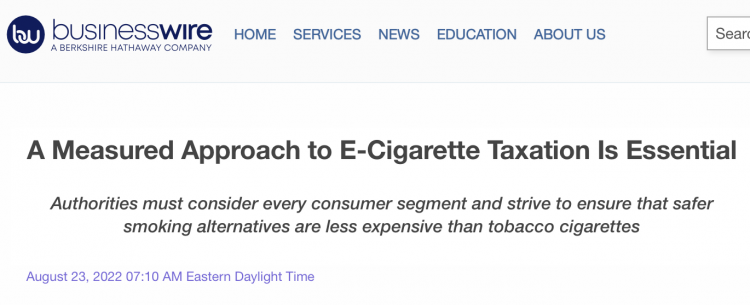
Increasing evidence suggests that electronic cigarettes are a safer alternative and/or tool to help smokers quit smoking. Compared to tobacco products, it makes sense for authorities to keep their tax rates lower.
A global study has shown that taxes imposed to discourage people from consuming alcohol and tobacco, also known as "sin taxes," primarily impact those who are least able to afford them. This contradicts one of the eight principles for harm reduction, which calls for "non-stigmatizing, non-coercive services and resources to assist people in reducing the harms associated with drug use and their living conditions.
According to Robert Naouss, the Director of External Affairs at Yueting, the company believes that consumers of legal age have the right to access less harmful alternatives to combustible cigarettes, rather than being forced to continue using them. It is equally important to discourage the use of black market products and instead allow consumers to obtain cheaper cigarette substitutes through legally regulated channels.
According to the FDA, products smuggled into various countries and sold on the black market are not regulated and of questionable quality. These products can even end up in the hands of young people and may lead to significant health problems. In this case, the government must address individual product tax losses while also using fiscal reserves to fund healthcare facilities for smoking-related illnesses. Authorities should also consider that the growth of tax and illicit trade may drive out investors and entrepreneurs who hope to enter the market and create job opportunities, further affecting government revenue and the economy.
Yueke believes that implementing moderate taxation on electronic cigarette products is in the best interest of the authorities, which would allow consumers to continue to choose safer and more affordable tobacco alternatives.
Statement:
This article is compiled from third-party information and is intended for industry exchange and learning purposes only.
This article does not represent the viewpoint of 2FIRSTS, and 2FIRSTS cannot confirm the truthfulness and accuracy of the article's content. The compilation of this article is solely for industry-related communication and research purposes.
Due to limitations in the level of translation, the compiled article may not fully reflect the original text. Please refer to the original article for accuracy.
2FIRSTS maintains complete alignment with the Chinese government on any domestic, Hong Kong, Macau, Taiwan, and foreign-related expressions and positions.
The compilation information is the property of the original media and the respective author. If any infringement occurs, please contact us for removal.
Disclaimer
This article is provided solely for professional research, industry discussion, and informational purposes. Any references to brands, companies, products, technologies, or policies are made for factual reporting and analytical purposes only, and do not constitute endorsement, recommendation, promotion, or advertising by 2Firsts.
Nicotine-containing products, including but not limited to cigarettes, e-cigarettes, heated tobacco products, and nicotine pouches, carry significant health risks. Readers are responsible for complying with all applicable laws and regulations in their respective jurisdictions, including age restrictions and access limitations.
The information contained in this article should not be regarded as investment, legal, medical, regulatory, or commercial advice. While 2Firsts strives to ensure the accuracy and reliability of its content, it does not assume liability for any direct or indirect loss arising from errors, omissions, inaccuracies, or reliance on the information contained herein.
This article is not intended for individuals below the legal age for accessing tobacco or nicotine-related information in their jurisdiction.
Copyright Notice
This article is either original content produced by 2Firsts or content reproduced, translated, summarized, or adapted from third-party sources with attribution where applicable. The intellectual property rights of the original content remain with 2Firsts or the respective original rights holders.
No individual or organization may copy, reproduce, distribute, republish, modify, translate, or otherwise use this content without prior authorization. Any unauthorized use may result in legal action.
For copyright-related inquiries, corrections, or removal requests, please contact: info@2firsts.com.
AI-Assisted Translation and Editing Notice
Portions of this article may have been translated, edited, or reviewed with the assistance of artificial intelligence tools to improve efficiency and readability. Due to the limitations of AI-assisted translation and editing, discrepancies, omissions, or inaccuracies may exist when compared with the original source.
Where applicable, readers are advised to refer to the original source for the most complete and accurate information. If you identify any errors or believe that any content infringes upon your rights, please contact us at info@2firsts.com, and we will review and address the matter promptly.