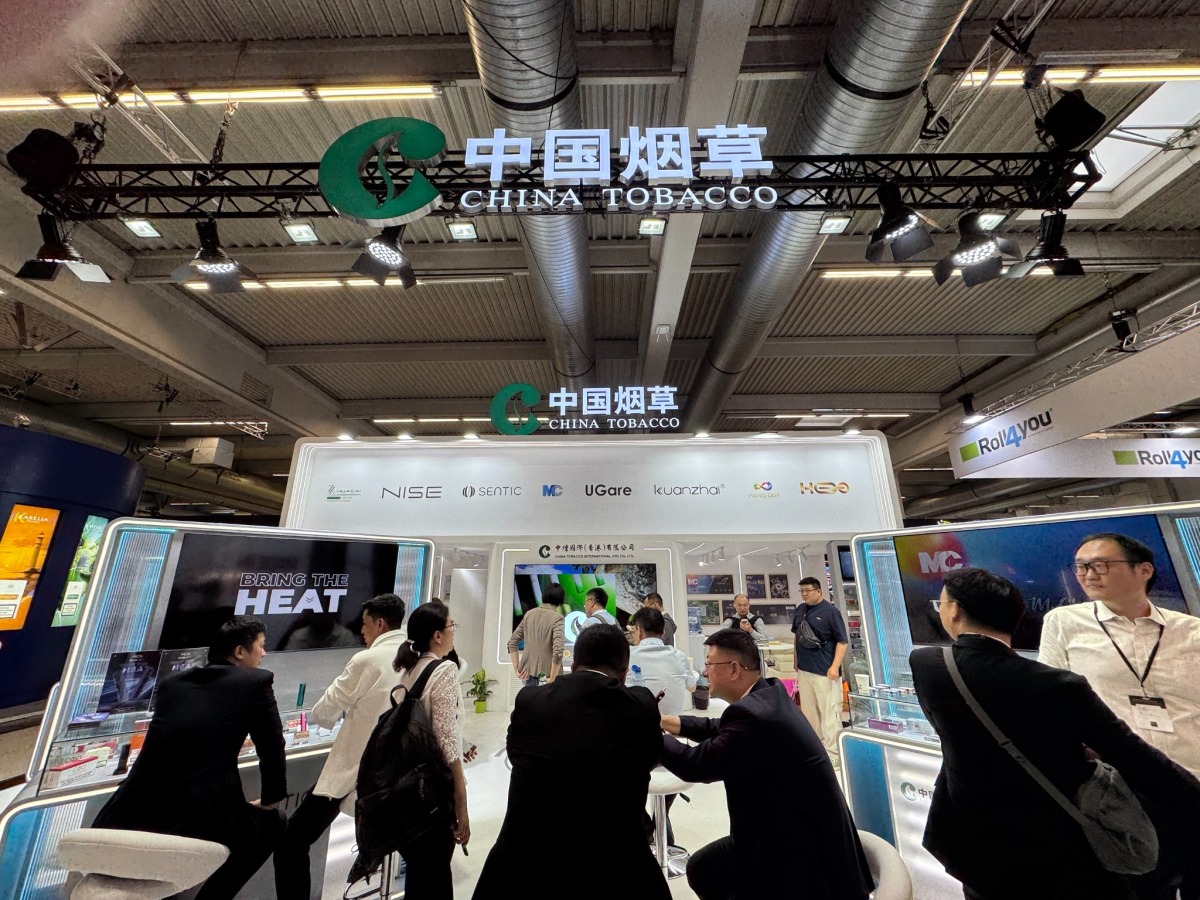
【By 2Firsts】In May, the East Tobacco Newspaper (ETN) published the "2024 World Tobacco Development Report". As an authoritative publication under China Tobacco and the State Tobacco Monopoly Administration, it to some extent reflects the cognitive and judgment of domestic authoritative institutions on the global tobacco development situation. CEO of 2Firsts, Alan Zhao, provided an in-depth interpretation of the "2024 World Tobacco Development Report" in his personal video blog "Ruihuo Talk".
This article is a summary of the video content from the personal video account "Ruihusuo" of the CEO of 2Firsts, Alan Zhao. It focuses on key details in the report regarding the development of new tobacco products, regulatory trends in the United States, and unique characteristics of the Japanese market. It provides readers with a comprehensive and in-depth analysis.
Nicotine Pouches - From a Niche Category to a "Key Focus"
The 2024 World Tobacco Development Report outlines the global new tobacco development trends for 2024, stating that "heated cigarettes and e-cigarette sales growth rate continues to decline," while "nicotine pouches continue their rapid expansion." It is worth noting that last year's report has repeatedly mentioned the rapid growth of nicotine pouches, and this year once again emphasizes this trend, highlighting the high level of attention from authoritative sources in the country to the global nicotine pouch market and its rapid growth recognition in reality.
The recognition of this fact may lead to the development and internationalization of China Tobacco's presence in the nicotine pouch market, which is worth continued attention.
E-Cigarette Regulation in the U.S.: Stricter Rules and Accelerated Compliance
The "2024 World Tobacco Development Report" provides a detailed description of the trends in tobacco regulation in the United States over the past year, focusing primarily on two points: firstly, the establishment of a cross-departmental task force to combat illegal e-cigarette products, and secondly, to expedite the approval process for product launches.
2Firsts has always closely monitored the regulatory trends in the US market through research reports and offline events. US regulators have intensified their crackdown on illegal e-cigarettes through the formation of joint working groups. At the same time, the new tobacco review system represented by PMTA (Premarket Tobacco Product Application) is continuously being optimized, and the progress towards product approval is expected to accelerate in the future. The report mentions these regulatory trends in the US, indicating that the development and changes in US market regulation have always been highly concerned by relevant domestic departments.
HNB Holds 44% Market Share in Japan Amid Market Maturity and Slowing Growth
According to the 2024 World Tobacco Development Report, Japan, Italy, and Russia are respectively the top three heated tobacco markets globally. The report indicates that Japan leads with sales of 115.9 billion, followed by Italy with 48 billion, and Russia with 25 billion.
According to a report, data from Euromonitor International shows that the sales volume and revenue growth of heated tobacco products in the Japanese market have dropped to single digits. This may indicate that the Japanese market has entered a relatively mature stage in the development of heated tobacco products.
According to data released by British American Tobacco (BAT) in 2024, the market share of heated tobacco products in Japan has reached 44%, with consumption of heated tobacco products in Tokyo even exceeding 50%.
Given the unique characteristics of the Japanese market, the main category of new tobacco products is heated cigarettes. Current data in Japan indicates that as the market develops to a relatively mature stage, heated tobacco products may surpass traditional cigarettes and become the main form of tobacco products. This fact is believed to have also drawn the attention of domestic authorities.
Case Study: Should China Learn from the Successes and Setbacks of South Korea’s KT&G?
The World Tobacco Development Report 2024 provides a detailed review of the past year's development of the South Korean tobacco company. KT&G's strategies in addressing the decline in traditional cigarette sales, leading the heated cigarette market, and advancing internationalization provide valuable insights.
Domestic Market: Deep Cultivation and Product Innovation
The report pointed out that in the domestic market of South Korea, facing the challenge of declining sales of traditional cigarettes, KT&G's strategy is to focus on the domestic market and constantly launch new products that meet consumer demands. Specific strategies include:
·Innovations in reduced flavor products: Continuously launching products that reduce unpleasant odors and sensations to meet consumer demand for a milder taste.
·Thinner cigarettes and droplet oil products are gaining momentum: Increasing research and development efforts and promoting them in the fields of thinner cigarettes and droplet oil products to seize the growth opportunities in niche markets.
In the domestic heated tobacco market, KT&G continues to maintain its market-leading position. Report data shows that its market share in heated tobacco devices exceeds 68%, with a 46% share in tobacco sticks. This indicates that KT&G has successfully solidified its dominant position in the local new tobacco field through ongoing product innovation and market cultivation.
International Market: Globalization Aspirations and Collaboration Challenges
The report mentions that KT&G aims to become the fourth largest multinational tobacco company in the world in the international market. To achieve this goal, the company has implemented the following internationalization strategies:
·Organizational Localization: In key markets such as Indonesia, Russia, and Turkey, 11 overseas entities have been established, with operational branches set up in Mongolia and Europe, aiming to achieve localized operations.
·New Tobacco Internationalization: The report describes it as "the international expansion of next-generation products highly tied to Philip Morris International (PMI).
However, the report contains a noteworthy commentary at this point, which is quite rare in reports that primarily focus on factual descriptions. The report explicitly states:
"From a practical standpoint, the expansion of the market has not resulted in significant sales growth. The company's major shareholders believe that the company's products have actually become a supporting role for IQOS, and are quite dissatisfied with the cooperation between the company and Philip Morris International (PMI)."
This statement reveals the obstacles that KT&G has encountered in its internationalization strategy, particularly in the new tobacco field. The deep collaboration with international giant Philip Morris International (PMI) did not bring about significant sales growth as expected, but instead may have resulted in their products being positioned ambiguously in the market, or even becoming mere "complements" to their partner's products. This "loss" experience should serve as a warning to other tobacco companies intending to enter the international market.
Exploring the Future of Internationalization for Chinese Heated Tobacco and Traditional Cigarettes
KT&G's experience, both successes and challenges, provide multidimensional insights for China's tobacco industry, which is currently undergoing transition.
Traditional Cigarette Market: Innovation and Differentiation Development
Currently, the domestic cigarette market in China is facing significant pressure and challenges. KT&G's strategies in product innovation and meeting consumers' differentiated needs may serve as a reference for the Chinese tobacco industry. How to maintain traditional advantages while exploring product innovation, market segmentation strategies, and meeting consumers' diverse demands for harm reduction and flavor reduction is a topic that the Chinese tobacco industry needs to delve into. For example, in the areas of flavor reduction and slim cigarettes, can the Chinese tobacco industry develop more competitive products?
Internationalization Strategy: Considerations of Localization and Collaboration Models
In recent years, China Tobacco has invested a significant amount of effort into internationalizing traditional tobacco. The experience of KT&G in focusing on niche markets, meeting the needs of local consumers, and global manufacturing can serve as a reference for the internationalization of China Tobacco.
Moreover, the conclusion of the report on the challenges facing KT&G international cooperation also raises deep thoughts on the international development strategy of Chinese heated tobacco products (HNB). What strategy should Chinese HNB adopt when entering the international market? Should it develop independently or cooperate with international tobacco companies? If choosing to cooperate, what strategy and approach should be taken? How can a situation like KT&G "playing second fiddle" be avoided? These are key issues that the Chinese tobacco industry should delve into.
International Cooperation: Opportunities and Challenges Coexist
The report mentions that the CEO of Philip Morris International (PMI) visited China twice within the first half of 2024 to hold meetings and discussions with key leaders of the State Tobacco Monopoly Administration. Although the specific details of the high-level talks cannot be speculated on, the frequent visits and communication at least indicate that the international tobacco giant has a strong desire to establish extensive cooperation with China's tobacco industry.
This provides an opportunity for China Tobacco to learn and exchange with international excellent companies, and explore the future development path together. However, how to maintain its own interests in cooperation, ensure the independent development of Chinese-style new tobacco, and maximize the international influence of China Tobacco will be important challenges faced by China Tobacco. China Tobacco needs to carefully consider what strategies and approaches to take when cooperating with international tobacco companies in order to achieve mutual benefit and avoid being in a passive position.
Follow the 2Firsts video channels to explore the future trends of the global tobacco industry and engage in more interactive content.

We welcome news tips, article submissions, interview requests, or comments on this piece.
Please contact us at info@2firsts.com, or reach out to Alan Zhao, CEO of 2Firsts, on LinkedIn
Notice
1. This article is intended solely for professional research purposes related to industry, technology, and policy. Any references to brands or products are made purely for objective description and do not constitute any form of endorsement, recommendation, or promotion by 2Firsts.
2. The use of nicotine-containing products — including, but not limited to, cigarettes, e-cigarettes, nicotine pouchand heated tobacco products — carries significant health risks. Users are responsible for complying with all applicable laws and regulations in their respective jurisdictions.
3. This article is not intended to serve as the basis for any investment decisions or financial advice. 2Firsts assumes no direct or indirect liability for any inaccuracies or errors in the content.
4. Access to this article is strictly prohibited for individuals below the legal age in their jurisdiction.
Copyright
This article is either an original work created by 2Firsts or a reproduction from third-party sources with proper attribution. All copyrights and usage rights belong to 2Firsts or the original content provider. Unauthorized reproduction, distribution, or any other form of unauthorized use by any individual or organization is strictly prohibited. Violators will be held legally accountable.
For copyright-related inquiries, please contact: info@2firsts.com
AI Assistance Disclaimer
This article may have been enhanced using AI tools to improve translation and editorial efficiency. However, due to technical limitations, inaccuracies may occur. Readers are encouraged to refer to the cited sources for the most accurate information.
We welcome any corrections or feedback. Please contact us at: info@2firsts.com