
World Tobacco Development Report 2024 (Part II)

May.16.2025
World Tobacco Development Report 2024 (Part II)
In 2024, global flue-cured tobacco production outside mainland China reached 37.28 million bales, as climate issues led to supply shortages. Prices continued to rise amid currency fluctuations and inflation. ETN highlights trends in the four major producing countries.


World Tobacco Development Report 2024 (Part II)
World tobacco production from 2020 to 2024 | Source: ETN


Brazil


World Tobacco Development Report 2024 (Part II)
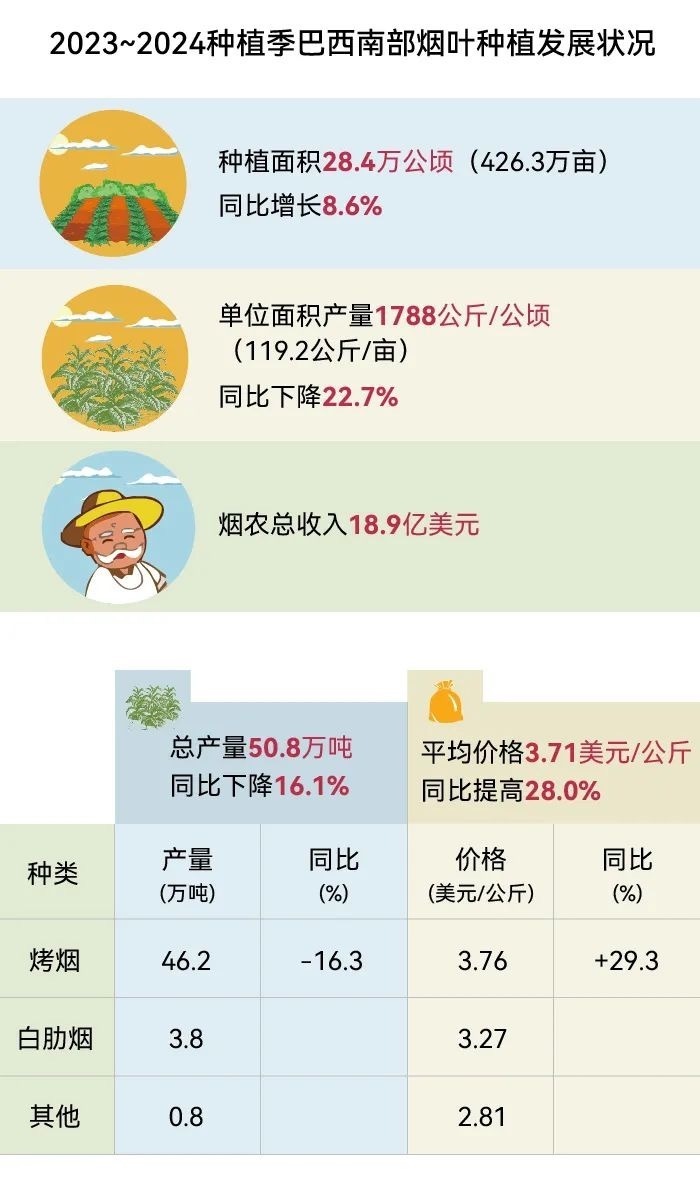
Planting situation of tobacco in southern Brazil during the 2023~2024 planting season | Source: ETN


World Tobacco Development Report 2024 (Part II)
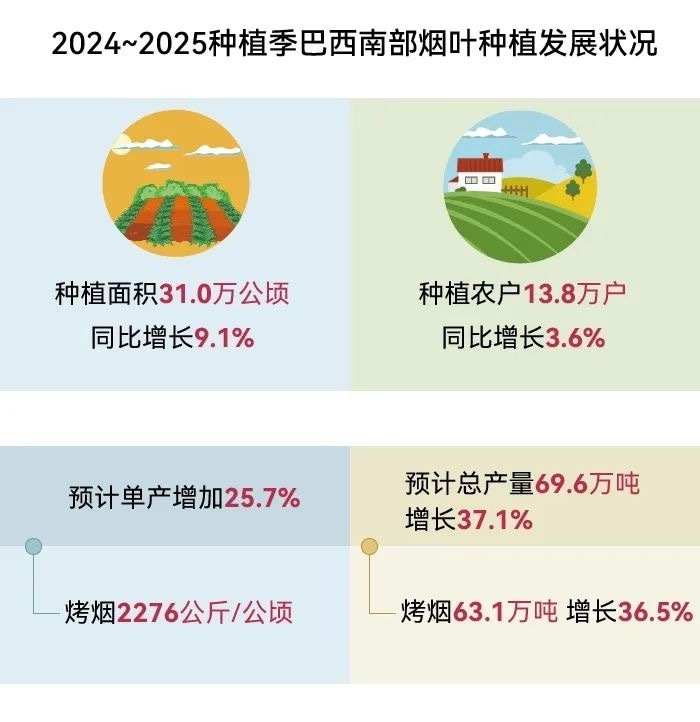
Planting conditions of tobacco in southern Brazil during the 2024-2025 planting season | Image source: ETN


India


India is the world's second largest producer of tobacco leaves and the third largest producer of tobacco for smoking.


According to reports, around 30% of India's total tobacco production comes from the cultivation of flue-cured tobacco. The tobacco industry in India directly and indirectly employs around 45 million people and generates exports worth $1.4 billion USD. The production and management of flue-cured tobacco in India is overseen by the Indian Tobacco Board, which falls under the Ministry of Commerce and Industry. The cultivation, sales, processing, and import/export of tobacco are all regulated under a registration and licensing system. The main flue-cured tobacco growing regions in India are Andhra Pradesh (production from October to February) and Karnataka (production from May to September).


World Tobacco Development Report 2024 (Part II)
Planting development of tobacco in Andhra Pradesh and Karnataka during the planting season of 2023-2024 | Image Source: ETN


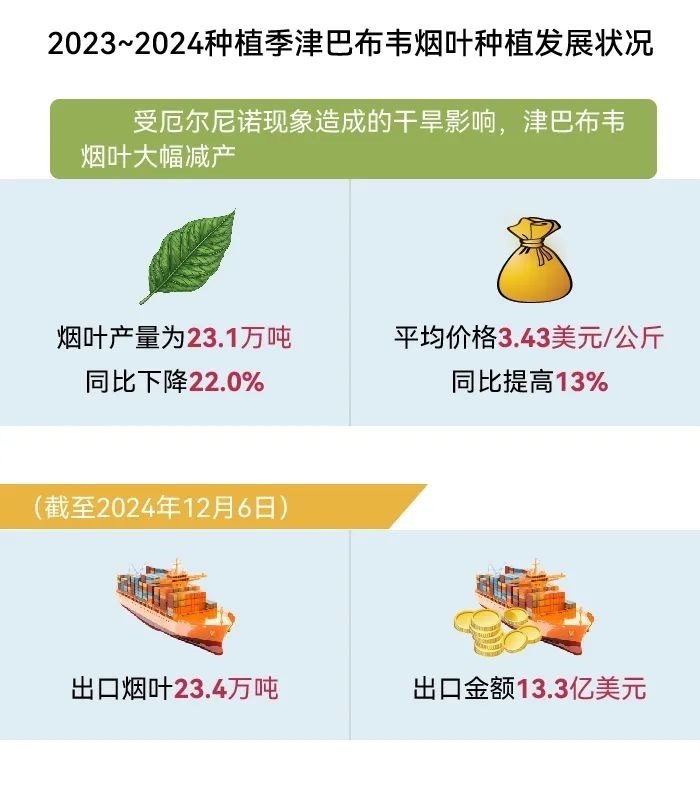
Zimbabwe


World Tobacco Development Report 2024 (Part II)
Planting situation of tobacco in Zimbabwe during the 2023~2024 planting season | Image source: ETN


World Tobacco Development Report 2024 (Part II)
Planting status of tobacco in Zimbabwe during the 2024-2025 planting season | Source: ETN


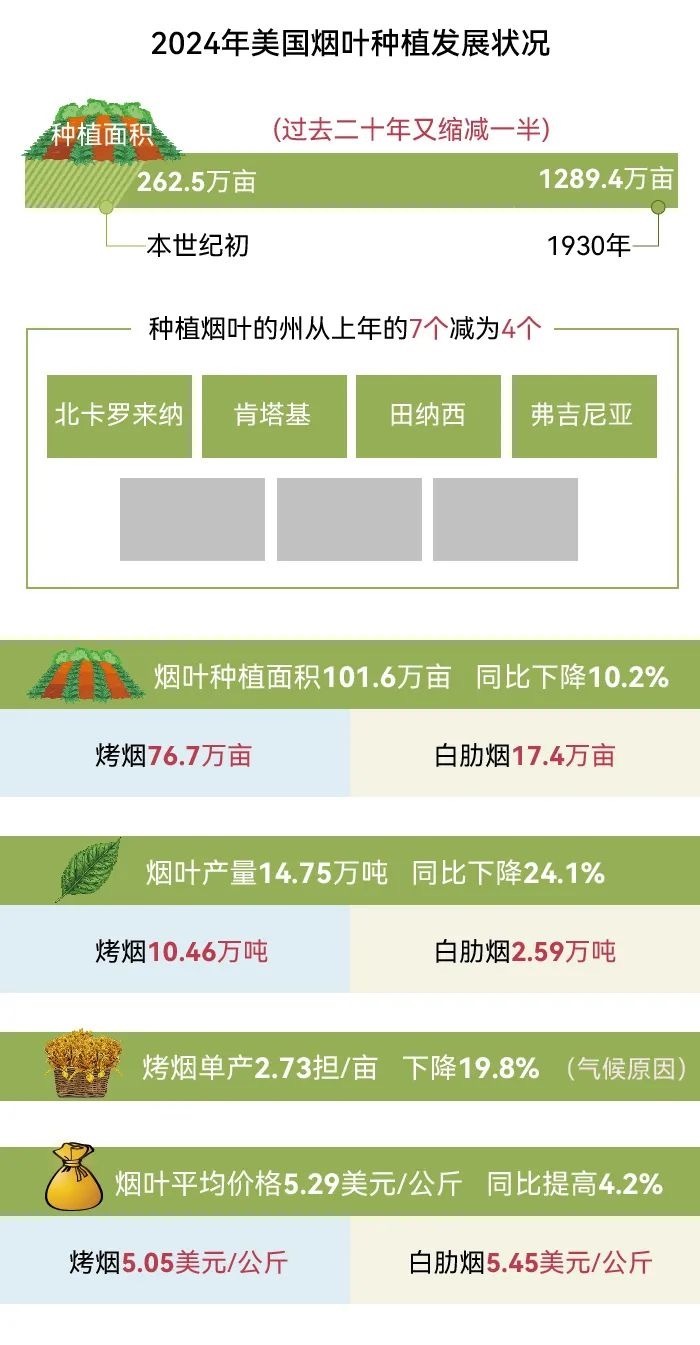
America


2024年世界烟草发展报告(中)
Tobacco Cultivation Trends in the U.S. in 2024 | Source:ETN


We welcome news tips, article submissions, interview requests, or comments on this piece.

Please contact us at info@2firsts.com, or reach out to Alan Zhao, CEO of 2Firsts, on LinkedIn


Notice

1.  This article is intended solely for professional research purposes related to industry, technology, and policy. Any references to brands or products are made purely for objective description and do not constitute any form of endorsement, recommendation, or promotion by 2Firsts.

2.  The use of nicotine-containing products — including, but not limited to, cigarettes, e-cigarettes, nicotine pouchand heated tobacco products — carries significant health risks. Users are responsible for complying with all applicable laws and regulations in their respective jurisdictions.

3.  This article is not intended to serve as the basis for any investment decisions or financial advice. 2Firsts assumes no direct or indirect liability for any inaccuracies or errors in the content.

4.  Access to this article is strictly prohibited for individuals below the legal age in their jurisdiction.


Copyright


This article is either an original work created by 2Firsts or a reproduction from third-party sources with proper attribution. All copyrights and usage rights belong to 2Firsts or the original content provider. Unauthorized reproduction, distribution, or any other form of unauthorized use by any individual or organization is strictly prohibited. Violators will be held legally accountable.

For copyright-related inquiries, please contact: info@2firsts.com


AI Assistance Disclaimer


This article may have been enhanced using AI tools to improve translation and editorial efficiency. However, due to technical limitations, inaccuracies may occur. Readers are encouraged to refer to the cited sources for the most accurate information.

We welcome any corrections or feedback. Please contact us at: info@2firsts.com

Iowa Vape Directory Exposes Retail Divide: Specialty Vape Retailer Route 69 Vapor Says Over 98% of Its Inventory Is Unlisted, While Convenience Chains Casey’s, Maverik and Tobacco Giant Altria Previously Backed the Law
Iowa published its first vapor products directory on November 16, 2026, restricting retail sales to products covered by 361 listed entries. In interviews published on November 18, independent vape retailers described inventory restrictions, revenue exposure and store closure plans. Route 69 Vapor said more than 98% of its inventory was excluded from the directory, while Central Iowa Vapors said approximately 91% of its existing product assortment was unlisted. A mixed tobacco retailer reported nearly $15,000 in vape inventory that suppliers would not accept for return. Iowa legislative records show that convenience store and fuel retail chains Casey’s and Maverik, along with tobacco company Altria, supported the legislation establishing the directory in 2024. The new rules also affect licensed distributors, wholesalers and manufacturers, bringing supply-chain arrangements into the dispute over retail access.
Regulations
Nov.19
Los Angeles Cracks Down on Illicit Flavored Vapes and Counterfeit Goods: 12 Businesses Searched, 24 Arrested, Eight Truckloads Seized
Los Angeles authorities searched 12 businesses and arrested 24 people during a multi-agency operation targeting illicit flavored vaping products, flavored cigarettes and counterfeit merchandise on October 22, 2026. The Los Angeles County Sheriff's Department said approximately eight tractor-trailer loads of merchandise were seized. Alleged violations involved flavored tobacco sales restrictions, tobacco licensing requirements and counterfeit trademark laws. Local, state and federal agencies participated. Authorities have not disclosed the number, brands or value of vaping products seized. Investigations remain ongoing.
Enforcement
Oct.28
How Investors Are Repricing the Global Tobacco Industry as Nicotine Markets Shift
How are investors reassessing the global tobacco industry as nicotine markets evolve? In an interview with 2Firsts, Charlie Chen, Head of Research at CCB International Securities, forecasts annual growth of 30–50% for nicotine pouches, outpacing vaping and heated tobacco. He examines how regulatory enforcement, shifting market shares and new business models are influencing company valuations. The report also explores differences between multinational tobacco groups and Chinese companies, drawing on insights from the New Approaches Summit on profitability, investment strategies and industry consolidation.
Nov.11
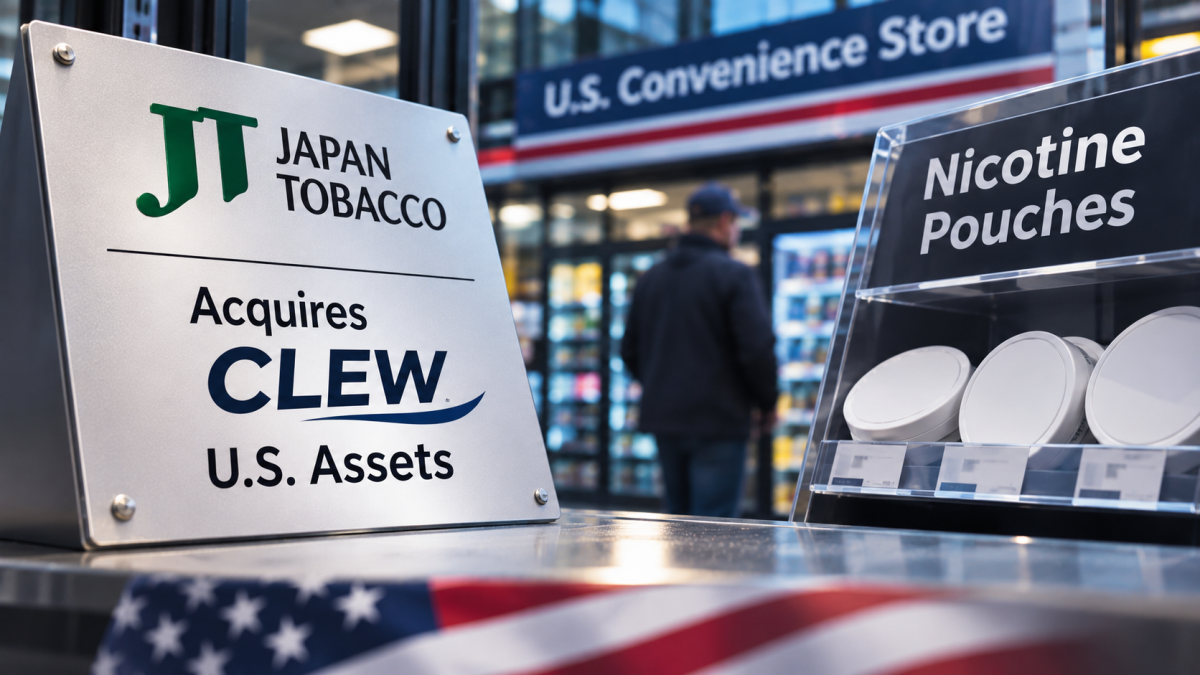
Special Report|Japan Tobacco Buys CLEW: Can Its 160,000-Store Cigarette Network Help It Vie for U.S. Nicotine Pouch Share Against PMI and BAT?
Japan Tobacco Inc. (JT) announced on November 12, 2026, that it had acquired the U.S. assets of nicotine pouch brand CLEW from Nevcore Innovations Inc., including trademarks, intellectual property, product formulations and a Premarket Tobacco Product Application (PMTA). CLEW, currently distributed through selected outlets in 13 U.S. states, will immediately join the JTI LIGGETT portfolio. The transaction follows JT's approximately $2.4 billion acquisition of U.S. cigarette maker Vector Group in 2024. JTI LIGGETT says its existing cigarette brands reach more than 160,000 U.S. retail stores. During the 2026 NACS Show in October, JTI LIGGETT booth staff told 2Firsts that the company had not yet launched nicotine pouches in the United States. Although Nevcore previously announced FDA acceptance of CLEW's PMTA, the brand is absent from the agency's current list of authorized nicotine pouch products. JT has not disclosed a retail expansion plan for CLEW.
Business
Nov.12
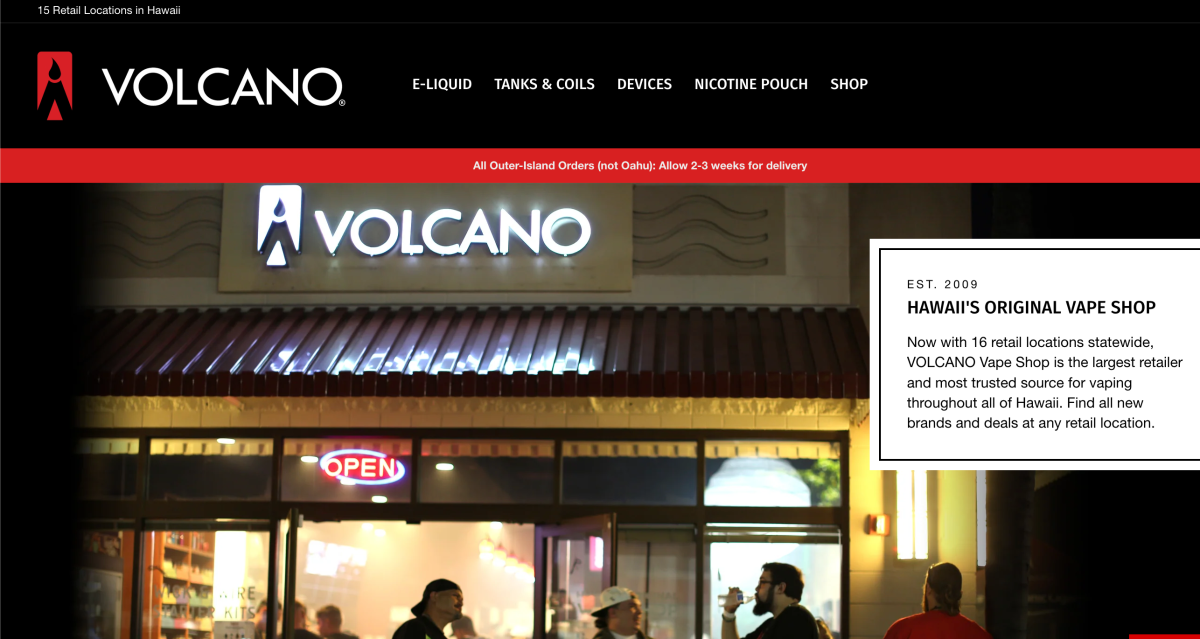
Hawaii's Largest Independent Vape Retailer and Wholesaler Volcano to Close All 13 Stores Ahead of 2027 Sales Rules
Hawaii-based vaping company Volcano eCigs plans to close all 13 physical retail stores on December 31, 2026, affecting approximately 56 employees. Volcano operates retail, wholesale, proprietary product and online sales businesses and has previously described itself in legislative testimony as Hawaii's largest independent vape retailer and wholesaler. Its operating company, Jocor Enterprises LLC, filed a formal closure notice on November 4, citing changes in the state's regulatory environment. From January 1, 2027, Hawaii will restrict the sale, acquisition and possession of vaping devices and e-liquids not listed in a state product directory, alongside separate restrictions on certain disposable devices. The closure concerns Volcano's physical retail network; the company has not announced the termination of wholesale or online operations.
Market
Nov.09
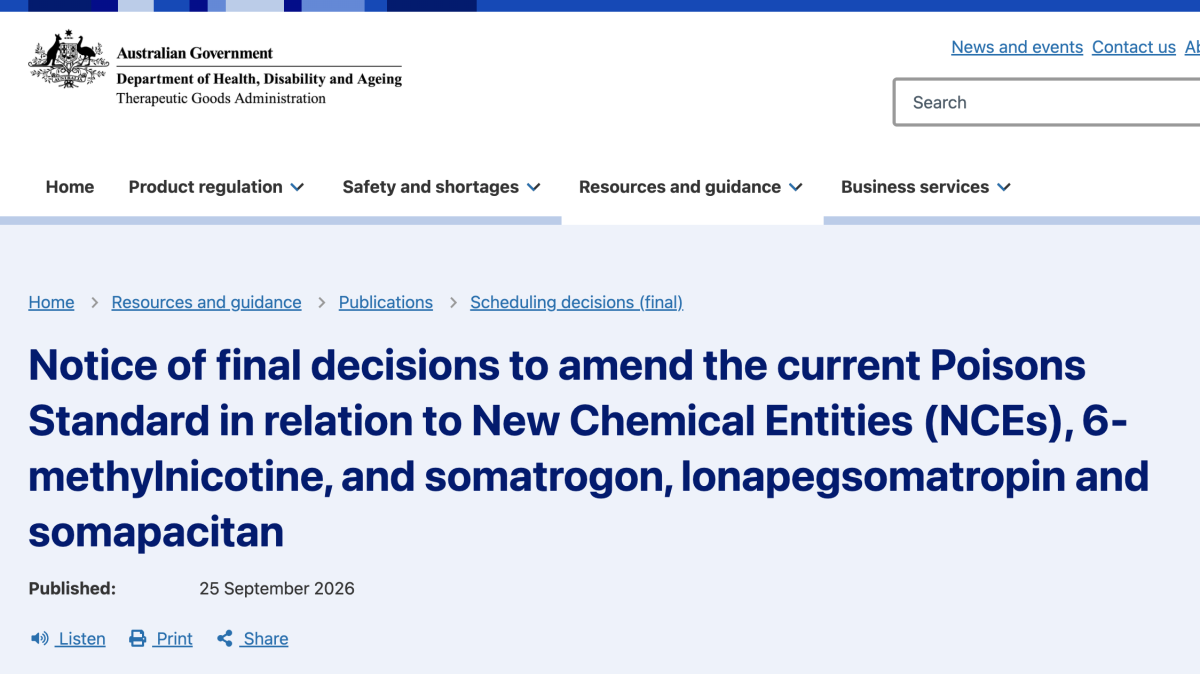
Australia Adds 6-Methylnicotine to Schedule 9 Prohibited Substances, Effective October 1
Australia's Therapeutic Goods Administration published a final decision on September 25 to classify 6-methylnicotine as a Schedule 9 prohibited substance under the Poisons Standard, effective October 1, 2026. TGA said the chemical has been reported in e-cigarette liquids sold in Australia and marketed as nicotine-free or nicotine alternatives, while evidence also indicates its use in preparations such as oral pouches. The government originally proposed a Schedule 7 classification but ultimately adopted the stricter Schedule 9 designation, citing acute toxicity, dependence risk, use in unapproved consumer products and misleading marketing.
News
Sep.29 by 2Firsts Perspectives