Key points:
Law Enforcement Update: 28 states in the US have joined forces to pressure the federal government to reinstate and strengthen measures to crack down on the illegal importation of e-cigarette products.
Illegal Accusations: Illegal e-cigarettes are mostly manufactured in China, avoiding FDA approval processes, and using packaging and flavors that appeal to teenagers.
Policy recommendations: Propose four specific measures including enhancing border control, empowering customs authorities, increasing penalties, and strengthening law enforcement efforts.
Political backdrop: The letter criticizes the lack of oversight by the Biden administration and calls on the Trump administration to continue and expand previous law enforcement measures.
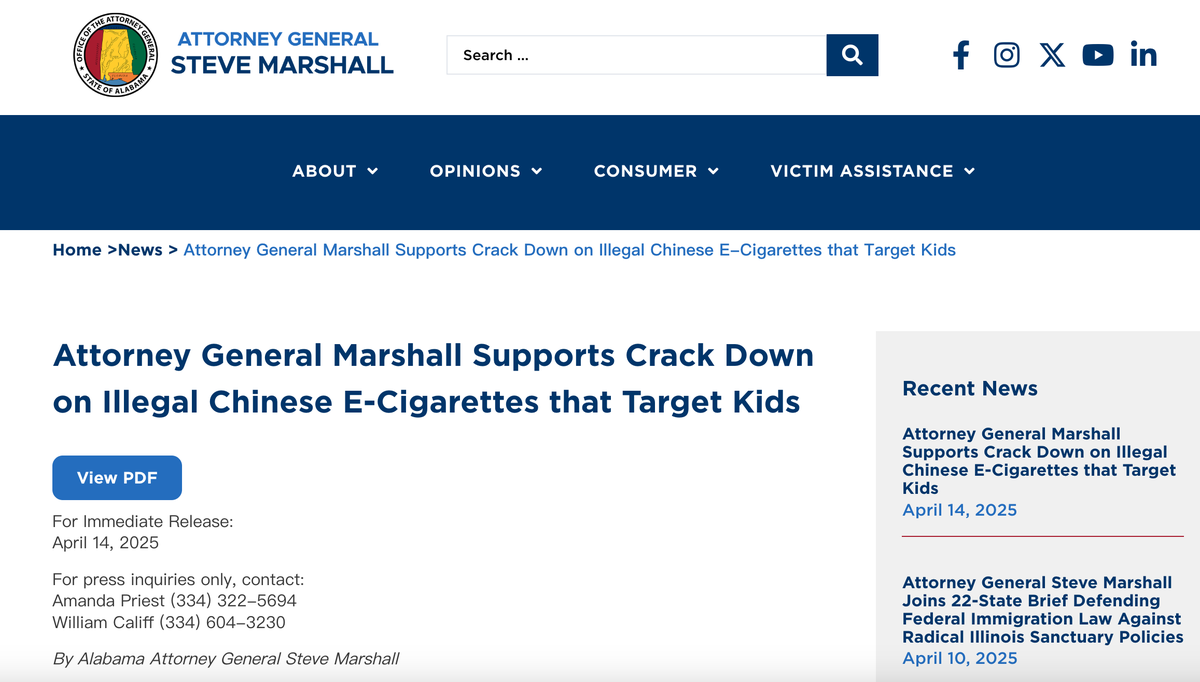
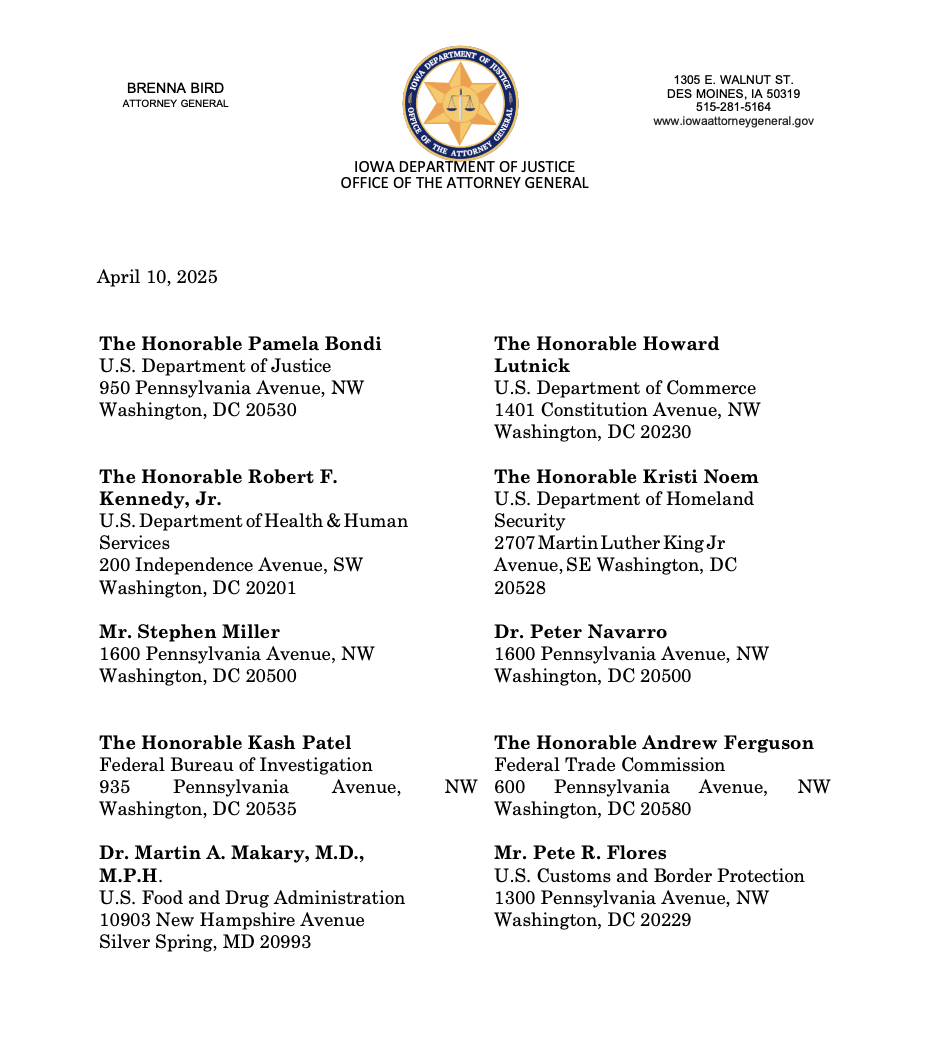
On April 14, Alabama Attorney General Steve Marshall, in conjunction with 27 other states, wrote a letter to the Trump administration urging them to take further action to address the influx of Chinese e-cigarette products into the United States.
According to the letter, in 2024, Chinese-made e-cigarette products worth billions of dollars will enter the U.S. market. These products typically use brightly colored packaging, sweet flavors, and electronic game themes to attract young users. Despite the historic decline in adolescent tobacco use, recent data shows that the majority of reports of teenagers using e-cigarettes in the past 30 days are using illegally smuggled Chinese products.
Marshall stated that some Chinese manufacturers and distributors are bypassing FDA regulations by not submitting pre-market review applications for their products, and are deliberately mislabeling products and evading customs supervision, increasing the risk of consumers inhaling unknown harmful substances.
The United States should take action now to resist a large number of illegal Chinese e-cigarettes, which are circumventing federal laws and targeting our youth. Our alliance urges the Trump administration to take further action to reject these harmful illegal products and keep them away from our children.
The Trump administration had taken measures to crack down on the illegal import of e-cigarettes during its first term, while Marshall criticized the Biden administration for lax regulations, leading to a resurgence of related products in the US market. States are calling on the government to strengthen enforcement in four areas:
- Instructing a federal multi-agency task force to prioritize curbing the distribution and sale of illegal Chinese e-cigarettes,
- Giving Customs and Border Protection the power to seize illicit tobacco products,
- Prosecuting and increasing penalties for violators who help peddle illegal Chinese e-cigarettes, and
- Strengthening enforcement at the border to crack down on e-cigarettes.
This initiative is led by the state of Iowa, with other states signing on including Alaska, Arkansas, Florida, Georgia, Idaho, Indiana, Kansas, Kentucky, Louisiana, Mississippi, Missouri, Montana, Nebraska, New Hampshire, North Dakota, Ohio, Oklahoma, Pennsylvania, South Carolina, South Dakota, Tennessee, Texas, Utah, Virginia, West Virginia, Wyoming, and Guam (not a formal state of the U.S.).
We welcome news tips, article submissions, interview requests, or comments on this piece.
Please contact us at info@2firsts.com, or reach out to Alan Zhao, CEO of 2Firsts, on LinkedIn
Notice
1. This article is intended solely for professional research purposes related to industry, technology, and policy. Any references to brands or products are made purely for objective description and do not constitute any form of endorsement, recommendation, or promotion by 2Firsts.
2. The use of nicotine-containing products — including, but not limited to, cigarettes, e-cigarettes, nicotine pouchand heated tobacco products — carries significant health risks. Users are responsible for complying with all applicable laws and regulations in their respective jurisdictions.
3. This article is not intended to serve as the basis for any investment decisions or financial advice. 2Firsts assumes no direct or indirect liability for any inaccuracies or errors in the content.
4. Access to this article is strictly prohibited for individuals below the legal age in their jurisdiction.
Copyright
This article is either an original work created by 2Firsts or a reproduction from third-party sources with proper attribution. All copyrights and usage rights belong to 2Firsts or the original content provider. Unauthorized reproduction, distribution, or any other form of unauthorized use by any individual or organization is strictly prohibited. Violators will be held legally accountable.
For copyright-related inquiries, please contact: info@2firsts.com
AI Assistance Disclaimer
This article may have been enhanced using AI tools to improve translation and editorial efficiency. However, due to technical limitations, inaccuracies may occur. Readers are encouraged to refer to the cited sources for the most accurate information.
We welcome any corrections or feedback. Please contact us at: info@2firsts.com