New York State Files Lawsuit Against E-cigarette Companies for Marketing Flavorful Products

Feb.21.2025
New York State Files Lawsuit Against E-cigarette Companies for Marketing Flavorful Products
New York State sues e-cigarette giants for illegally marketing flavored products to teenagers, demanding billion-dollar penalties.

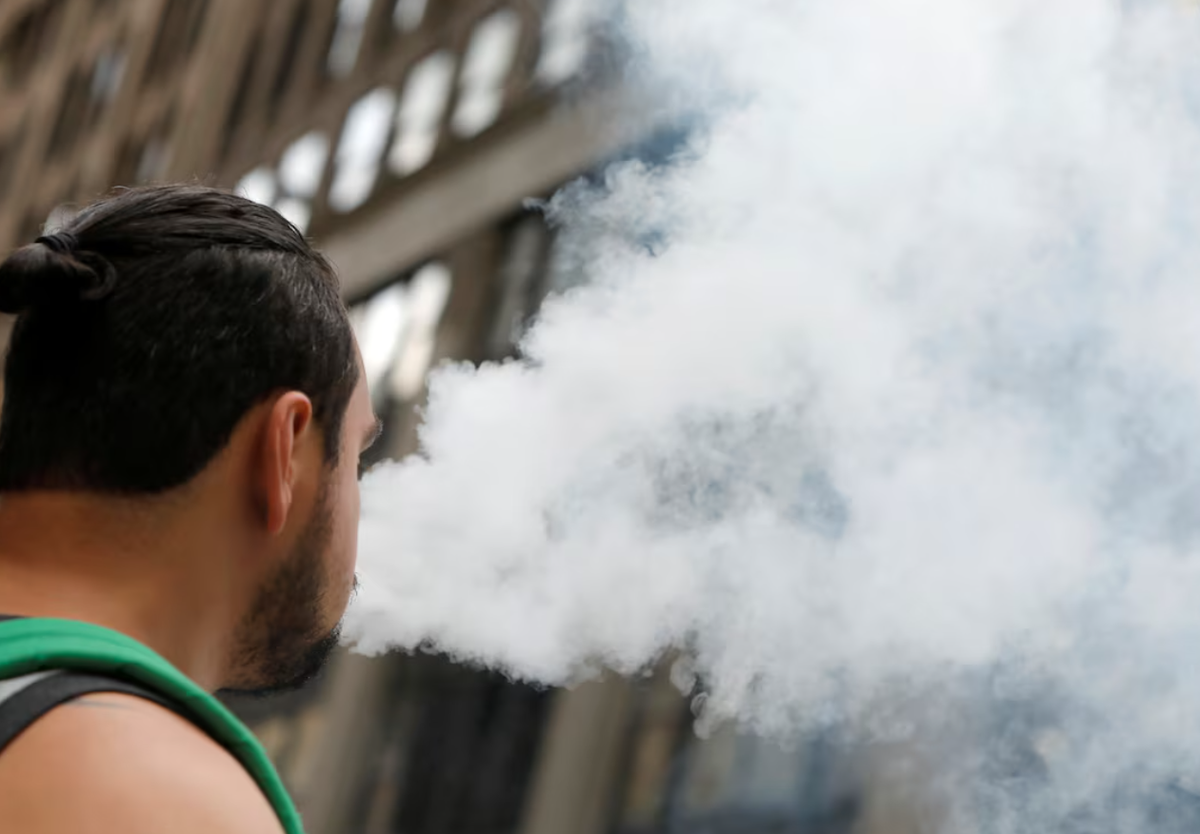
According to a report by Reuters on February 21st, the state of New York in the United States filed a lawsuit on Thursday (February 20) against several large e-cigarette manufacturers, distributors, and retailers, accusing them of illegally distributing, marketing, and selling flavored disposable e-cigarettes, including well-known brands such as Puff Bar, Elf Bar, Geek Bar, Breeze, and MYLE. The lawsuit alleges that these companies contributed to the trend of youth e-cigarette use by selling products in cartoon-style packaging and flavors like "Baja Slushie," "Strawberry Cereal Donut Milk," and "OMG Blow Pop.
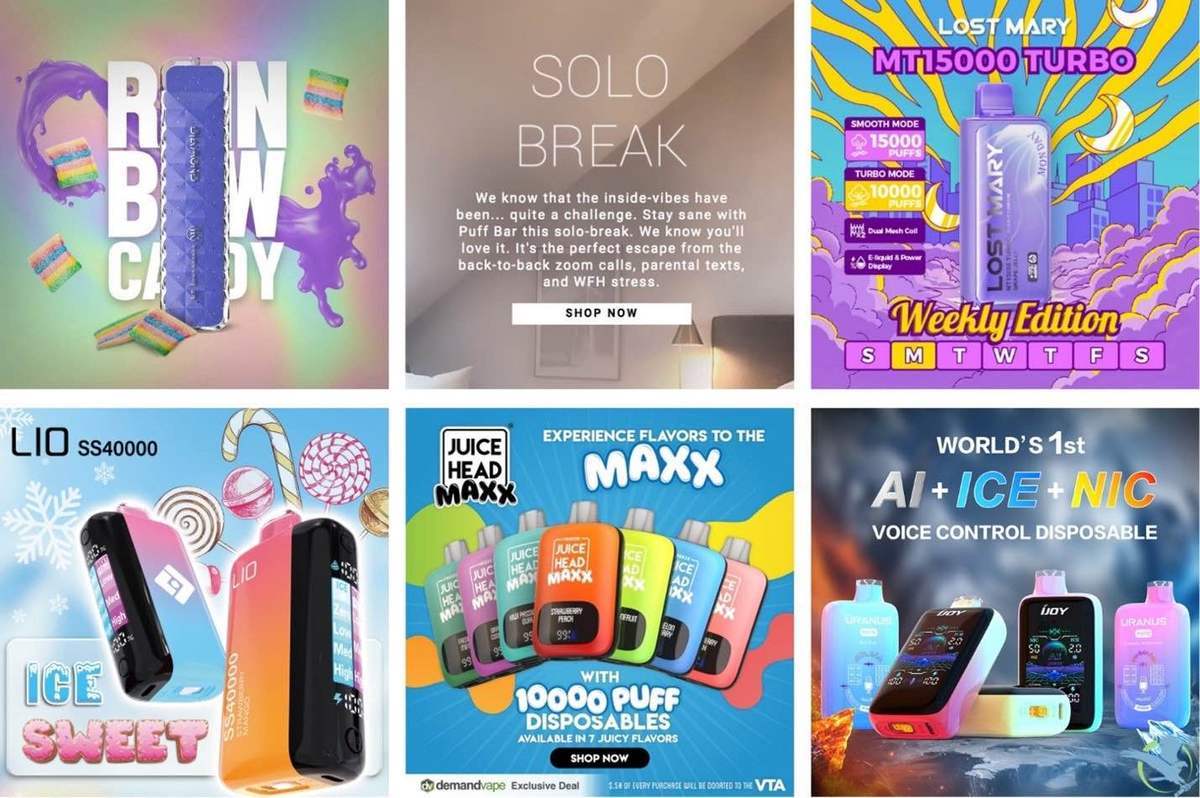
 

New York State Files Lawsuit Against E-cigarette Companies for Marketing Flavorful Products
The Attorney General of New York State accused 13 defendant companies and 3 defendants of selling flavored e-cigarette products that appeal to teenagers. | Image Source: Office of the Attorney General of New York State.


According to documents provided by the New York State Attorney General's office, the lawsuit involves a list of manufacturers, distributors, and retailers as follows:


  • Puff Bar
  • MYLE Vape
  • Pod Juice
  • Mi-One Brands
  • Happy Distro
  • Demand Vape
  • EVO Brands
  • PVG2
  • Magellan Technology
  • Midwest Goods
  • Safa Goods
  • EVO Brands
  • Price Point Distributors


In addition, a lawsuit was filed against the executives of an online e-cigarette retailer, Price Point Distributors, including Weis Khwaja, Hamza Jalili, and Mohammad Jalili.
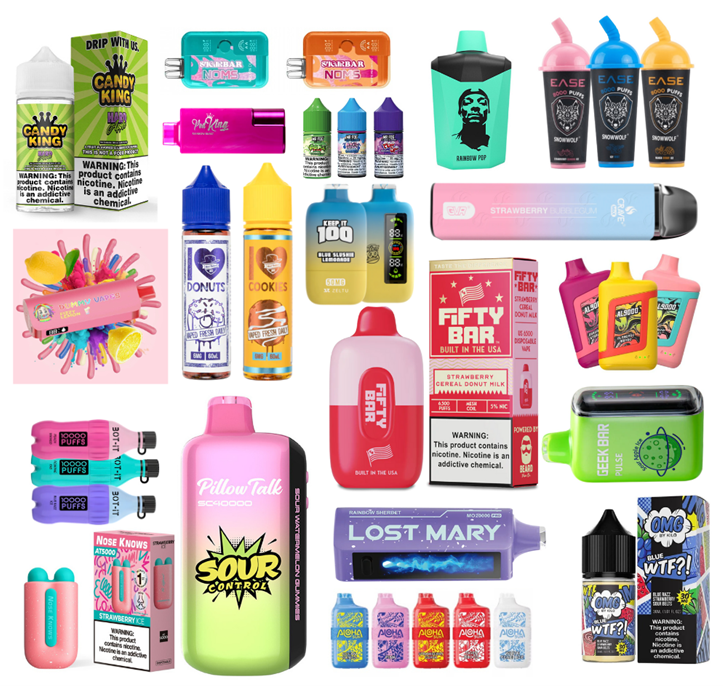
 

New York State Files Lawsuit Against E-cigarette Companies for Marketing Flavorful Products
The Attorney General of New York State accuses 13 defendant companies and 3 defendants of selling flavored e-cigarette products that appeal to teenagers.  | Image Source: Office of the Attorney General of New York State


New York State Files Lawsuit Against E-cigarette Companies for Marketing Flavorful Products


New York Attorney General Letitia James announced that she is seeking billions of dollars in civil fines and restitution from 13 defendant companies and 3 individuals, for widespread violations of local, state, and federal laws. The penalties will be aimed at punishing the companies for their illegal actions, compensating for the impact of their misconduct on public health, recovering all proceeds from their unlawful activities, and creating a fund to address the youth e-cigarette crisis in New York.


The statement indicates that the defendants knowingly sold fruit and candy-flavored e-cigarette products to vulnerable children, in violation of state laws prohibiting the sale of flavored tobacco products that pose health risks, as well as laws prohibiting the sale of e-cigarettes to individuals under 21 years old in 2020.


James said:


The e-cigarette industry is mirroring tobacco companies: they are making nicotine look cool, getting kids addicted, and in the process, sparking a large-scale public health crisis.


The defendants in the case include ELFBARe-cigarette distributor Demand Vape in Buffalo, New York, and Puff Bar in Gardena, California. These companies are accused of misleading the public through advertising to make flavored e-cigarettes appear as simple recreational products.


Demand Vape and Puff Bar did not immediately respond to requests for comment.


Many e-cigarette companies promote their products as a traditional cigarette alternative for adults, but since 2014, e-cigarettes have become the most commonly used tobacco product among children in the United States.


According to the 2024 Youth Tobacco Survey, 5.9% of middle and high school students (approximately 1.63 million children) reported currently using e-cigarettes, with nearly 90% of users using flavored products.


In December, the US Supreme Court heard a case regarding whether the FDA has the authority to prevent two e-cigarette companies from selling flavors such as "Jimmy The Juice Man Peachy Strawberry" and "Suicide Bunny Mother's Milk and Cookies".


In January 2024, a federal appeals court ruled that the FDA's decisions were arbitrary and inconsistent, although seven other federal appeals courts had previously supported the agency in similar cases. Regardless of the final outcome, Democratic lawmaker James is attempting to close regulatory loopholes through legislation to prevent the FDA from backtracking on regulation.

We welcome news tips, article submissions, interview requests, or comments on this piece.

Please contact us at info@2firsts.com, or reach out to Alan Zhao, CEO of 2Firsts, on LinkedIn


Notice

1.  This article is intended solely for professional research purposes related to industry, technology, and policy. Any references to brands or products are made purely for objective description and do not constitute any form of endorsement, recommendation, or promotion by 2Firsts.

2.  The use of nicotine-containing products — including, but not limited to, cigarettes, e-cigarettes, nicotine pouchand heated tobacco products — carries significant health risks. Users are responsible for complying with all applicable laws and regulations in their respective jurisdictions.

3.  This article is not intended to serve as the basis for any investment decisions or financial advice. 2Firsts assumes no direct or indirect liability for any inaccuracies or errors in the content.

4.  Access to this article is strictly prohibited for individuals below the legal age in their jurisdiction.


Copyright


This article is either an original work created by 2Firsts or a reproduction from third-party sources with proper attribution. All copyrights and usage rights belong to 2Firsts or the original content provider. Unauthorized reproduction, distribution, or any other form of unauthorized use by any individual or organization is strictly prohibited. Violators will be held legally accountable.

For copyright-related inquiries, please contact: info@2firsts.com


AI Assistance Disclaimer


This article may have been enhanced using AI tools to improve translation and editorial efficiency. However, due to technical limitations, inaccuracies may occur. Readers are encouraged to refer to the cited sources for the most accurate information.

We welcome any corrections or feedback. Please contact us at: info@2firsts.com

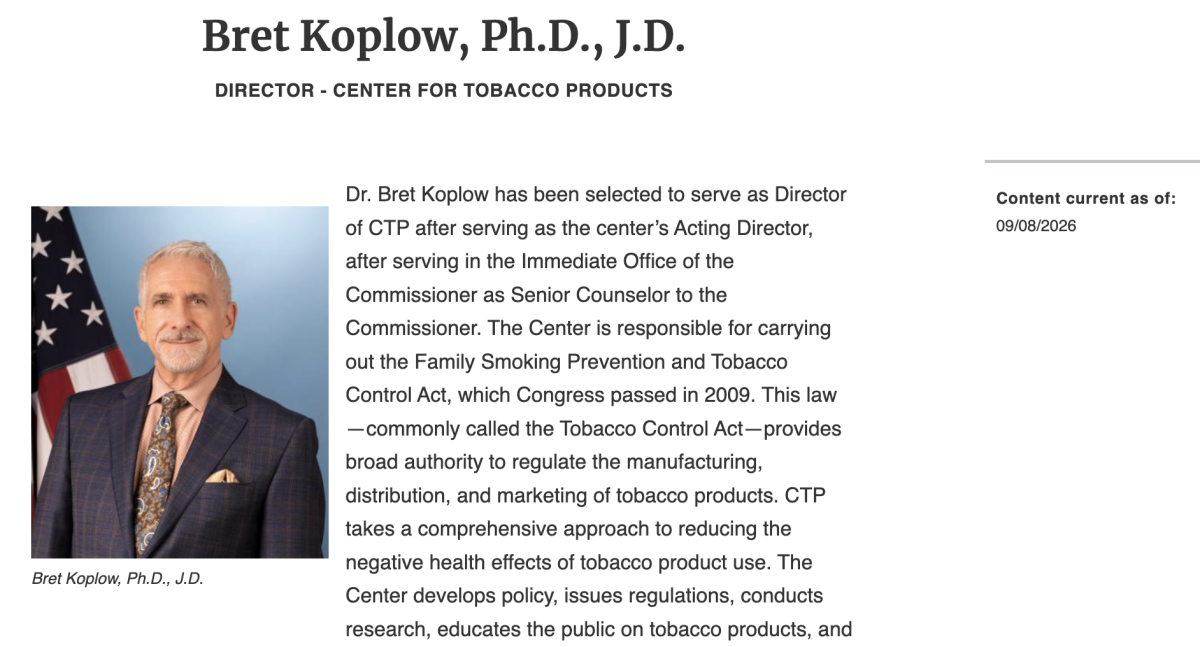
Bret Koplow Takes Permanent Charge of FDA Tobacco Center After Pushing Faster PMTA Reviews, as HHS Emphasizes Innovation and Access to Lower-Risk Alternatives
The U.S. Department of Health and Human Services has named Bret Koplow permanent director of the FDA’s Center for Tobacco Products, ending his period as acting chief. Koplow has spent years working on tobacco regulation, law and policy inside the FDA and, while serving as acting director, pushed for faster PMTA reviews and nicotine pouch review pilots. HHS also said CTP will prioritize innovation and access to less harmful alternatives for adult smokers while continuing efforts to protect youth.
Sep.09
Kelly White Bets on Female Consumers as Nicotine Pouch Competition Intensifies | 2Firsts Interview
Swedish nicotine pouch brand Kelly White is building its strategy around adult female consumers. Founder and CEO Sophia Wilsby told 2Firsts that women accounted for around 70% of the brand’s repeat customers on HAYPP in Sweden in 2025. The interview explores female consumer segmentation, product and design differentiation, gender stereotypes, packaging regulation, and how independent brands can compete with global players such as ZYN and VELO while considering funding, partnerships and future ownership options.
Business
Sep.24
As JUUL2 Wins FDA Authorization, Harm Reduction Journal Highlights the Role of Real-World Evidence in Nicotine Product Regulation
A commentary published in the international open-access, peer-reviewed Harm Reduction Journal argues that randomized controlled trials remain central to evaluating smoking cessation efficacy but cannot alone capture real-world uptake, complete switching, longer-term use and population impact of non-combustible nicotine products such as e-cigarettes, heated tobacco and nicotine pouches. The authors frame impact as “reach × efficacy” and call for real-world evidence to complement RCTs. Three days after publication, the FDA authorized three JUUL2 products and highlighted complete switching among adult smokers in explaining its decision, providing a timely regulatory backdrop to the debate.
Sep.08
2Firsts Hosts China Market Forum at InterTabac as Global Industry Attention to China’s Tobacco Sector Deepens
On September 16, 2Firsts hosted a China-focused industry forum during InterTabac in Dortmund, bringing together more than 30 participants from North America, Europe, India, South Korea and other markets. The session covered traditional tobacco, next-generation products, exports, technology, regulation and supply chains, while examining how China’s tobacco sector operates, where its transformation may be heading, and why its growing role matters increasingly to companies across the global tobacco and nicotine industry.
Sep.21
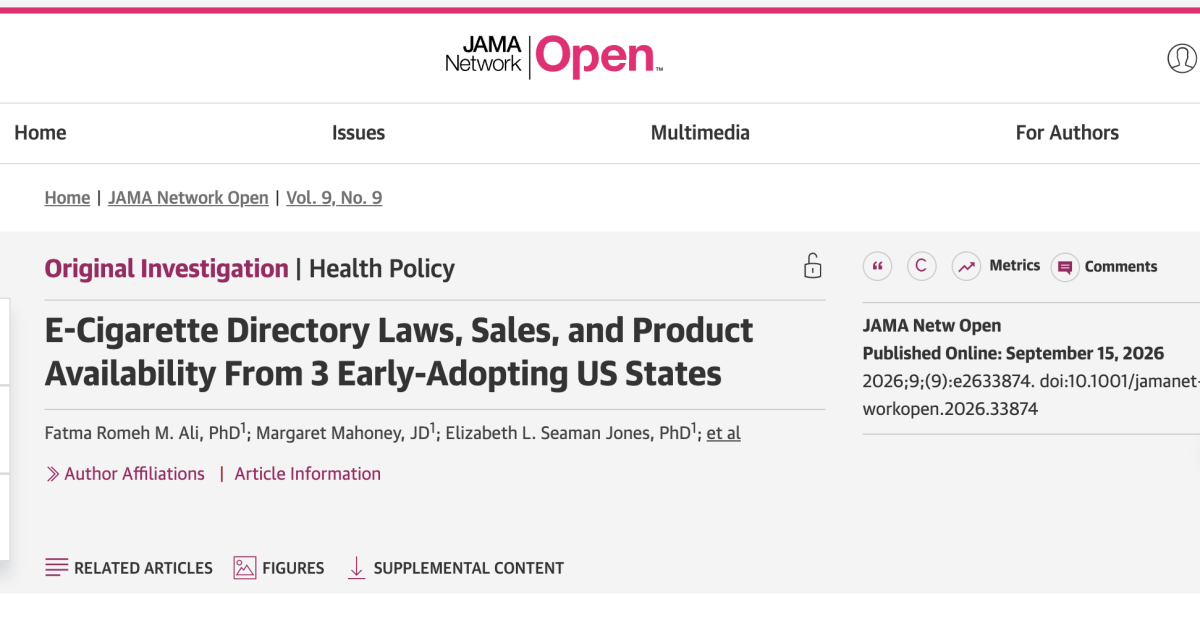
JAMA Study: U.S. Vape Directories Fail to Sustainably Curb Unlisted Sales as Product Shifts May Redistribute Brand Share 2Firsts Recommended
A study by CDC Foundation researchers found no sustained decline in e-cigarette sales across Alabama, Oklahoma and Louisiana, the first three U.S. states to implement e-cigarette directory laws. Louisiana initially saw a significant sales decline, followed by a rebound and a persistent reduction in product availability. Sales also shifted from nontobacco-flavored disposables toward prefilled cartridges, with Vuse Alto driving much of the increase in menthol cartridges. By April 2025, unlisted products still accounted for more than half of e-cigarette nicotine sales in all three states.
Sep.18
Retail Case Study | Wisconsin Vape Market One Year After New Regulations: Johnny Vapes Reports 80% Sales Decline as Consumers Shift Online and Across State Lines
According to WNCY on August 24, 2026, some independent vape retailers in Wisconsin say they have faced significant business pressure one year after new vape regulations took effect. Johnny Vapes, a retailer operating in northeast Wisconsin, said its store count fell from seven locations to four, sales declined by about 80%, and roughly 90% of its inventory was affected. Retailers said some consumers have shifted to online purchases or traveled to neighboring Michigan to buy vape products. The case highlights how local regulations can reshape retail operations, inventory management and consumer purchasing patterns.
Aug.28