Alarming Rise of Illegal Disposable E-Cigarette Use among Utah's Youth

Market by 2FIRSTS.ai
Jan.02.2024
Alarming Rise of Illegal Disposable E-Cigarette Use among Utah's Youth
Despite being banned by the federal government, disposable e-cigarettes remain the top choice for Utah children, according to a national survey.

According to a report by news.yahoo on December 30, a study has found that despite being federally banned nationwide in the United States, a certain product has still become a favorite choice among children in the state of Utah.


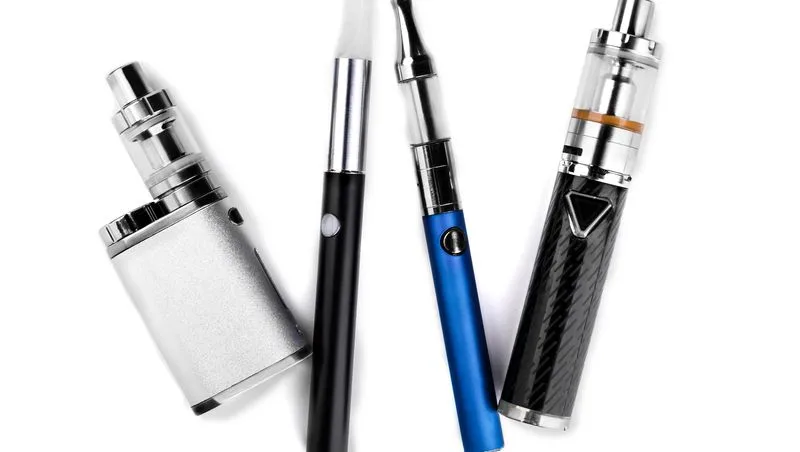
A nationwide survey report on tobacco use among adolescents reveals that disposable e-cigarettes remain the top choice among high school students. Currently, over 1.2 million adolescents are using e-cigarettes, with illicit Chinese brands Elf Bar and Esco Bar ranking first and second among teenagers.


Despite praise from the US FDA and the Centers for Disease Control and Prevention for the declining number of high school students using e-cigarettes, there is a gradual increase in e-cigarette use among middle school students. Concerns are growing over younger children using these highly addictive and dangerous products.


Despite a federal ban on flavored cigarettes in 2020, brands such as Elf Bar, Esco Bar, and numerous others are still available on store shelves in Utah. These products, manufactured in Shenzhen, China, have not complied with the regulations and standards set by the US FDA before being imported into the country.


In recent days, Braden Ainsworth, the head of the Utah Department of Health's Tobacco Prevention and Control Program, has announced that local health authorities will enhance enforcement efforts against these illicit disposable e-cigarettes.


We welcome news tips, article submissions, interview requests, or comments on this piece.

Please contact us at info@2firsts.com, or reach out to Alan Zhao, CEO of 2Firsts, on LinkedIn


Notice

1.  This article is intended solely for professional research purposes related to industry, technology, and policy. Any references to brands or products are made purely for objective description and do not constitute any form of endorsement, recommendation, or promotion by 2Firsts.

2.  The use of nicotine-containing products — including, but not limited to, cigarettes, e-cigarettes, nicotine pouchand heated tobacco products — carries significant health risks. Users are responsible for complying with all applicable laws and regulations in their respective jurisdictions.

3.  This article is not intended to serve as the basis for any investment decisions or financial advice. 2Firsts assumes no direct or indirect liability for any inaccuracies or errors in the content.

4.  Access to this article is strictly prohibited for individuals below the legal age in their jurisdiction.


Copyright


This article is either an original work created by 2Firsts or a reproduction from third-party sources with proper attribution. All copyrights and usage rights belong to 2Firsts or the original content provider. Unauthorized reproduction, distribution, or any other form of unauthorized use by any individual or organization is strictly prohibited. Violators will be held legally accountable.

For copyright-related inquiries, please contact: info@2firsts.com


AI Assistance Disclaimer


This article may have been enhanced using AI tools to improve translation and editorial efficiency. However, due to technical limitations, inaccuracies may occur. Readers are encouraged to refer to the cited sources for the most accurate information.

We welcome any corrections or feedback. Please contact us at: info@2firsts.com

Kumulus Vape2026 H1 Revenue Falls 8.3% but Profit Rises 24% as B2B Weakens and Consumer Channels Grow
French vaping company Kumulus Vape reported first-half 2026 revenue of €25.5 million, down 8.3% year over year, as its core B2B distribution business fell 11% to €21.6 million. B2C and store-network revenue rose 5.6% and 17.8%, respectively. Commercial margin increased to 26.3% from 21.7%, while net profit rose 24.1% to €0.8 million. The company attributed the profitability improvement to catalog optimization, logistics restructuring and the ramp-up of Labster, its in-house production unit for proprietary brands.
Market
Sep.17 by 2Firsts Perspectives
Australia’s One Nation Proposes 75% Tobacco Tax Cut, Says Lower Prices Could Hit Illicit Market
Australia’s One Nation party has proposed cutting tobacco excise by 75%, arguing that lower legal cigarette prices could narrow the gap with illicit tobacco and reduce demand for black-market products. The proposal comes as Australia continues expanding enforcement against illicit tobacco supply chains through border controls, retail inspections and organised-crime investigations. Supporters argue high taxes have contributed to illicit-market growth, while opponents warn that lower tobacco prices could undermine public-health goals. The proposal is a party policy position and has not been adopted by the Australian government.
Aug.18
UK-Listed Consumer Goods Group Supreme Sees Vape Duty as Potential Consolidation Opportunity, Holds FY27 Outlook
UK-listed consumer goods group Supreme plc says it continues to expect FY27 trading to meet market expectations as the Vaping Products Duty takes effect on October 1, while maintaining a comparatively positive view of the new tax and compliance regime. Supreme has said the framework could increase compliance complexity for smaller operators and contribute to market consolidation, while its manufacturing, compliance and distribution scale may allow it to gain share. Its 88Vape brand will retain its value positioning.
Sep.18
STIIIZY Redesign Fails to Escape PAX Labs Patent Import Ban as Section 337 Case Also Involves China ALD
U.S. Customs and Border Protection ruled that STIIIZY had not shown that the redesigned cannabis-vape products covered by its latest request fall outside an ITC limited exclusion order tied to PAX Labs patents. CBP accepted some of STIIIZY’s claim-construction and non-infringement arguments, but the company did not address two additional claims in the same patent. Earlier STIIIZY redesigned cartridges and certain associated components imported with them had received separate CBP clearance.
Sep.16
FDA Revises Import Alert 98-07 Rules, Bringing May Enforcement Priorities Into Unauthorized ENDS Detentions
The U.S. Food and Drug Administration has revised the rules under Import Alert 98-07 to incorporate its May 2026 enforcement-priority policy for certain electronic nicotine delivery systems marketed without premarket authorization. The alert continues to allow detention without physical examination, or DWPE, for ENDS lacking required marketing authorization, while directing field divisions to apply the May risk-based framework. When necessary, detention or refusal decisions must also undergo review by the FDA's Center for Tobacco Products. Products including PACHA and Vuse Pro have already emerged as industry examples of the May policy, although enforcement discretion does not constitute FDA marketing authorization.
News
Sep.28 by 2Firsts Perspectives
Australian Coalition Taskforce Calls for 80% Tobacco Tax Cut to Combat Illicit Market
According to SGST on August 26, 2026, Australia’s Coalition Illegal Tobacco Taskforce released a report recommending an up to 80% cut in tobacco excise to reduce the appeal of the illicit tobacco market. The report claimed organised crime groups now control about 80% of Australia’s tobacco market and argued that high excise rates have widened the price gap between legal and illegal products. The recommendation remains a policy proposal and has not been adopted by the Australian government, which said its focus remains on enforcement, compliance and additional resources.
Aug.27