BAT Launches High-Capacity Vuse Box Vape in South Korea

Nov.20.2024
BAT Launches High-Capacity Vuse Box Vape in South Korea
BAT South Korean subsidiary has launched the high-capacity product line "Vuse Box" under the "Vuse" brand. The device offers four flavors, a 6ml capacity, and up to 3,000 puffs, priced at $18. BAT stated that the new product aims to enhance user experience and expand its market share.

According to a report by N.News on November 20th, industry sources have revealed that the Korean subsidiary of British American Tobacco will be launching four models of the high-capacity disposable e-cigarette "Vuse Box" next week.


The new product includes four flavors: Cold Fresh, Purple Fresh, Pullet Fresh, and Green Spark, and will be available for purchase at convenience stores starting on the 24th.


According to reports, the "Vuse Box" product has a capacity of 6 milliliters and can be used up to 3000 times. It supports both regular and enhanced modes, with a suggested retail price of 25,000 Korean Won (18 US dollars).


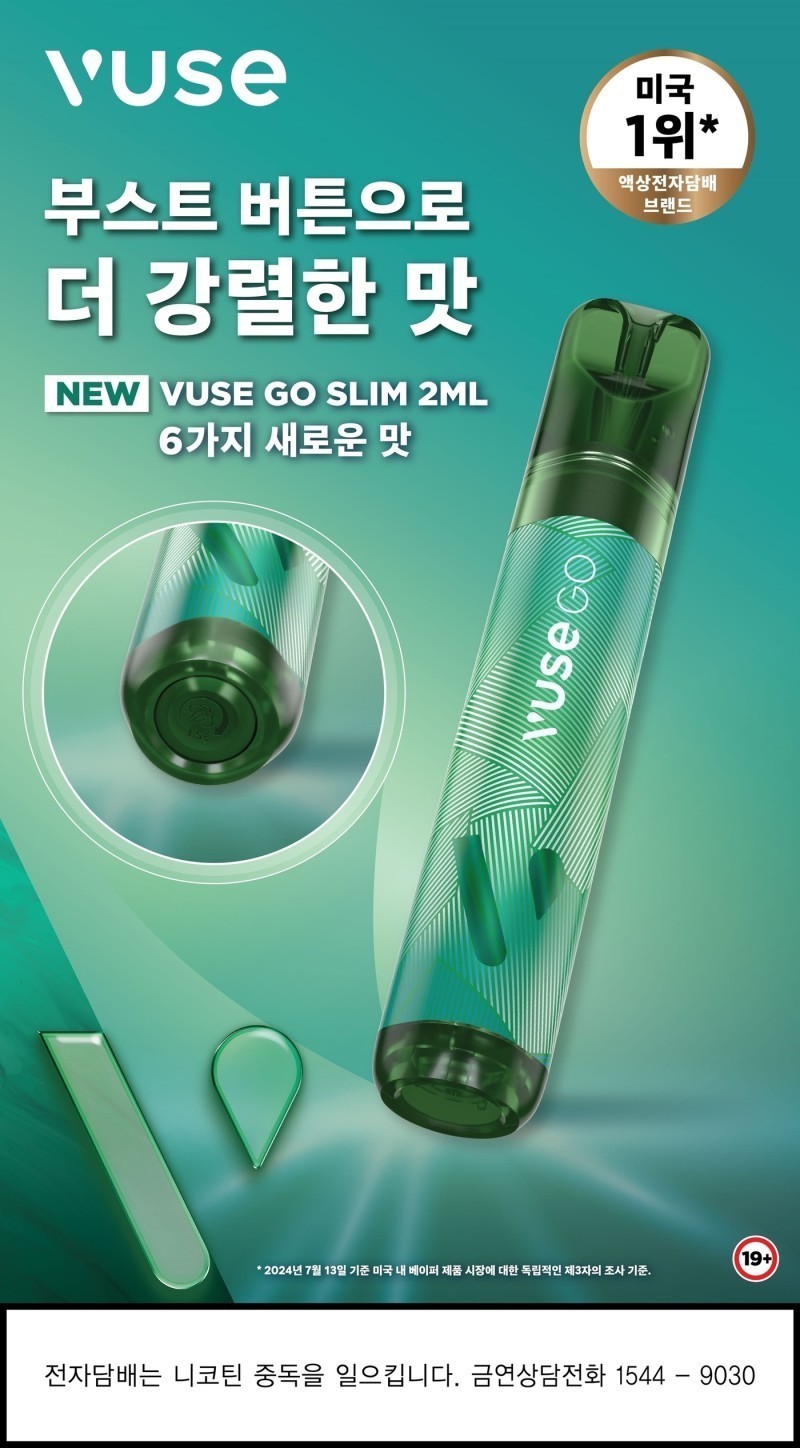
On the 19th, the company launched the slim version of the e-cigarette "Vuse Go Slim." The boost mode feature of Vuse Go Slim is also being introduced to the "Vuse Box.


According to reports, sales of the "Vuse Go 800" have more than doubled within a month of its release, a result of BAT's ongoing efforts to expand the range of markets for the "Vuse" brand.


Industry insiders said: "Compared to regular cigarettes, this product is more affordable, and  convenient, and the large capacity design enhances the user experience."


We welcome news tips, article submissions, interview requests, or comments on this piece.

Please contact us at info@2firsts.com, or reach out to Alan Zhao, CEO of 2Firsts, on LinkedIn


Notice

1.  This article is intended solely for professional research purposes related to industry, technology, and policy. Any references to brands or products are made purely for objective description and do not constitute any form of endorsement, recommendation, or promotion by 2Firsts.

2.  The use of nicotine-containing products — including, but not limited to, cigarettes, e-cigarettes, nicotine pouchand heated tobacco products — carries significant health risks. Users are responsible for complying with all applicable laws and regulations in their respective jurisdictions.

3.  This article is not intended to serve as the basis for any investment decisions or financial advice. 2Firsts assumes no direct or indirect liability for any inaccuracies or errors in the content.

4.  Access to this article is strictly prohibited for individuals below the legal age in their jurisdiction.


Copyright


This article is either an original work created by 2Firsts or a reproduction from third-party sources with proper attribution. All copyrights and usage rights belong to 2Firsts or the original content provider. Unauthorized reproduction, distribution, or any other form of unauthorized use by any individual or organization is strictly prohibited. Violators will be held legally accountable.

For copyright-related inquiries, please contact: info@2firsts.com


AI Assistance Disclaimer


This article may have been enhanced using AI tools to improve translation and editorial efficiency. However, due to technical limitations, inaccuracies may occur. Readers are encouraged to refer to the cited sources for the most accurate information.

We welcome any corrections or feedback. Please contact us at: info@2firsts.com

JAMA Issues First U.S. Clinical Guidance on Vaping for Smoking Cessation, Urging Complete Switch From Cigarettes
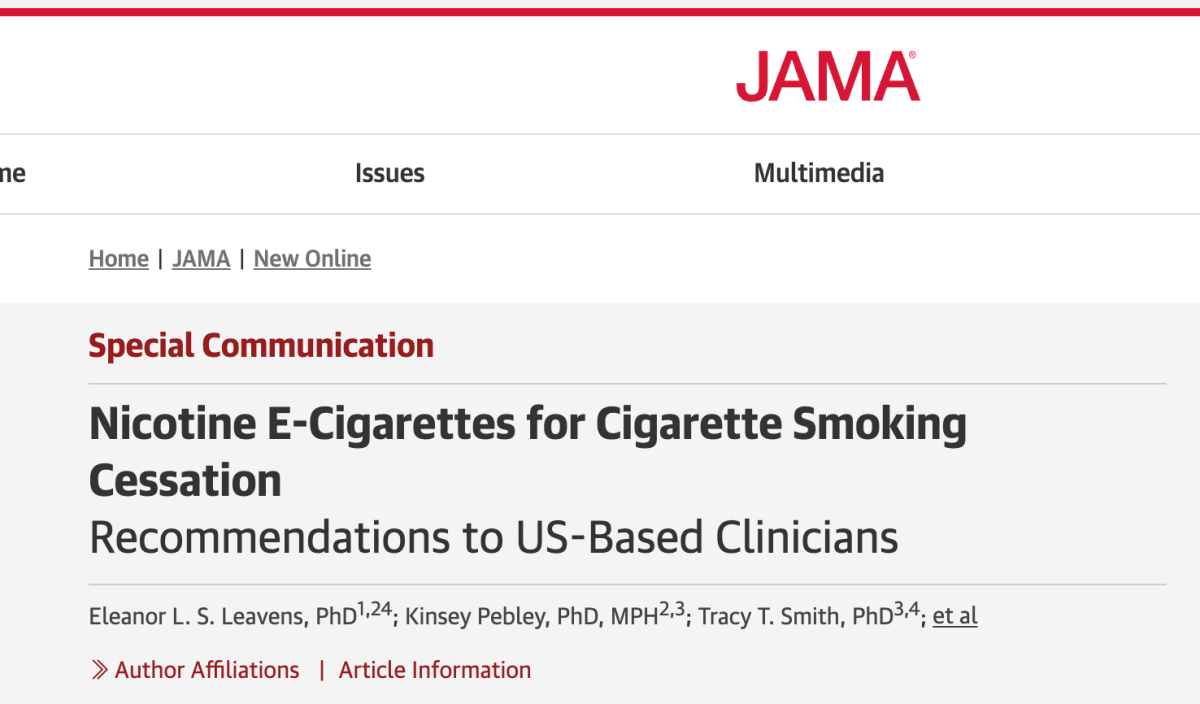
JAMA has published a Special Communication offering systematic recommendations for U.S.-based clinicians on the use of nicotine e-cigarettes in adult smoking cessation. Developed by the Harm Reduction Workgroup of the Society for Research on Nicotine and Tobacco’s Treatment Research Network, the paper recommends including e-cigarettes alongside FDA-approved cessation medications in risk-benefit discussions. It cites high-certainty evidence that nicotine e-cigarettes achieve higher quit rates than nicotine replacement therapy and evidence suggesting efficacy comparable to highly effective medications such as varenicline and cytisine. For adults who choose vaping to quit, the authors recommend FDA-authorized products, sufficient nicotine delivery and a rapid, complete transition away from cigarettes rather than prolonged dual use.
Aug.13
Product | FOGER Introduces Switch Pro 30K Nixodine Pod in U.S. Retail, Bringing 6-MN Related Formulation to High-Capacity Pod Platform
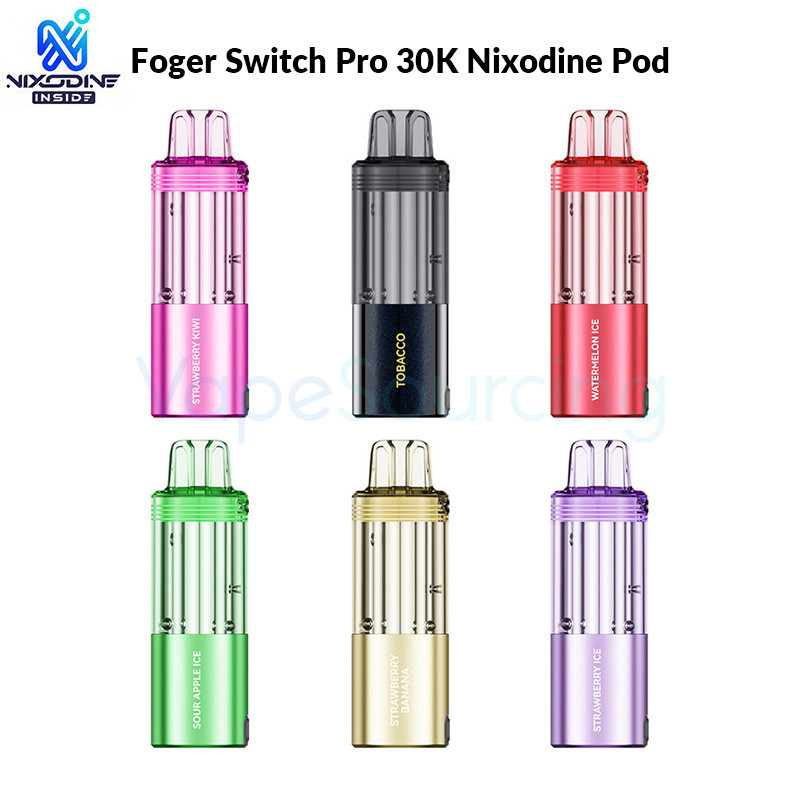
FOGER has introduced the Switch Pro 30K Nixodine Pod in U.S. retail channels, bringing a 6-methylnicotine (6-MN)-related formulation into its reusable Switch Pro 30K pod ecosystem. The product retains the existing reusable dock and magnetic replacement pod architecture, featuring a 19ml prefilled pod, dual-mesh heating and Normal/Boost modes. The Nixodine version is labeled nicotine-free in terms of conventional nicotine but uses a 5% Nixodine-related formulation. The product has appeared in U.S. retail and wholesale channels, with some listings indicating Kentucky-only availability.
Aug.28
China Tobacco Zhejiang files patent for pressure-triggered, on-demand oral nicotine release
China Tobacco Zhejiang Industrial Co., Ltd. has filed a patent application for an oral nicotine delivery product designed to let users actively adjust nicotine release. The product embeds two types of nicotine reservoirs with different wall thicknesses and positions inside a deformable matrix. Pressure applied with the tongue or lips can rupture the reservoirs and accelerate nicotine release. In simulated oral tests, several patent examples showed sharply higher peak nicotine release rates as applied force increased from 0 N to 1 N and 3 N. The filing explores a shift from preset release profiles toward user-triggered nicotine delivery.
Sep.01
Reynolds Seeks to Join Altria Lawsuit Challenging FDA PMTA Rule and Calculation of 180-Day Deadline
Three R.J. Reynolds companies are seeking to intervene in a lawsuit filed by Altria subsidiaries Helix Innovations and NJOY challenging the FDA's 2021 PMTA final rule. The companies dispute how the agency uses Acceptance and Filing reviews and completeness determinations to establish when the Tobacco Control Act's 180-day decision period begins. Reynolds has also linked prolonged PMTA reviews to competition from unauthorized vaping products. The FDA, meanwhile, has been accelerating reviews and reducing its backlog.
Sep.14
Australia Tobacco Tax Debate Spreads Within Labor as NSW Premier Minns Reaffirms Support for a Cut
Australia’s tobacco excise debate is increasingly exposing differences within the governing Labor Party. New South Wales Labor Premier Chris Minns reaffirmed on September 8 that he supports reducing tobacco excise, arguing that current tax settings are pushing consumers toward cheaper black-market cigarettes. Federal Health Minister Mark Butler continues to oppose an excise cut, while Treasurer Jim Chalmers and Assistant Treasurer Daniel Mulino have recently stopped short of ruling out future changes. The divergence follows the opposition Coalition’s proposal to cut tobacco excise by 80%.
Sep.08
Malaysia Withdraws Appeal Against Liquid Nicotine Ruling as Vape Regulation Framework Enters New Phase
Malaysia’s government has withdrawn its appeal against a High Court ruling concerning the regulatory status of liquid nicotine used in vape and e-cigarette products, according to reports by New Straits Times, Free Malaysia Today and CodeBlue on August 18, 2026. The Kuala Lumpur High Court ruled on May 15 that the government’s decision to remove liquid nicotine from the scheduled poisons list under the Poisons Act 1952 was irrational and made without proper consultation with the Poisons Board. The withdrawal ends the government’s appeal process, while the future regulatory framework for nicotine vape products remains under discussion.
Aug.21