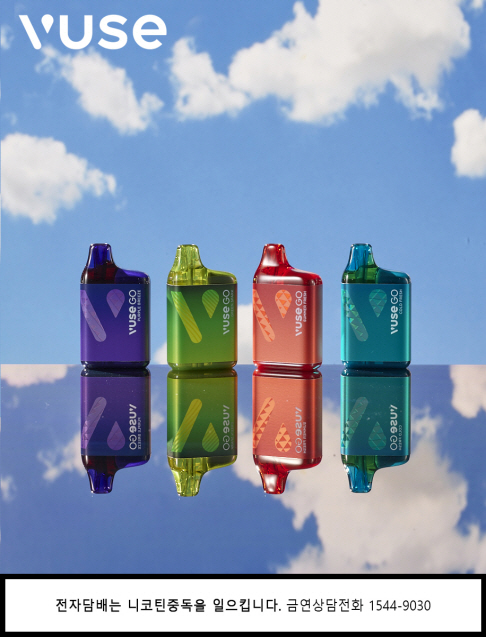
BAT Vuse Go 800 Dominates Korean E-cigarette Market

BAT by 2FIRSTS.ai
Jan.19.2024
BAT Vuse Go 800 Dominates Korean E-cigarette Market
BAT's e-cigarette "Vuse Go 800" is rapidly dominating the market in South Korea, expanding its sales network to 30,000 stores.

According to a report from the Korean Culture Daily on January 18th, the e-liquide-cigarette "Vuse Go 800" launched by British American Tobacco (BAT) is rapidly gaining market share in the e-cigarette industry in South Korea. Its sales network is continuously expanding and has now reached Seoul, as well as over 30,000 convenience stores and e-cigarette shops.


This closed-system e-cigarette was first launched in South Korea in July of last year and further expanded its product line in September by introducing four new flavors, including "Purple Breeze," "Green Spark," "Ice Fresh," and "Summer Fresh," specifically for the Seoul region.


British American Tobacco has announced its intention to establish a leading e-cigarette brand in South Korea, with the "Vuse Go 800" as its flagship product. The company emphasized its commitment to strengthening its non-combustible product portfolio and offering more diverse options to the mature smoking population in South Korea.


A spokesperson for a British-American tobacco company stated, "Despite its limited release in certain regions, the sales of 'Vuse Go 800' have exceeded our initial expectations." He further disclosed that the company is rapidly responding to meet consumer demands and has plans to diversify its product line.


We welcome news tips, article submissions, interview requests, or comments on this piece.

Please contact us at info@2firsts.com, or reach out to Alan Zhao, CEO of 2Firsts, on LinkedIn


Notice

1.  This article is intended solely for professional research purposes related to industry, technology, and policy. Any references to brands or products are made purely for objective description and do not constitute any form of endorsement, recommendation, or promotion by 2Firsts.

2.  The use of nicotine-containing products — including, but not limited to, cigarettes, e-cigarettes, nicotine pouchand heated tobacco products — carries significant health risks. Users are responsible for complying with all applicable laws and regulations in their respective jurisdictions.

3.  This article is not intended to serve as the basis for any investment decisions or financial advice. 2Firsts assumes no direct or indirect liability for any inaccuracies or errors in the content.

4.  Access to this article is strictly prohibited for individuals below the legal age in their jurisdiction.


Copyright


This article is either an original work created by 2Firsts or a reproduction from third-party sources with proper attribution. All copyrights and usage rights belong to 2Firsts or the original content provider. Unauthorized reproduction, distribution, or any other form of unauthorized use by any individual or organization is strictly prohibited. Violators will be held legally accountable.

For copyright-related inquiries, please contact: info@2firsts.com


AI Assistance Disclaimer


This article may have been enhanced using AI tools to improve translation and editorial efficiency. However, due to technical limitations, inaccuracies may occur. Readers are encouraged to refer to the cited sources for the most accurate information.

We welcome any corrections or feedback. Please contact us at: info@2firsts.com

2FIRSTS EXCLUSIVE|China Breaks Up $6.8 Million Illegal Hookah Tobacco Operation as Market Expands
Chinese authorities have dismantled an illegal hookah tobacco operation worth more than 46 million yuan ($6.8 million), detaining five foreign suspects and seizing over 500,000 boxes of tobacco paste. The case comes as hookah expands across China’s nightlife sector and attracts overseas operators, including former vaping entrepreneurs. It also raises a central regulatory question: whether waterpipe tobacco will follow China’s private-sector e-cigarette licensing model or be reserved for the state tobacco system, as with nicotine pouches, in the years ahead.
Jul.31
PMI Expands U.S. ZYN Portfolio With New 1.5 mg and 8 mg Strengths, Moves Toward a Unified 20-Pouch-Per-Can Format
Philip Morris International is expanding its U.S. ZYN nicotine pouch portfolio with new 1.5 mg and 8 mg strengths and plans to move its core 3 mg and 6 mg dry-pouch products from 15 to 20 pouches per can in the fourth quarter of 2026. ZYN ULTRA is also commercially available, with FDA authorization covering 10 products at 9 mg and one 11 mg Smooth product. PMI U.S. lists the new 1.5 mg and 8 mg strengths as commercially available, but as of September 10 they do not appear on the FDA’s public authorization list. Public materials do not identify which PMTA submissions cover the two new strengths or their current review status.
Sep.11
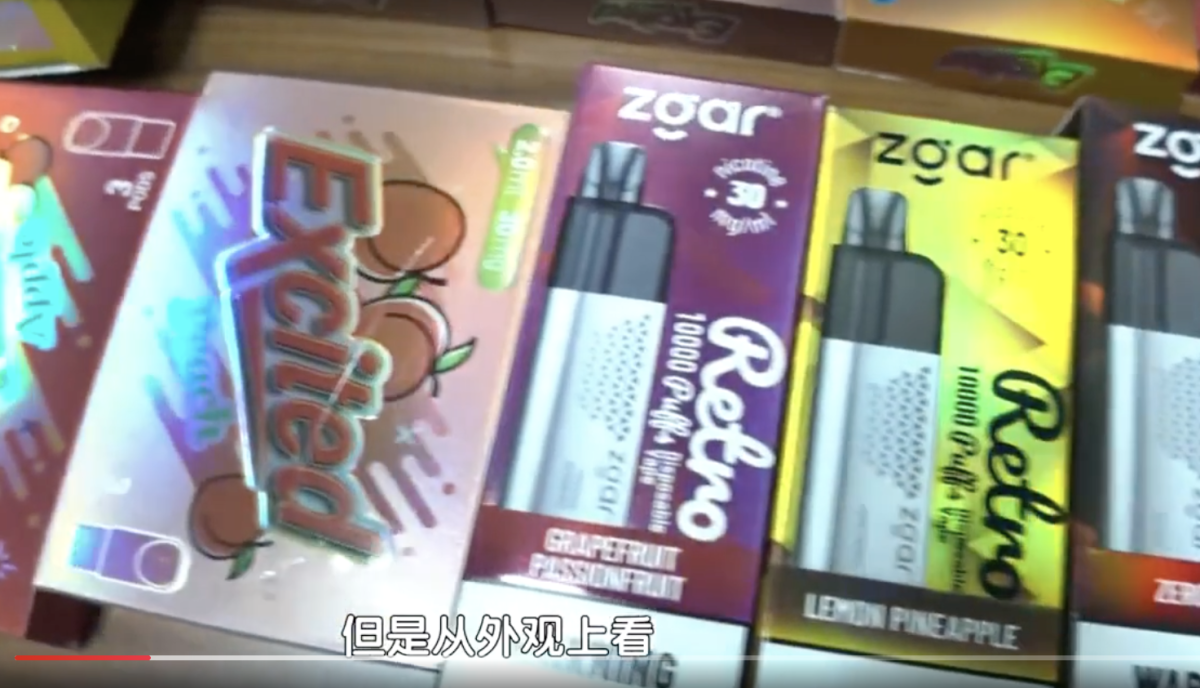
China Discloses First Criminal Case Over Counterfeit Vapes Disguised as “Medical Nebulizers” and “Zero-Nicotine” Products
Chinese authorities have disclosed the country’s first reported criminal case involving counterfeit vapes marketed as “medical nebulizers” and “zero-nicotine” products. Authorities determined that the products involved were counterfeit vapes and pursued criminal charges for producing and selling counterfeit goods. According to the report, the case resulted in the seizure of 347,000 counterfeit vape pods and 53,700 vape devices, with physical goods valued at 22.13 million yuan.
Aug.04
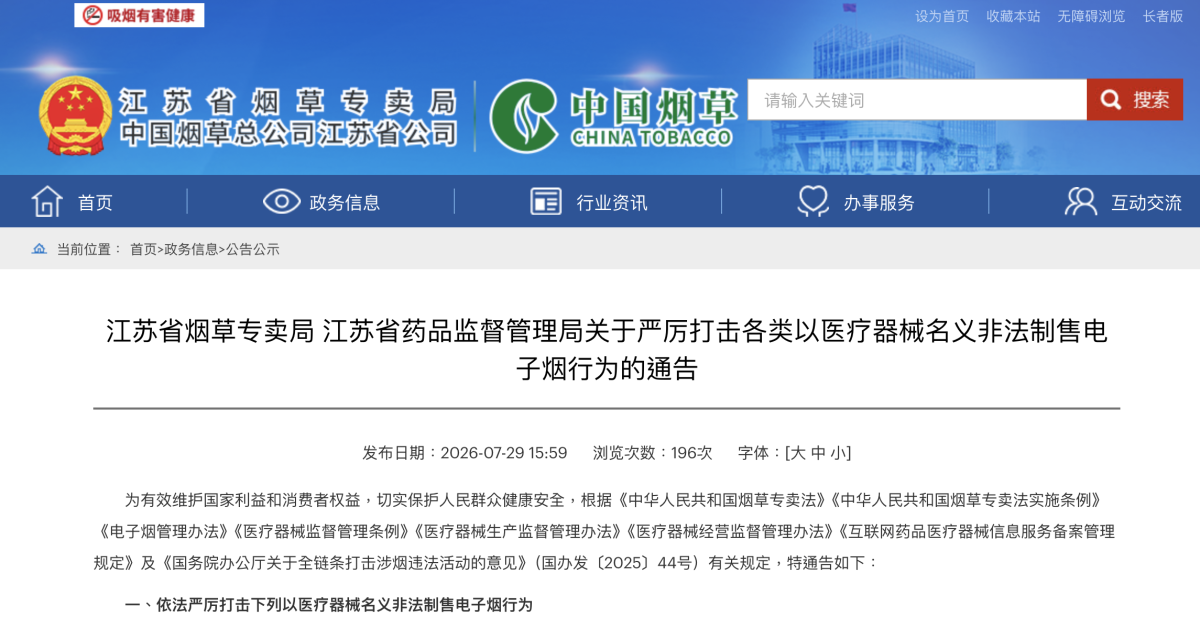
China’s Jiangsu Tobacco Monopoly Bureau and Drug Regulator Target Illegal Vape Sales Disguised as Medical Devices, Define Six Violations
China’s Jiangsu Tobacco Monopoly Bureau and Jiangsu Provincial Medical Products Administration have issued a joint notice targeting illegal production and sales of vape products disguised as medical devices. The notice identifies six categories of violations, including obtaining medical licenses through false materials, misusing medical device credentials, expanding production beyond approved scopes, and using medical device-related online platforms to promote or sell vape products. The action is based on China’s tobacco and medical device regulations and aims to strengthen vape oversight and consumer protection.
Aug.04
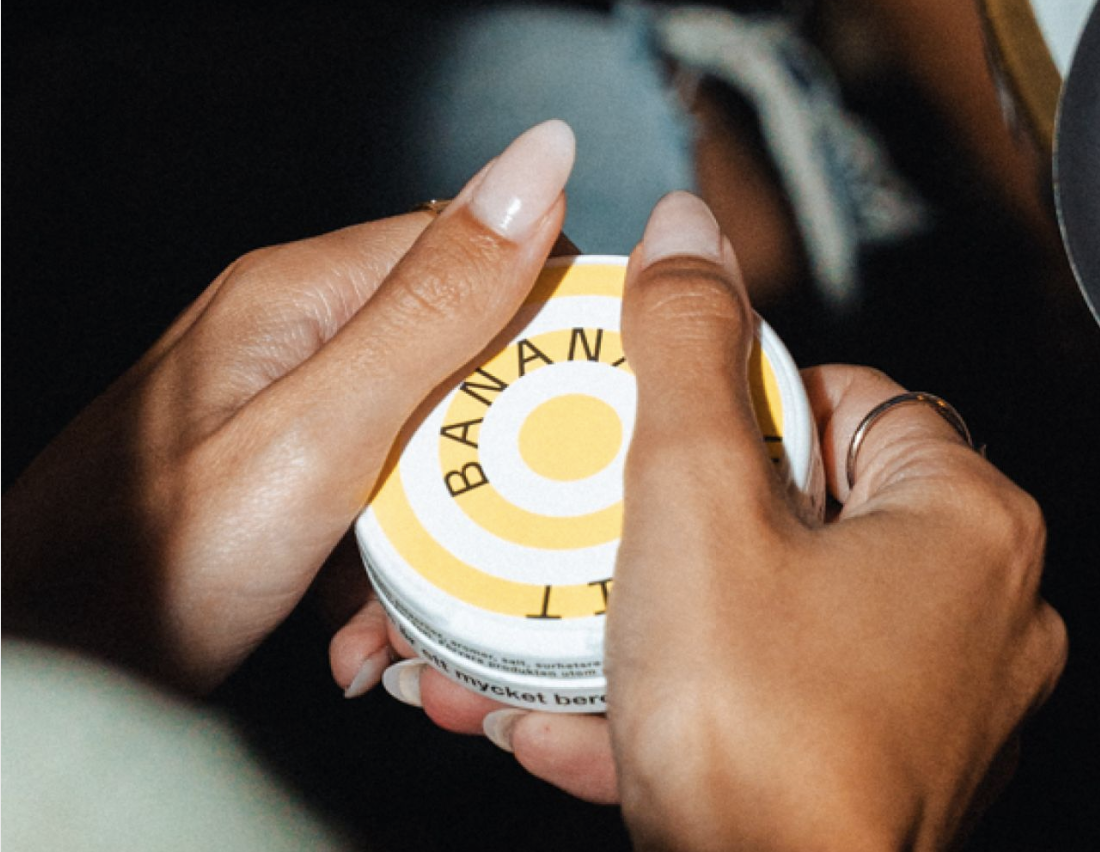
Imperial Brands Acquires Helwit Owner Yoik Group for SEK 515 Million, More Than Doubling Swedish Nicotine Pouch Share
Imperial Brands has agreed to acquire 100% of Swedish modern oral nicotine company Yoik Group AB for an initial SEK515 million, equivalent to about US$53.9 million, plus a deferred payment linked to performance over the next two years. Yoik owns nicotine pouch brand Helwit, which held about 3.4% of Sweden’s modern oral nicotine market over the past 12 months. Imperial says the acquisition will more than double its existing share of the Swedish market. Helwit is also sold elsewhere in the Nordics, through European online channels and in selected UK retail outlets.
Sep.08
Cochrane 2026 Update Adds Nine Trials, Keeps High-Certainty Finding That Nicotine E-Cigarettes Improve Quit Rates Over NRT
Cochrane’s 2026 update of its living review on electronic cigarettes for smoking cessation included 80 randomized controlled trials involving 29,861 adult smokers, with nine trials added in this update. The review retained its high-certainty conclusion that nicotine e-cigarettes increase smoking cessation rates compared with nicotine replacement therapy. In absolute terms, about 10 in 100 people using nicotine e-cigarettes may quit smoking for at least six months, compared with about 6 in 100 using NRT. The review found no clear difference in serious adverse event rates between the two groups, while longer-term safety and the relative effectiveness of newer device types remain less certain.
Sep.07