CICC Urges Quebec Government for Food-Grade License for E-Cigarettes

Aug.27.2024
CICC Urges Quebec Government for Food-Grade License for E-Cigarettes
CICC urges Quebec government to require all e-cigarettes to have a food-grade alcohol license to combat flavor sales evasion.

According to a report by CTV News on August 27, the Convenience Industry Council of Canada (CICC) has publicly urged the Quebec government to require that all e-cigarette products sold have a food-grade alcohol license.


CICC hopes to curb certain e-cigarette stores that are currently circumventing regulations on the sale of e-cigarette flavors through this initiative.


Since October 31, the province of Quebec has banned the sale of flavored e-cigarette products.


The association's vice president, Michel Gadbois, stated that


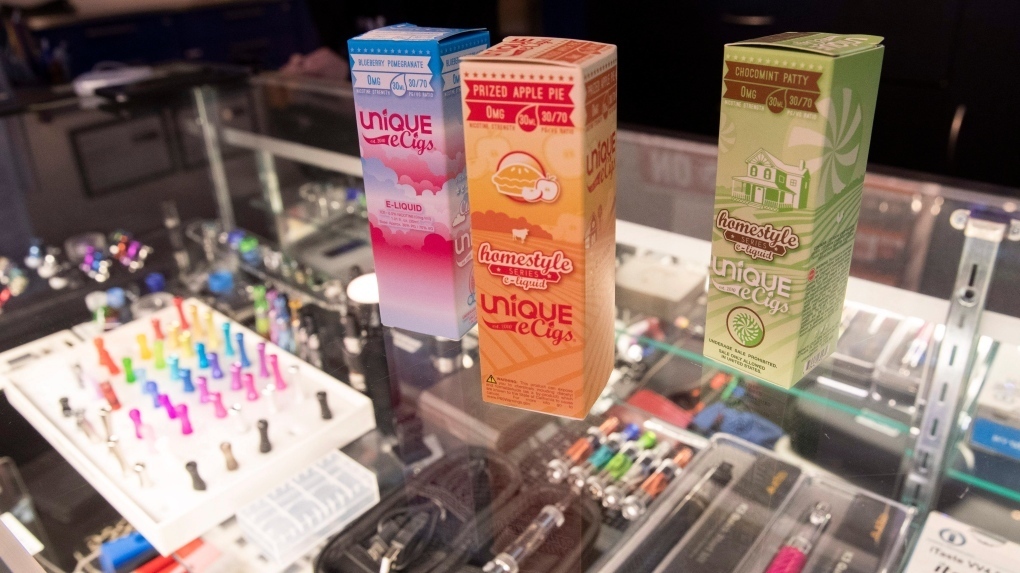
There are approximately 400 e-cigarette shops in Quebec that circumvent regulations by masquerading as convenience stores and selling flavored products in the form of food flavorings.


According to Gabuwa, at least 80% of e-cigarette stores are not compliant with regulations, while the non-compliance rate for traditional convenience stores is less than 5%. Due to these evasion behaviors, "depending on the region, we have lost market share in the e-cigarette product market by 2% to 50%.


By requiring all businesses to hold a liquor sales license, CICC hopes to compel these non-compliant enterprises to change their business models and comply with the law.


In order to obtain a liquor sales license for a grocery store, at least 51% of the display items must be food, and the minimum value must be $5,500. Additionally, the store must undergo a preliminary investigation and inspection by the Alcohol, Gaming, and Racing Commission (RACJ).


The CICC believes that relevant regulations can be quickly implemented through the issuance of alcohol sales licenses, without the need for the government to incur additional costs. This can be achieved through simple regulatory revisions.


Gabwa said that he submitted this proposal to the government six months ago, but to date there have been no changes.


We told them: we will publicly pressure them because it appears they are not eager to take action.


The CICC stated that the government was aware of the existence of violators but chose not to take action.


There were no charges filed, no follow-up, so there was also no punishment.


The media posed questions to the Department of Health, but did not receive an immediate response.


The association had previously expressed support when e-cigarette flavors were banned. They had requested the government to at least retain two flavors, mint and fruit flavors. However, Gabwa insisted that...


Obviously, flavors such as pineapple, cotton candy, and bubblegum should not be included, as they are all designed to attract younger people.


We welcome news tips, article submissions, interview requests, or comments on this piece.

Please contact us at info@2firsts.com, or reach out to Alan Zhao, CEO of 2Firsts, on LinkedIn


Notice

1.  This article is intended solely for professional research purposes related to industry, technology, and policy. Any references to brands or products are made purely for objective description and do not constitute any form of endorsement, recommendation, or promotion by 2Firsts.

2.  The use of nicotine-containing products — including, but not limited to, cigarettes, e-cigarettes, nicotine pouchand heated tobacco products — carries significant health risks. Users are responsible for complying with all applicable laws and regulations in their respective jurisdictions.

3.  This article is not intended to serve as the basis for any investment decisions or financial advice. 2Firsts assumes no direct or indirect liability for any inaccuracies or errors in the content.

4.  Access to this article is strictly prohibited for individuals below the legal age in their jurisdiction.


Copyright


This article is either an original work created by 2Firsts or a reproduction from third-party sources with proper attribution. All copyrights and usage rights belong to 2Firsts or the original content provider. Unauthorized reproduction, distribution, or any other form of unauthorized use by any individual or organization is strictly prohibited. Violators will be held legally accountable.

For copyright-related inquiries, please contact: info@2firsts.com


AI Assistance Disclaimer


This article may have been enhanced using AI tools to improve translation and editorial efficiency. However, due to technical limitations, inaccuracies may occur. Readers are encouraged to refer to the cited sources for the most accurate information.

We welcome any corrections or feedback. Please contact us at: info@2firsts.com

Altria Smokeable Profit Rises 2.4% as Marlboro Share Falls and U.S. Discounts Gain
Altria’s second-quarter results show a U.S. nicotine market splitting across price, product and regulation. Smokeable profit rose 2.4% as Marlboro pricing offset lower volumes, while discount brand Basic gained share among value-conscious smokers. In oral nicotine, on! PLUS expanded distribution but faced intensifying competition from ZYN and Velo. NJOY remained off the market as patent and regulatory hurdles delayed its return. The broader lesson: U.S. growth increasingly depends on price-tier strategy, retail execution, authorisation and enforcement readiness across the industry.
Special Report
Jul.31
UK PM Andy Burnham Shifts Business Rates Policy, Supporting Hospitality While Raising Pressure on Vape Shops
UK Prime Minister Andy Burnham’s government is adjusting business rates policy to support hospitality businesses while some other sectors, including vape retailers, face higher operating cost pressures. According to Streamline Feed, AJ Bell and other reports, the policy shift reflects a redistribution of business rate burdens as the government seeks to support sectors facing economic pressure. For UK vape shops, the change comes amid a broader regulatory environment shaped by the disposable vape ban, the upcoming Vaping Products Duty and increased compliance requirements.
News
Jul.24
ATF Cancels Webloc Contract, Raising Questions Over Commercial Location Data in Enforcement
The U.S. Bureau of Alcohol, Tobacco, Firearms and Explosives (ATF) has stopped using Webloc, a commercial phone-tracking tool, after lawmakers, a prosecutor and a judge raised legal and privacy concerns over warrantless use of ad-tech location data, a development that may affect data-use boundaries in U.S. enforcement against illicit tobacco, nicotine products and cross-border distribution networks.
Jun.29
Nearly Half of Seoul Vape Vending Machines Bypassed by Fake IDs, Raising Youth Access Concerns
Seoul city authorities inspected 339 tobacco vending machines at e-cigarette retailers and found that 168, or 49.5%, allowed purchases using fake IDs, showing that unmanned retail terminals and adult-verification systems remain a major enforcement gap after e-cigarettes were brought under tobacco regulation.
Market
Jul.03 by 2Firsts Perspectives
China’s Jinhua Tobacco Launches CNY 2.7 Million Procurement for E-Cigarette Violation Lead Monitoring Services
Jinhua Tobacco, a municipal tobacco company in China’s Zhejiang province, has launched a public tender for e-cigarette-related violation lead monitoring and consulting services. The project is valued at CNY 2.7 million and covers data resource integration and analytical consulting services for 36 months from contract signing. The procurement reflects the use of external data and analysis services to support local tobacco companies’ market oversight activities related to e-cigarettes.
Aug.07
South Korean Lawmaker Jeong Jin-wook Pushes Synthetic Nicotine Vape Probe, Highlighting Supply Chain and Tax Concerns
South Korean lawmaker Jeong Jin-wook has again called for stronger government action against liquid synthetic nicotine vape manufacturers and sellers, alleging that some businesses may have avoided regulation through product labeling changes and corporate restructuring. According to Newsworks, JNILBO and other Korean reports, Jeong has held his third press conference on the issue, calling for a government-wide investigation. The dispute involves whether synthetic nicotine products should fall under tobacco regulations, tax implications and supply-chain transparency. South Korean government agencies have previously said some estimates of potential tax losses cannot be verified due to limited sales data.
Jul.27