Cracking Down on Counterfeit Tobacco Barcodes in Russia

Regulations by 2FIRSTS.ai
Mar.19.2024
Cracking Down on Counterfeit Tobacco Barcodes in Russia
Russian lawmaker proposes criminal liability for tobacco products without labels, as part of efforts to combat illegal trade.

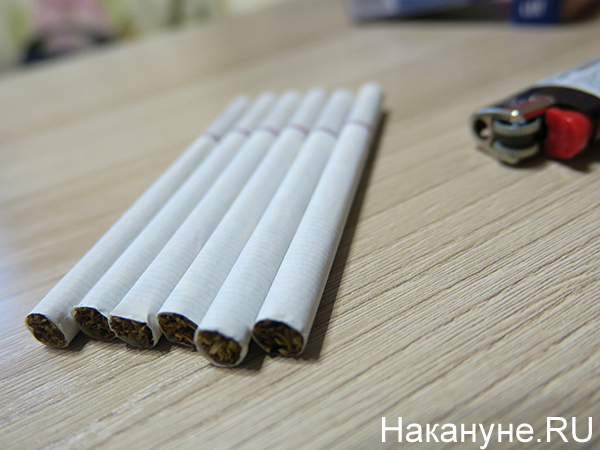
According to the Russian media outlet nakanune.ru, Alexander Spiridonov, the Deputy Director of the State Duma's Committee on Industry, stated that criminal liability must be established for the production and distribution of tobacco products without labels. The bill has been submitted to the parliament, and if passed, all tobacco products will be required to bear digital bar code labels.


Barcodes will replace the current consumption tax labels used to mark tobacco products. However, currently counterfeit tobacco barcodes do not have to take responsibility, so it is important to eliminate this legal loophole as soon as possible.


In December 2023, Biysultan Hamzayev, a member of parliament from Dagestan, proposed implementing a lifetime ban on smoking starting from adolescence.


We welcome news tips, article submissions, interview requests, or comments on this piece.

Please contact us at info@2firsts.com, or reach out to Alan Zhao, CEO of 2Firsts, on LinkedIn


Notice

1.  This article is intended solely for professional research purposes related to industry, technology, and policy. Any references to brands or products are made purely for objective description and do not constitute any form of endorsement, recommendation, or promotion by 2Firsts.

2.  The use of nicotine-containing products — including, but not limited to, cigarettes, e-cigarettes, nicotine pouchand heated tobacco products — carries significant health risks. Users are responsible for complying with all applicable laws and regulations in their respective jurisdictions.

3.  This article is not intended to serve as the basis for any investment decisions or financial advice. 2Firsts assumes no direct or indirect liability for any inaccuracies or errors in the content.

4.  Access to this article is strictly prohibited for individuals below the legal age in their jurisdiction.


Copyright


This article is either an original work created by 2Firsts or a reproduction from third-party sources with proper attribution. All copyrights and usage rights belong to 2Firsts or the original content provider. Unauthorized reproduction, distribution, or any other form of unauthorized use by any individual or organization is strictly prohibited. Violators will be held legally accountable.

For copyright-related inquiries, please contact: info@2firsts.com


AI Assistance Disclaimer


This article may have been enhanced using AI tools to improve translation and editorial efficiency. However, due to technical limitations, inaccuracies may occur. Readers are encouraged to refer to the cited sources for the most accurate information.

We welcome any corrections or feedback. Please contact us at: info@2firsts.com

Iowa House says governor’s tobacco and vape tax hikes are in a “holding pattern”
Radio Iowa reported that House Speaker Pat Grassley said House Republicans are wrestling with Gov. Kim Reynolds’ proposal to raise Iowa’s tax on tobacco products and impose a new 15% sales tax on vaping products. Grassley said the idea is in a “holding pattern,” noting it does not align neatly with recent Republican moves to cut income taxes, and that House Republicans already removed the proposed tax increase from the governor’s MAHA bill.
Feb.27 by 2FIRSTS.ai
South Korea to regulate synthetic-nicotine e-liquids as tobacco from April 24
South Korea’s Health Ministry says amendments to the Tobacco Business Act will take effect on April 24, bringing synthetic-nicotine e-liquid vapes under the legal definition of tobacco. The shift extends cigarette-style rules to these products, including mandatory graphic warnings, sharply limited advertising channels, stricter vending-machine placement requirements, and a ban on use in smoke-free areas, with enforcement checks slated from late April.
Feb.03 by 2FIRSTS.ai
Oklahoma DOC to allow inmates to buy nicotine vapes and pouches in 2026
Oklahoma’s Department of Corrections says it will begin allowing inmates to buy single-use nicotine vapes and nicotine pouches through prison canteens in 2026, framing the move as a strategy to reduce contraband-driven debts and prison violence. Officials say inmates will be barred from using personal nicotine products, the devices will be disposable and non-cartridge-based, and the program will be self-funded through inmate purchases rather than taxpayer money.
Feb.05 by 2FIRSTS.ai
Australia’s NSW Finds Lower Vaping Rates Among Teenagers Aged 14 to 17
A new report from Cancer Council’s Generation Vape research project shows that fewer teenagers in New South Wales are trying vaping after the state government introduced tougher vaping goods laws. Among surveyed NSW teenagers aged 14 to 17, the proportion who had tried vaping fell from 29.6% in April 2024 to 20.1% in October 2025.
Mar.17 by 2FIRSTS.ai
The Volume Illusion: Measuring the Future of Nicotine with the Tools of the Past
As next-generation nicotine products become economically central rather than marginal, traditional volume-based metrics are increasingly unable to explain consumption, risk, and value. Units designed for a cigarette-based economy struggle to describe systems defined by delivery speed, pharmacokinetics, and adaptive user behavior. Drawing on financial reporting, regulation, and nicotine science, a fundamental question: can the future of nicotine still be measured using the tools of its past?
Feb.09 by Alan Zhao | 2Firsts Perspectives
California and New Jersey advance bills to curb vape-waste risks tied to facility fires
US state lawmakers and recycling groups are pursuing 2026 measures to address safety issues linked to vape waste through legislation, take-back programs and educational outreach. California’s State Assembly passed a bill to ban disposable vape pens, while New Jersey reintroduced an extended producer responsibility bill for e-cigarettes.
Feb.05 by 2FIRSTS.ai