Cracking Down on e-Cigarette Smuggling in Thailand: Tightening Penalties

Mar.19.2025
Cracking Down on e-Cigarette Smuggling in Thailand: Tightening Penalties
Thai Prime Minister vows to crackdown on e-cigarette smuggling, increase arrests, and enforce strict penalties for violators.

Key Points:


1. The Prime Minister of Thailand has stated that efforts to crackdown on e-cigarette smuggling will continue, with an expansion of the scope of arrests and harsh penalties for illegal shipping companies, in order to ensure strict enforcement of the law.


2. The Prime Minister emphasized the need for collaboration among various departments including the security forces, military, and police to prevent the flow of illegal products into Thailand.


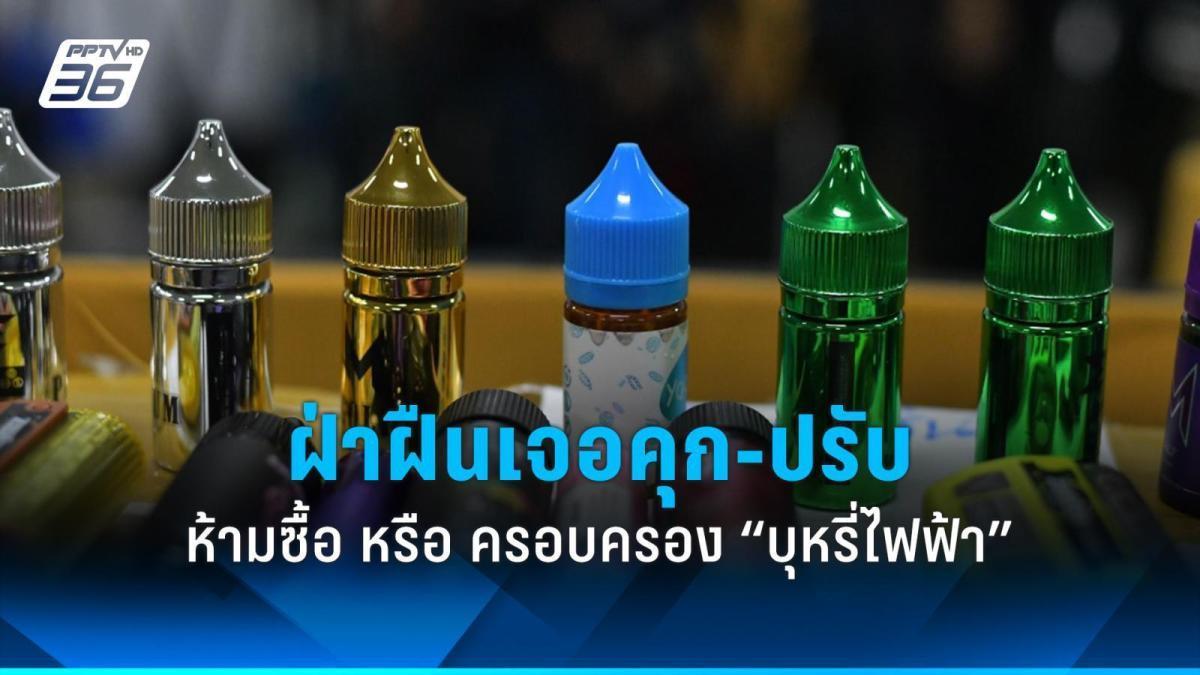
3. The Special Investigation Bureau has reiterated laws regarding e-cigarettes, including strict penalties for importing, selling, purchasing, and possessing e-cigarettes, with the maximum penalty being 10 years imprisonment and a fine of up to five times the value of the product.


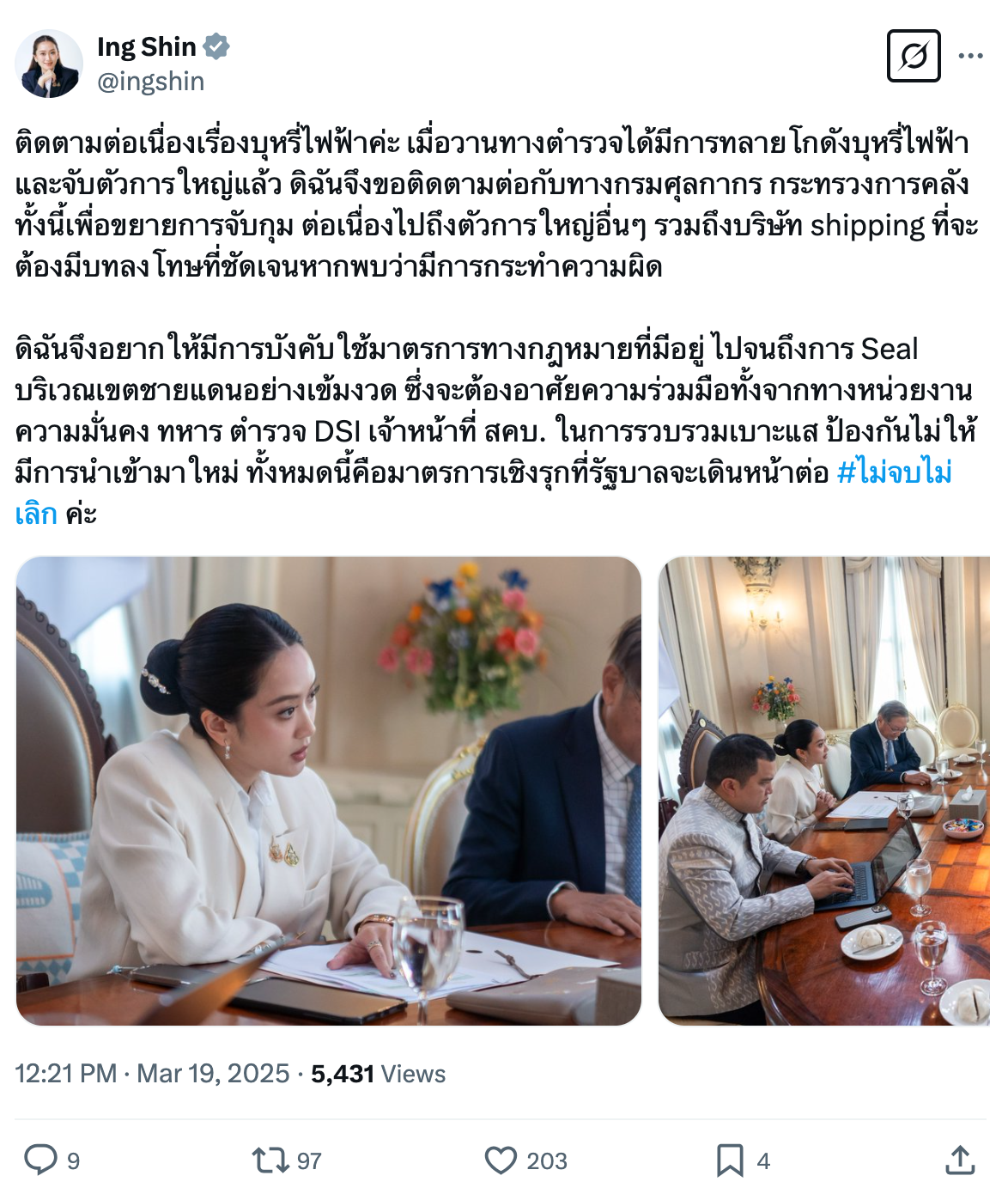
According to a report from PPTVHD36 on March 19th, Thai Prime Minister Paetongtarn Shinawatra posted on her social media platform X that she will continue to closely monitor the issue of e-cigarettes.


"I will continue to monitor the issue of e-cigarettes. Yesterday, the police raided an e-cigarette warehouse and arrested the main suspect. Therefore, I will continue to follow up with the Ministry of Finance's Customs Department to expand the scope of arrests, further crack down on other main suspects, as well as shipping companies involved in illegal activities, which must be clearly sanctioned by law if found to be breaking the law."


"I hope to strictly enforce existing legal measures, including strict control of border areas, which requires cooperation from the departments of homeland security, military, police, special investigation bureau (DSI), and department of business development, among others, to gather clues and prevent the influx of new illegal products. These are all proactive measures that the government will continue to advance."
 

Cracking Down on e-Cigarette Smuggling in Thailand: Tightening Penalties
Paetongtarn Shinawatra posted on her social media to raise awareness about the e-cigarette issue | Image source: X


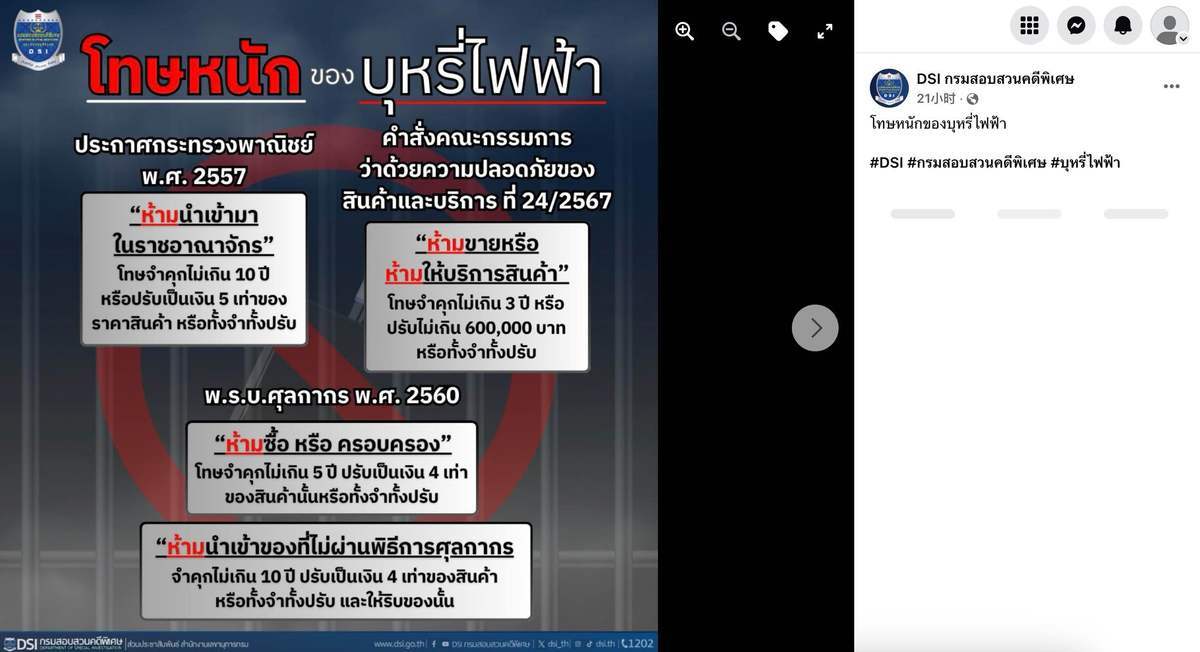
On the 18th, the Department of Special Investigation (DSI) reiterated on its social media the laws and penalties related to e-cigarettes.


According to Announcement from the Ministry of Commerce (2014), Importation to Thailand is Prohibited. Violators will be sentenced to a maximum of 10 years in prison or fined five times the price of the goods, or both.


The Product and Service Safety Commission (2024) has also issued an order to "prohibit the sale or provision of goods and services". Violators will be sentenced to a maximum of 3 years in prison, or fined up to 600,000 baht (18,000 USD), or both.


Under the Customs Law (2017), individuals are prohibited from purchasing or possessing certain items. Offenders may face up to 5 years in prison, a fine up to four times the price of the goods, or both. Additionally, importing goods without going through customs procedures is also prohibited. Offenders could face up to 10 years in prison, a fine up to four times the price of the goods, or both, and have the goods confiscated.
 

Cracking Down on e-Cigarette Smuggling in Thailand: Tightening Penalties
DSI announces e-cigarette related legal penalties | Image source: DSI Facebook


We welcome news tips, article submissions, interview requests, or comments on this piece.

Please contact us at info@2firsts.com, or reach out to Alan Zhao, CEO of 2Firsts, on LinkedIn


Notice

1.  This article is intended solely for professional research purposes related to industry, technology, and policy. Any references to brands or products are made purely for objective description and do not constitute any form of endorsement, recommendation, or promotion by 2Firsts.

2.  The use of nicotine-containing products — including, but not limited to, cigarettes, e-cigarettes, nicotine pouchand heated tobacco products — carries significant health risks. Users are responsible for complying with all applicable laws and regulations in their respective jurisdictions.

3.  This article is not intended to serve as the basis for any investment decisions or financial advice. 2Firsts assumes no direct or indirect liability for any inaccuracies or errors in the content.

4.  Access to this article is strictly prohibited for individuals below the legal age in their jurisdiction.


Copyright


This article is either an original work created by 2Firsts or a reproduction from third-party sources with proper attribution. All copyrights and usage rights belong to 2Firsts or the original content provider. Unauthorized reproduction, distribution, or any other form of unauthorized use by any individual or organization is strictly prohibited. Violators will be held legally accountable.

For copyright-related inquiries, please contact: info@2firsts.com


AI Assistance Disclaimer


This article may have been enhanced using AI tools to improve translation and editorial efficiency. However, due to technical limitations, inaccuracies may occur. Readers are encouraged to refer to the cited sources for the most accurate information.

We welcome any corrections or feedback. Please contact us at: info@2firsts.com

Putin Signs Russia’s Tobacco and Nicotine Product Licensing Law, Banning Unlicensed Sales From 2027
Russian President Vladimir Putin has signed a law introducing mandatory licensing for wholesale and retail trade in tobacco and nicotine-containing products, with the system taking effect on October 1, 2026, and unlicensed operations banned from March 1, 2027, while vape and e-liquid retail may also face uncertainty from temporary regional sales-ban powers.
Jul.01
South Korea Vape Strategies Diverge as BAT Reconsiders Exit and PMI Takes VEEV to About 14,000 Stores
BAT Rothmans says it previously considered exiting South Korea's vaping market because of competitive pressure from unregulated products, but is now reassessing conditions following changes to the country's nicotine regulatory framework. Vuse and other BAT vaping products remain available through existing distribution channels. The statement followed a South Korean media report that interpreted BAT's broader withdrawal from selected Vapour markets as a full exit from South Korea. Meanwhile, Philip Morris International launched VEEV inPRIME in the country in June and began expanding distribution to around 14,000 convenience stores and other retail channels in July. The contrasting moves highlight differing investment strategies as South Korea's regulated vaping market evolves.
Aug.14
 $20 Million, a Permanent Injunction and Distributor Controls: Posh Deal Tightens Illinois Vape Compliance
$20 Million, a Permanent Injunction and Distributor Controls: Posh Deal Tightens Illinois Vape Compliance
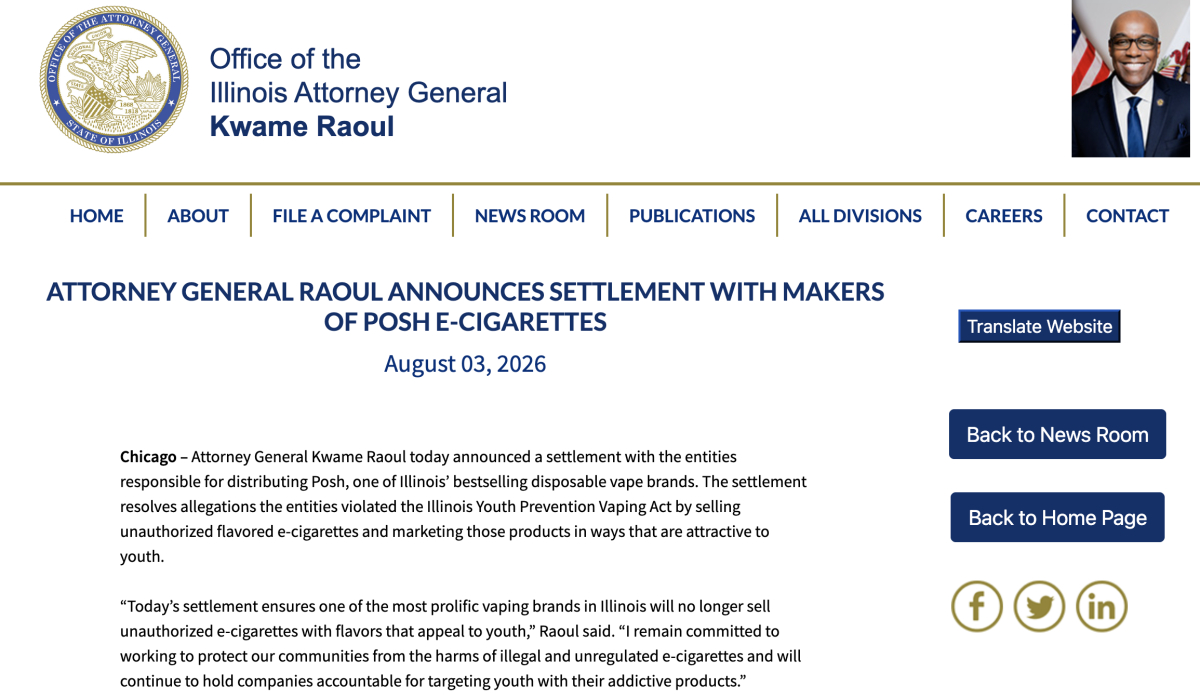
An Illinois court ordered three companies tied to Posh vapes to pay $20 million and permanently restricted the sale, marketing and distribution in Illinois of products lacking required FDA authorization. The consent order also imposes downstream distributor controls, age-verification measures and social-media marketing limits, creating a new state-level compliance benchmark for disposable vape businesses.
Regulations
Aug.05
Malaysia Police Seize RM12.7 Million in Illegal Vapes and Cigarettes as Probe Points to Sea Shipments From China
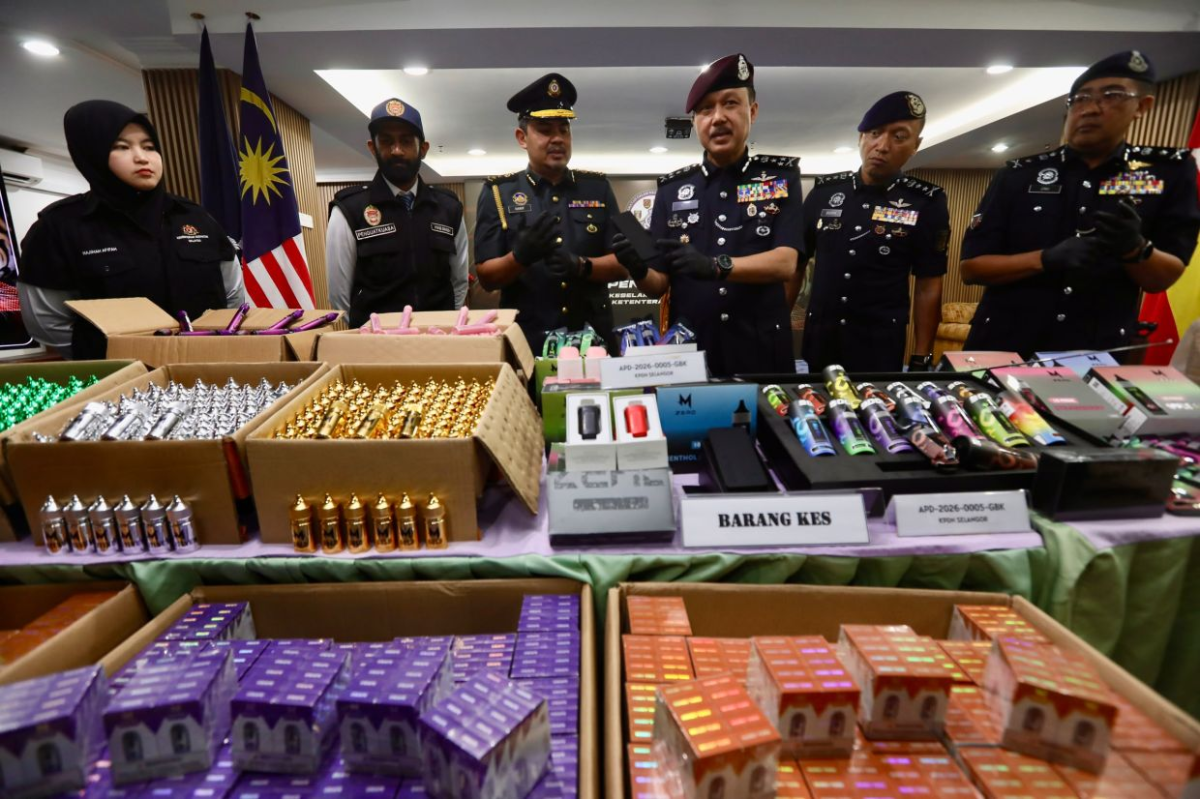
Police in Malaysia’s Selangor state seized illegal vape products and contraband cigarettes worth about RM12.7 million (approximately $3 million) in two enforcement operations. According to New Straits Times and The Star, the vape-related operation uncovered 131,036 boxes of vape products, 4,900 bottles of e-liquid and 25,510 vape devices, valued at about RM9.4 million. Police said preliminary investigations indicated that some illegal vape products entered Malaysia through sea shipments from China before moving through storage and distribution networks.
Aug.10
Italy and Greece Oppose Ireland’s Nicotine Product Bill, Raising EU Regulatory Concerns
Italy and Greece have opposed Ireland’s proposed nicotine product regulations, arguing that the measures could affect EU market coordination and the free movement of products. Ireland plans to introduce stricter rules covering nicotine products including vapes and nicotine pouches, with measures involving packaging, marketing and sales controls. The dispute highlights differences among EU member states between stronger public health protections and maintaining regulatory consistency within the bloc’s single market.
Jul.29
China’s Zhengzhou Tobacco Research Institute develops end-to-end heated tobacco analysis to trace aerosol compound origins
The Zhengzhou Tobacco Research Institute of China National Tobacco Corporation has filed a patent application for an end-to-end method to analyze the migration and transformation of chemical compounds in heated tobacco products. Using GC-Orbitrap/MS non-targeted analysis, the method compares tobacco substrate and aerosol samples to distinguish compounds transferred directly from the substrate from those newly formed during heating, while also calculating transfer rates. In an example involving nine heated tobacco products, the patent identified 17 newly formed thermal decomposition compounds and 38 transferred compounds.
Aug.13