Estonia considers ban on flavored disposable e-cigarettes.

Nov.15.2022
Estonia considers ban on flavored disposable e-cigarettes.
Estonia to take measures to reduce tobacco products, including preventing sales of flavored e-cigarettes to minors.

Estonian Public Broadcasting - ERR reported that the ban was proposed by the Minister of Health and Labor of Estonia, Peep Peterson.


Estonia's Minister of Health and Labor, Peep Peterson, has informed the Estonian National Broadcasting Corporation (ERR) that he will take all necessary measures to reduce the sale of new tobacco products, including preventing the sale of single-use flavored electronic cigarettes to minors.


Electronic cigarettes, regular cigarettes, and other smoking-related accessories. Image source: ERR.


Since 2019, the purchase of flavored e-cigarette oils outside of Estonia has been prohibited. However, it is unclear whether this ban applies to flavored additives sold separately from the e-cigarette device, as the law does not provide detailed clarification.


Minister Peterson believes that the ban on importing electronic cigarette components into Estonia has no real impact, even if these components are listed as prohibited items. However, it is the responsibility of customs to inspect and control foreign trade, and domestic regulatory capabilities are limited.


According to Erik Heldna, the director of Customs at the Estonian Tax and Customs Board, the Customs Department intercepts illegal imports of tobacco products every day, which are mostly shipped from other EU countries. He believes that restrictions on heated tobacco products need to be put in place at the EU level. Any such measures at the EU level that reduce the market, particularly among young people who are attracted to this product, would greatly improve the government's current regulatory challenges.


The market for modifiable electronic cigarettes in Estonia is rapidly expanding, with numbers rising from 2.5 million in 2020 to close to 35 million in 2021.


To protect minors from further harm, given the current situation, the government may consider a complete ban on disposable flavored e-cigarettes.


Statement:


This article is compiled from third-party information and is intended for industry exchanges and learning purposes only.


This article does not reflect the views of 2FIRSTS and 2FIRSTS cannot confirm the authenticity and accuracy of the content. The compilation of this article is only intended for industry communication and research purposes.


Due to limitations in translation ability, the translated article may not fully reflect the original text. Please refer to the original text for accuracy.


2FIRSTS maintains complete alignment with the Chinese government on any domestic, Hong Kong, Macao, Taiwan, and foreign-related statements and positions.


The copyright of compiled information belongs to the original media and author. If there is any infringement, please contact us for deletion.


Disclaimer

This article is provided solely for professional research, industry discussion, and informational purposes. Any references to brands, companies, products, technologies, or policies are made for factual reporting and analytical purposes only, and do not constitute endorsement, recommendation, promotion, or advertising by 2Firsts.

Nicotine-containing products, including but not limited to cigarettes, e-cigarettes, heated tobacco products, and nicotine pouches, carry significant health risks. Readers are responsible for complying with all applicable laws and regulations in their respective jurisdictions, including age restrictions and access limitations.

The information contained in this article should not be regarded as investment, legal, medical, regulatory, or commercial advice. While 2Firsts strives to ensure the accuracy and reliability of its content, it does not assume liability for any direct or indirect loss arising from errors, omissions, inaccuracies, or reliance on the information contained herein.

This article is not intended for individuals below the legal age for accessing tobacco or nicotine-related information in their jurisdiction.


Copyright Notice

This article is either original content produced by 2Firsts or content reproduced, translated, summarized, or adapted from third-party sources with attribution where applicable. The intellectual property rights of the original content remain with 2Firsts or the respective original rights holders.

No individual or organization may copy, reproduce, distribute, republish, modify, translate, or otherwise use this content without prior authorization. Any unauthorized use may result in legal action.

For copyright-related inquiries, corrections, or removal requests, please contact: info@2firsts.com.


AI-Assisted Translation and Editing Notice

Portions of this article may have been translated, edited, or reviewed with the assistance of artificial intelligence tools to improve efficiency and readability. Due to the limitations of AI-assisted translation and editing, discrepancies, omissions, or inaccuracies may exist when compared with the original source.

Where applicable, readers are advised to refer to the original source for the most complete and accurate information. If you identify any errors or believe that any content infringes upon your rights, please contact us at info@2firsts.com, and we will review and address the matter promptly.

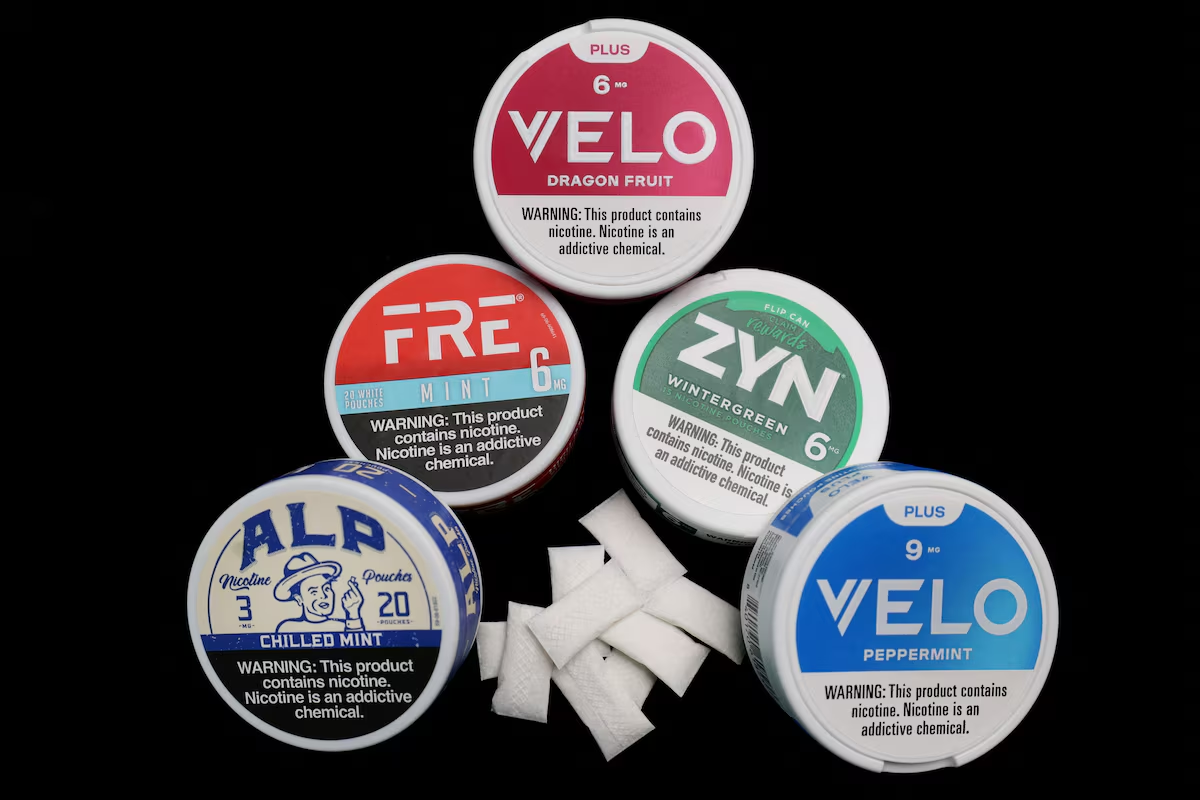
Reuters Tracks Big Tobacco’s Shift Beyond Cigarettes as Nicotine Pouches Vie for the Next Growth Curve
As cigarette markets face long-term pressure, major tobacco companies are increasingly turning to nicotine pouches in search of growth beyond combustible tobacco. Reuters has examined whether nicotine pouches can become the next strategic growth platform for companies including Philip Morris International, British American Tobacco and Japan Tobacco. PMI strengthened its position through the acquisition of Swedish Match and its ZYN brand, while BAT and JTI continue expanding their own nicotine pouch portfolios. The category has gained attention because of its smoke-free, device-free format, but regulation, youth-use concerns and market scale will determine whether it can become a long-term growth engine.
Regulations
Aug.18 by 2Firsts Perspectives
Major U.S.  Vape Distributor Demand Vape Pays at Least $300,000 for White House Lobbying Amid Enforcement Pressure
Major U.S. Vape Distributor Demand Vape Pays at Least $300,000 for White House Lobbying Amid Enforcement Pressure
New York vape distributor Ecto World, which operates as Demand Vape, hired political consultant Roger Stone to lobby the Executive Office of the President on regulation of vaping and related products while facing state enforcement and multiple lawsuits. Public lobbying disclosures show that Ecto World paid at least $300,000 for the work through June 30, 2026. Separately, New York State announced in March that more than 28,500 pounds of vaping products tied to the company had been seized, while New York City and the state have pursued legal or enforcement actions. Public records do not show that the lobbying directly changed any specific regulatory or enforcement outcome.
Sep.08
Inside Nicotine-Pouch M&A Through Imperial's Yoik Deal: Latham, KPMG, PwC, Goldman Sachs and Morgan Stanley Form the Adviser Lineup
Imperial Brands' acquisition of Swedish Helwit owner Yoik Group AB has highlighted the professional-services firms supporting cross-border oral nicotine M&A. Latham & Watkins and KPMG advised Imperial, while PwC and TM & Partners advised Yoik. KPMG also appeared on Imperial's acquisition of Black Buffalo earlier in 2026, while PwC played an extensive role in KT&G's acquisition of Swedish nicotine-pouch company Another Snus Factory. Imperial's public disclosures put the global modern oral nicotine delivery market at approximately £8.8 billion in retail sales and 23.5 billion pouches in 2024
Sep.20
Kantar Study Finds More Than 93% of Vape Products in Ukraine Fail Regulatory Requirements
According to Interfax-Ukraine, a study conducted by market research firm Kantar Ukraine at the request of major tobacco companies found that more than 93% of vape products in Ukraine did not fully comply with regulatory requirements. The research examined product categories, brand distribution and consumer purchasing channels, showing that pod systems and disposable vapes represent major segments of the market, while offline retail remains the dominant purchasing channel. The findings highlight ongoing compliance challenges in Ukraine’s vape market.
Aug.26
PMI Expands U.S. ZYN Portfolio With New 1.5 mg and 8 mg Strengths, Moves Toward a Unified 20-Pouch-Per-Can Format
Philip Morris International is expanding its U.S. ZYN nicotine pouch portfolio with new 1.5 mg and 8 mg strengths and plans to move its core 3 mg and 6 mg dry-pouch products from 15 to 20 pouches per can in the fourth quarter of 2026. ZYN ULTRA is also commercially available, with FDA authorization covering 10 products at 9 mg and one 11 mg Smooth product. PMI U.S. lists the new 1.5 mg and 8 mg strengths as commercially available, but as of September 10 they do not appear on the FDA’s public authorization list. Public materials do not identify which PMTA submissions cover the two new strengths or their current review status.
Sep.11
 $20 Million, a Permanent Injunction and Distributor Controls: Posh Deal Tightens Illinois Vape Compliance
$20 Million, a Permanent Injunction and Distributor Controls: Posh Deal Tightens Illinois Vape Compliance
An Illinois court ordered three companies tied to Posh vapes to pay $20 million and permanently restricted the sale, marketing and distribution in Illinois of products lacking required FDA authorization. The consent order also imposes downstream distributor controls, age-verification measures and social-media marketing limits, creating a new state-level compliance benchmark for disposable vape businesses.
Regulations
Aug.05