Recently, according to Recyclingportal, seven major associations in Europe, including the European Federation of Waste Management and Resource Utilisation (FEAD), the European Waste-to-Energy Plants Association (CEWEP), the European Battery Recycling Association (EBRA), the European Recycling Industries Confederation (EuRIC), the European Federation of Glass Processing Associations (FERVER), Municipal Waste Europe, and WEELABEX, have joined forces to call for a ban on the use of disposable e-cigarettes by the end of 2024 due to their negative impact on the environment and circular economy goals.
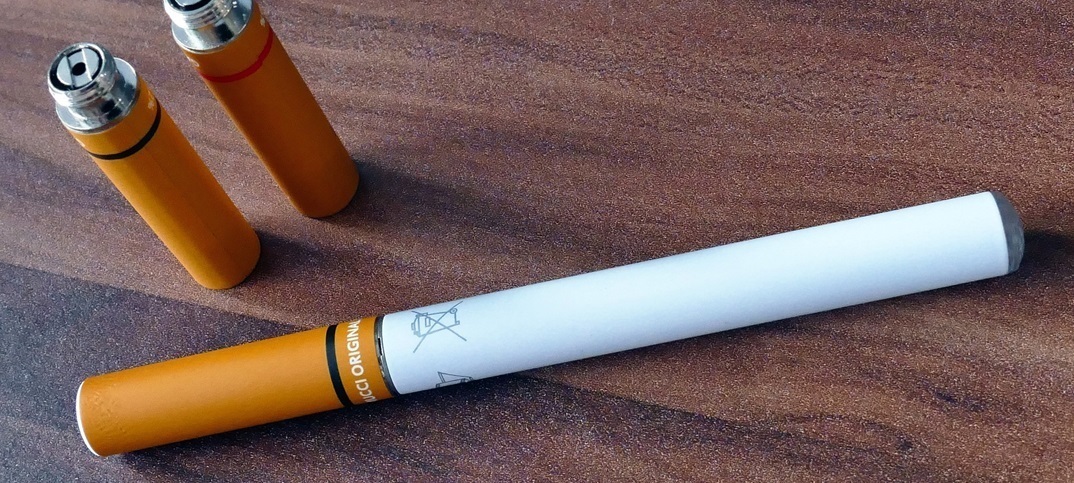
They stated that e-cigarettes first appeared on the European market in 2006. This product was initially designed to replace traditional tobacco smoking, aiming to provide a way for consumers to inhale nicotine aerosol without the harmful effects of burning tobacco, such as tar and carbon substances. Since its release, the design of e-cigarettes has evolved, including disposable e-cigarettes, which were first sold in Europe in 2019, primarily targeting consumers seeking low-cost, compact products and a wider range of e-liquid and flavor options, whether or not they contain nicotine.
All e-cigarette devices are powered by external or internal lithium batteries, external batteries can be charged using a battery charger, while internal batteries are partially rechargeable depending on the device type. However, most disposable devices have non-rechargeable internal batteries. Despite initial models having short battery life and small tanks, the global sales reached $19.3 billion in 2019, growing exponentially each year. Product designs have also evolved gradually with more powerful batteries, larger capacities, and longer usage times.
These devices are mainly composed of an atomizer, a battery (lithium-ion), and a container with e-liquid (such as a cartridge or tank). They are made of some of the most valuable resources on Earth - steel, aluminum, copper, and lithium. They also use plastic shells containing flame retardants (PPO).
Under EU, UK and European Economic Area regulations on producer responsibility, these devices are classified as "Electrical and Electronic Equipment" (EEE) and come with corresponding obligations for manufacturers and/or distributors, including contribution to collection options and end-of-life recycling of products. However, the reality is that, due to lack of awareness and lax enforcement, many of these device manufacturers and distributors are not registered, therefore failing to contribute to electronic waste disposal systems.
With the popularity of disposable e-cigarettes on the rise, the safety and impact of these products are becoming increasingly concerning for both the public and the industry. Several governments around the world have taken measures to restrict or ban e-cigarettes, including the UK, France, Turkey, India, Thailand, Mexico, and Australia. Additionally, many other countries' governments are also considering whether to ban or restrict these products, with some already banning flavored e-liquids this year.
Disposable e-cigarettes are causing damage to the local environment, especially in terms of waste disposal, posing a threat to wildlife and water sources. Improperly handled, they may release heavy metals, nicotine, and other chemicals from batteries and unused e-liquids. It has been found that e-liquids contain over 80 harmful chemicals, such as formaldehyde and metal nano particles. Additionally, the increasing use of e-cigarettes by children and its negative impact on health has been widely reported, with disposable e-cigarettes believed to be a major driver of the sharp increase in youth tobacco use.
Of particular concern is the presence of lithium batteries, which are being improperly and irresponsibly disposed of in public streets, household garbage bins, municipal waste collection bins, waste collection trucks, and waste management facilities, leading to known causes of fires. Ultimately, given the current sales volume of these devices and the calls to ensure the security of critical raw material supply, careless disposal results in the loss of valuable and recyclable metals and lithium. This goes against the goal of achieving a stronger global circular economy.
The European Union has the authority to restrict the use of substances that have been identified as posing risks to human health or the environment under REACH. Other regulations, such as national environmental laws, also support this. In recent years, legal actions have been taken against disposable products such as plastic straws and plastic bags, setting a precedent for regulating products that cause harm. Therefore, the damage caused by disposable e-cigarettes should not be allowed to continue without regulation.
By the end of 2024 at the latest, Europe is expected to ban the use of disposable e-cigarettes.
We welcome news tips, article submissions, interview requests, or comments on this piece.
Please contact us at info@2firsts.com, or reach out to Alan Zhao, CEO of 2Firsts, on LinkedIn
Notice
1. This article is intended solely for professional research purposes related to industry, technology, and policy. Any references to brands or products are made purely for objective description and do not constitute any form of endorsement, recommendation, or promotion by 2Firsts.
2. The use of nicotine-containing products — including, but not limited to, cigarettes, e-cigarettes, nicotine pouchand heated tobacco products — carries significant health risks. Users are responsible for complying with all applicable laws and regulations in their respective jurisdictions.
3. This article is not intended to serve as the basis for any investment decisions or financial advice. 2Firsts assumes no direct or indirect liability for any inaccuracies or errors in the content.
4. Access to this article is strictly prohibited for individuals below the legal age in their jurisdiction.
Copyright
This article is either an original work created by 2Firsts or a reproduction from third-party sources with proper attribution. All copyrights and usage rights belong to 2Firsts or the original content provider. Unauthorized reproduction, distribution, or any other form of unauthorized use by any individual or organization is strictly prohibited. Violators will be held legally accountable.
For copyright-related inquiries, please contact: info@2firsts.com
AI Assistance Disclaimer
This article may have been enhanced using AI tools to improve translation and editorial efficiency. However, due to technical limitations, inaccuracies may occur. Readers are encouraged to refer to the cited sources for the most accurate information.
We welcome any corrections or feedback. Please contact us at: info@2firsts.com