Florida Supreme Court Approves Recreational Marijuana Legalization Vote

Regulations by 2FIRSTS.ai
Apr.08.2024
Florida Supreme Court Approves Recreational Marijuana Legalization Vote
Florida Supreme Court approves inclusion of Amendment 3 on November ballot, potentially legalizing adult recreational marijuana use in the state.

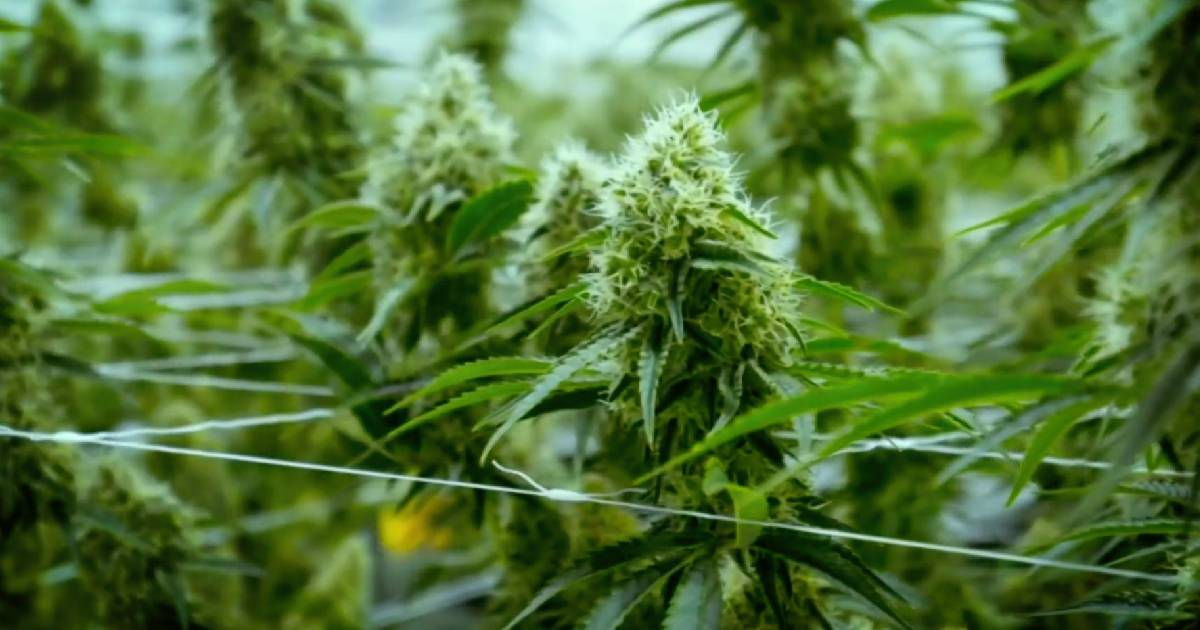
According to Cibercuba news, the Supreme Court of Florida has approved the inclusion of Amendment 3 in the November ballot, which will allow voters to decide on the legalization of recreational marijuana for adults in the state.


This decision has been warmly welcomed by the marijuana industry in Florida pushing for legalization and they have expressed being "very excited" about the court's ruling.


If this amendment passes in the November election, the sale of marijuana to adults will begin in May 2025. There is anticipation that this measure will have a significant impact on the marijuana market in Florida, but it is also controversial.


The cannabis investment company NewLake (OTCQX: NLCP) has expressed optimism about this decision. In a statement, the company emphasized that the passage of Amendment 3 is a significant step forward for Florida's cannabis industry, and is expected to have a positive impact on economic growth and job opportunities. The legalization of medical marijuana in 2016 received widespread support from voters, with approval ratings exceeding 70%.


In November of this year, voters will decide whether to legalize the recreational use of marijuana in the state. The specific question to be presented to the people is whether to allow anyone over the age of 21 to possess up to 3 ounces of marijuana without facing legal consequences.


The debate over the legalization of marijuana has sparked a significant amount of both support and opposition activities. Kim Rivers, CEO of marijuana and CBD products supplier Trulieve, stated that the efforts to push for marijuana legalization require a substantial investment, exceeding 40 million dollars.


The passing of the November 3rd amendment will require at least 60% voter support to advance the legalization of marijuana.


The use of marijuana is legal in multiple states in the United States, such as Colorado, Washington, Alaska, Oregon, California, Maine, Massachusetts, Nevada, Michigan, Vermont, Illinois, Arizona, Montana, New Jersey, New York, Virginia, New Mexico, Connecticut, Rhode Island, Maryland, Missouri, Delaware, Minnesota, and Ohio.


We welcome news tips, article submissions, interview requests, or comments on this piece.

Please contact us at info@2firsts.com, or reach out to Alan Zhao, CEO of 2Firsts, on LinkedIn


Notice

1.  This article is intended solely for professional research purposes related to industry, technology, and policy. Any references to brands or products are made purely for objective description and do not constitute any form of endorsement, recommendation, or promotion by 2Firsts.

2.  The use of nicotine-containing products — including, but not limited to, cigarettes, e-cigarettes, nicotine pouchand heated tobacco products — carries significant health risks. Users are responsible for complying with all applicable laws and regulations in their respective jurisdictions.

3.  This article is not intended to serve as the basis for any investment decisions or financial advice. 2Firsts assumes no direct or indirect liability for any inaccuracies or errors in the content.

4.  Access to this article is strictly prohibited for individuals below the legal age in their jurisdiction.


Copyright


This article is either an original work created by 2Firsts or a reproduction from third-party sources with proper attribution. All copyrights and usage rights belong to 2Firsts or the original content provider. Unauthorized reproduction, distribution, or any other form of unauthorized use by any individual or organization is strictly prohibited. Violators will be held legally accountable.

For copyright-related inquiries, please contact: info@2firsts.com


AI Assistance Disclaimer


This article may have been enhanced using AI tools to improve translation and editorial efficiency. However, due to technical limitations, inaccuracies may occur. Readers are encouraged to refer to the cited sources for the most accurate information.

We welcome any corrections or feedback. Please contact us at: info@2firsts.com

Italian Court Ends Six-Year Cigarette Excise Dispute, Rejecting Damages Claim
Italy’s Lazio Regional Administrative Court has dismissed an appeal by Italian Tobacco Manufacturing and Manifattura Italiana Tabacco over the cigarette excise calculation mechanism, upholding the minimum tax burden rules and excluding compensation for smaller tobacco operators.
News
Jun.26 by 2Firsts Perspectives
Philip Morris Romania Executive on Smoke-Free Strategy: How IQOS Spaces Are Moving Beyond Retail to Consumer Connection
In an interview with Romanian marketing publication IQads, Marek Gębski, Director of Smoke-Free Products at Philip Morris Romania, said IQOS experience spaces are evolving from traditional retail locations into platforms for consumer engagement and brand connection. Through locations such as IQOS Boutique Victoriei, PMI aims to use design, culture and consumer experiences to strengthen communication with adult consumers about smoke-free products. The interview highlights how tobacco companies are expanding smoke-free strategies beyond products toward experiential marketing and consumer relationships.
Aug.11
Global Tobacco Control Faces Regional Adaptation Test as Nicotine Markets Evolve, Asian Specialist Says
As e-cigarettes, heated tobacco products and nicotine pouches expand across global markets, a central question is gaining urgency: can tobacco control rely on a universal policy model? In an interview with 2Firsts, Asian public health and addiction medicine specialist Dr. Rashidi Mohamed bin Pakri Mohamed says Western experience remains relevant, but policies must be adapted to local culture, healthcare systems, enforcement capacity, illicit markets and clinical evidence.
Jul.08
Adani’s Mumbai Airport Duty-Free Shops Face Scrutiny Over Nicotine Pouch Sales in India
An Indian investigation found that duty-free shops at Mumbai international airport operated by billionaire Gautam Adani’s business group sold nicotine pouches in breach of the law, Reuters reported, in a case that could shape how India regulates sales of new nicotine products at airport retail outlets.
Jul.08
UK HMRC Plans 30,000 Retail Enforcement Actions as Illegal Tobacco and Vape Sellers Face Tougher Crackdown
The UK government has announced that HM Revenue & Customs (HMRC) will carry out more than 30,000 interventions targeting businesses and retail premises during the 2026-2027 financial year. The actions will focus on tax fraud, illegal goods sales and businesses involved in unlawful activities through retail channels. The government said illegal tobacco and illegal vape sales remain areas of concern. The move shows that UK enforcement against illegal nicotine products is expanding from import and supply channels toward retail-level oversight, alongside the upcoming introduction of the Vaping Products Duty.
Jul.24
Science | International Experts Propose a New Smoking Cessation Pathway, Citing Higher Quit Rates With E-Cigarettes Than Nicotine Replacement Therapy
A new expert paper in JAMA urges U.S. clinicians to include nicotine e-cigarettes in smoking-cessation discussions, citing higher quit rates than nicotine replacement therapy. It also stresses that products must deliver enough nicotine to replace cigarettes, dual use should be brief, and complete switching is the goal. 2Firsts argues the recommendations matter beyond clinics: public-health professionals should reassess relative risk, regulators should preserve sufficient product appeal for adult smokers, and manufacturers should focus on helping users quit cigarettes more sustainably.
SCIENCE
Aug.03 by 2Firsts Perspectives