Key points:
Although e-cigarettes and heated tobacco products are banned in Vietnam, buying and selling activities are still rampant in the market, especially on online platforms.
Young people are the primary users of e-cigarettes, engaging in transactions through social networks to bypass regulation.
Legal experts suggest strengthening regulation of online platforms to curb illegal e-cigarette transactions.
According to a report from VOV on March 4th, Vietnam has banned the purchase, sale, exchange, and use of e-cigarettes and heated tobacco products since January 1st. Violators may face fines or even up to 15 years in prison. However, these transactions are still active in the market, rendering the ban ineffective.
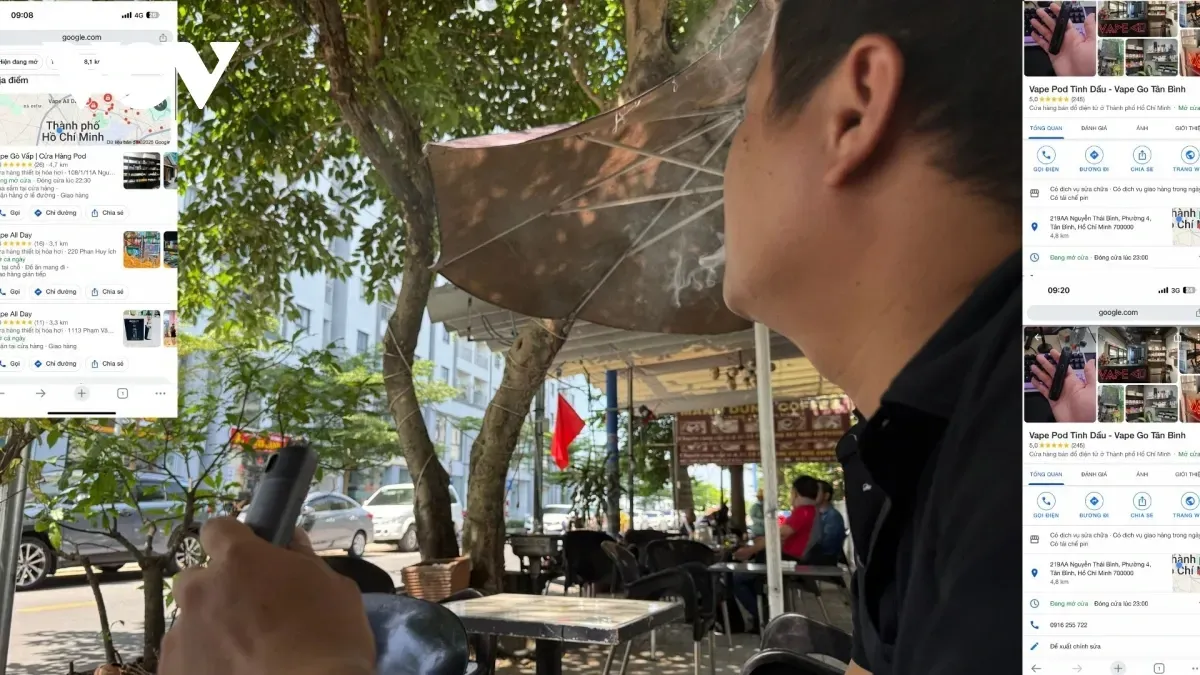
According to Vietnamese media Vov, entering the keyword "Vape - Pod" in the Google search engine immediately brings up millions of results, showing that there are hundreds or even thousands of stores selling these products in the area, almost all of which are labeled as "open for business." A reporter randomly selected a store in Ho Chi Minh City to investigate its sales situation. The store owner stated that they currently only sell products online, and directed customers to add them as a friend on Zalo to choose from a variety of products. The shopping and shipping process can all be done online.
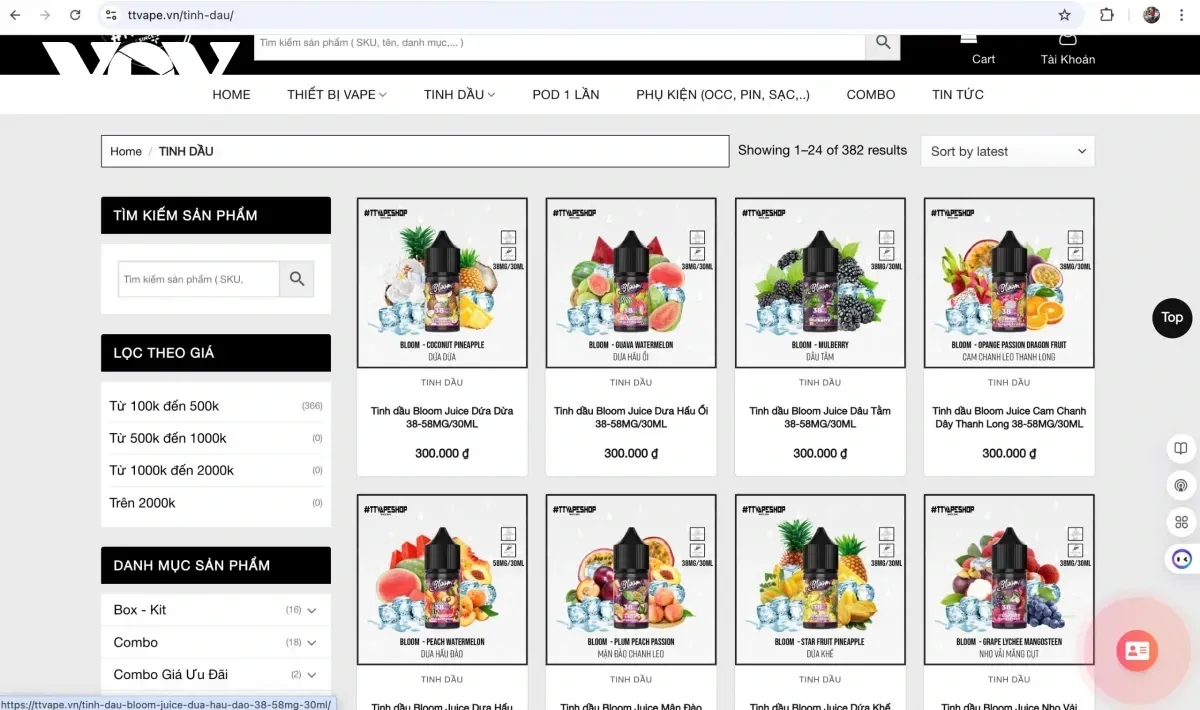
Not only are the businesses marked on Google continuing to buy and sell, but there are also specialized websites meticulously showcasing various prohibited products. On the website https://ttvape.vn/, all banned items are detailedly introduced, including origin, weight, and price. The merchants also provide contact numbers for transactions.
A university student in Ho Chi Minh City stated that the ban on purchasing e-cigarettes has had little impact, as transactions can still be made through Google, online platforms, and social networks. He pointed out that many social platforms such as Facebook, TikTok, and Telegram still have transactions taking place, and people are still exchanging and selling as usual.
According to reports, there have not been many enforcement actions nationwide involving e-cigarettes since the ban was implemented. The buying, selling, storing, and using of these prohibited products are still widespread throughout the country. Lawyer Dương Lê Ước An stated that although the law is now in effect, there is a lack of effective enforcement, especially when dealing with young people who primarily conduct transactions online, which increases the difficulty of detection and prosecution.
He suggested that relevant authorities should enhance supervision over social networking platforms and e-commerce platforms, requiring these platforms to delete related transaction websites and keywords, and add them to the list of prohibited items for sale.
According to reports, the Vietnamese National Assembly has passed Resolution No. 173, which declares that the production, sale, import, possession, transportation, and use of e-cigarettes and heated tobacco will be illegal as of 2025. Violators will be handled according to the law. (Related reading: Vietnam Customs General Department issues ban: Import procedures for e-cigarettes and heated tobacco products will stop starting in 2025)
We welcome news tips, article submissions, interview requests, or comments on this piece.
Please contact us at info@2firsts.com, or reach out to Alan Zhao, CEO of 2Firsts, on LinkedIn
Notice
1. This article is intended solely for professional research purposes related to industry, technology, and policy. Any references to brands or products are made purely for objective description and do not constitute any form of endorsement, recommendation, or promotion by 2Firsts.
2. The use of nicotine-containing products — including, but not limited to, cigarettes, e-cigarettes, nicotine pouchand heated tobacco products — carries significant health risks. Users are responsible for complying with all applicable laws and regulations in their respective jurisdictions.
3. This article is not intended to serve as the basis for any investment decisions or financial advice. 2Firsts assumes no direct or indirect liability for any inaccuracies or errors in the content.
4. Access to this article is strictly prohibited for individuals below the legal age in their jurisdiction.
Copyright
This article is either an original work created by 2Firsts or a reproduction from third-party sources with proper attribution. All copyrights and usage rights belong to 2Firsts or the original content provider. Unauthorized reproduction, distribution, or any other form of unauthorized use by any individual or organization is strictly prohibited. Violators will be held legally accountable.
For copyright-related inquiries, please contact: info@2firsts.com
AI Assistance Disclaimer
This article may have been enhanced using AI tools to improve translation and editorial efficiency. However, due to technical limitations, inaccuracies may occur. Readers are encouraged to refer to the cited sources for the most accurate information.
We welcome any corrections or feedback. Please contact us at: info@2firsts.com