Indonesia Government Targets Tobacco Control Through Tax Adjustment

Regulations by 2FIRSTS.ai
Jul.09.2024
Indonesia Government Targets Tobacco Control Through Tax Adjustment
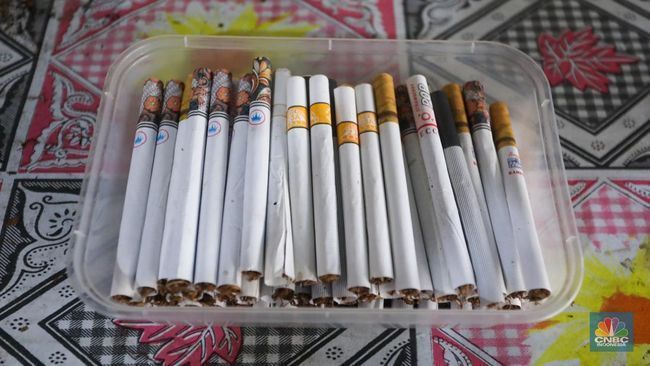
Indonesian Customs Director General Askolani states citizens turning to cheap cigarettes drive government tobacco tax goals.

According to a report by the American Consumer News and Business Channel on July 9th, Askolani, the Director General of Customs at the Indonesian Ministry of Finance, stated that Indonesian citizens turning to low-cost cigarettes is the government's target in setting tobacco tariff levels. Askolani emphasized that if any improper or fraudulent behavior occurs, customs will not tolerate it. He stated that this phenomenon will serve as a reference for the government in setting tariffs.


During a working meeting with the national budget agency, Indonesian Finance Minister Sri Mulyani also stated that the decrease in tobacco tax for two consecutive years aligns with Indonesia's goal of controlling tobacco consumption. She emphasized that the control of cigarette production is a contributing factor to this outcome.


We welcome news tips, article submissions, interview requests, or comments on this piece.

Please contact us at info@2firsts.com, or reach out to Alan Zhao, CEO of 2Firsts, on LinkedIn


Notice

1.  This article is intended solely for professional research purposes related to industry, technology, and policy. Any references to brands or products are made purely for objective description and do not constitute any form of endorsement, recommendation, or promotion by 2Firsts.

2.  The use of nicotine-containing products — including, but not limited to, cigarettes, e-cigarettes, nicotine pouchand heated tobacco products — carries significant health risks. Users are responsible for complying with all applicable laws and regulations in their respective jurisdictions.

3.  This article is not intended to serve as the basis for any investment decisions or financial advice. 2Firsts assumes no direct or indirect liability for any inaccuracies or errors in the content.

4.  Access to this article is strictly prohibited for individuals below the legal age in their jurisdiction.


Copyright


This article is either an original work created by 2Firsts or a reproduction from third-party sources with proper attribution. All copyrights and usage rights belong to 2Firsts or the original content provider. Unauthorized reproduction, distribution, or any other form of unauthorized use by any individual or organization is strictly prohibited. Violators will be held legally accountable.

For copyright-related inquiries, please contact: info@2firsts.com


AI Assistance Disclaimer


This article may have been enhanced using AI tools to improve translation and editorial efficiency. However, due to technical limitations, inaccuracies may occur. Readers are encouraged to refer to the cited sources for the most accurate information.

We welcome any corrections or feedback. Please contact us at: info@2firsts.com

Special Report|Reynolds’ 337 Patent Case Ends, but a Harsher 337 Compliance Battle Now Targets the Entire Vape Supply Chain
The U.S. International Trade Commission (ITC) has terminated Investigation 337-TA-1410 after invalidating key vape patent claims asserted by R.J. Reynolds Vapor Company, removing the immediate risk of import bans for dozens of companies. However, a new case—337-TA-1486—has already opened a more consequential legal front, shifting the focus from patent disputes to regulatory compliance across the vape supply chain, including PACT Act reporting, tax compliance, and FDA marketing authorization.
BAT
Mar.11
Study: Links between internalizing mental health symptoms and nicotine/tobacco use vary by gender identity among U.S. adolescents
A study using 2020–2023 U.S. data from the ITC Youth Tobacco and Vaping Survey (ages 16–19) reports that both nicotine/tobacco use and internalizing mental health (IMH) symptoms vary across disaggregated gender identities, and that gender identity moderates the relationship between IMH symptoms and product use.
Feb.27 by 2FIRSTS.ai
South Korea to regulate synthetic-nicotine e-liquids as tobacco from April 24
South Korea’s Health Ministry says amendments to the Tobacco Business Act will take effect on April 24, bringing synthetic-nicotine e-liquid vapes under the legal definition of tobacco. The shift extends cigarette-style rules to these products, including mandatory graphic warnings, sharply limited advertising channels, stricter vending-machine placement requirements, and a ban on use in smoke-free areas, with enforcement checks slated from late April.
Feb.03 by 2FIRSTS.ai
Azerbaijan parliament passes third-reading amendments introducing e-cigarette penalties, effective April 1, 2026
Azerbaijan’s Milli Majlis has adopted, in its third reading, amendments to the Code of Administrative Offences introducing fines and confiscation for the use of e-cigarettes and their components, as well as import, export, production, wholesale and retail sales, and storage for sale.
Mar.04 by 2FIRSTS.ai
Bonnie Herzog:U.S. nicotine market seen at about $67B in revenue by 2035 as smoke-free expands
Goldman Sachs Managing Director Bonnie Herzog said the U.S. nicotine market is attractive and growing, with total revenue projected to reach about $67 billion by 2035. She expects cigarettes to account for a smaller share of revenue (47%) as smoke-free revenue expands and becomes a key driver of industry profit growth. Herzog said smoke-free products represent about 48% of U.S. nicotine volumes today and could rise to roughly 75% by 2035.
Mar.04 by 2FIRSTS.ai
BAT FY2025 Results: New Categories Contribution Expands as Smokeless Share Reaches 18.2%
British American Tobacco reported FY2025 revenue of £25.61 billion, down 1.0% on a reported basis but up 2.1% at constant currency. New Categories revenue rose 5.5%, with category contribution increasing 77%. Smokeless products accounted for 18.2% of group revenue.
Feb.12