Italian Government Defies Court Ruling, Lists CBD as Narcotic

Jul.15.2024
Italian Government Defies Court Ruling, Lists CBD as Narcotic
Italy defies EU law, listing CBD as narcotic. Italy's move sparks backlash from hemp industry, threatens 10,000 jobs.

According to a report from Hemptoday on July 12, the Italian government has ignored a ruling from a regional administrative court and violated EU law by placing CBD on the country's list of narcotic drugs.


The Italian Ministry of Health stated that this regulation complies with Italian Presidential Decree 309/1990, which forms the cornerstone of Italy's drug legislation. However, this contradicts a ruling from a regional court last year, which was based on legally binding judgments within the European Union.


This is the latest move by the Italian government against CBD. In October 2020, the Ministry of Health classified CBD as a narcotic drug for the first time and banned it from the market, but soon after revoked the order.


In another attempt in early 2022, the national-regional conference updated the language in the 2018 regulation, officially categorizing marijuana as a medicinal plant.


In that scenario, four major cannabis associations filed a lawsuit and the Lazio Regional Administrative Court overturned the regulation a year later, ruling that it violated European law. The European Commission announced in 2020 that CBD is not a narcotic drug and can be legally traded between member states. This decision was based on a landmark ruling by the European Court of Justice the same year.


The Italian Farmers' Association, Cia-Agricoltori Italiani, criticized the government in a statement for not consulting producers before listing CBD as a dangerous drug, stating that this move "has insulted farmers who have invested money and work in the industrial hemp supply chain in recent years".


The farmer's organization stated that


This is not only a controversial measure from legal, health, and scientific perspectives, but also an intervention that could potentially make the already heavily strained supply chain even more complicated.


According to CIA-Agricoltori Italiani, these prejudices are further reflected in a current amendment in the Italian parliament, which aims to ban CBD and all other products derived from hemp flowers.


The group's chairman, Cristiano Fini, stated that


We are facing potential ideological interference that could paralyze a high-value-added supply chain that attracts young people. This supply chain has huge production potential in cosmetics, herbs, green construction, floriculture, and textiles, with an annual turnover of 500 million euros and providing over 10,000 jobs.


Currently circulating in parliament is a proposed amendment that would completely ban cannabis flowers, affecting various aspects of production and trade. The leading cannabis industry organization, Federcanapa, has expressed that the provisions would effectively shut down the sub-industry of cannabis extracts, affecting the use of CBD and other non-psychoactive cannabinoids in herbal remedies, cosmetics, and dietary supplements.


Some lawmakers and other experts have stated that the amendment would result in the closure of 3,000 businesses and the unemployment of 15,000 workers.


Finney stated that Cia-Agricoltori Italiani has invited government representatives to discuss with CBD operators.


We welcome news tips, article submissions, interview requests, or comments on this piece.

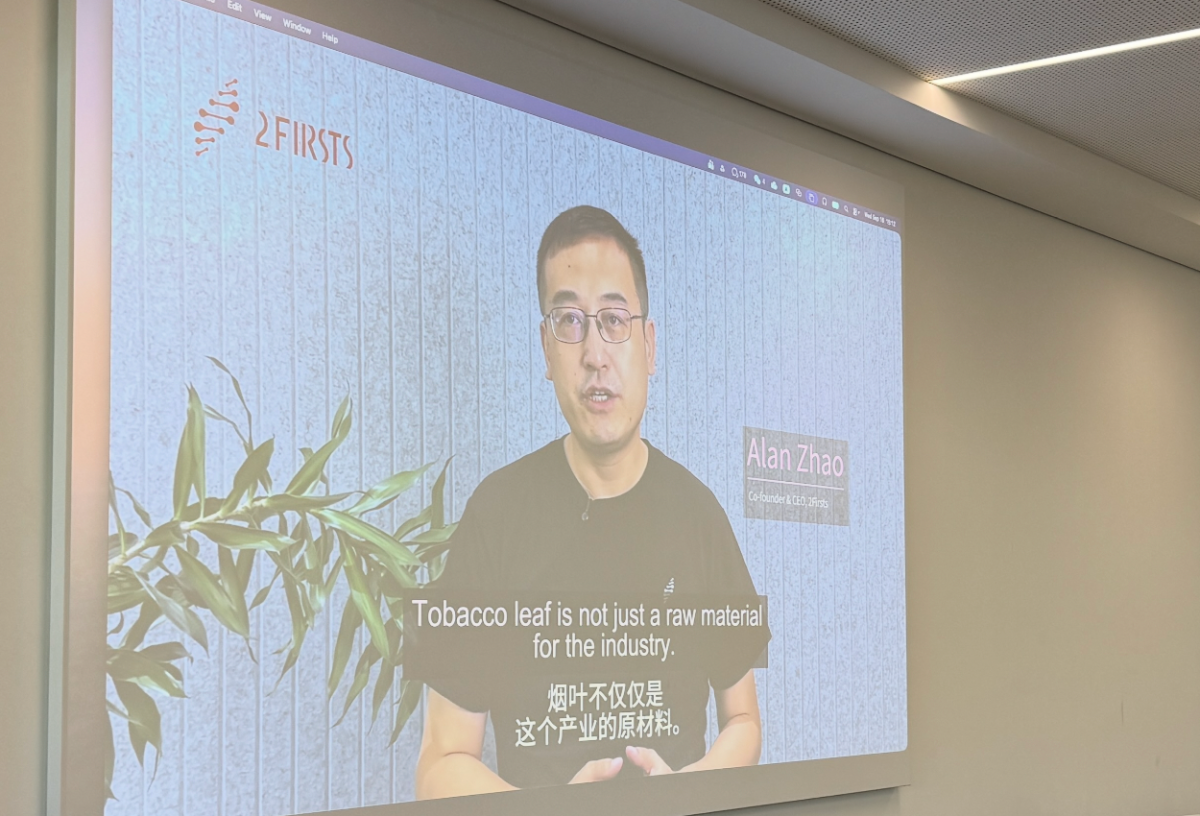
Please contact us at info@2firsts.com, or reach out to Alan Zhao, CEO of 2Firsts, on LinkedIn


Notice

1.  This article is intended solely for professional research purposes related to industry, technology, and policy. Any references to brands or products are made purely for objective description and do not constitute any form of endorsement, recommendation, or promotion by 2Firsts.

2.  The use of nicotine-containing products — including, but not limited to, cigarettes, e-cigarettes, nicotine pouchand heated tobacco products — carries significant health risks. Users are responsible for complying with all applicable laws and regulations in their respective jurisdictions.

3.  This article is not intended to serve as the basis for any investment decisions or financial advice. 2Firsts assumes no direct or indirect liability for any inaccuracies or errors in the content.

4.  Access to this article is strictly prohibited for individuals below the legal age in their jurisdiction.


Copyright


This article is either an original work created by 2Firsts or a reproduction from third-party sources with proper attribution. All copyrights and usage rights belong to 2Firsts or the original content provider. Unauthorized reproduction, distribution, or any other form of unauthorized use by any individual or organization is strictly prohibited. Violators will be held legally accountable.

For copyright-related inquiries, please contact: info@2firsts.com


AI Assistance Disclaimer


This article may have been enhanced using AI tools to improve translation and editorial efficiency. However, due to technical limitations, inaccuracies may occur. Readers are encouraged to refer to the cited sources for the most accurate information.

We welcome any corrections or feedback. Please contact us at: info@2firsts.com

2Firsts Hosts China Market Forum at InterTabac as Global Industry Attention to China’s Tobacco Sector Deepens
On September 16, 2Firsts hosted a China-focused industry forum during InterTabac in Dortmund, bringing together more than 30 participants from North America, Europe, India, South Korea and other markets. The session covered traditional tobacco, next-generation products, exports, technology, regulation and supply chains, while examining how China’s tobacco sector operates, where its transformation may be heading, and why its growing role matters increasingly to companies across the global tobacco and nicotine industry.
Sep.21
Florida Governor DeSantis Expands TANF Restrictions, Blocking Welfare Benefits From Buying Tobacco and Vapes
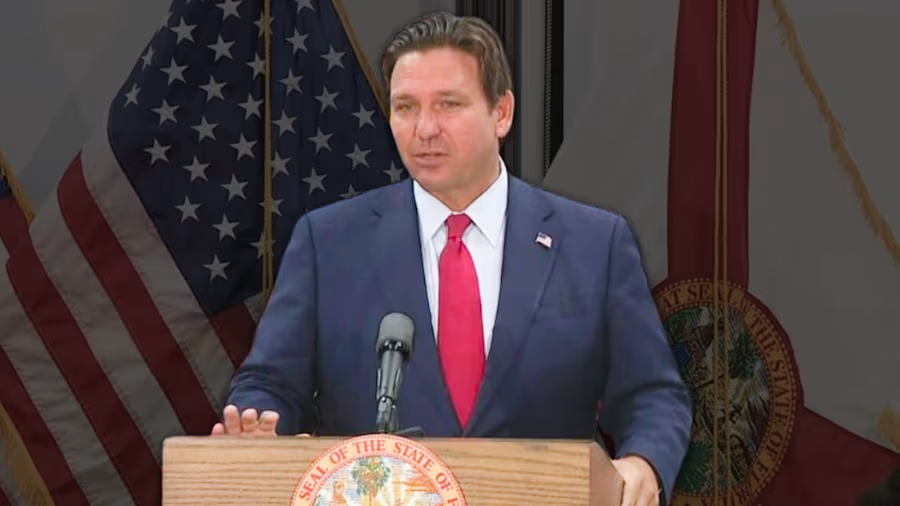
Florida Governor Ron DeSantis announced an expansion of Temporary Assistance for Needy Families (TANF) restrictions that would prohibit Electronic Benefit Transfer (EBT) funds from being used to purchase tobacco and vaping products. The state will amend its TANF State Plan and submit the changes for federal approval. Florida officials said the restrictions would not affect eligibility for temporary cash assistance or the amount of benefits received, but would change how funds can be spent.
Aug.25
UAE Sets Dh1-Per-ml Minimum Excise Price for Vape Liquids From Sept. 1 While Keeping 100% Tax Rate
The UAE Ministry of Finance will introduce a minimum excise price for e-liquids used in vaping and electronic smoking devices from September 1, 2026. The minimum excise price will be set at AED 1 per millilitre. The existing 100% excise tax rate will continue to apply to tobacco and electronic smoking products. The measure changes the minimum taxable base rather than the tax rate, with the UAE government saying it aims to establish unified tax standards, improve market compliance and prevent pricing loopholes.
Regulations
Aug.07 by 2Firsts Perspectives
Canada Health Minister Says She Is Not Considering Looser Nicotine Pouch Retail Rules as PMI-Linked Group Pushes for Wider Access
Canadian Health Minister Marjorie Michel says she is not considering loosening retail restrictions on nicotine pouches. Canada regulates pouches containing 4 mg or less of nicotine per unit as non-prescription nicotine replacement therapy and requires newer NRT formats such as pouches to be sold from behind pharmacy counters. Meanwhile, Unsmoke Canada, linked to Philip Morris International's Canadian business, is pushing to allow pouches in convenience stores and other general retail outlets. Health Canada also acknowledges continued unauthorized sales, while recent research shows rising pouch use among Canadian youth aged 16 to 19.
Sep.24
China Tobacco Yunnan files patent for cellulose-free nicotine pouch scaffold to replace microcrystalline cellulose
China Tobacco Yunnan Industrial Co., Ltd. has filed a patent application for a cellulose-free scaffold material for nicotine pouches, proposing a combination of bioceramic material, polydextrose and sugar alcohols to replace conventional microcrystalline cellulose and cellulose derivatives. The filing aims to address issues including powdery mouthfeel, residue and limited release control, while also reducing reliance on existing cellulose-based patent portfolios. In patent examples, one fast-release formulation reached a nicotine release rate of 50% at 10 minutes and more than 90% at 20 minutes.
Sep.02
South Korea Vape Strategies Diverge as BAT Reconsiders Exit and PMI Takes VEEV to About 14,000 Stores
BAT Rothmans says it previously considered exiting South Korea's vaping market because of competitive pressure from unregulated products, but is now reassessing conditions following changes to the country's nicotine regulatory framework. Vuse and other BAT vaping products remain available through existing distribution channels. The statement followed a South Korean media report that interpreted BAT's broader withdrawal from selected Vapour markets as a full exit from South Korea. Meanwhile, Philip Morris International launched VEEV inPRIME in the country in June and began expanding distribution to around 14,000 convenience stores and other retail channels in July. The contrasting moves highlight differing investment strategies as South Korea's regulated vaping market evolves.
Aug.14