JTI Plans to Expand Investment in HTPs, Promoting in Mid-East and African Markets

JTI by 2FIRSTS.ai
May.06.2024
JTI Plans to Expand Investment in HTPs, Promoting in Mid-East and African Markets
Japan Tobacco International (JTI) plans to invest $29 billion in heated tobacco over three years, expanding sales globally.

According to a report from Nikkei on May 2, Japan Tobacco International (JTI) has announced plans to invest approximately 450 billion yen (about $29 billion) in heated tobacco products over the next three years by 2026. Additionally, the company plans to enter the markets in the Middle East and Africa, expecting its sales regions to expand to more than three times the current level by the end of 2026, reaching 45 areas.


The company's CEO, Masamichi Terabatake, stated clearly in an interview with Nikkei Economic News that, amidst the continuous decline of the traditional cigarette market, Japan Tobacco International aims to cultivate heated tobacco as a new source of revenue.


The company originally planned to invest 300 billion yen (approximately 1.9 billion USD) in heated tobacco products over the three-year period from 2023 to 2025. However, under the guidance of Shodo Terahata, the company has decided to increase its investment and accelerate the achievement of its original target.


We welcome news tips, article submissions, interview requests, or comments on this piece.

Please contact us at info@2firsts.com, or reach out to Alan Zhao, CEO of 2Firsts, on LinkedIn


Notice

1.  This article is intended solely for professional research purposes related to industry, technology, and policy. Any references to brands or products are made purely for objective description and do not constitute any form of endorsement, recommendation, or promotion by 2Firsts.

2.  The use of nicotine-containing products — including, but not limited to, cigarettes, e-cigarettes, nicotine pouchand heated tobacco products — carries significant health risks. Users are responsible for complying with all applicable laws and regulations in their respective jurisdictions.

3.  This article is not intended to serve as the basis for any investment decisions or financial advice. 2Firsts assumes no direct or indirect liability for any inaccuracies or errors in the content.

4.  Access to this article is strictly prohibited for individuals below the legal age in their jurisdiction.


Copyright


This article is either an original work created by 2Firsts or a reproduction from third-party sources with proper attribution. All copyrights and usage rights belong to 2Firsts or the original content provider. Unauthorized reproduction, distribution, or any other form of unauthorized use by any individual or organization is strictly prohibited. Violators will be held legally accountable.

For copyright-related inquiries, please contact: info@2firsts.com


AI Assistance Disclaimer


This article may have been enhanced using AI tools to improve translation and editorial efficiency. However, due to technical limitations, inaccuracies may occur. Readers are encouraged to refer to the cited sources for the most accurate information.

We welcome any corrections or feedback. Please contact us at: info@2firsts.com

South Korea Constitutional Court Upholds Volume-Based E-Liquid Tax, With Challenged Rates at KRW 370 and KRW 628 per Milliliter
South Korea's Constitutional Court has upheld fixed taxes on nicotine-containing e-cigarette liquids based on solution volume, ruling that challenged provisions imposing KRW 370 per milliliter in individual consumption tax and KRW 628 per milliliter in tobacco consumption tax do not violate the Constitution. The cases stemmed from historical disputes involving importers that reported nicotine as being extracted from tobacco stems rather than leaves. South Korea has since broadened its tobacco definition to include synthetic nicotine, while current tax laws provide reduced rates for certain products not derived from tobacco.
Sep.18
China Tobacco Yunnan files patent for cellulose-free nicotine pouch scaffold to replace microcrystalline cellulose
China Tobacco Yunnan Industrial Co., Ltd. has filed a patent application for a cellulose-free scaffold material for nicotine pouches, proposing a combination of bioceramic material, polydextrose and sugar alcohols to replace conventional microcrystalline cellulose and cellulose derivatives. The filing aims to address issues including powdery mouthfeel, residue and limited release control, while also reducing reliance on existing cellulose-based patent portfolios. In patent examples, one fast-release formulation reached a nicotine release rate of 50% at 10 minutes and more than 90% at 20 minutes.
Sep.02
South Korea Fully Reviews Nicotine-Analog and Nicotine-Free Vape Liquid Imports, With Over 99% From China and Chinese Supply-Chain Documents Under Scrutiny
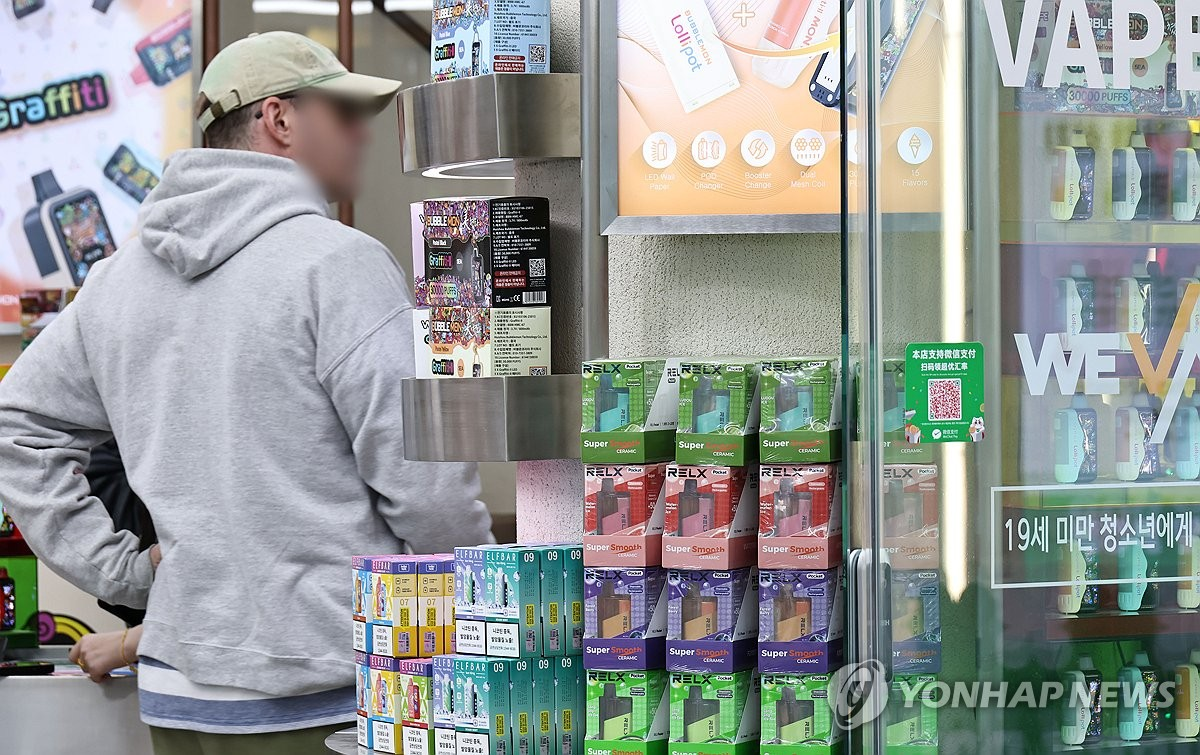
Korea Customs Service has tightened import controls on nicotine-analog and nicotine-free e-cigarette liquids, placing the products under 100% document review and subjecting all e-cigarette liquid import declarations to pre-clearance ingredient analysis. As of September 20, 2026, South Korea had imported about 15 metric tons of nicotine-analog liquids, 99.99% from China, and about 316 metric tons of nicotine-free liquids, including roughly 315 metric tons, or 99.7%, from China. The measures follow South Korea's April expansion of its tobacco definition to include synthetic nicotine products and include new checks on Chinese manufacturing, transaction and export documentation.
Sep.24
Smoore Wins Three Heated Device Supply Lots in China Tobacco Jiangsu’s Overseas Market Project Covering Japan, South Korea and Southeast Asia
China Tobacco Jiangsu Industrial Co., Ltd. (JSIC) has completed its 2026-2028 heated device procurement project, with Shenzhen Smoore Technology Limited securing final supply contracts for three lots: U1, C1 and C2. The project was launched through a public tender in June 2026 to support overseas markets and involved heated tobacco devices carrying JSIC’s “iRod” trademark. Candidate supplier results published on July 13 showed Smoore ranked first for the three awarded lots, while Shenzhen Yunxi Intelligent Technology Co., Ltd. and Shenzhen Bodi Technology Development Co., Ltd. participated in the bidding process.
Aug.03
BAT’s Velo Study Finds 61% of Nicotine Users Feel More Comfortable Expressing Themselves When Others Do the Same
British American Tobacco’s (BAT) nicotine pouch brand Velo has released a global consumer study and launched its “Echoes of Tomorrowland” campaign with electronic music festival brand Tomorrowland. The research surveyed 2,009 nicotine users across the UK, Spain, Pakistan, Poland and Austria. Velo said 61% of respondents feel more comfortable expressing themselves when they see others doing the same, while 39% said building meaningful connections becomes harder with age. The campaign reflects how nicotine pouch brands are increasingly using music, communities and lifestyle marketing to build consumer engagement.
Aug.10
FRE and ALP Push Modern Oral to 48% of Q2 Sales as Turning Point Brands Changes CEO and Lowers Profit-Guidance Ceiling
Turning Point Brands said Executive Chairman David E. Glazek will become CEO on October 1, replacing Graham Purdy, who is stepping down for personal reasons. The company narrowed its 2026 adjusted EBITDA outlook to $70 million-$80 million from $70 million-$90 million while maintaining Modern Oral gross sales guidance of $330 million-$350 million and net sales guidance of $260 million-$270 million. In the second quarter, Modern Oral net sales rose 128% to $68.4 million and accounted for 48% of company-wide net sales. Adjusted EBITDA fell 50% year over year. TPB shares closed about 10% lower on September 21.
Market
Sep.22 by 2Firsts Perspectives