Koch & Gesell: Swiss Cannabis and Tobacco Brand Goes Bankrupt

Business by 2FIRSTS.ai
Jan.10.2024
Koch & Gesell: Swiss Cannabis and Tobacco Brand Goes Bankrupt
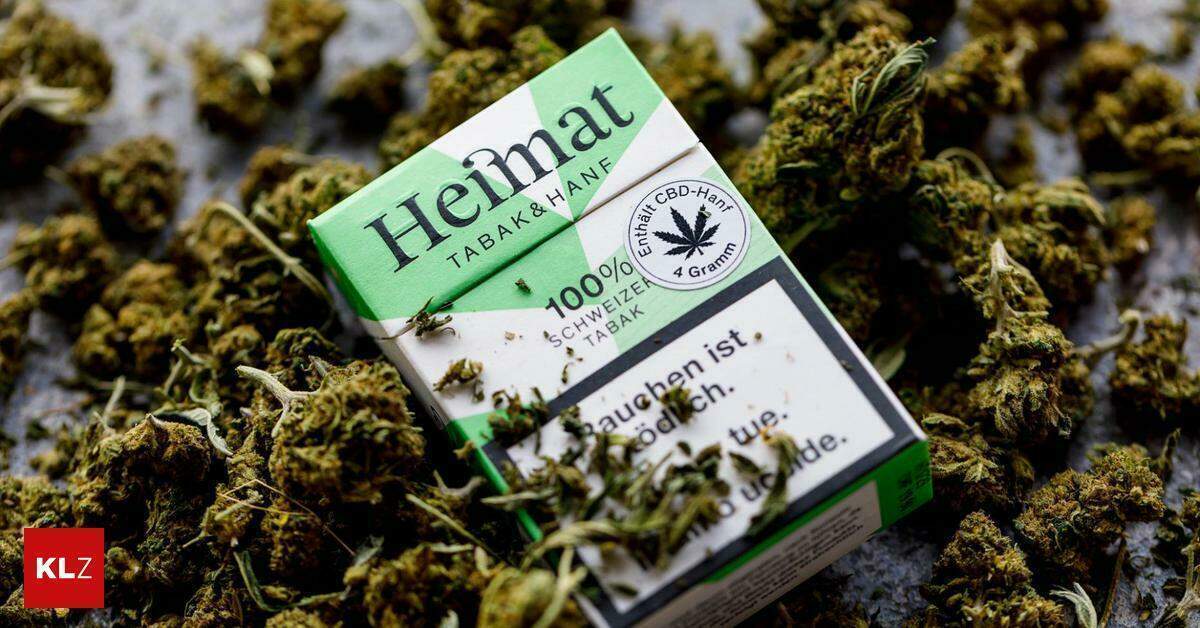
Swiss marijuana cigarette company Koch & Gesell has filed for bankruptcy, leading to the closure of CBD and tobacco brand Heimat. The company plans to potentially restart its marijuana business.

According to a report by the Swiss media outlet Kleine Zeitung, Koch & Gesell, a cannabis cigarette company based in St. Gallen, has filed for bankruptcy, signifying the closure of the Swiss CBD and tobacco brand, Heimat. The company has suggested the possibility of relaunching its cannabis business. Additionally, the subsidiary in Austria has not been affected by the bankruptcy.


The primary reasons for the bankruptcy are the company's cash flow troubles and the loss of its tobacco license. Roger Koch, the founder and CEO of the company, explained to reporters that this was due to a decline in revenue, poor cash flow status, and the inability to find new sources of funding.


The company has a subsidiary in Austria and has launched a tobacco brand called "Tschick". However, according to the company's business director Reinhard Leitner, this subsidiary has not been affected by the bankruptcy of the Swiss company.


In regards to the company's next steps for development, Roger Koch suggested that one potential option may be to entirely shift the focus of their operations towards the more lucrative cannabis industry. This could involve prioritizing products such as cannabis-infused iced tea. Koch emphasized, "We possess a wealth of expertise, experience, formulations, and a global registered patent.


This tobacco company was established in 2015 and primarily focuses on producing locally sourced tobacco in Switzerland. In 2017, they successfully developed the world's first legal marijuana-infused tobacco cigarettes, gaining significant popularity in the market. In 2019, the company also launched industrially produced pure CBD marijuana cigarettes, for which they have already submitted a patent application for the production technology.


However, in 2019, due to investments in research and development, equipment purchases, and market expansion, the company faced financial difficulties and applied for bankruptcy protection. Although it managed to avoid bankruptcy in 2020, it is now unable to withstand the pressure and has ultimately filed for bankruptcy.


We welcome news tips, article submissions, interview requests, or comments on this piece.

Please contact us at info@2firsts.com, or reach out to Alan Zhao, CEO of 2Firsts, on LinkedIn


Notice

1.  This article is intended solely for professional research purposes related to industry, technology, and policy. Any references to brands or products are made purely for objective description and do not constitute any form of endorsement, recommendation, or promotion by 2Firsts.

2.  The use of nicotine-containing products — including, but not limited to, cigarettes, e-cigarettes, nicotine pouchand heated tobacco products — carries significant health risks. Users are responsible for complying with all applicable laws and regulations in their respective jurisdictions.

3.  This article is not intended to serve as the basis for any investment decisions or financial advice. 2Firsts assumes no direct or indirect liability for any inaccuracies or errors in the content.

4.  Access to this article is strictly prohibited for individuals below the legal age in their jurisdiction.


Copyright


This article is either an original work created by 2Firsts or a reproduction from third-party sources with proper attribution. All copyrights and usage rights belong to 2Firsts or the original content provider. Unauthorized reproduction, distribution, or any other form of unauthorized use by any individual or organization is strictly prohibited. Violators will be held legally accountable.

For copyright-related inquiries, please contact: info@2firsts.com


AI Assistance Disclaimer


This article may have been enhanced using AI tools to improve translation and editorial efficiency. However, due to technical limitations, inaccuracies may occur. Readers are encouraged to refer to the cited sources for the most accurate information.

We welcome any corrections or feedback. Please contact us at: info@2firsts.com

UK Vaping Products Duty to Raise £565 Million by 2030/31
The UK will introduce Vaping Products Duty on all vaping liquids from October 1, 2026, with government revenue forecast to rise from £135 million in 2026/27 to £565 million by 2030/31.
Jun.18
Smoore Wins Three Heated Device Supply Lots in China Tobacco Jiangsu’s Overseas Market Project Covering Japan, South Korea and Southeast Asia
China Tobacco Jiangsu Industrial Co., Ltd. (JSIC) has completed its 2026-2028 heated device procurement project, with Shenzhen Smoore Technology Limited securing final supply contracts for three lots: U1, C1 and C2. The project was launched through a public tender in June 2026 to support overseas markets and involved heated tobacco devices carrying JSIC’s “iRod” trademark. Candidate supplier results published on July 13 showed Smoore ranked first for the three awarded lots, while Shenzhen Yunxi Intelligent Technology Co., Ltd. and Shenzhen Bodi Technology Development Co., Ltd. participated in the bidding process.
Aug.03
UK PM Andy Burnham Reshapes Vape Retail Rules as Licensing Could Raise Barriers for New Shops
UK Prime Minister Andy Burnham is pushing a high street reform agenda that could give local authorities greater powers over commercial activity, including vape retail. The reforms could involve expanded planning powers and a potential vape retail licensing system, allowing councils to play a larger role in store locations and market access. The measures are part of the UK’s broader shift toward tighter vape regulation, although no nationwide vape retail restrictions have yet been implemented.
Aug.11
DOJ Trade Fraud Task Force Tops $1 Billion in Cases, Putting Vape Supply Chains at Risk of Fraud Enforcement
According to the U.S. Department of Justice (DOJ), Fox News and other reports, the DOJ’s Trade Fraud Task Force (TFTF) has been linked to more than $1 billion in recoveries, penalties, forfeitures and publicly charged losses in less than one year. The task force focuses on trade fraud issues including country-of-origin fraud, illegal transshipment, false declarations and tariff evasion. While vape products are not the main source of the $1 billion figure, the industry’s reliance on global manufacturing and cross-border supply chains places it within broader U.S. trade enforcement scrutiny. The development suggests that U.S. oversight of cross-border vape products may increasingly extend beyond product authorization into import compliance, supply-chain transparency and corporate accountability.
Jul.23
How AI Is Rewriting the Talent Playbook for the Nicotine Industry: JTI’s Case
AI is moving from a back-office tool to a core organizational capability in the nicotine industry. Based on JTI’s responses, this 2Firsts feature examines how AI is reshaping talent strategy, internal mobility, decision-making and human accountability as global tobacco companies compete in the shift toward new nicotine categories.
Jun.17
China’s HTP Exports Fell 14.3% in H1 2026 as Russia and Belarus Accounted for 76% Lead
In H1 2026, China’s HS 24041100 exports stood at $1.32 million, down 14.3% YoY, with volume falling 17.2% to 55.33 tons. Market distribution shifted drastically amid overall export drops. Exports to Russia and Belarus totaled $1 million, taking 76.0% of all shipments versus 29.5% in H1 2025. Belarus became the top destination with export value jumping 177.5%, while the Philippines, Singapore and Indonesia’s combined share slumped from 49.3% to 11.2%.Domestically, Yunnan led exporter registrations; Jiangsu and Shanghai were key suppliers, yet Anhui and Sichuan had no exports. Heavy concentration means order or declaration changes for Russia/Belarus greatly affect national aggregate data. The data shows customs entry points (not end markets), covering tobacco consumables only, excluding heating equipment and the complete HTP supply chain.
Aug.11