South Korean Study: E-Cigarette Sales Double in Five Years as Smokers Shift to Novel Tobacco Products

Jun.13.2025
South Korean Study: E-Cigarette Sales Double in Five Years as Smokers Shift to Novel Tobacco Products
In recent years, smokers in South Korea have increasingly turned to e-cigarettes. The use of nicotine alternatives has led to a younger demographic among smokers, with a rising smoking rate among female adolescents. The government needs to strengthen its regulatory measures.

Key Points:


·Traditional cigarette sales are declining, while e-cigarettes are gradually taking over the market. 


·Women and young people are becoming the primary consumers of tobacco products. 


·The use of new tobacco products is leading to an increase in smoking rates among adults. 


·Nicotine substitutes are bringing new regulatory challenges.


According to South Korea's "Yonhap News" on June 12th, in recent years, domestic smokers in South Korea are gradually shifting from traditional cigarettes to HNB and e-cigarettes. Although cigarette sales have decreased by 3.2% in the past five years, the sales of e-cigarettes have nearly doubled. This phenomenon has raised concerns in society about the new trend of tobacco products lowering the smoking threshold and increasing smoking rates among women and adolescents. The government needs to enact corresponding measures to address this issue.


According to a study conducted by the Korean Association for Tobacco Control on behalf of the Ministry of Health and Welfare, cigarette sales in South Korea were approximately 6.4 billion packs in 2018, and are projected to decrease to around 6.2 billion packs by 2023, a decline of 3.2%. Meanwhile, sales of HNB (Heat-Not-Burn) products increased from 65.41 million units to 122.20 million units, representing a growth of 1.9 times.


In particular, there has been a significant increase in the consumption of flavored tobacco. In 2013, flavored tobacco accounted for only 9.8% of total sales, but by 2023, this proportion skyrocketed to 46.7%. Research indicates that new tobacco products with flavoring technology have become a major incentive for young people and women to smoke.


Although the smoking rate among adults in South Korea has decreased over the past 10 years, both male and female smoking rates have increased in 2023. According to data from the Department of Disease Management, the smoking rate among men around the age of 50 has increased from 32.5% in 2022 to 42.1% in 2023, a 9.6 percentage point increase, while women in their twenties have seen an increase from 5.8% to 12.1%, a 6.3 percentage point growth. The analysis of the study suggests that this may be due to a weakening negative perception of tobacco use and the popularity of alternative products.


Research has also found that female smokers purchase more cigarettes each time compared to men. Those in their twenties prefer e-cigarettes, those in their thirties tend to lean towards HNB products, and those aged 60 and above prefer traditional cigarettes.


Researchers point out that different types of new tobacco products have led to complex and dangerous smoking patterns, such as a resurgence of traditional cigarettes in certain populations. Synthetic nicotine and nicotine analogs have also become a new source of problems, as they are not extracted from tobacco leaves, thus bypassing current tobacco laws regulating and taxing. Researchers suggest that these nicotine analogs may be more addictive than traditional nicotine, and therefore measures need to be in place to prevent their entry into the market through policies.


We welcome news tips, article submissions, interview requests, or comments on this piece.

Please contact us at info@2firsts.com, or reach out to Alan Zhao, CEO of 2Firsts, on LinkedIn


Notice

1.  This article is intended solely for professional research purposes related to industry, technology, and policy. Any references to brands or products are made purely for objective description and do not constitute any form of endorsement, recommendation, or promotion by 2Firsts.

2.  The use of nicotine-containing products — including, but not limited to, cigarettes, e-cigarettes, nicotine pouchand heated tobacco products — carries significant health risks. Users are responsible for complying with all applicable laws and regulations in their respective jurisdictions.

3.  This article is not intended to serve as the basis for any investment decisions or financial advice. 2Firsts assumes no direct or indirect liability for any inaccuracies or errors in the content.

4.  Access to this article is strictly prohibited for individuals below the legal age in their jurisdiction.


Copyright


This article is either an original work created by 2Firsts or a reproduction from third-party sources with proper attribution. All copyrights and usage rights belong to 2Firsts or the original content provider. Unauthorized reproduction, distribution, or any other form of unauthorized use by any individual or organization is strictly prohibited. Violators will be held legally accountable.

For copyright-related inquiries, please contact: info@2firsts.com


AI Assistance Disclaimer


This article may have been enhanced using AI tools to improve translation and editorial efficiency. However, due to technical limitations, inaccuracies may occur. Readers are encouraged to refer to the cited sources for the most accurate information.

We welcome any corrections or feedback. Please contact us at: info@2firsts.com

Australia’s Victoria Steps Up Illegal Tobacco Enforcement With Store Closures and Penalties of Up to A$2.5 Million
Australia’s state of Victoria has activated new powers allowing Tobacco Licensing Victoria and police to shut premises suspected of selling, supplying or possessing illicit tobacco for up to 90 days. Longer closures can be ordered by a magistrates’ court. Businesses subject to closure orders must generally cease all trading and will be placed on a public list. Breaching a closure order can carry penalties of up to A$2.5 million and 20 years in prison.
Sep.10
Malaysia’s Vape Rules Face Review as Health Minister Dzulkefly Ahmad Addresses Dropped Nicotine Appeal
According to Free Malaysia Today on August 26, 2026, Malaysia’s Health Minister Dzulkefly Ahmad said the Health Ministry would explain the government’s decision to withdraw its appeal against a High Court ruling involving the exemption of liquid nicotine used in vape products from the Poisons List. The High Court previously ruled that the exemption decision was irrational. Dzulkefly said withdrawing the appeal did not mean the government would stop regulating vaping, and that future regulatory approaches would continue under existing legal frameworks.
Aug.28
Product | JT to Launch MEVIUS Tropical Option in Japan, Expanding Ploom Tobacco Stick Lineup to 32
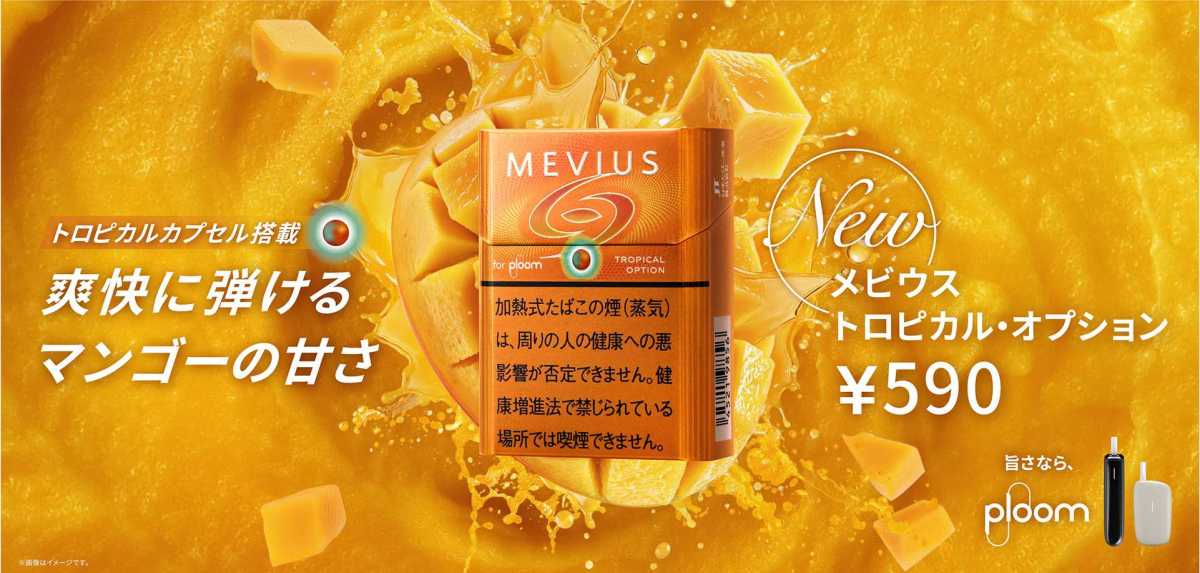
Japan Tobacco (JT) will launch MEVIUS Tropical Option, a new tobacco stick for Ploom, nationwide in Japan from October 6, 2026. The capsule-format product combines mango-oriented sweetness with menthol cooling, adding a tropical flavor to the MEVIUS Ploom tobacco-stick lineup for the first time. Each pack contains 20 sticks and will launch at JPY 590. The product is compatible with all Ploom devices, and its addition will expand the Ploom tobacco-stick portfolio to 32 variants.
Sep.08
Ohio Supreme Court Weighs Whether State Consumer Law Can Restrict Flavored Vape Sales
The Ohio Supreme Court is hearing a case involving flavored vape sales and whether state authorities can use consumer protection laws to take action against retailers selling unauthorized vape products. Ohio officials argue that selling unauthorized flavored vapes may constitute consumer deception, while retailers argue that tobacco product regulation falls under federal Food and Drug Administration (FDA) authority and that states cannot impose additional restrictions through consumer laws. The case could affect the scope of state-level vape regulation across the United States.
Aug.06
Product | HQD SiSA 80K Enters the U.S. Market With a Hookah-Inspired Approach to the High-Capacity Disposable Segment
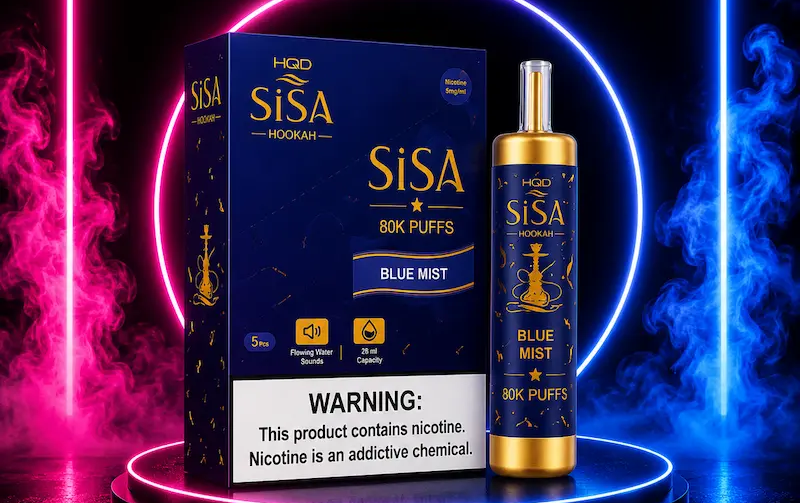
The HQD SiSA 80K Hookah Disposable Vape has appeared across U.S. and cross-border online retail channels. The device comes prefilled with 28ml of e-liquid, uses a 5% nicotine salt configuration and carries a brand claim of up to 80,000 puffs. Beyond puff count, the product differentiates itself through hookah-inspired features including adjustable airflow, a flowing-water sound effect and flavor options associated with traditional hookah consumption.
Aug.18
Malaysia Withdraws Appeal Against Liquid Nicotine Ruling as Vape Regulation Framework Enters New Phase
Malaysia’s government has withdrawn its appeal against a High Court ruling concerning the regulatory status of liquid nicotine used in vape and e-cigarette products, according to reports by New Straits Times, Free Malaysia Today and CodeBlue on August 18, 2026. The Kuala Lumpur High Court ruled on May 15 that the government’s decision to remove liquid nicotine from the scheduled poisons list under the Poisons Act 1952 was irrational and made without proper consultation with the Poisons Board. The withdrawal ends the government’s appeal process, while the future regulatory framework for nicotine vape products remains under discussion.
Aug.21