Key points:
·Issues regarding e-cigarettes.
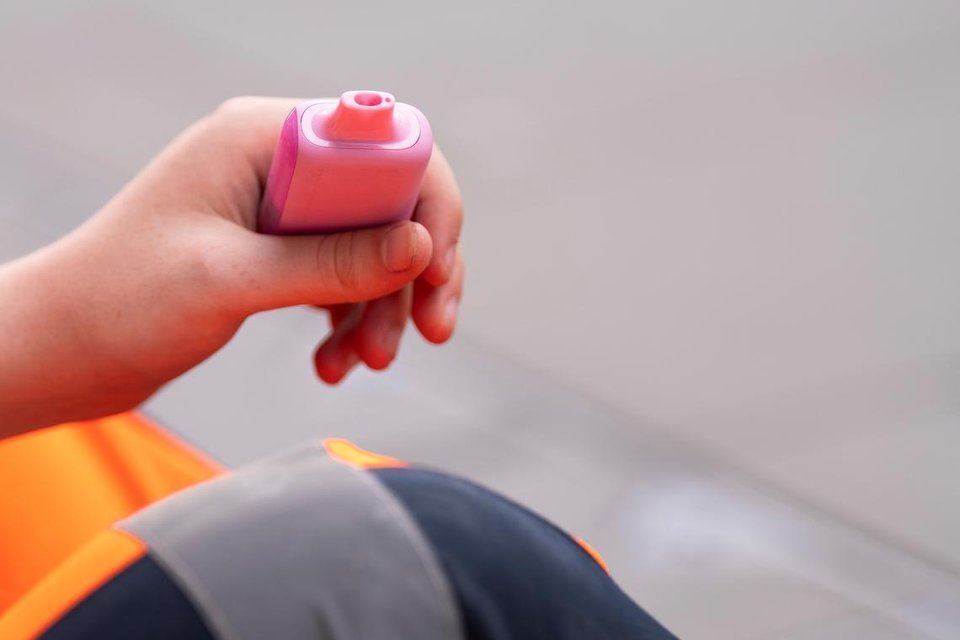
The use of e-cigarettes in Malaysia is on the rise, especially among teenagers and young women. E-cigarettes contain addictive and dangerous substances such as nicotine, abuse of which can lead to hallucinations and organ failure. The Singaporean model emphasizes:
·Singapore has banned e-cigarettes since 2018, with the maximum penalty for possessing, using, or purchasing an e-cigarette set at $2000. Nicotine, which is commonly found in e-cigarettes, will be classified as a Class C drug, and e-cigarette users will be required to attend a rehabilitation program. The situation in Malaysia:
·The number of cigarette smokers is decreasing, but the use of e-cigarettes is increasing daily. Malaysia's Health Minister, Dzulkefly Ahmad, stated that a thorough study will be conducted before considering banning nicotine as a dangerous substance. Experts recommend:
·The Consumers Association of Penang (CAP), represented by N.V. Subbarow, is calling on lawmakers to sound the alarm on the dangers of drugs in e-cigarette liquids and take strict action. The chairman of Ikram Health Malaysia, Mohd Afiq Mohd Nor, has recommended the comprehensive enforcement of the Control of Tobacco Products Regulations to protect public health. Amrahi Buang, president of the Malaysian Pharmaceutical Society (MPS), has stated that MPS adopts a zero-tolerance stance on e-cigarettes. Future measures:
·Suhaizan Kayat, the chairman of the Special Health Committee of the Malaysian Parliament, has proposed amending the Control of Tobacco Products (Amendment) Bill 2024 to ban e-cigarettes. Senior lawyer Mohamed Haniff Khatri Abdulla stated that various studies and tests are needed to determine if the substances used in e-cigarettes contain any harmful ingredients.
According to a report by the Straits Times on August 21st, Malaysia should consider emulating Singapore's approach of treating e-cigarettes as a criminal drug and implementing stricter penalties to curb their increasing use, especially among young people, health experts and activists say.
N.V. Subbarow, a senior education official from the Consumers Association of Penang (CAP), has stated that the country should handle this issue similar to how Singapore does.
In our country, most e-cigarettes contain addictive and harmful ingredients, including acetone. We should not ignore these issues," he said.
On August 17th, Singapore announced that it will strengthen its stance on e-cigarettes, treating them as a drug issue and implementing stricter punishment measures, including imprisonment for sellers of e-cigarettes containing harmful substances.
Since 2018, Singapore has banned e-cigarettes. Under current laws, the maximum fine for possessing, using, or purchasing e-cigarettes is $2,000.
Currently, under Singapore's Misuse of Drugs Act, ketamine, which has been a controlled drug, will soon be reclassified as a Class C drug. E-cigarette users will be required to participate in a rehabilitation program similar to that used for drug addicts.
Doctors typically induce sedation by injecting etomidate, but misuse of it can lead to hallucinations and permanent organ failure.
On July 30, Malaysian Health Minister Dzulkefly Ahmad stated that thorough research will be conducted before considering listing mitragynine as a dangerous drug under the law.
Dzulkefly added that the ministry is aware of the recent proposal to include the substance in the 1952 Dangerous Drugs Act, but will not rush to make a decision without proper evidence.
According to a survey conducted by the Council on Asian Pacific (CAP), the number of cigarette smokers in Malaysia is decreasing, while the number of students and young people using e-cigarettes is increasing daily.
This includes young women who have begun using e-cigarettes. They do so fearlessly. They say it is their choice and their right to equality," Mr. Subbarow said.
He added that it is now time for lawmakers to speak out about the dangers of drugs in e-cigarettes and take tough action.
The President of Ikram Health Malaysia, Mohd Afiq Mohd Nor, also agreed, stating that Singapore has a strong and consistent stance on this issue.
He suggested that while waiting for the government to make a decision to ban this substance, authorities should fully enforce Malaysia's "Control of Tobacco Products to Safeguard Public Health Act".
Consistency is key before things get worse," he said.
Amrahi Buang, President of the Malaysian Pharmaceutical Society (MPS), stated that his organization has been monitoring this issue since 2015.
At the National Pharmacist Conference held on July 25, 2025, MPS adopted a zero-tolerance stance on e-cigarettes. We need to protect the people and the nation from this scourge. These threats are indeed very harmful," he said.
Public health expert Sharifa Ezat Wan Puteh pointed out that many places have already banned e-cigarettes, but do not consider e-cigarette users to be drug addicts.
These places include Thailand, Brunei, and India, but the standards differ.
The President of the Malaysia e-cigarette organization, Samsul Kamal Ariffin, stated that any actions taken to mimic Singapore must be based on scientific facts rather than perceptions.
Prominent lawyer Mohamed Haniff Khatri Abdulla stated that if Malaysia wants to take similar steps as Singapore on this issue, it will need to implement numerous measures.
First, various studies must be conducted to determine if all types of e-cigarettes, as well as the substances used in e-cigarettes, contain drug or other harmful ingredients," he said.
Mohamed Haniff stated that the authorities must conduct various tests to determine which substances are safe for use, which are prohibited, and which are controlled.
Chairman of the Special Health Committee of the Malaysian Parliament, Suhaizan Kayat, stated that one possible approach is to introduce amendments to the Control of Tobacco Products Regulations 2024 to ban e-cigarettes in order to protect public health.
We welcome news tips, article submissions, interview requests, or comments on this piece.
Please contact us at info@2firsts.com, or reach out to Alan Zhao, CEO of 2Firsts, on LinkedIn
Notice
1. This article is intended solely for professional research purposes related to industry, technology, and policy. Any references to brands or products are made purely for objective description and do not constitute any form of endorsement, recommendation, or promotion by 2Firsts.
2. The use of nicotine-containing products — including, but not limited to, cigarettes, e-cigarettes, nicotine pouchand heated tobacco products — carries significant health risks. Users are responsible for complying with all applicable laws and regulations in their respective jurisdictions.
3. This article is not intended to serve as the basis for any investment decisions or financial advice. 2Firsts assumes no direct or indirect liability for any inaccuracies or errors in the content.
4. Access to this article is strictly prohibited for individuals below the legal age in their jurisdiction.
Copyright
This article is either an original work created by 2Firsts or a reproduction from third-party sources with proper attribution. All copyrights and usage rights belong to 2Firsts or the original content provider. Unauthorized reproduction, distribution, or any other form of unauthorized use by any individual or organization is strictly prohibited. Violators will be held legally accountable.
For copyright-related inquiries, please contact: info@2firsts.com
AI Assistance Disclaimer
This article may have been enhanced using AI tools to improve translation and editorial efficiency. However, due to technical limitations, inaccuracies may occur. Readers are encouraged to refer to the cited sources for the most accurate information.
We welcome any corrections or feedback. Please contact us at: info@2firsts.com