Penang, Malaysia, pushes forward with anti-smoking bill; 2,647 fines issued as of August

Aug.08.2025
Penang, Malaysia, pushes forward with anti-smoking bill; 2,647 fines issued as of August
Some businesses in Penang, Malaysia have until September 30 to comply with the Public Health (Control of Tobacco Products) Regulations 2024.

Key points of focus:


Business owners in Penang, Malaysia are required to comply with the provisions of the Public Health (Control of Smoking) Act 2024 (Act 852) by September 30th. 

Some merchants have not yet met the requirements of the law, and officials are urging cooperation in enforcement. The focus will primarily be on education, with fines being a secondary measure.


According to Buletin Mutiara on August 7th, business owners in Penang, Malaysia must comply with the regulations of the Public Health (Control of Tobacco) Act 2024 (Act 852) by September 30th. The act will come into effect after this date.


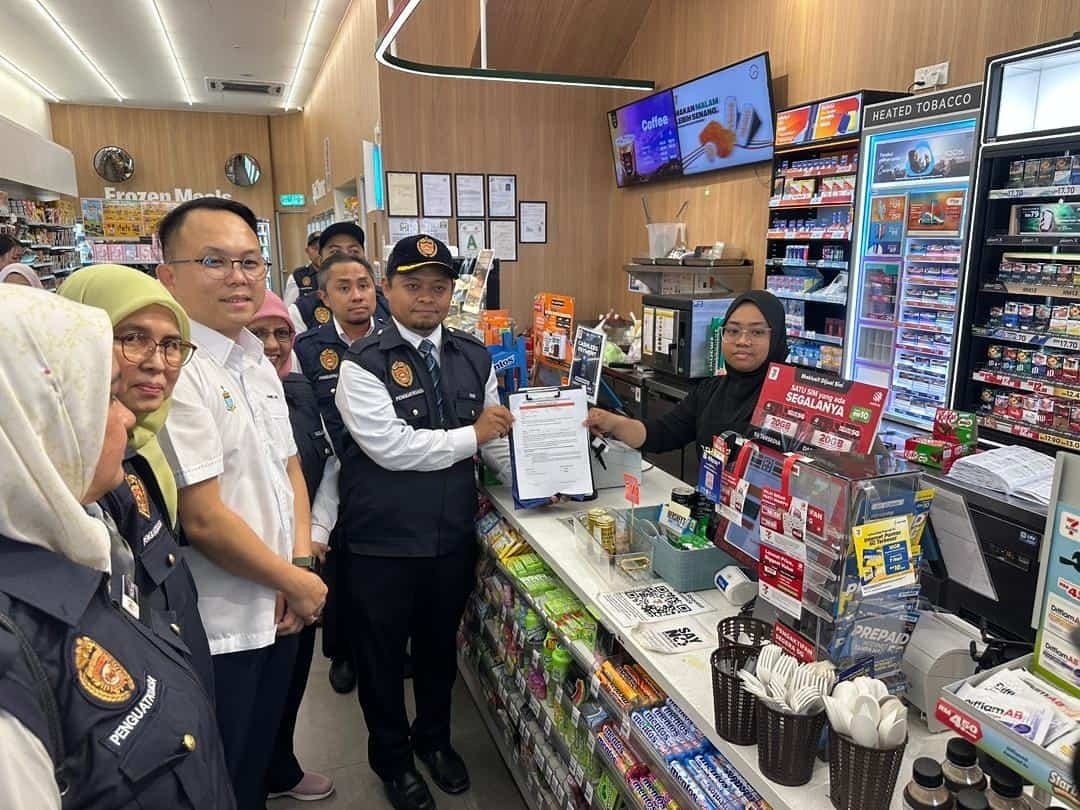
Daniel Gooi Zi Sen, a member of the Youth, Sports, and Health Affairs Committee, pointed out that through inspections it has been revealed that some businesses are still not complying with the requirements of the law. Gooi stated that he does not want to achieve compliance through fines, but rather prefers to educate businesses in order to fulfill their responsibilities.


Daniel stated that there is still plenty of time before the September 30 deadline. Some merchants have taken the initiative to post the latest notices, indicating that they will no longer sell e-cigarette products. However, there are still some merchants who have not complied with the regulations. Education and promotional activities are ongoing to ensure that efforts to create a smoke-free environment are successful.


According to the law, strict control over the registration and sale of all tobacco products is necessary. In addition, commercial establishments must display warning signs prohibiting smoking and the sale of tobacco products to minors.


Daniel added that as of August 5th, a total of 2647 fines have been issued for smoking in dining establishments, and there have also been 137 notifications sent to businesses for not displaying no smoking signs. During the operation, a total of 26 dining establishments were inspected, with 24 of them receiving the "Cleanliness and Safety" (BeSS) certification.


We welcome news tips, article submissions, interview requests, or comments on this piece.

Please contact us at info@2firsts.com, or reach out to Alan Zhao, CEO of 2Firsts, on LinkedIn


Notice

1.  This article is intended solely for professional research purposes related to industry, technology, and policy. Any references to brands or products are made purely for objective description and do not constitute any form of endorsement, recommendation, or promotion by 2Firsts.

2.  The use of nicotine-containing products — including, but not limited to, cigarettes, e-cigarettes, nicotine pouchand heated tobacco products — carries significant health risks. Users are responsible for complying with all applicable laws and regulations in their respective jurisdictions.

3.  This article is not intended to serve as the basis for any investment decisions or financial advice. 2Firsts assumes no direct or indirect liability for any inaccuracies or errors in the content.

4.  Access to this article is strictly prohibited for individuals below the legal age in their jurisdiction.


Copyright


This article is either an original work created by 2Firsts or a reproduction from third-party sources with proper attribution. All copyrights and usage rights belong to 2Firsts or the original content provider. Unauthorized reproduction, distribution, or any other form of unauthorized use by any individual or organization is strictly prohibited. Violators will be held legally accountable.

For copyright-related inquiries, please contact: info@2firsts.com


AI Assistance Disclaimer


This article may have been enhanced using AI tools to improve translation and editorial efficiency. However, due to technical limitations, inaccuracies may occur. Readers are encouraged to refer to the cited sources for the most accurate information.

We welcome any corrections or feedback. Please contact us at: info@2firsts.com

Indonesia’s BNN Pushes Total Vape Ban as Health Ministry Tightens Tobacco Packaging Rules, Putting $40 Billion Industry at Risk
Indonesia is entering a new phase of debate over vape and tobacco regulation. The National Narcotics Agency (BNN) has proposed a total vape ban, with some lawmakers supporting stronger restrictions. At the same time, the Health Ministry is advancing tobacco and nicotine regulations under Government Regulation No. 28/2024, including measures such as plain packaging and product controls. Tobacco and vape industries have warned that tighter rules could affect a sector worth around $40 billion, supporting about 6 million jobs and contributing significant tax revenue.
Jul.27
FIFA Bans Vaping in 2026 World Cup Stadiums, Putting Nicotine Rules in Event Compliance Focus
FIFA’s 2026 World Cup stadium rules prohibit smoking, vaping and the use of any tobacco products or electronic smoking devices inside stadiums, including inner and outer perimeters, while electronic smoking devices, tobacco products, lighters and matches are listed as prohibited items, bringing nicotine-product management, venue compliance and cross-border legal differences into focus at a major global sporting event.
Jul.06
BP, Marathon and Valero Warn U.S. Gas-Station Stores: Illegal Vape Sales Could Bring Heavy Fines and Card-Processing Limits
Fiserv and service station operators including BP, Marathon Petroleum and Valero have warned U.S. partners and gas-station convenience-store owners that selling illegal vapes could lead to heavy fines, breach brand agreements and even put stores’ card-processing access at risk, according to Reuters.
Regulations
Jul.07 by 2Firsts Perspectives
From Nicotine Salts to Cocrystals: China’s Shenzhen Huabao institute explores a more stable form for sustained nicotine release
China-based Shenzhen Huabao Collaborative Innovation Technology Research Institute Co., Ltd. has filed a patent application for a nicotine-ascorbic acid cocrystal, exploring a new solid-state form of nicotine. The patent proposes applications across e-liquids, heated tobacco sticks, oral tobacco, chewing tobacco and snuff. In nicotine pouch tests disclosed in the filing, cocrystal formulations showed less than a 6% decline in nicotine content after three months of accelerated storage and a release profile combining early-stage release with sustained delivery over 60 minutes. The filing reflects exploration of nicotine forms beyond conventional nicotine base and nicotine salts.
Aug.13
Germany Seizes 56 Pallets of Illegal Vapes, Probe Estimates €1.8 Million Tax Loss
German authorities have seized dozens of pallets of illegal disposable vapes in a criminal investigation, with the products estimated to have caused at least €1.8 million in tax losses. The case has also raised concerns over cross-border supply chains linked to unauthorized nicotine products entering the European market.
Jul.14
Vape Industry Group Loses Alabama Court Fight as State Tightens Rules on Imported Products
The Alabama Supreme Court affirmed a lower court’s refusal to issue a preliminary injunction blocking the state’s 2025 electronic nicotine delivery systems law, allowing rules requiring covered products to be U.S.-made or FDA-authorized to remain in effect.
Jul.10