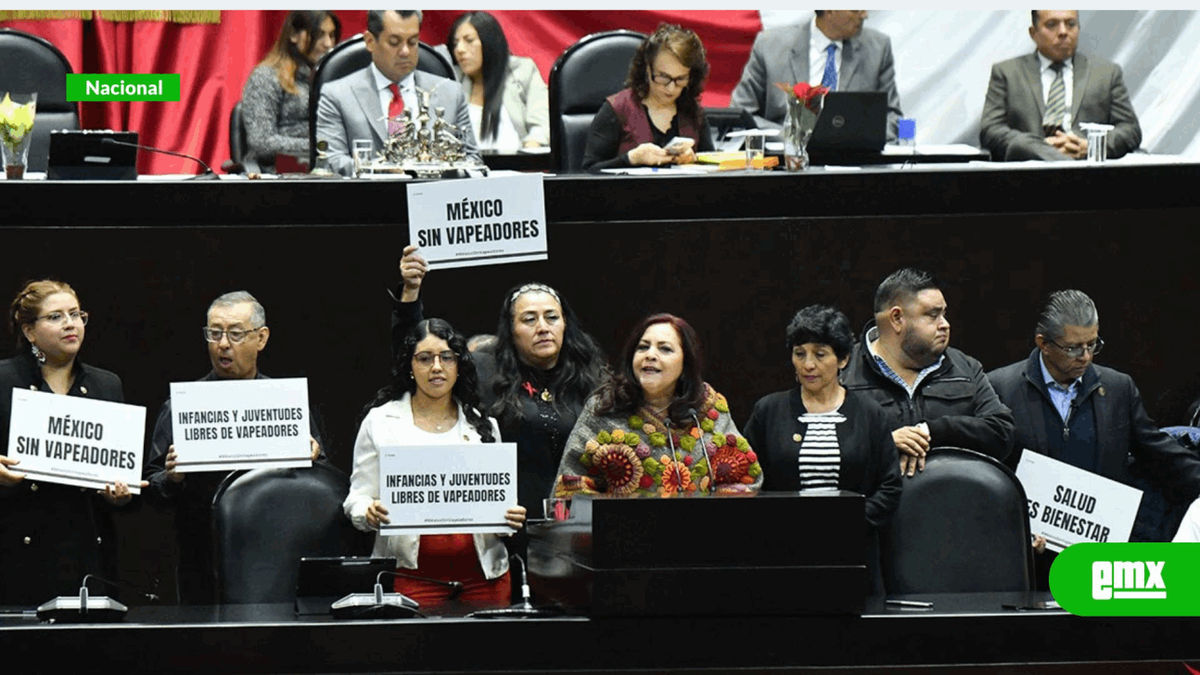
Mexican Chamber of Deputies Approves New Legislation to Ban the Illicit Use of E-Cigarettes

Dec.04.2024
Mexican Chamber of Deputies Approves New Legislation to Ban the Illicit Use of E-Cigarettes
The Mexican Chamber of Deputies has passed a constitutional amendment to prohibit the illicit use of fentanyl and e-cigarette products, and will adjust the relevant legal framework to align with the new law.

According to El Mexicano, on December 3rd, the Mexican Chamber of Deputies passed a bill with 410 votes in favor, 24 against, and zero abstentions, which prohibits the illegal use of products such as fentanyl and e-cigarettes in the constitution.


This reform is part of a package of 20 initiatives proposed by President Andrés Manuel López Obrador. The move comes after the 2022 National Health and Nutrition Survey revealed that e-cigarette use among adolescents reached 2.6% of the reference population (approximately 500 individuals) and 1.5% of the adult population (around 300,000 individuals), contributing to negative health impacts.


The Federal Commission for the Protection against Sanitary Risks (COFEPRIS) reported that in 2022, around five million people aged 12 to 65 had tried vaping devices, with 975,000 using them regularly.


In response to these figures, the approved reform adds provisions to Articles 4 and 5 of the Political Constitution of the United Mexican States, aimed at enhancing health protection. It establishes that "to ensure the right to health protection for individuals, the law will penalize any activity related to e-cigarettes, vaping devices, and other similar electronic systems or devices, as well as the production, distribution, and sale of toxic substances, chemical precursors, the illicit use of fentanyl, and other unauthorized synthetic drugs."


The amendment also prohibits professions, industries, internal and external commerce, employment, or any other activity related to these substances.


The law specifies the prohibition of the production, distribution, and sale of toxic substances, chemical precursors, and the illicit use of unauthorized synthetic drugs such as fentanyl and methamphetamines.


The reform stipulates that the Congress of the Union will have 180 days to harmonize existing legal frameworks with the decree's contents, and each of Mexico's 32 states must make the required regulatory adjustments within 365 days of the reform's publication.


The Plenary session clarified that no additional funds would be authorized for the implementation of this decree. All costs resulting from its enactment will be covered by the existing budgets of the responsible authorities for the current fiscal year.


We welcome news tips, article submissions, interview requests, or comments on this piece.

Please contact us at info@2firsts.com, or reach out to Alan Zhao, CEO of 2Firsts, on LinkedIn


Notice

1.  This article is intended solely for professional research purposes related to industry, technology, and policy. Any references to brands or products are made purely for objective description and do not constitute any form of endorsement, recommendation, or promotion by 2Firsts.

2.  The use of nicotine-containing products — including, but not limited to, cigarettes, e-cigarettes, nicotine pouchand heated tobacco products — carries significant health risks. Users are responsible for complying with all applicable laws and regulations in their respective jurisdictions.

3.  This article is not intended to serve as the basis for any investment decisions or financial advice. 2Firsts assumes no direct or indirect liability for any inaccuracies or errors in the content.

4.  Access to this article is strictly prohibited for individuals below the legal age in their jurisdiction.


Copyright


This article is either an original work created by 2Firsts or a reproduction from third-party sources with proper attribution. All copyrights and usage rights belong to 2Firsts or the original content provider. Unauthorized reproduction, distribution, or any other form of unauthorized use by any individual or organization is strictly prohibited. Violators will be held legally accountable.

For copyright-related inquiries, please contact: info@2firsts.com


AI Assistance Disclaimer


This article may have been enhanced using AI tools to improve translation and editorial efficiency. However, due to technical limitations, inaccuracies may occur. Readers are encouraged to refer to the cited sources for the most accurate information.

We welcome any corrections or feedback. Please contact us at: info@2firsts.com

Malaysia Nicotine Vape Market Faces Legal Uncertainty Over Tax and Poisons List Ruling
Malaysia’s Finance Minister Anwar Ibrahim said duties and taxes on nicotine-containing vape products will be determined in line with the Court of Appeal’s ruling on whether liquid or gel nicotine can be exempted from the Poisons List under the Poisons Act 1952, a case that could affect the legal basis for vape taxation, retail sales and future ban policy.
Jun.29
Reuters: Shopify May Ban All Vape Sales This Week Amid Illegal Market Crackdown
Reuters reported that Shopify may ban all vape products from its platform as soon as this week, signaling that U.S. enforcement against the illegal vape market is expanding from retailers and importers to e-commerce platforms and payment networks.
MarketBAT
Jun.23 by 2Firsts Perspectives
China’s HTP Exports Fell 14.3% in H1 2026 as Russia and Belarus Accounted for 76% Lead
In H1 2026, China’s HS 24041100 exports stood at $1.32 million, down 14.3% YoY, with volume falling 17.2% to 55.33 tons. Market distribution shifted drastically amid overall export drops. Exports to Russia and Belarus totaled $1 million, taking 76.0% of all shipments versus 29.5% in H1 2025. Belarus became the top destination with export value jumping 177.5%, while the Philippines, Singapore and Indonesia’s combined share slumped from 49.3% to 11.2%.Domestically, Yunnan led exporter registrations; Jiangsu and Shanghai were key suppliers, yet Anhui and Sichuan had no exports. Heavy concentration means order or declaration changes for Russia/Belarus greatly affect national aggregate data. The data shows customs entry points (not end markets), covering tobacco consumables only, excluding heating equipment and the complete HTP supply chain.
Aug.11
South Korea Brings Synthetic-Nicotine E-Cigarettes Under Tobacco Rules From June 24, Targeting Online Sales and Evasion
South Korea began full enforcement of tobacco-style rules for synthetic-nicotine e-cigarettes on June 24, 2026, with fines of up to 100,000 won for use in non-smoking areas and enforcement focus on online sales, raw nicotine liquids and products falsely marketed as nicotine-free.
MarketNews
Jun.25 by 2Firsts Perspectives
Product | JT Launches Ploom AURA Glacier White in Japan, Expanding the Device Ecosystem Through Color and Accessories
Japan Tobacco Inc. (JT) has introduced the Ploom AURA Glacier White heated tobacco device in Japan, adding a new color option to the existing Ploom AURA lineup. The device maintains the existing SMART HEATFLOW technology and HEAT SELECT SYSTEM with four heating modes, while expanding the ecosystem through new accessories including front panels, back covers, a car holder and wireless charging covers. The product entered pre-sale in Japan on June 30, 2026, followed by broader retail availability from July 7.
Aug.03
One Nation Proposes 50% Tobacco Excise Cut as Australia’s Illicit Market Expands
Australian One Nation leader Pauline Hanson has proposed cutting tobacco excise by 50% and freezing indexation until June 30, 2028, in a bid to lower legal cigarette prices and reduce the price advantage of the illicit tobacco market.
Jun.18