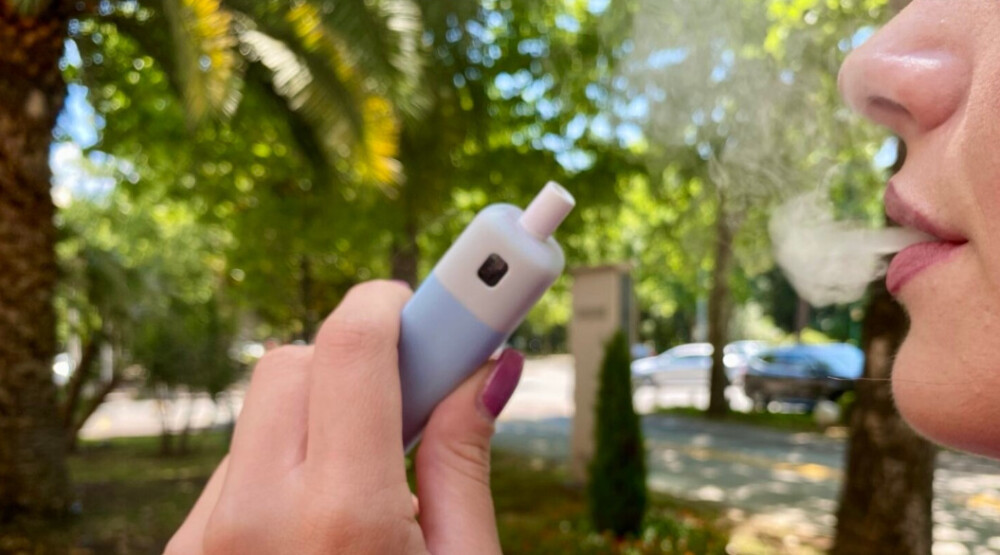
According to Aktuelno on July 1st, the Restaurant Association of Podgorica in Montenegro has recently launched a movement called "Restriction is not the Solution", urging the Montenegrin government to abandon its plan to ban the use of e-cigarettes indoors.
Five years ago, Montenegro had already passed a law prohibiting indoor smoking. Now, the government plans to expand this ban to include e-cigarettes.
The government's plan has received endorsement from the World Health Organization (WHO), which has warned of the dangers of e-cigarettes.
For governments that prioritize the health of children and future generations over the profits of the tobacco industry, this decision is very simple," said Mina Brajović, head of the World Health Organization's office in Montenegro, in an interview with Radio Free Europe.
If this proposed law receives support from legislators and goes into effect, Montenegro will join the list of 42 countries worldwide that ban the use of e-cigarettes indoors.
According to data from the World Health Organization, currently 34 countries worldwide have banned the sale of e-cigarettes. There is a concerning upward trend in the percentage of young people using e-cigarettes. Approximately one-third of 15-year-old adolescents globally report having used e-cigarettes.
Brajovic pointed out that the tobacco industry is making e-cigarettes more attractive to children and adolescents by offering over 16,000 different flavors, sometimes even packaging them with cartoon characters.
By doing this, they are recruiting new users, making them nicotine addicts from a young age. Does Montenegro really want to provide these for the benefit of the tobacco industry and lobbying groups, to the younger generation? I believe not.
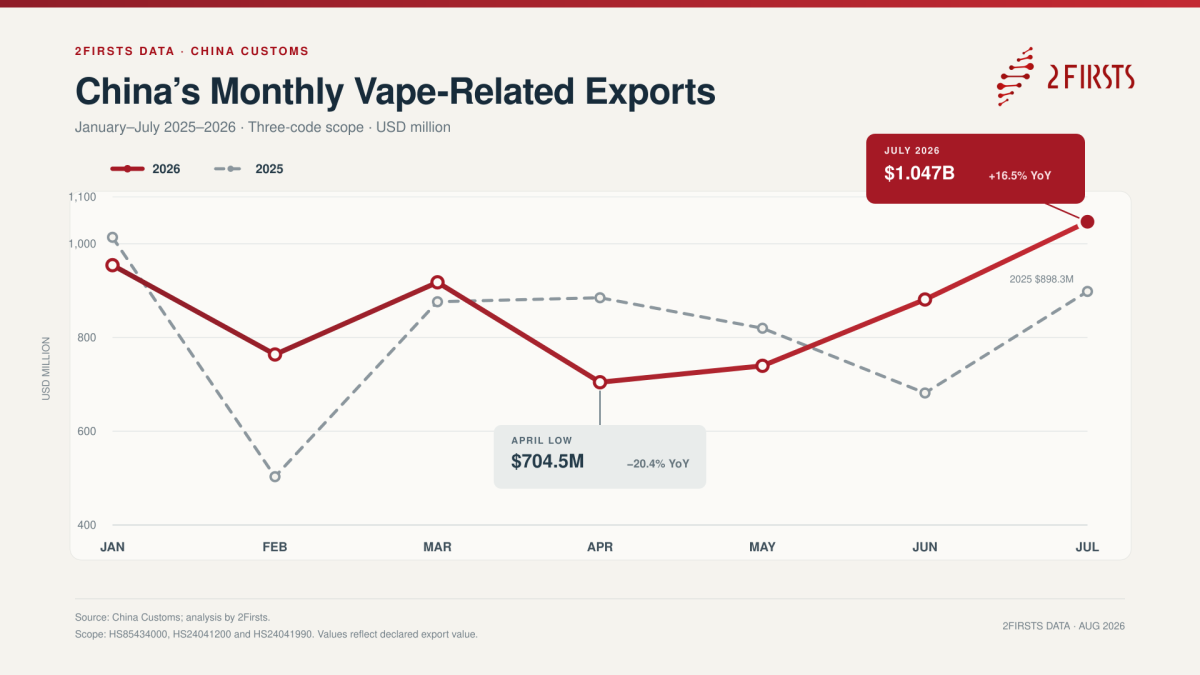
In recent years, the import volume of e-cigarettes in Montenegro has sharply increased. According to data from the Montenegrin Statistical Office (MONSTAT), Montenegro has imported 2.5 million e-cigarettes from China since 2020.
Due to the increasing sales and popularity of e-cigarettes among adolescents, Dr. Agima Ljaljević, National Tobacco Control Coordinator, believes that swift action is needed.
She pointed out that e-cigarettes have only been in use for 15 years, which is not enough time to determine all of their potential side effects.
However, there is no doubt that e-cigarettes are not effective for quitting smoking, and they are not as "less harmful than traditional cigarettes" as tobacco companies claim.
She added that more and more e-cigarettes on the market are labeled as nicotine-free, but tests show that this is not accurate.
Nicotine is the very cause of addiction.
The coordinator believes that part of the solution lies in reducing the supply of e-cigarettes, implementing strict advertising and traffic control policies, and establishing appropriate taxation and pricing strategies.
Despite the Ministry of Health pushing for the implementation of a law prohibiting the indoor use of e-cigarettes, Montenegro is also facing numerous challenges in enforcing the ban on traditional cigarettes.
No Smoking Allowed!" initiative launched by the Monitoring and Research Centre (CeMI) and the youth organization Juventas with the support from WHO aimed at addressing the issue of violation of indoor smoking bans in dining establishments. The project allows citizens to easily report violations through an application, which will then be sent to the relevant inspection agencies.
The agency's Vladimir Simonović explained that despite the project ending at the end of March, reports are still ongoing. So far, a total of 522 reports have been received.
The average response time for reports investigated by the regulatory agency is eight days, reflecting inefficiencies in enforcement. Additionally, the penalty policy appears ineffective, as fines typically fall within the statutory minimum range.
Simonovic pointed out that inspectors can impose fines of 30 euros on individuals smoking indoors, and up to a maximum of 500 euros on businesses, but these penalties have not been effective as a deterrent.
According to data from the RSE, in the first six months of 2024, the number of inspections conducted by inspectors has increased by 30% compared to the previous year, while the reports received have also increased by 70%.
The ban on e-cigarettes by the Montenegrin government has sparked widespread controversy, particularly among those in the food and beverage industry. Many are concerned that the ban will negatively impact their businesses, while supporters emphasize the importance of the ban in protecting public health, especially young people, from the harmful effects of nicotine.
We welcome news tips, article submissions, interview requests, or comments on this piece.
Please contact us at info@2firsts.com, or reach out to Alan Zhao, CEO of 2Firsts, on LinkedIn
Notice
1. This article is intended solely for professional research purposes related to industry, technology, and policy. Any references to brands or products are made purely for objective description and do not constitute any form of endorsement, recommendation, or promotion by 2Firsts.
2. The use of nicotine-containing products — including, but not limited to, cigarettes, e-cigarettes, nicotine pouchand heated tobacco products — carries significant health risks. Users are responsible for complying with all applicable laws and regulations in their respective jurisdictions.
3. This article is not intended to serve as the basis for any investment decisions or financial advice. 2Firsts assumes no direct or indirect liability for any inaccuracies or errors in the content.
4. Access to this article is strictly prohibited for individuals below the legal age in their jurisdiction.
Copyright
This article is either an original work created by 2Firsts or a reproduction from third-party sources with proper attribution. All copyrights and usage rights belong to 2Firsts or the original content provider. Unauthorized reproduction, distribution, or any other form of unauthorized use by any individual or organization is strictly prohibited. Violators will be held legally accountable.
For copyright-related inquiries, please contact: info@2firsts.com
AI Assistance Disclaimer
This article may have been enhanced using AI tools to improve translation and editorial efficiency. However, due to technical limitations, inaccuracies may occur. Readers are encouraged to refer to the cited sources for the most accurate information.
We welcome any corrections or feedback. Please contact us at: info@2firsts.com