According to an article on the Observer, a US news website, on December 15th, New York State Senator Nathalia Fernandez has introduced a legislative proposal (S.7771) to ban disposable e-cigarettes.
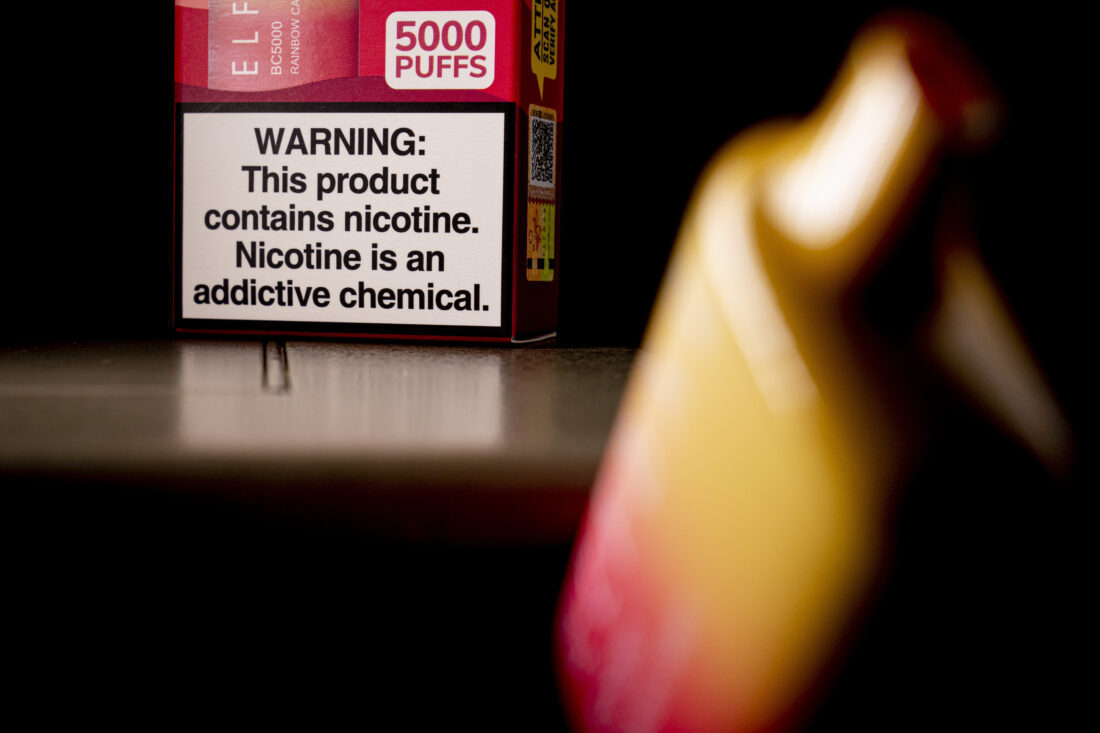
The disposable e-cigarette is a compact, battery-powered device that delivers nicotine vapor in various flavors. While they do not contain tobacco, many products still contain nicotine and cannot be recharged or reused. The small disposable lithium batteries in these devices are often discarded in landfills, which is a key issue addressed in a recently proposed legislation in New York.
Fernandez states in her legislative argument, "The widespread use of e-cigarettes poses harm to public health and is extremely detrimental to our environment. There are countless rechargeable devices circulating in the market, making it unnecessary to further pollute the environment with disposable products.
She cited a report from the United States Fire Administration in 2017, which documented nearly 200 incidents of e-cigarette explosions occurring between 2009 and 2016. Furthermore, the 2022 Youth Tobacco Survey found that disposable e-cigarettes continue to be the most popular choice among young people, with 85% of e-cigarette users opting for flavored products.
She further stated:
As the use of e-cigarettes becomes more widespread, the amount of waste generated is also increasing. These plastic devices will never fully degrade and can be found littering beaches around the world, polluting public spaces. In July 2023, a report from the U.S. PIRG Education Fund estimated that 4.5 disposable e-cigarettes are discarded every second in the United States.
Marion Catellin, the chairperson of the Anti-Smoking Alliance, informed the Associated Press that disposable e-cigarettes are made of plastic. They contain a lithium battery and other heavy metals, including cobalt and bromine. These pods contain highly toxic nicotine... Simply considering their impact on the environment, these disposable e-cigarettes should be banned.
The United Kingdom, Ireland, and Germany are also considering adopting similar measures. New Zealand and Australia have already implemented restrictions. New Zealand's measures include mandatory reduction of nicotine levels and restrictions on the location of e-cigarette stores near schools.
We welcome news tips, article submissions, interview requests, or comments on this piece.
Please contact us at info@2firsts.com, or reach out to Alan Zhao, CEO of 2Firsts, on LinkedIn
Notice
1. This article is intended solely for professional research purposes related to industry, technology, and policy. Any references to brands or products are made purely for objective description and do not constitute any form of endorsement, recommendation, or promotion by 2Firsts.
2. The use of nicotine-containing products — including, but not limited to, cigarettes, e-cigarettes, nicotine pouchand heated tobacco products — carries significant health risks. Users are responsible for complying with all applicable laws and regulations in their respective jurisdictions.
3. This article is not intended to serve as the basis for any investment decisions or financial advice. 2Firsts assumes no direct or indirect liability for any inaccuracies or errors in the content.
4. Access to this article is strictly prohibited for individuals below the legal age in their jurisdiction.
Copyright
This article is either an original work created by 2Firsts or a reproduction from third-party sources with proper attribution. All copyrights and usage rights belong to 2Firsts or the original content provider. Unauthorized reproduction, distribution, or any other form of unauthorized use by any individual or organization is strictly prohibited. Violators will be held legally accountable.
For copyright-related inquiries, please contact: info@2firsts.com
AI Assistance Disclaimer
This article may have been enhanced using AI tools to improve translation and editorial efficiency. However, due to technical limitations, inaccuracies may occur. Readers are encouraged to refer to the cited sources for the most accurate information.
We welcome any corrections or feedback. Please contact us at: info@2firsts.com