Oregon Proposed Ban on Flavored Tobacco Products Sparks Debate

Mar.06.2025
Oregon Proposed Ban on Flavored Tobacco Products Sparks Debate
Oregon proposes ban on all flavored tobacco products, sparking debate over impact on youth vaping and potential black market expansion.

Key takeaways:


Oregon state in the United States is considering banning the sale of all flavored tobacco products.


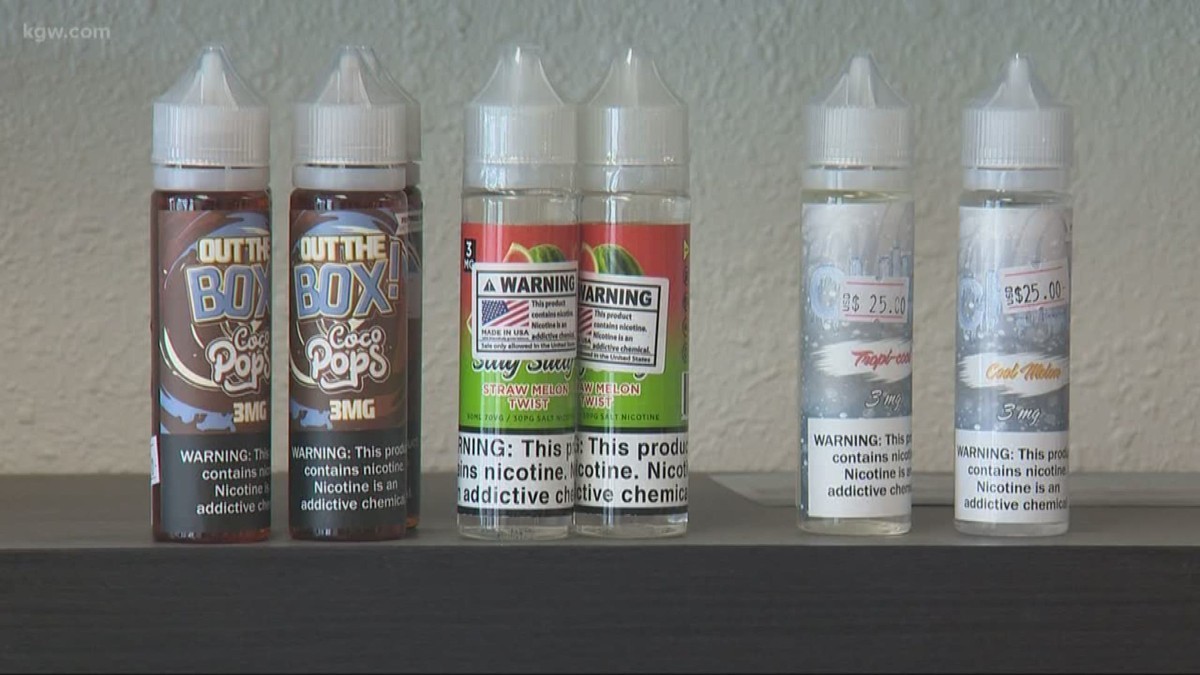
Supporters believe that the ban will help reduce the use of flavored e-cigarettes among teenagers, while tobacco shop owners argue that the ban may lead to the expansion of the black market.


Some people believe that the ban may encourage users to return to traditional cigarettes.


According to a report from KGW8 on March 4th, a bill aiming to ban flavored nicotine products in the state of Oregon held its first hearing on the same day.


The bill will prohibit the sale or distribution of any "flavored tobacco products" in the state. Senator Lisa Reynolds stated that the bill is broadly worded and covers any flavored products containing tobacco or nicotine, and could even encompass "things we haven't thought of.


The bill will also prohibit promotional gifts and other free distribution of all tobacco products, flavored or not. In addition, all cigarettes, e-cigarettes, and smokeless tobacco products can only be sold at licensed retailers.


At a hearing of the Senate Committee on Early Childhood and Behavioral Health, dozens of individuals voiced their opinions on the bill. Students, parents advocates, and lawmakers were mainly concerned about the health risks of tobacco and the appeal of flavored e-cigarettes to adolescents and young people. However, several tobacco shop owners argued that purchasing e-cigarettes and tobacco products for those under 21 is already illegal. They believe that a complete ban on flavored products would significantly harm their business and potentially lead to the expansion of a black market for flavored products.


Senator David Brock Smith believes that e-cigarettes and smokeless tobacco products pose less risk to user health than traditional cigarettes, and that banning these alternative products could potentially lead some users to return to smoking traditional cigarettes.


We welcome news tips, article submissions, interview requests, or comments on this piece.

Please contact us at info@2firsts.com, or reach out to Alan Zhao, CEO of 2Firsts, on LinkedIn


Notice

1.  This article is intended solely for professional research purposes related to industry, technology, and policy. Any references to brands or products are made purely for objective description and do not constitute any form of endorsement, recommendation, or promotion by 2Firsts.

2.  The use of nicotine-containing products — including, but not limited to, cigarettes, e-cigarettes, nicotine pouchand heated tobacco products — carries significant health risks. Users are responsible for complying with all applicable laws and regulations in their respective jurisdictions.

3.  This article is not intended to serve as the basis for any investment decisions or financial advice. 2Firsts assumes no direct or indirect liability for any inaccuracies or errors in the content.

4.  Access to this article is strictly prohibited for individuals below the legal age in their jurisdiction.


Copyright


This article is either an original work created by 2Firsts or a reproduction from third-party sources with proper attribution. All copyrights and usage rights belong to 2Firsts or the original content provider. Unauthorized reproduction, distribution, or any other form of unauthorized use by any individual or organization is strictly prohibited. Violators will be held legally accountable.

For copyright-related inquiries, please contact: info@2firsts.com


AI Assistance Disclaimer


This article may have been enhanced using AI tools to improve translation and editorial efficiency. However, due to technical limitations, inaccuracies may occur. Readers are encouraged to refer to the cited sources for the most accurate information.

We welcome any corrections or feedback. Please contact us at: info@2firsts.com

Tasmania Reports Annual Enforcement Results: 5.5 Million Illegal Cigarettes and Nearly 30,000 Vapes Seized, With IGET Products Visible in Official Images
Tasmania reported its 2025/26 illicit tobacco enforcement results on July 14, with authorities seizing about 5.5 million illegal cigarettes, more than 2,500 kilograms of loose tobacco and nearly 30,000 vapes.
Jul.15
How AI Is Rewriting the Talent Playbook for the Nicotine Industry: JTI’s Case
AI is moving from a back-office tool to a core organizational capability in the nicotine industry. Based on JTI’s responses, this 2Firsts feature examines how AI is reshaping talent strategy, internal mobility, decision-making and human accountability as global tobacco companies compete in the shift toward new nicotine categories.
Jun.17
Exclusive: China Tobacco Launches Locally Made MODEN FREE Nicotine Pouches in Indonesia
2Firsts exclusively reports that China Tobacco Zhejiang Industrial has launched MODEN FREE nicotine pouches in Indonesia. The locally manufactured product is sold through Sixhill, a next-generation tobacco channel under CFU Group, at about $1.80 per 18-pouch can. The launch moves China Tobacco’s nicotine pouch activity beyond trade-show displays and testing into local production and public retail.
Jul.16
JT’s Ploom Volumes Rise 43.5% as Cigarettes Anchor Its Transition
JT’s Ploom heated-tobacco volumes rose 43.5% in the first half of 2026, while combustibles still represented about 97% of its tobacco volume and remained the main earnings base. In Japan, reduced-risk products now account for 48.7% of industry shipments, shifting competition from category adoption towards brand share, pricing and consumer retention. JT’s results offer a revealing case of a traditional tobacco company pursuing a prolonged, dual-track transformation.
JTI
Jul.30
Product | Summo 150K Introduces Refillable Design With Up to 150,000 Puffs, Exploring a New High-Capacity Vape Format
Summo has introduced the Summo 150K Refillable Disposable Vape, entering the ultra-high-puff vape segment with a claimed capacity of up to 150,000 puffs. The device combines a 40ml dual e-liquid system, transparent tank design, dual mesh coils and a 900mAh rechargeable battery, using a refillable structure to differentiate itself from conventional disposable vapes. The product appeared on overseas online retail channels including Vapesourcing and VapeBarTime between late June and early July 2026.
Jul.22
IQOS Global Flagship Space to Open in Tokyo Ginza as PMI Expands Consumer Experience Strategy
Philip Morris Japan (PMJ) announced that it will open “IQOS Flagship Ginza” in Tokyo on September 4, 2026. The location will become the first global flagship space for PMI’s IQOS brand. PMJ said the venue will target adult smokers aged 20 and above and combine product experiences, community engagement and local cultural elements. The design will incorporate Japanese natural aesthetics and traditional craftsmanship. The launch reflects PMI’s broader strategy of strengthening consumer engagement through experiential retail and brand spaces. The existing IQOS Store Ginza is scheduled to close on August 30, 2026.
Jul.21