Quick Takeaways
Japan: Adult smoking fell from 19.6% in 2014 to 10.6% in 2022 (-46%). PMI cites research linking the rollout of heated tobacco products to declining cigarette sales.
New Zealand: Established a regulatory framework for smoke-free products in 2020; monthly smoking prevalence fell to 8.3% in 2023, a 53% drop since 2014.
Thailand: Has banned e-cigarettes and heated tobacco products since 2014; adult smoking fell from 20.7% in 2014 to 17.4% in 2021 (about -16%).
PMI’s view: Offering regulated alternatives for adults who cannot fully quit nicotine—alongside traditional tobacco-control measures—could accelerate declines in smoking.
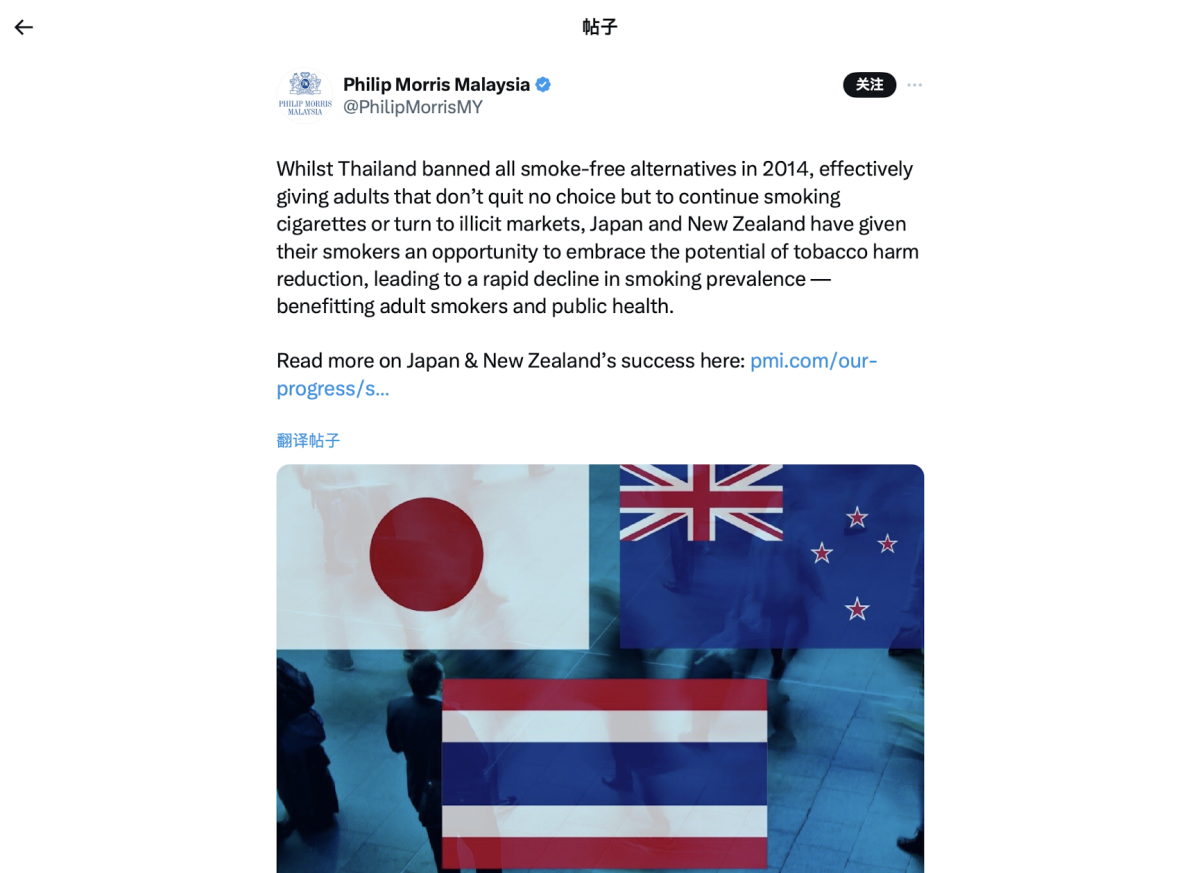
2Firsts, October 15, 2025 — According to posts from Philip Morris Malaysia (@PhilipMorrisMY) on X, Philip Morris International (PMI) says Thailand has maintained a comprehensive ban on all smoke-free alternatives—including e-cigarettes and heated tobacco products—since 2014. As a result, adults who have not been able to quit are left with few options beyond continuing to smoke cigarettes or turning to the illicit market. In contrast, Japan and New Zealand provide and regulate smoke-free alternatives for adult smokers, giving them an opportunity to benefit from tobacco-harm-reduction potential, which PMI says has coincided with rapid declines in smoking and benefits for adult smokers and public health.
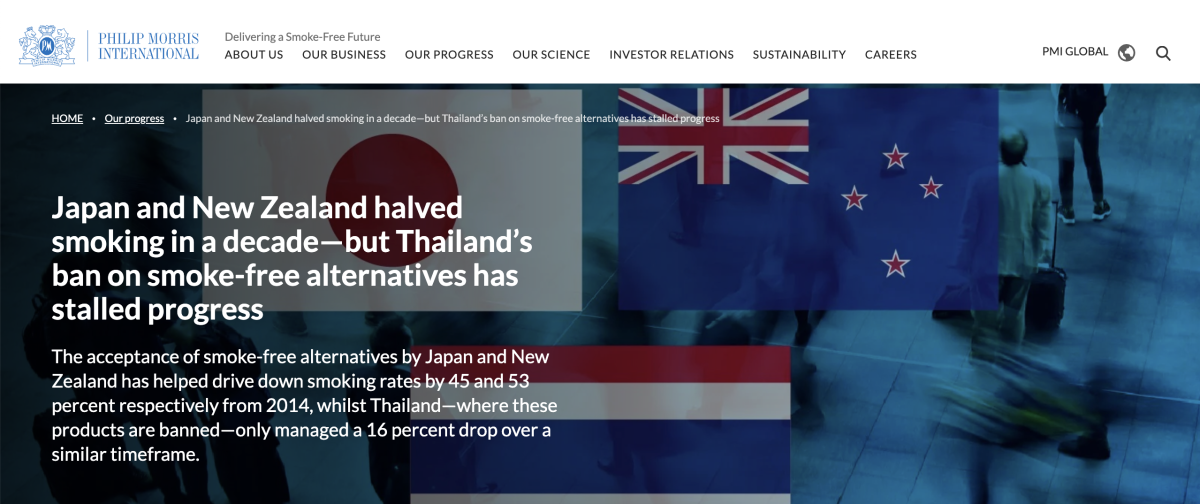
In the post, PMI also linked to the “Our Progress” section on its corporate website, highlighting how adult smoking rates fell sharply in Japan and New Zealand after these countries accepted and regulated smoke-free products (including heated tobacco and e-cigarettes).
Japan and New Zealand Offer Compliant Options
PMI notes that Japan introduced heated tobacco products in some cities in 2014 and expanded nationwide in 2015. Adult smoking dropped from 19.6% in 2014 to 10.6% in 2022 (-46%), while sales of combustible tobacco declined more quickly over the same period. PMI also cites a 2019 American Cancer Society study suggesting that the introduction of heated tobacco “may have reduced cigarette sales” in Japan.
In New Zealand, the government incorporated harm-reduction principles into tobacco control in 2020 and established a legislative framework for smoke-free products. Citing the New Zealand Health Survey, PMI says monthly smoking prevalence has fallen 53% since 2014, reaching 8.3% in 2023.
Thailand Shows the Limits of Traditional Measures
By contrast, Thailand illustrates the limitations of relying solely on traditional tobacco-control tools while rejecting smoke-free alternatives. Since 2014, Thailand has enforced a strict ban on all smoke-free products, including heated tobacco and e-cigarettes.
Despite stringent measures on cigarettes, adult smoking only declined from 20.7% in 2014 to 17.4% in 2021—about a 16% reduction over seven years.
This slower decline suggests that traditional strategies alone may not be sufficient to markedly reduce smoking rates. By prohibiting smoke-free alternatives that could replace continued smoking, Thailand effectively removes a potential pathway away from cigarettes for adult smokers.
Conclusion
PMI concludes that providing regulated smoke-free alternatives to adults who cannot fully quit nicotine—alongside established tobacco-control policies—may help hasten declines in smoking and improve public health.
Cover image: PMI
We welcome news tips, article submissions, interview requests, or comments on this piece.
Please contact us at info@2firsts.com, or reach out to Alan Zhao, CEO of 2Firsts, on LinkedIn
Notice
1. This article is intended solely for professional research purposes related to industry, technology, and policy. Any references to brands or products are made purely for objective description and do not constitute any form of endorsement, recommendation, or promotion by 2Firsts.
2. The use of nicotine-containing products — including, but not limited to, cigarettes, e-cigarettes, nicotine pouchand heated tobacco products — carries significant health risks. Users are responsible for complying with all applicable laws and regulations in their respective jurisdictions.
3. This article is not intended to serve as the basis for any investment decisions or financial advice. 2Firsts assumes no direct or indirect liability for any inaccuracies or errors in the content.
4. Access to this article is strictly prohibited for individuals below the legal age in their jurisdiction.
Copyright
This article is either an original work created by 2Firsts or a reproduction from third-party sources with proper attribution. All copyrights and usage rights belong to 2Firsts or the original content provider. Unauthorized reproduction, distribution, or any other form of unauthorized use by any individual or organization is strictly prohibited. Violators will be held legally accountable.
For copyright-related inquiries, please contact: info@2firsts.com
AI Assistance Disclaimer
This article may have been enhanced using AI tools to improve translation and editorial efficiency. However, due to technical limitations, inaccuracies may occur. Readers are encouraged to refer to the cited sources for the most accurate information.
We welcome any corrections or feedback. Please contact us at: info@2firsts.com