U.S. Redding Police Conduct Tobacco Compliance Checks, Several Fined for Illegal Sales

Jul.25.2025
U.S. Redding Police Conduct Tobacco Compliance Checks, Several Fined for Illegal Sales
U.S. Redding Police Intensify Crackdown on Illegal Tobacco Sales, Seize Over 600 Flavored Products, Emphasizing Youth Health and Safety.

Key points:


·The Reading City Police in the United States are intensifying efforts to crack down on teenagers obtaining tobacco products. 


·During a special inspection operation, two stores were found to be selling flavored tobacco products in violation of the law. 


·These stores were shut down and over 600 flavored tobacco products were confiscated. 


·California law strictly prohibits flavored tobacco products, and enforcement efforts are being increased.


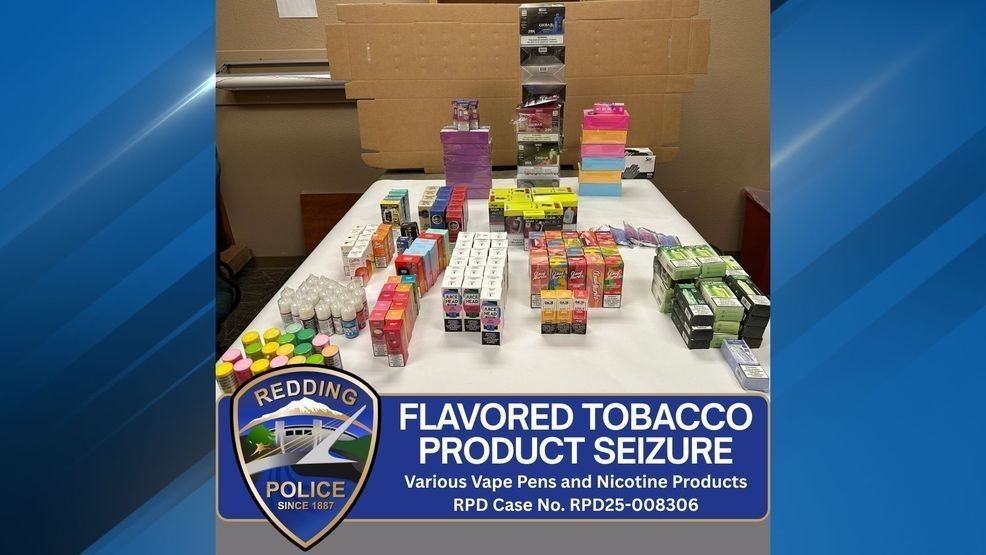
【2Firsts News Flash】According to KRCR on July 24th, the Redding Police Department in California conducted a series of enforcement actions in July to restrict teenagers' access to tobacco and e-cigarette products. This initiative resulted in multiple citations being issued and the seizure of flavored tobacco products.


On July 1st, the police conducted the first retail tobacco inspection at a smoke shop on Victoria Avenue and found multiple violations, including not having a valid tobacco retail license and lacking necessary signage. The store employees received a verbal warning and were provided with educational materials on compliance.


On July 16, police, along with tobacco compliance experts from Shasta County, conducted a follow-up inspection of the store and discovered a list of flavored tobacco products and warehouse. Over 600 flavored tobacco products were confiscated. 46-year-old Redding city employee Rattana Xayavong was fined for possessing flavored tobacco products with intent to sell.


On July 18, with the assistance of an under-21 adult police trainee, the police carried out a "shoulder tap" operation targeting adults who purchase tobacco for minors. During the operation, five individuals were fined for supplying tobacco to minors.


According to police, during a retail inspection on the same day, an employee handed over a handbag containing over 300 flavored tobacco products. The store owner, 27-year-old Anderson resident Gurshawn Padda, was previously caught with flavored tobacco products at his other store on July 3, 2025. Police stated that charges will be brought against Padda for possessing and intending to sell flavored tobacco products.


The Reading City Police Department emphasized that these actions are part of a broader public safety strategy supported by state funding, aimed at protecting the health and safety of young people and ensuring the enforcement of state laws. According to California law, the sale of flavored tobacco products is prohibited due to their appeal to youth and health risks. In 2022, voters supported legislators in enforcing the product ban passed in 2020, and the US Supreme Court reaffirmed the ban that same year by rejecting a request from tobacco companies to halt it.


In addition, the Reading City Council passed an ordinance on July 15 requiring tobacco retailers to pay a fee that will be used for the enforcement and administration of the tobacco retail license program.


We welcome news tips, article submissions, interview requests, or comments on this piece.

Please contact us at info@2firsts.com, or reach out to Alan Zhao, CEO of 2Firsts, on LinkedIn


Notice

1.  This article is intended solely for professional research purposes related to industry, technology, and policy. Any references to brands or products are made purely for objective description and do not constitute any form of endorsement, recommendation, or promotion by 2Firsts.

2.  The use of nicotine-containing products — including, but not limited to, cigarettes, e-cigarettes, nicotine pouchand heated tobacco products — carries significant health risks. Users are responsible for complying with all applicable laws and regulations in their respective jurisdictions.

3.  This article is not intended to serve as the basis for any investment decisions or financial advice. 2Firsts assumes no direct or indirect liability for any inaccuracies or errors in the content.

4.  Access to this article is strictly prohibited for individuals below the legal age in their jurisdiction.


Copyright


This article is either an original work created by 2Firsts or a reproduction from third-party sources with proper attribution. All copyrights and usage rights belong to 2Firsts or the original content provider. Unauthorized reproduction, distribution, or any other form of unauthorized use by any individual or organization is strictly prohibited. Violators will be held legally accountable.

For copyright-related inquiries, please contact: info@2firsts.com


AI Assistance Disclaimer


This article may have been enhanced using AI tools to improve translation and editorial efficiency. However, due to technical limitations, inaccuracies may occur. Readers are encouraged to refer to the cited sources for the most accurate information.

We welcome any corrections or feedback. Please contact us at: info@2firsts.com

JTI Makes Third Bet on South Korea as Ploom AURA Enters a Market Dominated by lil and IQOS
Japan Tobacco International is stepping up its heated tobacco push in South Korea with Ploom AURA. Since its official launch in April 2026, the device's limited First Edition and Glacier White version have sold out, while distribution has expanded across Seoul, Incheon, Gyeonggi Province and airport duty-free channels. The rollout marks JTI's third major attempt to build a stronger heated tobacco position in South Korea, following Ploom TECH in 2019 and Ploom X Advanced in 2024. At the group level, JT plans to invest about ¥800 billion, approximately $5 billion, in reduced-risk products from 2026 through 2028, with heated products and Ploom identified as its primary investment priority.
Aug.14
From Border-Logistics Insiders to Retail Service Stations, Australia Mounts a Sweeping Crackdown on the Illicit Nicotine Trade as iGET Vapes Surface in A$80 Million Crime Networks
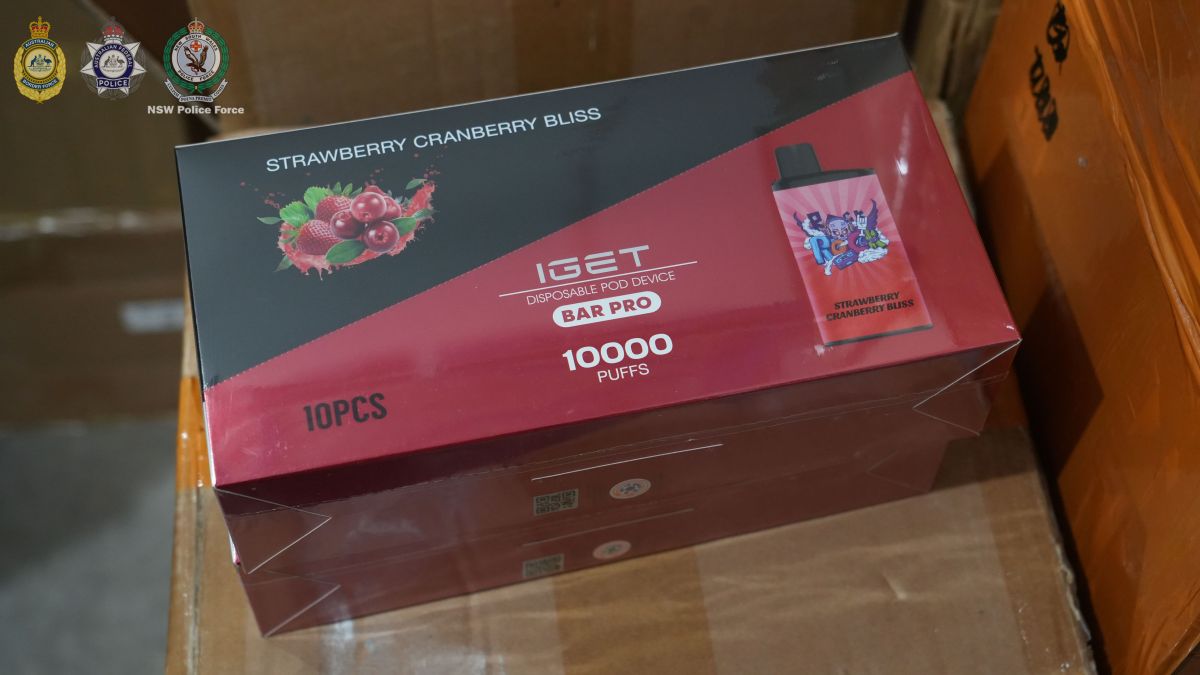
Australian authorities have disclosed two major enforcement actions that go beyond product seizures and retail closures to examine how illicit tobacco and vape networks operate. On Aug. 14, the Multi Agency Strike Team said seven people had been charged and two criminal networks were valued by authorities at a combined A$80 million, or about US$56.8 million. Investigators allege the groups used bonded warehouses, freight businesses and “trusted insiders” in legitimate industries to circumvent border controls. In a separate operation on Aug. 11, more than 100 service stations were targeted as authorities sought information on illicit tobacco importation, distribution networks and the movement of sales proceeds.
Aug.17
IVG Parent Secures HMRC Excise Warehouse and Duty Stamp Approvals Ahead of UK Vape Tax
Acme Vape Ltd, the company behind UK vaping brand IVG, has received HM Revenue & Customs approval to operate an excise warehouse for vaping products and participate in the Vaping Duty Stamps Scheme. The UK's Vaping Products Duty will take effect on October 1, 2026, at a flat rate of £2.20 per 10ml of vaping liquid. Acme Vape Ltd says its approved warehouse in Preston will become operational under the new regime on the same date.
Regulations
Sep.18 by 2Firsts Perspectives
China Tobacco Regulator Deputy Head Visits Laos as Both Sides Strengthen Cooperation on Illegal Tobacco Trade
China’s official Xinhua News Agency reported that Liu Sanjiang, deputy head and Party group member of China’s tobacco regulator, led a delegation to Laos from July 31 to Aug. 2, 2026, for discussions with Lao authorities on combating cross-border illegal tobacco trade. The two sides discussed areas including law enforcement cooperation, information sharing and efforts to address tobacco-related illegal activities such as counterfeiting and smuggling. The visit highlights cooperation between Chinese and Lao authorities on illicit tobacco control.
News
Aug.05
Hunan China Tobacco Industry files heated tobacco device patent featuring adult-user identification through pressure sensing
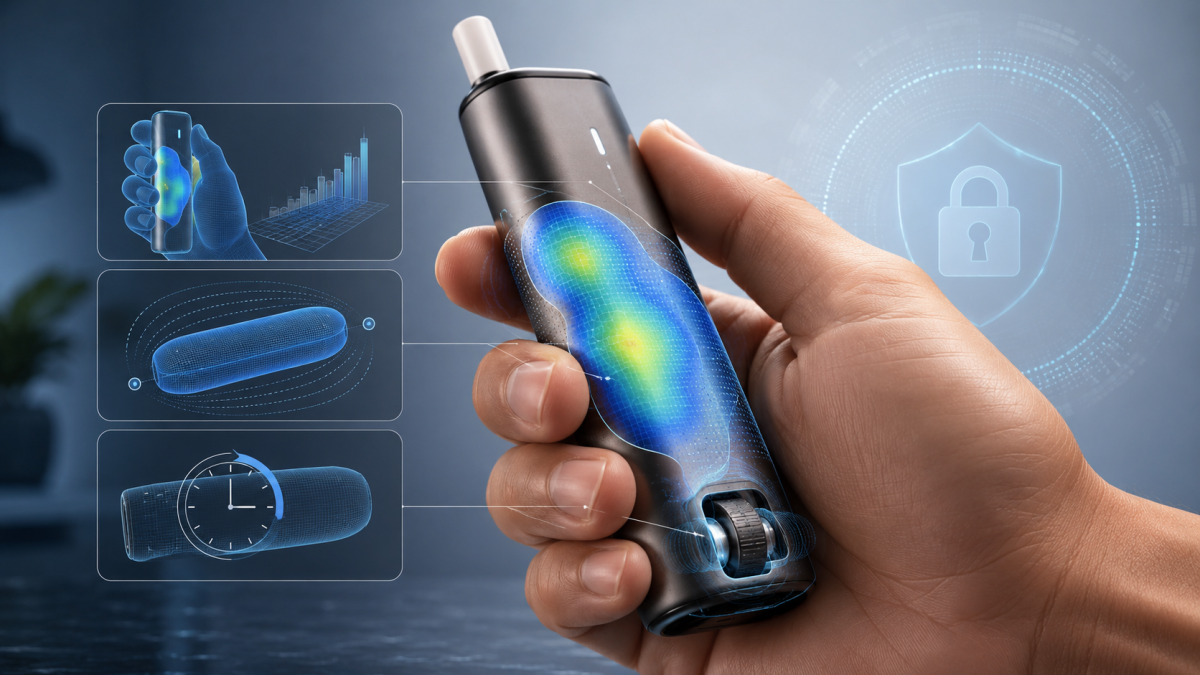
China-based Hunan China Tobacco Industry Co., Ltd. and Shenzhen Baisha Technology Co., Ltd. have filed a patent application covering an adult-user identification mechanism for heated tobacco devices. The patent proposes using flexible pressure sensors installed in the device grip area to collect pressure distribution patterns generated when users hold the device. The system evaluates factors including effective contact area, grip shape and contact duration, and combines roller movement detection to determine whether unlocking conditions are met. The filing reflects exploration of device-level user recognition and smarter interaction technologies for heated tobacco products (HTPs).
Aug.05
U.S. Ninth Circuit Upholds FDA Denial of MH Global’s Flavored Vape PMTA Applications
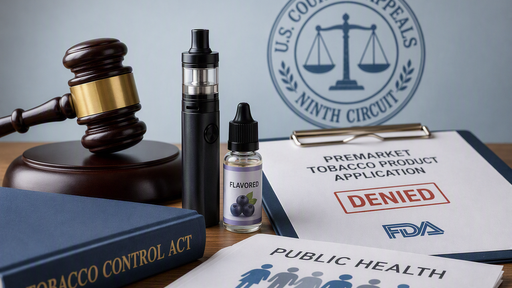
The U.S. Court of Appeals for the Ninth Circuit upheld the FDA’s denial of MH Global LLC’s applications to market flavored electronic nicotine delivery systems (ENDS). The court ruled that FDA’s comparative-efficacy framework, which requires applicants to show that flavored products provide greater cessation or switching benefits than tobacco-flavored alternatives, is consistent with the Tobacco Control Act’s “appropriate for the protection of the public health” standard. The court also found that FDA was not required to establish the framework through notice-and-comment rulemaking.
Aug.26