RELX Assists In Cracking Down On Counterfeit Products

Mar.19.2025
RELX Assists In Cracking Down On Counterfeit Products
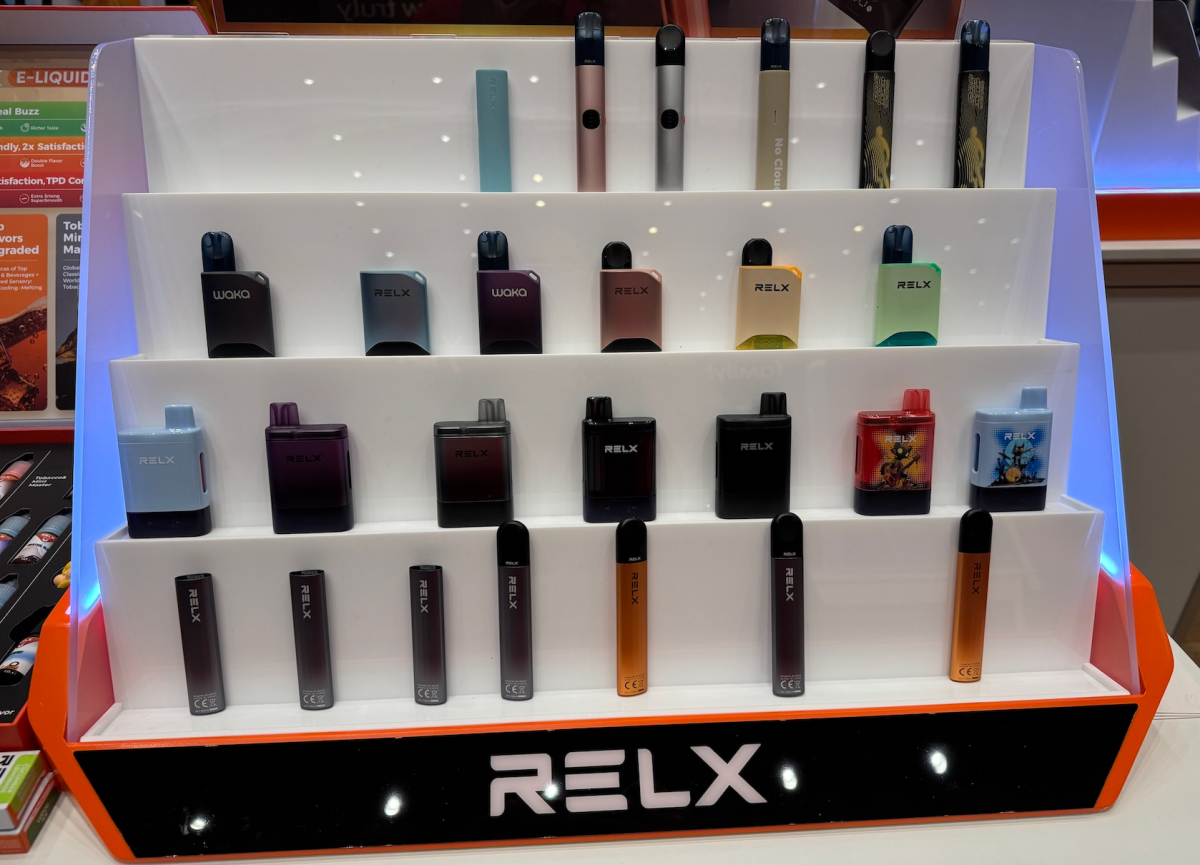
RELX assists authorities in cracking down on 24 fake pod cases, seizing 700k counterfeit pods worth over 30m RMB.

Key points:


1. In 2024, RELX assisted law enforcement agencies in combating 24 cases of counterfeiting and selling fake goods, seizing nearly 700,000 counterfeit pods with a total value exceeding 30 million yuan.


2. Counterfeit products are being distributed through channels such as MLM, posing health risks such as excessive heavy metal contamination and battery explosions.


3. RELX is calling on consumers to purchase standard national standard products offline.


2Firsts, reporting from Shenzhen - RELX announced its latest achievement in combating counterfeit products on the 14th with the "Golden Shield Operation", Eastobacco reported.


In 2024, RELX assisted law enforcement in launching criminal strikes against 24 illegal dens involved in the manufacturing and storage of counterfeit RELX products. 


Nearly 700,000 fake RELX pods, as well as nearly 110,000 smoking devices and disposable products were seized, with the total amount involved exceeding 30 million yuan.


In June 2024, a counterfeiting operation in Guangdong province was busted with 5,260 fake RELX pods and 227 kilograms of illegal vaping liquid seized. 


The Shenzhen Institute of Measurement Quality Testing conducted tests on a batch of counterfeit e-cigarettes, finding that a disposable product had lead levels of 1,500ng/100 puffs, three times higher than national standards. Based on an estimated 5,000 puffs per use, consumers were inhaling 75 micrograms of lead with each puff.


Counterfeit products are often distributed through channels such as online sellers, deceiving consumers with labels such as "overseas purchasing" or "fruit flavored." 


However, these products came from very poor sanitary conditions in counterfeit workshops, posing serious health risks such as excessive levels of heavy metals, battery fires, and explosions.


RELX urging consumers not to blindly trust illegal products sold by online businesses such as micro-businesses, and instead choose to purchase legitimate products from licensed retail stores offline.


We welcome news tips, article submissions, interview requests, or comments on this piece.

Please contact us at info@2firsts.com, or reach out to Alan Zhao, CEO of 2Firsts, on LinkedIn


Notice

1.  This article is intended solely for professional research purposes related to industry, technology, and policy. Any references to brands or products are made purely for objective description and do not constitute any form of endorsement, recommendation, or promotion by 2Firsts.

2.  The use of nicotine-containing products — including, but not limited to, cigarettes, e-cigarettes, nicotine pouchand heated tobacco products — carries significant health risks. Users are responsible for complying with all applicable laws and regulations in their respective jurisdictions.

3.  This article is not intended to serve as the basis for any investment decisions or financial advice. 2Firsts assumes no direct or indirect liability for any inaccuracies or errors in the content.

4.  Access to this article is strictly prohibited for individuals below the legal age in their jurisdiction.


Copyright


This article is either an original work created by 2Firsts or a reproduction from third-party sources with proper attribution. All copyrights and usage rights belong to 2Firsts or the original content provider. Unauthorized reproduction, distribution, or any other form of unauthorized use by any individual or organization is strictly prohibited. Violators will be held legally accountable.

For copyright-related inquiries, please contact: info@2firsts.com


AI Assistance Disclaimer


This article may have been enhanced using AI tools to improve translation and editorial efficiency. However, due to technical limitations, inaccuracies may occur. Readers are encouraged to refer to the cited sources for the most accurate information.

We welcome any corrections or feedback. Please contact us at: info@2firsts.com

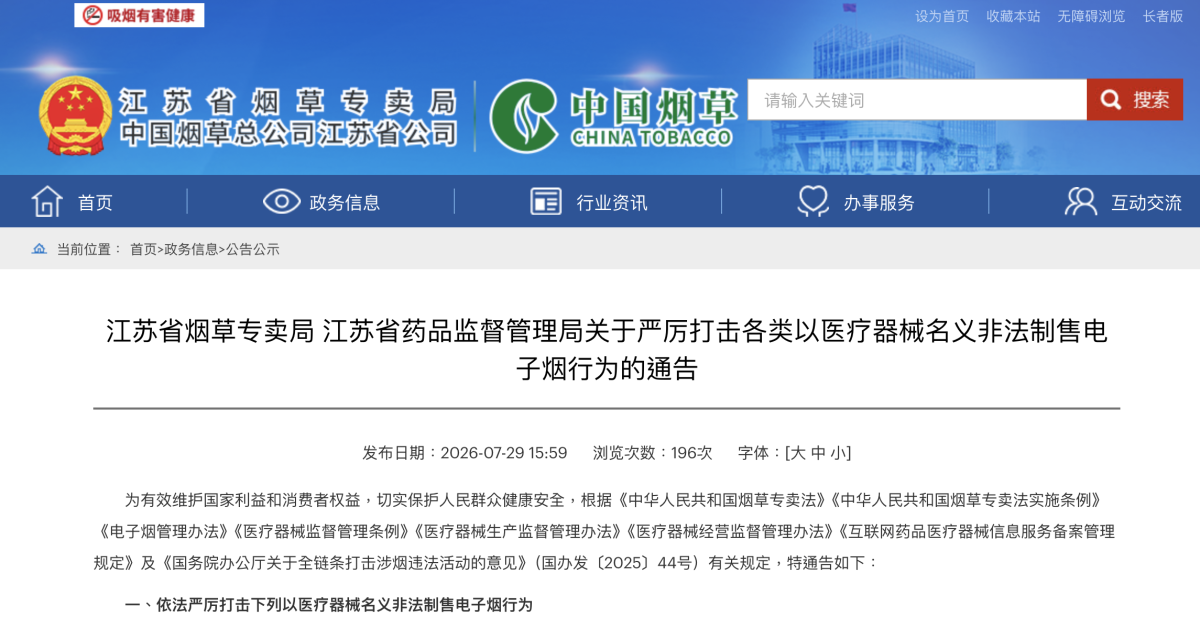
China’s Jiangsu Tobacco Monopoly Bureau and Drug Regulator Target Illegal Vape Sales Disguised as Medical Devices, Define Six Violations
China’s Jiangsu Tobacco Monopoly Bureau and Jiangsu Provincial Medical Products Administration have issued a joint notice targeting illegal production and sales of vape products disguised as medical devices. The notice identifies six categories of violations, including obtaining medical licenses through false materials, misusing medical device credentials, expanding production beyond approved scopes, and using medical device-related online platforms to promote or sell vape products. The action is based on China’s tobacco and medical device regulations and aims to strengthen vape oversight and consumer protection.
Aug.04
2Firsts Exclusive Analysis | RLX Q2 Revenue Rises 14.8%, Company Takes Control of Western European Distributor and Expands Multi-Category Strategy
business accounting for 68.5% of sales. A new controlling investment in a Western European distributor and plans to scale modern oral nicotine pouches point to a broader international strategy spanning channels and multiple product categories.
Special Report
Aug.14
Malaysia Liquid Nicotine Returns to Poisons List, Leaving Vape Retail and RM354 Million Tax Collection in Legal Uncertainty
Malaysia’s withdrawal of its appeal in a landmark liquid-nicotine case has left a High Court ruling that struck down the 2023 nicotine exemption in force, bringing liquid and gel nicotine used in vaping products back under the Poisons Act 1952. At the same time, the Control of Smoking Products for Public Health Act 2024 continues to provide a regulatory framework for vaping products, creating uncertainty over retail sales, taxation and existing inventory. MPs are calling for nicotine vape sales and excise collection to stop, including refunds of more than RM354 million collected since 2023, while industry and consumer groups are asking the government to clarify the current legal position.
Sep.04
U.S. Fifth Circuit Vacates NicQuid Vape MDO, Says FDA Comparative-Efficacy Standard Violated APA Procedures
According to VitalLaw on August 27, 2026, the U.S. Court of Appeals for the Fifth Circuit vacated an FDA marketing denial order (MDO) against NicQuid LLC, ruling that the agency’s comparative-efficacy standard for electronic nicotine delivery system (ENDS) applications had become a substantive rule requiring notice-and-comment rulemaking under the Administrative Procedure Act (APA). The court did not reject FDA’s authority to compare the public health benefits and risks of flavored vapes, but held that the agency could not establish a broadly binding standard through informal adjudications. The case was remanded to FDA for further proceedings.
Aug.28
UK Reform Party Proposes Cap of 1,000 Vape Shops Under Plan to Tighten Retail Controls
The UK Reform Party has proposed limiting the number of dedicated vape shops in the country to around 1,000 as part of a plan to tighten oversight of vape retail channels. The proposal was put forward by Reform UK deputy leader and MP Lee Anderson. The plan remains a political proposal and has not become UK government policy, with no detailed legislation, implementation timeline or allocation rules announced.
Aug.10
Malaysia Withdraws Appeal Against Liquid Nicotine Ruling as Vape Regulation Framework Enters New Phase
Malaysia’s government has withdrawn its appeal against a High Court ruling concerning the regulatory status of liquid nicotine used in vape and e-cigarette products, according to reports by New Straits Times, Free Malaysia Today and CodeBlue on August 18, 2026. The Kuala Lumpur High Court ruled on May 15 that the government’s decision to remove liquid nicotine from the scheduled poisons list under the Poisons Act 1952 was irrational and made without proper consultation with the Poisons Board. The withdrawal ends the government’s appeal process, while the future regulatory framework for nicotine vape products remains under discussion.
Aug.21