Research Shows Illegal E-cigarette Prevalence and Tax Evasion in Russia

Sep.30.2024
Research Shows Illegal E-cigarette Prevalence and Tax Evasion in Russia
Russian e-cigarette market facing tax evasion crisis, with only 1 in 50 products legal, causing low revenue. SPINI urges regulation.

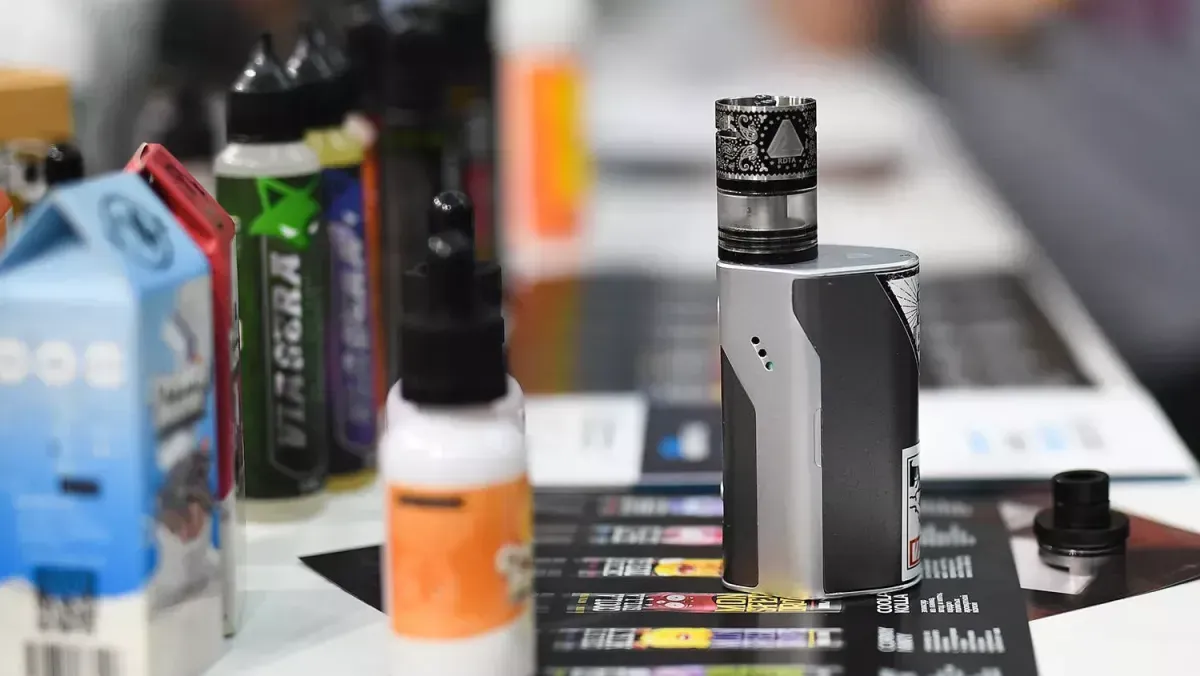
According to a report by RIA on September 30, a study conducted by the Union of Nicotine Product Enterprises (СПИНИ) shows that in Russia, only one out of every 50 e-cigarettes is legal, leading to lower rates of consumption tax collection.


The organization pointed out that in Russia, over 99% of e-liquids containing nicotine and electronic nicotine delivery systems (ENDS) are illegally produced and sold. This means that only 1 out of 50 e-cigarettes sold in Russia are legal, and only this portion is subject to consumption tax.


SPINI predicts that the consumption tax on e-liquid in 2024 will be "close to zero". The organization cites data from the Ministry of Finance, stating that from June to August 2024, Russian manufacturers producing these e-liquids did not pay any consumption tax, compared to the 2.119 billion rubles (225 million USD) in consumption tax paid by Russian manufacturers for e-liquid in 2023.


SPINI's representative also mentioned that starting from January 1, 2025, a consumption tax of 2.2 million rubles (23,000 dollars) will be imposed on every kilogram of nicotine raw material. This year, the consumption tax on e-liquids containing nicotine is 42 rubles (0.45 dollars) per milliliter. Preliminary calculations suggest that the government expects to collect 50 billion rubles (500 million dollars) in consumption tax from e-liquids, but this amount is deemed "unattainable" by the agency.


SPINI President Vladimir Mishelovin emphasized that


The current situation in the market is described as completely "black" (illegal). Consumers are unwilling to spend money on legal products, and the country could completely lose out on nicotine raw material tax revenue. In addition to the over 148 billion rubles (approximately 1.6 billion USD) lost in 2023, the government is expected to have virtually no income in the 2024 budget. The situation is extremely critical and requires urgent reevaluation of national regulations on the e-cigarette market and e-liquid, in order to prevent the market from falling into a completely underground state. A method needs to be found to ensure the reasonable taxation of nicotine raw materials and products.


We welcome news tips, article submissions, interview requests, or comments on this piece.

Please contact us at info@2firsts.com, or reach out to Alan Zhao, CEO of 2Firsts, on LinkedIn


Notice

1.  This article is intended solely for professional research purposes related to industry, technology, and policy. Any references to brands or products are made purely for objective description and do not constitute any form of endorsement, recommendation, or promotion by 2Firsts.

2.  The use of nicotine-containing products — including, but not limited to, cigarettes, e-cigarettes, nicotine pouchand heated tobacco products — carries significant health risks. Users are responsible for complying with all applicable laws and regulations in their respective jurisdictions.

3.  This article is not intended to serve as the basis for any investment decisions or financial advice. 2Firsts assumes no direct or indirect liability for any inaccuracies or errors in the content.

4.  Access to this article is strictly prohibited for individuals below the legal age in their jurisdiction.


Copyright


This article is either an original work created by 2Firsts or a reproduction from third-party sources with proper attribution. All copyrights and usage rights belong to 2Firsts or the original content provider. Unauthorized reproduction, distribution, or any other form of unauthorized use by any individual or organization is strictly prohibited. Violators will be held legally accountable.

For copyright-related inquiries, please contact: info@2firsts.com


AI Assistance Disclaimer


This article may have been enhanced using AI tools to improve translation and editorial efficiency. However, due to technical limitations, inaccuracies may occur. Readers are encouraged to refer to the cited sources for the most accurate information.

We welcome any corrections or feedback. Please contact us at: info@2firsts.com

PMI Global R&D Chief Meets Chinese Tobacco Regulator as China Advances Heated Cigarette Standards
Philip Morris International’s global R&D chief Michele Cattoni met Liu Sanjiang, deputy director of China’s State Tobacco Monopoly Administration, in Beijing on Aug. 27. The meeting comes as China advances mandatory standards for heated cigarettes and nicotine pouches, laying groundwork for their domestic introduction. Cattoni has held senior roles in PMI’s heated tobacco development, while China’s draft standard covers multiple heating architectures, including systems similar in principle to PMI’s IQOS ILUMA technology.
Aug.27
IQOS Enters Kantar BrandZ Global Top 100 for First Time, Valued at $36.6 Billion and Ranked No. 74
Philip Morris International’s IQOS has entered the Kantar BrandZ Top 100 Most Valuable Global Brands for the first time, ranking No. 74 with a brand value of $36.634 billion and becoming one of only three newcomers to the 2026 ranking. Kantar said the combined value of the Global Top 100 reached $13.1 trillion, up 22% year on year, while the threshold for entry rose to a record high. PMI says IQOS has more than 35 million users worldwide and surpassed $10 billion in annual net revenues within a decade of launch.
Sep.03
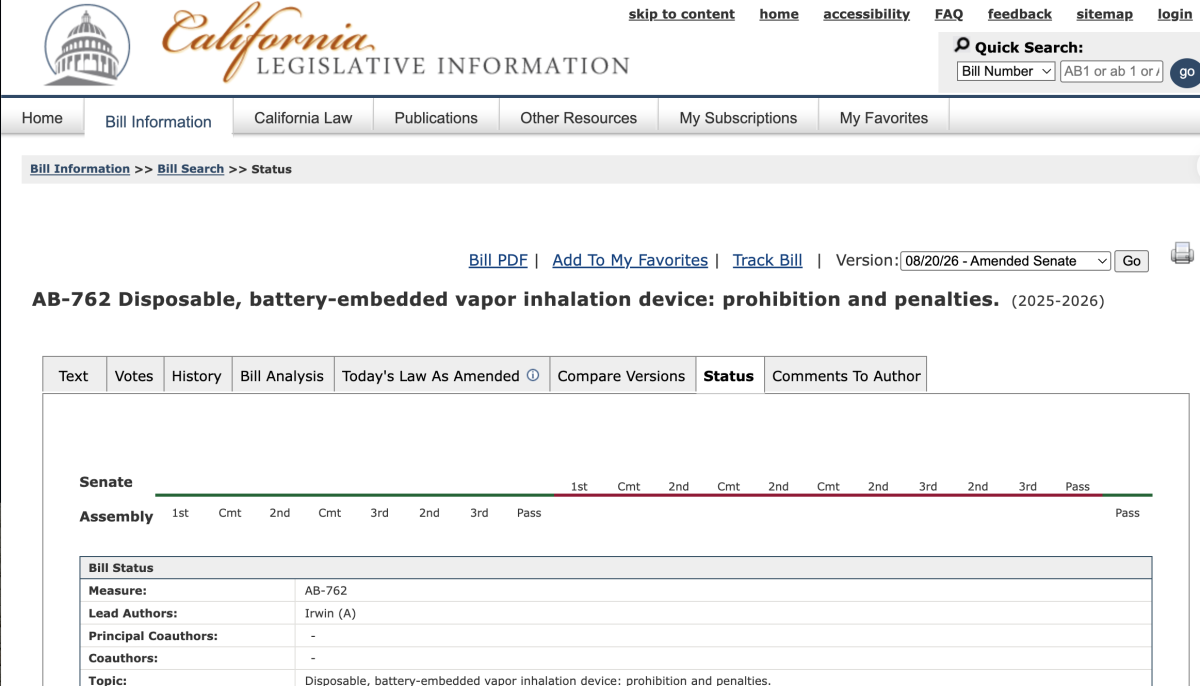
California Lawmakers Pass Disposable Nicotine Vape Ban, With Sales Prohibition Set for 2028
According to CBS Los Angeles on August 27, 2026, California lawmakers have passed Assembly Bill 762, which would phase out disposable, battery-embedded nicotine vapes in the state. If signed by Governor Gavin Newsom, manufacturing and importation of the covered products would be prohibited beginning January 1, 2027, followed by a sales ban on January 1, 2028. Driven primarily by concerns over electronic waste, lithium-battery fires and environmental pollution, the legislation would further shift California’s legal vape market toward rechargeable, refillable or replaceable-pod devices.
Aug.28
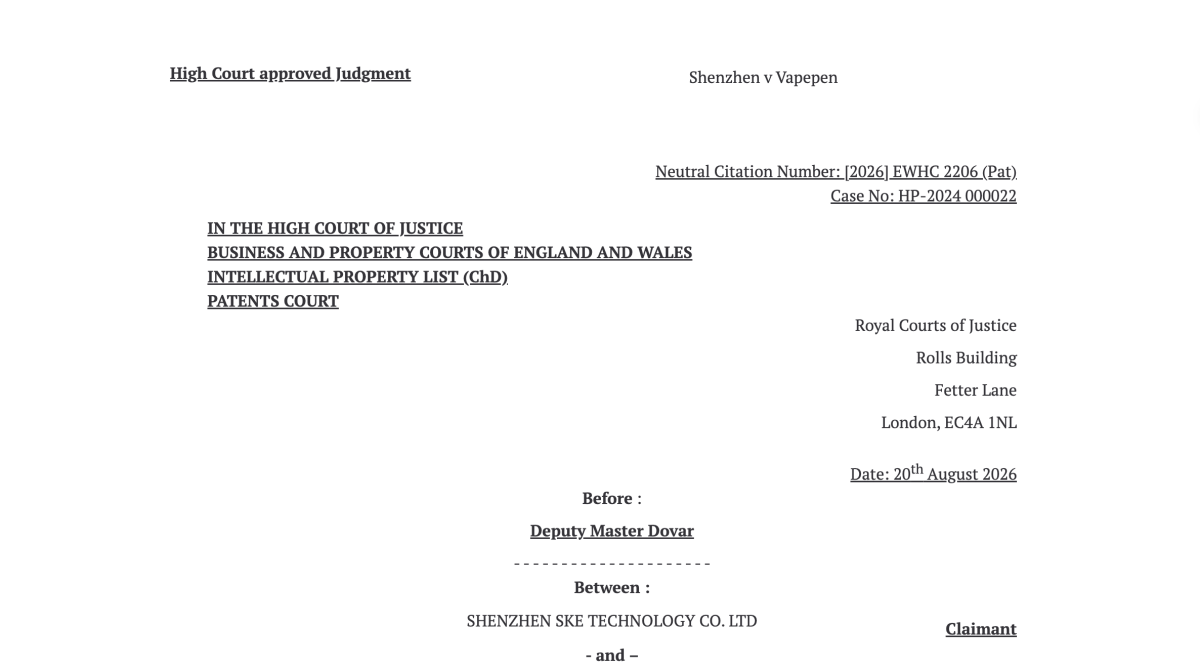
Yinghe-Controlled Vape Maker SKE Ordered to Post £569,039 Security as It Pursues Crystal Bar Design Infringement Case in UK
The UK High Court has ordered Chinese vape manufacturer Shenzhen SKE Technology to provide £569,039 ($776,000) in security for costs in its design infringement proceedings against Vapepen London and other defendants over its Crystal Bar vape product. The court did not accept the defendants’ main argument that recovering costs from a China-based company would face significant enforcement obstacles, but found that SKE had not sufficiently disclosed its own financial position. The order is procedural and does not determine the underlying infringement claims.
News
Aug.21
STIIIZY Redesign Fails to Escape PAX Labs Patent Import Ban as Section 337 Case Also Involves China ALD
U.S. Customs and Border Protection ruled that STIIIZY had not shown that the redesigned cannabis-vape products covered by its latest request fall outside an ITC limited exclusion order tied to PAX Labs patents. CBP accepted some of STIIIZY’s claim-construction and non-infringement arguments, but the company did not address two additional claims in the same patent. Earlier STIIIZY redesigned cartridges and certain associated components imported with them had received separate CBP clearance.
Sep.16
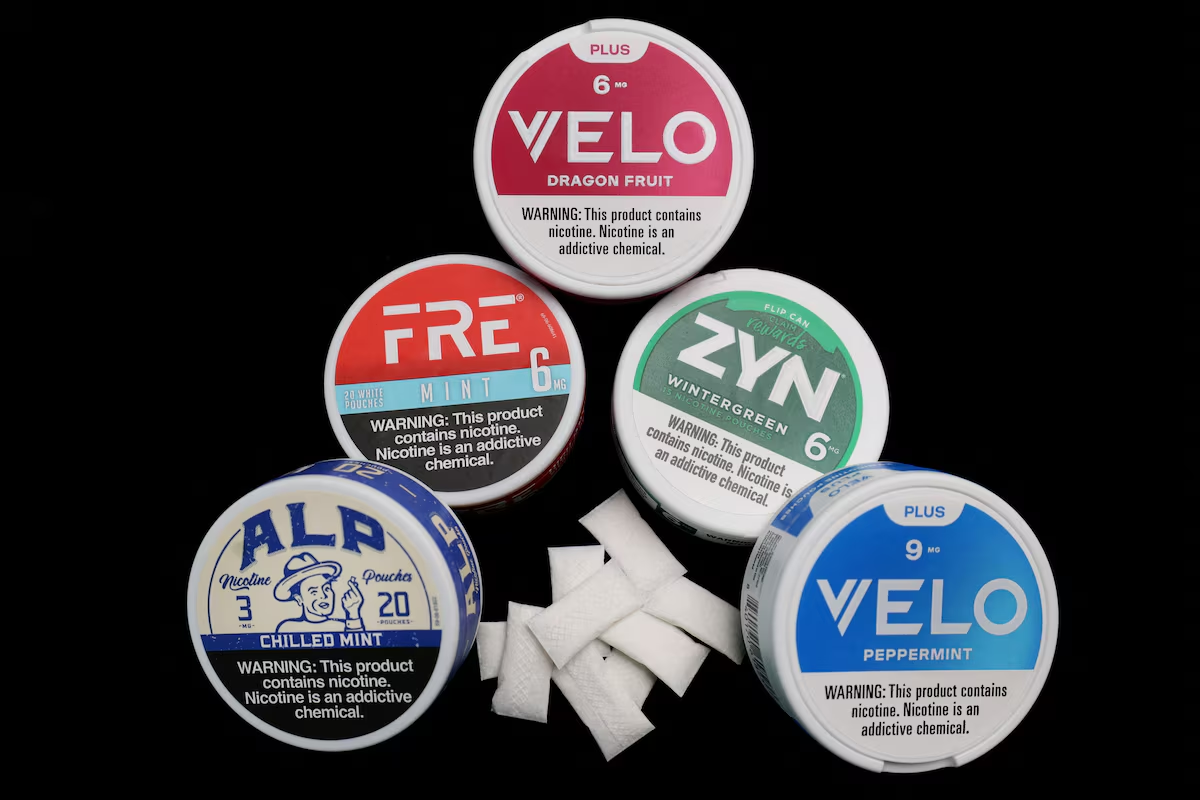
Reuters Tracks Big Tobacco’s Shift Beyond Cigarettes as Nicotine Pouches Vie for the Next Growth Curve
As cigarette markets face long-term pressure, major tobacco companies are increasingly turning to nicotine pouches in search of growth beyond combustible tobacco. Reuters has examined whether nicotine pouches can become the next strategic growth platform for companies including Philip Morris International, British American Tobacco and Japan Tobacco. PMI strengthened its position through the acquisition of Swedish Match and its ZYN brand, while BAT and JTI continue expanding their own nicotine pouch portfolios. The category has gained attention because of its smoke-free, device-free format, but regulation, youth-use concerns and market scale will determine whether it can become a long-term growth engine.
Regulations
Aug.18 by 2Firsts Perspectives