Russian Official Calls for Legislation Banning E-Cigarettes for Health Reasons

Regulations by 2FIRSTS.ai
Jul.30.2024
Russian Official Calls for Legislation Banning E-Cigarettes for Health Reasons
Russian official Vitaly Milonov calls for legislative ban on e-cigarettes, citing health risks and widespread availability.

According to Gazeta, on July 29th, Vitaly Milonov, Deputy Chairman of the State Duma Committee on Family, Protection of Children's Rights, Motherhood, and Fatherhood in Russia, proposed that e-cigarettes should be banned at the legislative level. He believes that the widespread use of e-cigarettes is like a plague and warns of its harmful effects on health.


Milonov emphasized in the NSN news center: "Our country has entered an e-cigarette epidemic, with these products being sold in every corner." He pointed out that currently there is no clear research showing the specific health damages caused by e-cigarettes, but there are some concerning signals emerging. Milonov believes the main issue is that people become addicted to e-cigarettes faster, despite the fact that the smell of e-cigarettes is not as unpleasant as regular cigarettes, they can lead smokers to quickly become dependent on "large amounts of nicotine.


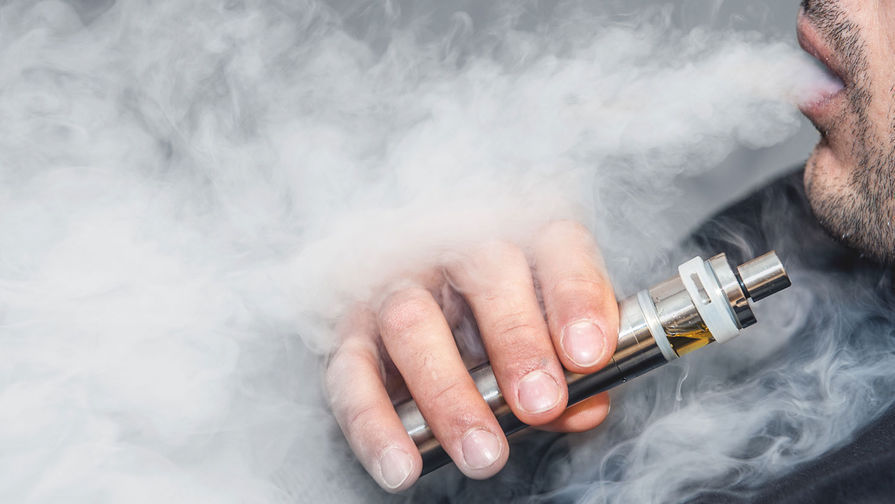
Previously, doctors warned that the "spice" (synthetic cannabinoids) and heavy metals in e-cigarettes have carcinogenic effects on the endocrine glands. E-cigarette vapor contains over 30 dangerous substances, many of which, such as propylene glycol, can accumulate in the body, causing allergies and producing purulent infections, damaging liver and kidney function.


We welcome news tips, article submissions, interview requests, or comments on this piece.

Please contact us at info@2firsts.com, or reach out to Alan Zhao, CEO of 2Firsts, on LinkedIn


Notice

1.  This article is intended solely for professional research purposes related to industry, technology, and policy. Any references to brands or products are made purely for objective description and do not constitute any form of endorsement, recommendation, or promotion by 2Firsts.

2.  The use of nicotine-containing products — including, but not limited to, cigarettes, e-cigarettes, nicotine pouchand heated tobacco products — carries significant health risks. Users are responsible for complying with all applicable laws and regulations in their respective jurisdictions.

3.  This article is not intended to serve as the basis for any investment decisions or financial advice. 2Firsts assumes no direct or indirect liability for any inaccuracies or errors in the content.

4.  Access to this article is strictly prohibited for individuals below the legal age in their jurisdiction.


Copyright


This article is either an original work created by 2Firsts or a reproduction from third-party sources with proper attribution. All copyrights and usage rights belong to 2Firsts or the original content provider. Unauthorized reproduction, distribution, or any other form of unauthorized use by any individual or organization is strictly prohibited. Violators will be held legally accountable.

For copyright-related inquiries, please contact: info@2firsts.com


AI Assistance Disclaimer


This article may have been enhanced using AI tools to improve translation and editorial efficiency. However, due to technical limitations, inaccuracies may occur. Readers are encouraged to refer to the cited sources for the most accurate information.

We welcome any corrections or feedback. Please contact us at: info@2firsts.com

South Korea Brings Synthetic-Nicotine E-Cigarettes Under Tobacco Rules From June 24, Targeting Online Sales and Evasion
South Korea began full enforcement of tobacco-style rules for synthetic-nicotine e-cigarettes on June 24, 2026, with fines of up to 100,000 won for use in non-smoking areas and enforcement focus on online sales, raw nicotine liquids and products falsely marketed as nicotine-free.
MarketNews
Jun.25 by 2Firsts Perspectives
FDA Authorizes Four More Nicotine Pouches as Review Pilot Expands Beyond Initial Decisions
The FDA has authorized four additional on! nicotine pouches, bringing the U.S. total to 30. The decision marks another outcome of the agency’s nicotine pouch review pilot, whose communication and review practices are now being applied more broadly across the category. It also extends Helix’s authorized portfolio from on! PLUS to the earlier on! line. Yet all FDA-authorized nicotine pouches still come from subsidiaries of PMI or Altria, underscoring how concentrated U.S. regulatory access remains.
Aug.05
FDA 2025 NYTS: Youth E-Cigarette Use Declines but Unauthorized Disposables Remain Prominent; Nicotine Pouch Use Stays Low
The U.S. Food and Drug Administration (FDA) released its 2025 National Youth Tobacco Survey analysis, saying about 2.01 million U.S. middle and high school students currently used any tobacco product; among current youth e-cigarette users, unauthorized disposable brands including Geek Bar, Elf Bar, Lost Mary and Raz had high reported shares, potentially making them a focus for future enforcement.
Jun.24
JT’s Ploom Volumes Rise 43.5% as Cigarettes Anchor Its Transition
JT’s Ploom heated-tobacco volumes rose 43.5% in the first half of 2026, while combustibles still represented about 97% of its tobacco volume and remained the main earnings base. In Japan, reduced-risk products now account for 48.7% of industry shipments, shifting competition from category adoption towards brand share, pricing and consumer retention. JT’s results offer a revealing case of a traditional tobacco company pursuing a prolonged, dual-track transformation.
JTI
Jul.30
CCPIT Says Trade Friction Index for China-Related Electronics Sector Remains High, With Vape Products Among Areas of Focus
China Council for the Promotion of International Trade (CCPIT) held its July regular press conference on July 31, 2026, releasing the May 2026 Global Economic and Trade Friction Index. CCPIT spokesperson Yang Fan said the global trade friction index stood at 95 in May, remaining at a medium-to-high level. By industry, the electronics sector recorded the highest trade friction index among 13 monitored industries. In China-related trade frictions, the index stood at 93, with electronics products including drones, chips and vape products among areas where friction remained elevated.
Aug.03
Nicotine Pouches Gain Ground in U.S. Convenience Stores as Vape Unit Sales Fall 14%
According to convenience retail publication CStore Decisions, U.S. convenience store tobacco categories are undergoing a structural shift. Based on Circana OmniMarket Total U.S. Convenience data for the 52 weeks ending June 14, 2026, cigarettes remained the largest category with $50.8 billion in sales, but unit sales declined 5.3%. Electronic smoking devices and vaping products also declined, while modern oral nicotine products continued to grow, with nicotine pouch sales rising 29% in dollars and 17% in units. Retailers said changing consumer preferences are reshaping tobacco product assortments at convenience stores.
Regulations
Aug.07