South Korea Requires Regular Testing of Harmful Substances in Tobacco

Feb.07.2025
South Korea Requires Regular Testing of Harmful Substances in Tobacco
South Korea Government requires tobacco manufacturers to regularly test harmful substances and publicly disclose results starting November.

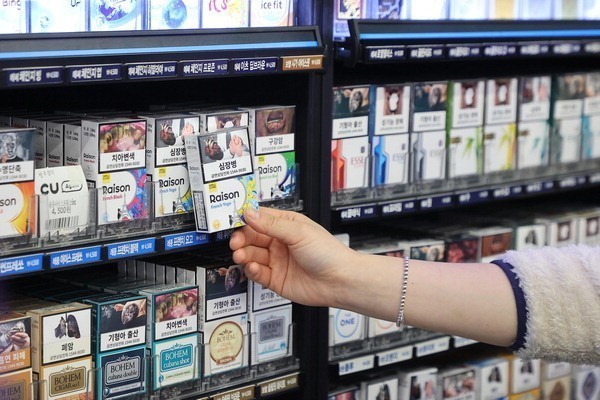
According to a report from N.News on February 6th, the South Korean government will require tobacco manufacturers and sellers to conduct regular inspections of harmful substances in tobacco starting in November, and to publicly disclose detailed inspection results.


The Ministry of Health and Welfare and the Food and Drug Safety Ministry of South Korea announced on the 6th the implementation decree and detailed rules of the "Tobacco Harmfulness Management Law". The law requires harmful ingredient testing to be conducted within one month after tobacco products are marketed. Tobacco manufacturers and importers are required to test the harmful ingredient content of their products every two years and submit the results to the Food and Drug Safety Ministry, which will then be made public to the national public. E-cigarette e-liquid and heated tobacco devices are also included in the inspection scope.


According to the newly enacted regulations and implementation guidelines, tobacco manufacturers and importers must conduct harmful ingredient tests on existing products within three months of the law's implementation date, and apply for testing again by June every two years thereafter.


Tobacco manufacturers are required to submit their test results to the Director of the Food and Drug Safety Administration within 15 days of receiving them. The Director will then publicly disclose information on harmful ingredients, as well as details on their toxicity and carcinogenicity, on the official website by December 31st each year.


We welcome news tips, article submissions, interview requests, or comments on this piece.

Please contact us at info@2firsts.com, or reach out to Alan Zhao, CEO of 2Firsts, on LinkedIn


Notice

1.  This article is intended solely for professional research purposes related to industry, technology, and policy. Any references to brands or products are made purely for objective description and do not constitute any form of endorsement, recommendation, or promotion by 2Firsts.

2.  The use of nicotine-containing products — including, but not limited to, cigarettes, e-cigarettes, nicotine pouchand heated tobacco products — carries significant health risks. Users are responsible for complying with all applicable laws and regulations in their respective jurisdictions.

3.  This article is not intended to serve as the basis for any investment decisions or financial advice. 2Firsts assumes no direct or indirect liability for any inaccuracies or errors in the content.

4.  Access to this article is strictly prohibited for individuals below the legal age in their jurisdiction.


Copyright


This article is either an original work created by 2Firsts or a reproduction from third-party sources with proper attribution. All copyrights and usage rights belong to 2Firsts or the original content provider. Unauthorized reproduction, distribution, or any other form of unauthorized use by any individual or organization is strictly prohibited. Violators will be held legally accountable.

For copyright-related inquiries, please contact: info@2firsts.com


AI Assistance Disclaimer


This article may have been enhanced using AI tools to improve translation and editorial efficiency. However, due to technical limitations, inaccuracies may occur. Readers are encouraged to refer to the cited sources for the most accurate information.

We welcome any corrections or feedback. Please contact us at: info@2firsts.com

Italy Fines PMI €7 Million Over Misleading ‘Smoke-Free Future’ Marketing Claims
Italy’s Competition and Market Authority (AGCM) has fined Philip Morris Italia €7 million, finding that the company’s use of “smoke-free future” and related claims in promoting products such as IQOS, VEEV and ZYN could mislead consumers.
Jun.16
State Registries Are Reshaping U.S. Vape Market Access 2Firsts Interview with U.S. Vapor Manufacturers Association President Allison Boughner
As the U.S. vapor market faces FDA authorizations, import seizures and growing state-level restrictions, AVM President Allison Boughner told 2Firsts that state product registries and white-list systems are having the most immediate impact. She said distributors are placing greater weight on documentation, product origin and supply-chain transparency.
Special Report
May.26
Innovation, Insights and Networking: NUBIZ Brings the Global NGP Industry Together in Dortmund
The market for next-generation products is expanding rapidly, with vapes, e-cigarettes, pouches, snus and heat-not-burn products among the industry’s most innovative segments. As part of InterTabac, NUBIZ provides a central platform for reduced-risk tobacco and nicotine products, bringing together global leaders and newcomers from 15 to 17 September. The show combines market insights, product comparisons, networking, a high-level conference programme and exclusive side events.
Jun.03
FDA Foreign Tobacco Registration Proposal Could Strengthen ENDS Import Oversight, Azim Chowdhury Says
FDA’s proposed rule requiring foreign tobacco manufacturers to register establishments and list products is more than routine paperwork, Keller and Heckman LLP partner Azim Chowdhury told 2Firsts. He said it could strengthen FDA’s import enforcement, inspections and market surveillance. Chinese e-cigarette OEM/ODM manufacturers, specification developers, brand owners and component suppliers may need to review their roles, product data and U.S. market authorization status.
Special Report
Jun.29
 RFK Jr. Spokesman Resigns Over FDA Authorization of Fruit-Flavored Vapes
RFK Jr. Spokesman Resigns Over FDA Authorization of Fruit-Flavored Vapes
Richard Danker, a senior public affairs official in Health Secretary Robert F. Kennedy Jr.’s team, resigned from his role at HHS over the FDA’s recent authorization of fruit-flavored vaping products. In a resignation letter addressed to President Donald Trump, Danker argued that the products could expose minors to nicotine addiction, lung damage, and increased cancer risks, while also conflicting with recent HHS guidance on youth risks associated with flavored nicotine products.
News
May.15
U.S. Military Nicotine Policy Sparks Debate as Nicotine Pouches Enter Discussion
An opinion article published by Stars and Stripes argued that the Pentagon’s January nicotine clinical guidelines overemphasize abstinence, fail to reflect the reality that about 30% of active-duty personnel use nicotine, and do not address nicotine pouches as potential harm-reduction products.
Industry Insight
Jun.08