Spain Sees Significant Decline in Tobacco Consumption: Euro Weekly News

Dec.06.2024
Spain Sees Significant Decline in Tobacco Consumption: Euro Weekly News
Spain sees significant decrease in tobacco consumption, with only 36.8% smoking in the past year, down from 38.9% in 2022.

According to a report from Euro Weekly News on December 4th, tobacco consumption in Spain has seen a significant decrease. The latest statistical data shows that only 36.8% of the population smoked in the past year, a decrease of 2.2% compared to 2022. This trend has continued for nearly thirty years, with the proportion of daily smokers dropping from 33.1% in 2022 to 25.8% in 2024.


The measures taken by the Spanish authorities to lower smoking rates include: raising taxes on tobacco products, stricter advertising restrictions, expanding smoke-free areas to public outdoor spaces, health campaigns targeting young people and smokers, and increasing funding for smoking cessation services.


Despite a decrease in cigarette consumption, the use of e-cigarettes is on the rise. Over the past four years, the number of e-cigarette users has doubled, with 19% of Spaniards having tried them. More than half of e-cigarette users opt for products that do not contain nicotine.


In response, the Spanish government is introducing new regulations to curb the use of e-cigarettes, including banning e-cigarettes in indoor public places, restricting flavored e-cigarette liquids to only tobacco flavor, considering plain packaging for e-cigarette products, and discussing taxing e-cigarette liquids in line with tobacco taxes. This move is aimed at addressing the growing appeal of e-cigarettes, especially among young users.


We welcome news tips, article submissions, interview requests, or comments on this piece.

Please contact us at info@2firsts.com, or reach out to Alan Zhao, CEO of 2Firsts, on LinkedIn


Notice

1.  This article is intended solely for professional research purposes related to industry, technology, and policy. Any references to brands or products are made purely for objective description and do not constitute any form of endorsement, recommendation, or promotion by 2Firsts.

2.  The use of nicotine-containing products — including, but not limited to, cigarettes, e-cigarettes, nicotine pouchand heated tobacco products — carries significant health risks. Users are responsible for complying with all applicable laws and regulations in their respective jurisdictions.

3.  This article is not intended to serve as the basis for any investment decisions or financial advice. 2Firsts assumes no direct or indirect liability for any inaccuracies or errors in the content.

4.  Access to this article is strictly prohibited for individuals below the legal age in their jurisdiction.


Copyright


This article is either an original work created by 2Firsts or a reproduction from third-party sources with proper attribution. All copyrights and usage rights belong to 2Firsts or the original content provider. Unauthorized reproduction, distribution, or any other form of unauthorized use by any individual or organization is strictly prohibited. Violators will be held legally accountable.

For copyright-related inquiries, please contact: info@2firsts.com


AI Assistance Disclaimer


This article may have been enhanced using AI tools to improve translation and editorial efficiency. However, due to technical limitations, inaccuracies may occur. Readers are encouraged to refer to the cited sources for the most accurate information.

We welcome any corrections or feedback. Please contact us at: info@2firsts.com

JUUL Purchasers Ask Ninth Circuit to Preserve Antitrust Classes in Case Over Altria’s $12.8 Billion Investment
Private antitrust litigation stemming from Altria's 2018 $12.8 billion investment for a 35% economic interest in JUUL is advancing before the U.S. Court of Appeals for the Ninth Circuit. Direct purchasers, indirect purchasers and indirect resellers of JUUL products filed answering briefs this week seeking to preserve class certifications granted by a California federal court in February. Altria and JUUL argue that individual consumers and large distributors differ too much in purchasing terms to remain in a single direct-purchaser class, while a separate dispute concerns whether California antitrust law can apply to indirect purchasers across 27 jurisdictions. A September trial has been put on hold during the appeal.
Sep.23
Product | PMI Japan Launches SENTIA Passion Fruit Capsule, Expanding the IQOS ILUMA Flavor Portfolio
Philip Morris Japan (PM Japan) has introduced SENTIA Passion Fruit Capsule, a new tobacco stick designed for the IQOS ILUMA heated tobacco platform. Featuring a crush-activated capsule, the product combines menthol with passion fruit flavor to provide an additional flavor experience. The product launched in Japan from August 3, 2026, through IQOS official channels, convenience stores and tobacco retailers.
Aug.04
GSTHR Estimates 200 Million People Use Non-Combustible Nicotine Products as 28 Countries Show Rising Use Alongside Falling Smoking Rates
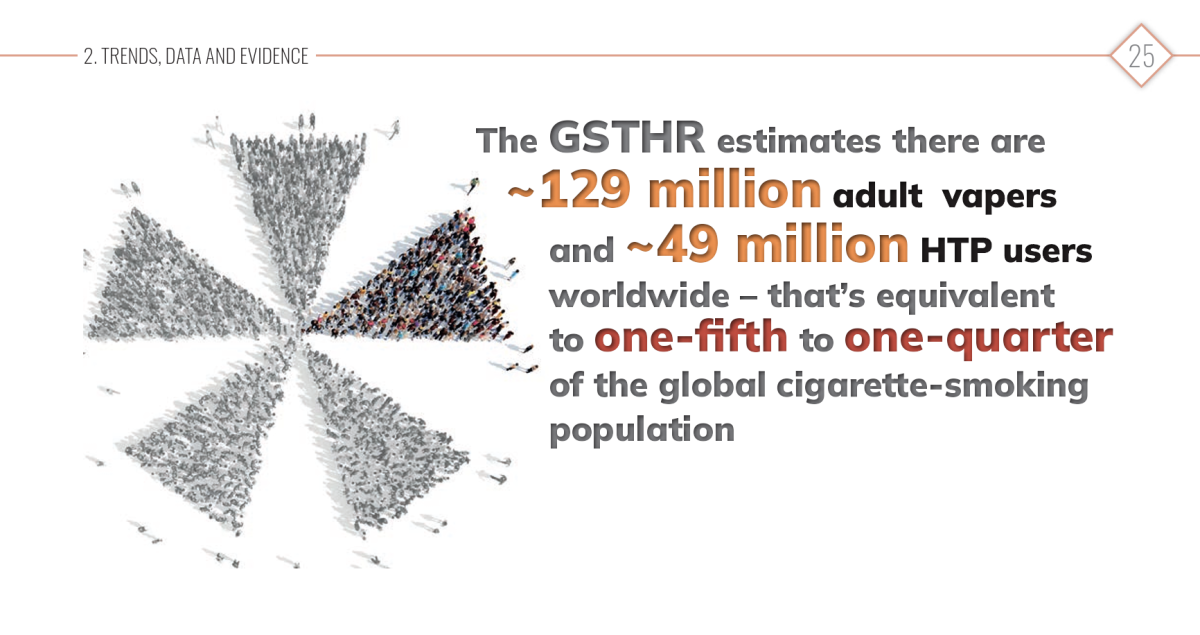
The Global State of Tobacco Harm Reduction, a project operated by Knowledge·Action·Change, estimates that about 200 million people worldwide use non-combustible nicotine products including vapes, heated tobacco, nicotine pouches and snus. Its 2026 report says use of these products rose alongside declining smoking rates in 28 countries it analyzed. The data do not establish that all 200 million users have quit smoking, nor do they prove a direct causal relationship. GSTHR also says regulatory restrictions on the products continue to expand in many markets.
Sep.10
Philippines Customs Seizes PHP11.68 Billion($200 Million) in Illegal Tobacco and Vapes in First Seven Months of 2026
Philippines Customs data showed that illegal cigarettes and vape products seized during the first seven months of 2026 were valued at about PHP11.68 billion, exceeding the PHP2.516 billion recorded for the full year of 2025. The figures were disclosed by a Bureau of Customs official during a House Committee on Ways and Means hearing on tobacco excise tax reforms. Vape-related seizures were valued at about PHP1.65 billion, with most cases recorded at the Manila International Container Port. Customs officials said enforcement against illicit tobacco trade would continue.
Aug.26
BAT’s Velo Study Finds 61% of Nicotine Users Feel More Comfortable Expressing Themselves When Others Do the Same
British American Tobacco’s (BAT) nicotine pouch brand Velo has released a global consumer study and launched its “Echoes of Tomorrowland” campaign with electronic music festival brand Tomorrowland. The research surveyed 2,009 nicotine users across the UK, Spain, Pakistan, Poland and Austria. Velo said 61% of respondents feel more comfortable expressing themselves when they see others doing the same, while 39% said building meaningful connections becomes harder with age. The campaign reflects how nicotine pouch brands are increasingly using music, communities and lifestyle marketing to build consumer engagement.
Aug.10
California Lawmakers Pass Disposable Nicotine Vape Ban, With Sales Prohibition Set for 2028
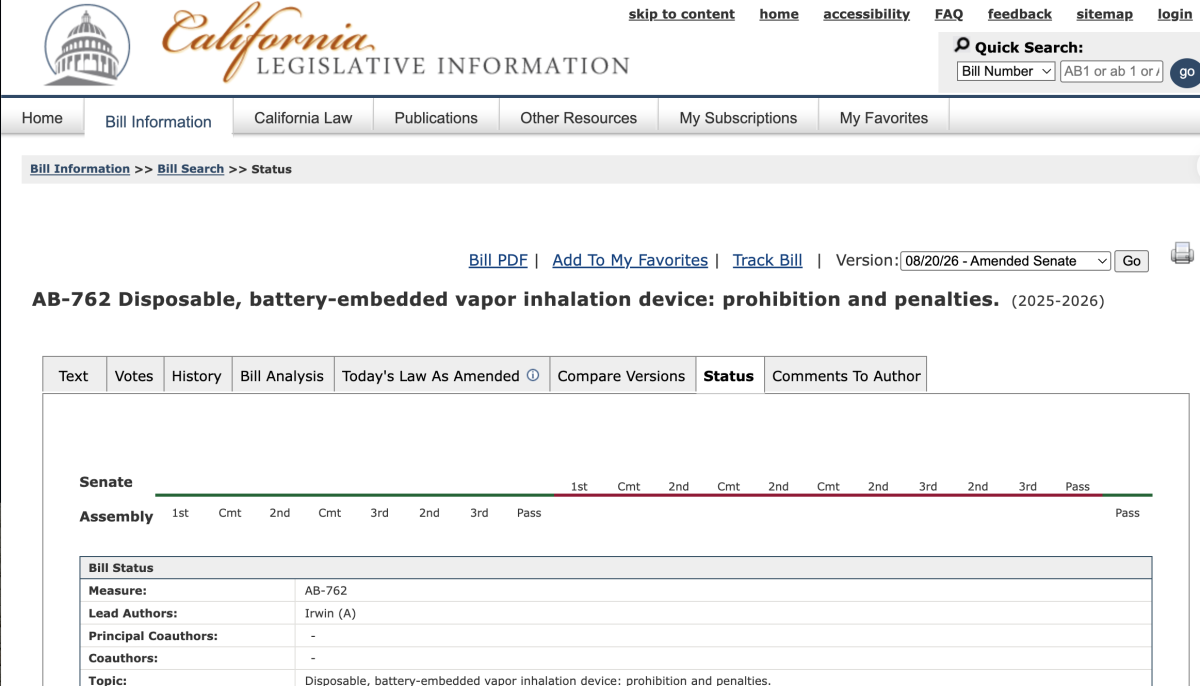
According to CBS Los Angeles on August 27, 2026, California lawmakers have passed Assembly Bill 762, which would phase out disposable, battery-embedded nicotine vapes in the state. If signed by Governor Gavin Newsom, manufacturing and importation of the covered products would be prohibited beginning January 1, 2027, followed by a sales ban on January 1, 2028. Driven primarily by concerns over electronic waste, lithium-battery fires and environmental pollution, the legislation would further shift California’s legal vape market toward rechargeable, refillable or replaceable-pod devices.
Aug.28