Disclaimer
[1]This article is intended solely to report on the tobacco and nicotine industries. It does not touch upon political topics or offer any political analysis or commentary.
[2]The information sources cited in this article are used exclusively for gathering leads relevant to this piece and do not imply that 2Firsts endorses or opposes any other content or viewpoints expressed by these sources.
Key Points:
• War-related stress and aggressive marketing have reversed previous declines in tobacco use, with nearly 50% of Ukrainian adults smoking in 2024.
• Among daily tobacco users, 79% smoke cigarettes, 18% use heated tobacco products, and 14% use e-cigarettes.
• Domestic cigarette production fell sharply from 58.9 billion units in 2021 to 31.7 billion in 2023; export plans now focus on neighboring countries.
• Despite initial progress in reducing illegal tobacco sales (down to 12.6% in Oct 2024), the illicit market rebounded to 14.1% in early 2025 due to counterfeit products and inconsistent enforcement.
• In response to rising tobacco use, Ukrainian lawmakers passed amendments restricting tobacco advertising.
• Economic instability and inflation forced the government to postpone plans to increase tobacco excise taxes to EU levels, with the target rate of €90 per 1,000 cigarettes now delayed to 2028 (current rate: €59).
[2Firsts reporting from Europe] Three years of war has dramatically changed the Ukrainian tobacco market, triggering a spike in tobacco consumption, a rise in illicit tobacco sales and forcing the government to delay plans to increase the excise rate for the industry.
In recent years, Ukraine has become a rare example of a European country with growing tobacco consumption. According to Pro Consulting, nearly half of the country’s adult population smoked in 2024.
War-related stress is undoubtedly one of the key factors driving the consumption of cigarettes and vapes in the country. However, local health groups also blame tobacco companies’ marketing efforts.
Tobacco consumption in Ukraine had been declining until 2017, a study by NGO Life in 2024 showed. This trend reversed following “aggressive advertising of tobacco-heating devices, e-cigarettes and other nicotine products,” according to the organization, which notes that consumption of all tobacco products is now rising in Ukraine. Among daily users, NGO Life found 79% using cigarettes, 18% using heating devices and 14% using e-cigarettes.
Alarmed by the results, Lada Bulakh, a lawmaker and member of the Committee on National Health, Medical Care, and Medical Insurance, proposed sweeping reforms to Ukraine’s tobacco regulations. Parliament adopted several amendments in 2023 and 2024, significantly restricting the advertisement of tobacco products.
Restarting Exports
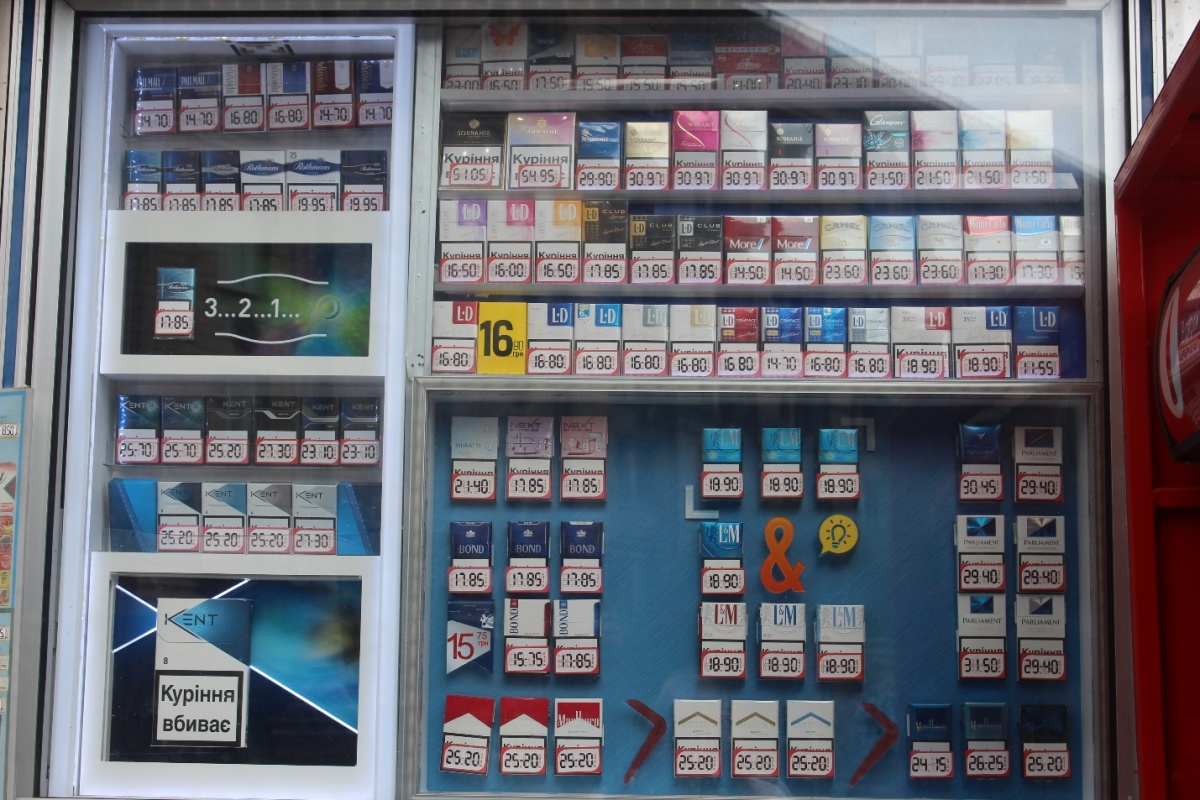
The war has also significantly impacted cigarette production in Ukraine. According to the finance ministry, domestic cigarette production plummeted from 58.9 billion pieces in 2021 to 31.7 billion pieces in 2023. Ukraine exported 3.9 billion cigarettes in 2023, compared with almost 30 million in 2018, when foreign sales reached a peak.
With most fighting taking place in the country’s east, several firms have relocated their factories and offices to the central and western parts of Ukraine. For instance, market leader Philip Morris International first moved its production from the Kharkiv region, which is partially controlled by Russian forces, to Imperial Brands’ Kyiv factory. In 2024, the company started production at a new facility in the Lviv region.
Although PMI’s new factory manufactures only 10 billion cigarettes per year—half of what the company produced on average per year at the Kharkiv factory—the multinational is eager to resume exports.
"The factory in Kharkiv manufactured 20 billion cigarettes [per year], half of which were for export,” Philip Morris Ukraine CEO Maxim Barabash told Ukrainian media. “We even produced for countries like Japan. There is no potential for growth in cigarette production in Ukraine because it is a fairly stable, sustainable market.”
"But as before the war, there is potential in export. We will examine which countries this can be applied to. Most likely, due to the war, it will be difficult to restore sales to Japan; it will take a longer time, but this does not mean that we are not looking at other countries. We can first of all start exporting to geographically close countries," he added.
Remarkably, a year earlier, the PMI determined that it was cheaper to import cigarettes from Poland than to produce them in Ukraine. Amid continuing mobilization, Ukraine has been grappling with persistent personnel shortages.
Illicit Products Bounce Back
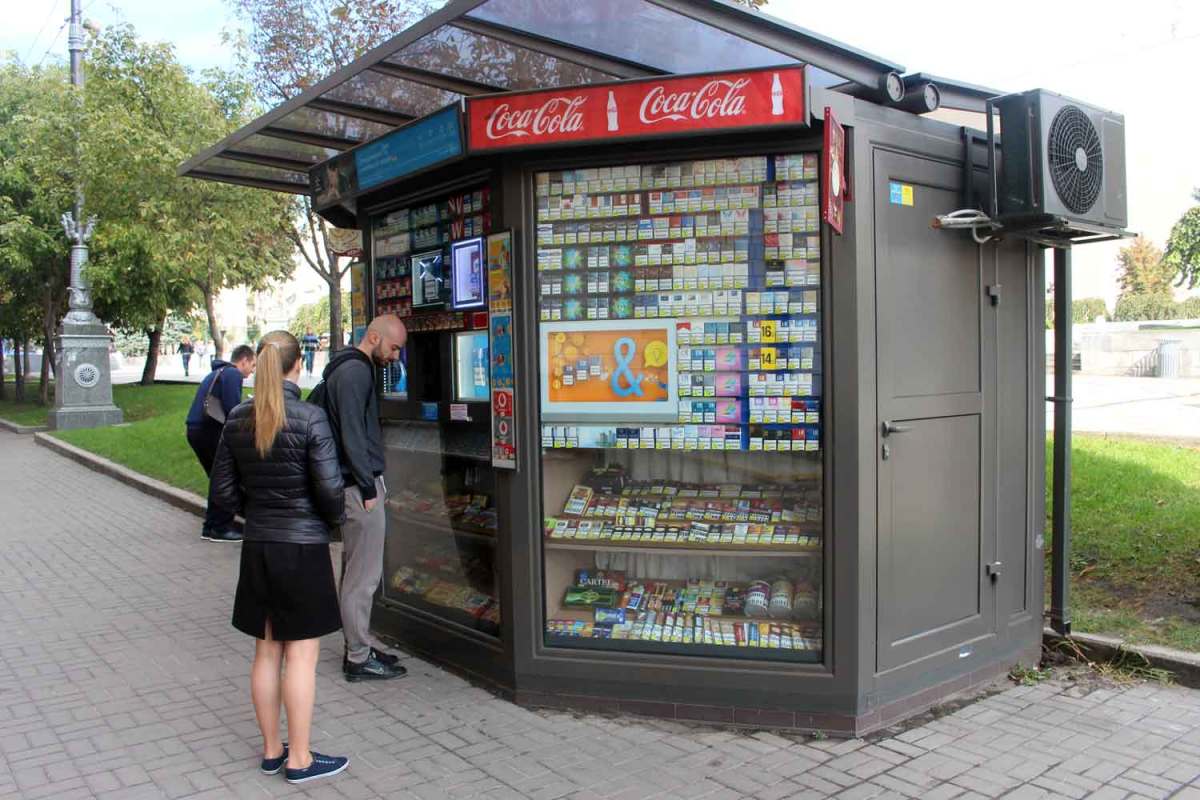
Despite the war, the Ukrainian government achieved significant progress in its struggle against the illicit segment of the tobacco market, comprised of smuggled and counterfeit products.
According to Kantar Ukraine, the share of illegal sales dropped to 12.6% in October 2024, which was nearly a third lower compared to the start of the year. The government attributed this development to stronger enforcement. Despite the progress, the annual losses of the state treasury from illegal sales of tobacco products still reached nearly UAH22 billion ($526.9 million) that year.
However, the downward trend reversed at the beginning of 2025. "After a long decline during 2024, we are again seeing an increase in the share of the illegal market - in February 2025, it reached 14.1%," Tetyana Sverdlik, an analyst at Kantar Ukraine, noted.
"The most noticeable increase was seen in products labeled Duty Free or designated for export, which are sold illegally in Ukraine. We are also seeing an increase in cases of counterfeiting, including fake products. The segment is changing quite quickly.”
Inconsistent state policy is viewed as one of the primary factors enabling the shadow segment to persist in the country. For example, in May 2024, detectives of the State Security Service seized equipment for the production of counterfeit cigarettes during a raid at the Orion Tobacco plant in the Odessa region. They confiscated more than 1.2 million cigarette packs with counterfeit excise tax stamps. However, in February 2025, the Shevchenkivskyi District Court of Kyiv reversed the seizure. In October 2024, the Lviv District Administrative Court ordered the State Tax Service to reinstate the factory’s production license, which had been revoked on July 2.
Excise Rate to Rise
Increasing excise taxes will provide new incentives for illicit operators, according to Pro-Consulting. The war triggered an economic crisis and devaluation of the national currency, which in turn prompted the government to delay its plan to increase excise taxes to €90 ($106.16) per 1,000 pieces by 2025. As of 2024, excise rates were €59 per 1,000 cigarettes. Under bill No. 11090, adopted in December 2024, the target of €90 per 1,000 cigarettes will not be reached until 2028.
2Firsts will continue to provide in-depth coverage of the tobacco and nicotine markets in Europe.
Cover image:Ukrainian soldiers taking a smoke break in Kiev | Photo: By Taco Tuinstra (2016)
We welcome news tips, article submissions, interview requests, or comments on this piece.
Please contact us at info@2firsts.com, or reach out to Alan Zhao, CEO of 2Firsts, on LinkedIn
Notice
1. This article is intended solely for professional research purposes related to industry, technology, and policy. Any references to brands or products are made purely for objective description and do not constitute any form of endorsement, recommendation, or promotion by 2Firsts.
2. The use of nicotine-containing products — including, but not limited to, cigarettes, e-cigarettes, nicotine pouchand heated tobacco products — carries significant health risks. Users are responsible for complying with all applicable laws and regulations in their respective jurisdictions.
3. This article is not intended to serve as the basis for any investment decisions or financial advice. 2Firsts assumes no direct or indirect liability for any inaccuracies or errors in the content.
4. Access to this article is strictly prohibited for individuals below the legal age in their jurisdiction.
Copyright
This article is either an original work created by 2Firsts or a reproduction from third-party sources with proper attribution. All copyrights and usage rights belong to 2Firsts or the original content provider. Unauthorized reproduction, distribution, or any other form of unauthorized use by any individual or organization is strictly prohibited. Violators will be held legally accountable.
For copyright-related inquiries, please contact: info@2firsts.com
AI Assistance Disclaimer
This article may have been enhanced using AI tools to improve translation and editorial efficiency. However, due to technical limitations, inaccuracies may occur. Readers are encouraged to refer to the cited sources for the most accurate information.
We welcome any corrections or feedback. Please contact us at: info@2firsts.com