Texas Bans E-Cigarette Designs Targeting Children.

Regulations by 2FIRSTS.ai
Jun.20.2023
Texas Bans E-Cigarette Designs Targeting Children.
Texas Governor signs bill banning e-cigarette packaging that appeals to minors. Effective from January 1, 2024.

Recently, it has been reported by the Texas state legislature that the Governor of Texas has signed into law the HB4758 bill, which will prohibit e-cigarette designs that depict cartoon characters or imitate logos or packaging of products primarily marketed to minors, include symbols or celebrity images used to appeal to minors, and packaging that resembles food such as candy or juice.


The objective of this bill is to protect minors from the allure and potential risks of e-cigarettes. Prior research has shown that cartoon imagery and food-like packaging may pique the interest of minors and falsely lead them to believe that these products are harmless. The aim is to decrease minors' exposure to and use of e-cigarettes in order to safeguard public health.


The legislation is viewed as an important step towards addressing the growing trend of e-cigarette usage among adolescents and safeguarding the health and wellbeing of this population group. The law will come into effect on January 1, 2024.


Disclaimer

This article is provided solely for professional research, industry discussion, and informational purposes. Any references to brands, companies, products, technologies, or policies are made for factual reporting and analytical purposes only, and do not constitute endorsement, recommendation, promotion, or advertising by 2Firsts.

Nicotine-containing products, including but not limited to cigarettes, e-cigarettes, heated tobacco products, and nicotine pouches, carry significant health risks. Readers are responsible for complying with all applicable laws and regulations in their respective jurisdictions, including age restrictions and access limitations.

The information contained in this article should not be regarded as investment, legal, medical, regulatory, or commercial advice. While 2Firsts strives to ensure the accuracy and reliability of its content, it does not assume liability for any direct or indirect loss arising from errors, omissions, inaccuracies, or reliance on the information contained herein.

This article is not intended for individuals below the legal age for accessing tobacco or nicotine-related information in their jurisdiction.


Copyright Notice

This article is either original content produced by 2Firsts or content reproduced, translated, summarized, or adapted from third-party sources with attribution where applicable. The intellectual property rights of the original content remain with 2Firsts or the respective original rights holders.

No individual or organization may copy, reproduce, distribute, republish, modify, translate, or otherwise use this content without prior authorization. Any unauthorized use may result in legal action.

For copyright-related inquiries, corrections, or removal requests, please contact: info@2firsts.com.


AI-Assisted Translation and Editing Notice

Portions of this article may have been translated, edited, or reviewed with the assistance of artificial intelligence tools to improve efficiency and readability. Due to the limitations of AI-assisted translation and editing, discrepancies, omissions, or inaccuracies may exist when compared with the original source.

Where applicable, readers are advised to refer to the original source for the most complete and accurate information. If you identify any errors or believe that any content infringes upon your rights, please contact us at info@2firsts.com, and we will review and address the matter promptly.


South Korea Constitutional Court Upholds Volume-Based E-Liquid Tax, With Challenged Rates at KRW 370 and KRW 628 per Milliliter
South Korea's Constitutional Court has upheld fixed taxes on nicotine-containing e-cigarette liquids based on solution volume, ruling that challenged provisions imposing KRW 370 per milliliter in individual consumption tax and KRW 628 per milliliter in tobacco consumption tax do not violate the Constitution. The cases stemmed from historical disputes involving importers that reported nicotine as being extracted from tobacco stems rather than leaves. South Korea has since broadened its tobacco definition to include synthetic nicotine, while current tax laws provide reduced rates for certain products not derived from tobacco.
Sep.18
South Korea Vape Strategies Diverge as BAT Reconsiders Exit and PMI Takes VEEV to About 14,000 Stores
BAT Rothmans says it previously considered exiting South Korea's vaping market because of competitive pressure from unregulated products, but is now reassessing conditions following changes to the country's nicotine regulatory framework. Vuse and other BAT vaping products remain available through existing distribution channels. The statement followed a South Korean media report that interpreted BAT's broader withdrawal from selected Vapour markets as a full exit from South Korea. Meanwhile, Philip Morris International launched VEEV inPRIME in the country in June and began expanding distribution to around 14,000 convenience stores and other retail channels in July. The contrasting moves highlight differing investment strategies as South Korea's regulated vaping market evolves.
Aug.14
From Vuse, Velo and glo to AI Consulting: Former BAT Content Lead Launches Destreza
Former BAT global content lead Andy Parton has left the company and launched Destreza, a London-based AI-native marketing consultancy. Parton previously worked across BAT's New Category brands Vuse, Velo and glo and had also served as Global Brand Lead for Vuse Go. Destreza says it will advise consumer businesses on AI in brand strategy, operating models, capability and agency configuration, using specialist AI agents to support research, strategy and creative development. BAT reported £3.621 billion in New Category revenue in 2025.
Sep.22
China’s Shanghai Tobacco Group Launches CNY 10.98 Million (Approximately US$1.53 Million) Procurement for Heated Tobacco Production Utility Equipment
Shanghai Tobacco Group Co., Ltd., a tobacco manufacturing company under China National Tobacco Corporation (CNTC), has launched a public tender for heated tobacco products (HTPs) production utility equipment at its Shanghai Cigarette Factory. The project is valued at CNY 10.98 million and covers six combined air-conditioning units, electrical cabinets and control systems for production facilities. The procurement includes equipment design, supply, installation, commissioning and related training services.
Aug.07
2Firsts Compliance Solutions Hosts PMTA Briefing on FDA Review Signals After JUUL2 Authorization
Following recent FDA authorizations for JUUL2 and ZYN ULTRA, 2Firsts Compliance Solutions held an online PMTA briefing on Sept. 4 to examine what the decisions may signal about review efficiency, scientific evidence and U.S. market access. Nearly 30 participants from brands, manufacturers, compliance service providers and investment firms joined the discussion.
2Firsts Events
Sep.06
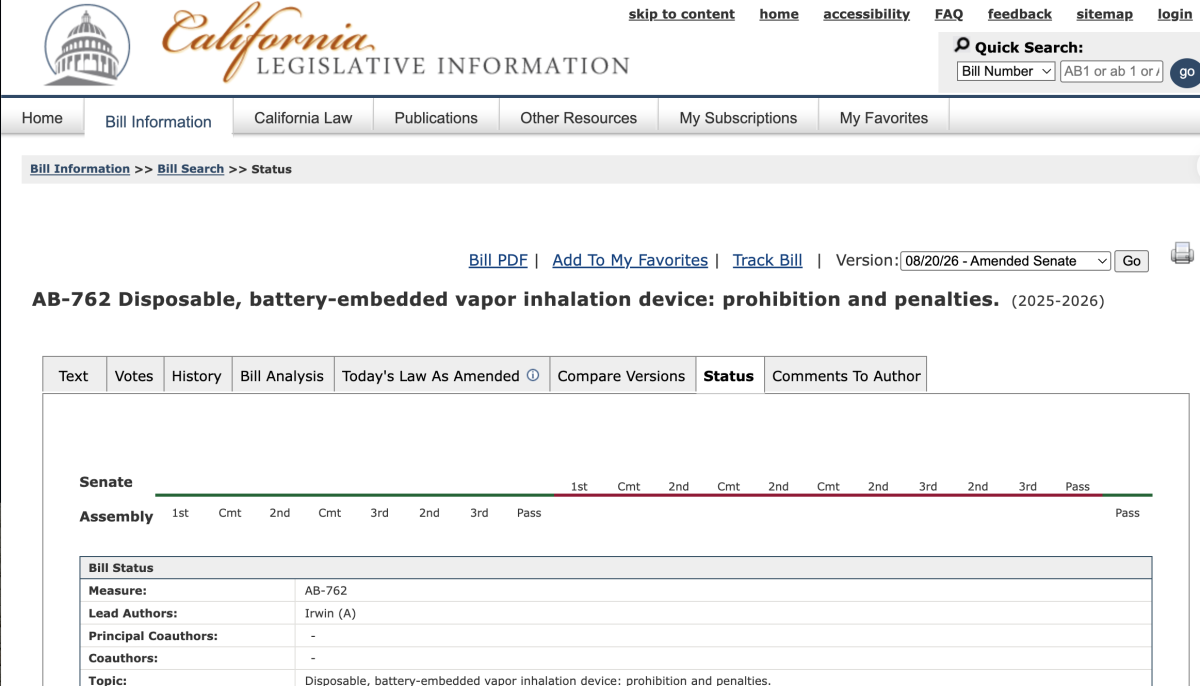
California Lawmakers Pass Disposable Nicotine Vape Ban, With Sales Prohibition Set for 2028
According to CBS Los Angeles on August 27, 2026, California lawmakers have passed Assembly Bill 762, which would phase out disposable, battery-embedded nicotine vapes in the state. If signed by Governor Gavin Newsom, manufacturing and importation of the covered products would be prohibited beginning January 1, 2027, followed by a sales ban on January 1, 2028. Driven primarily by concerns over electronic waste, lithium-battery fires and environmental pollution, the legislation would further shift California’s legal vape market toward rechargeable, refillable or replaceable-pod devices.
Aug.28