The Continued Prevalence of Flavored E-Cigarettes in the Netherlands

Jul.04.2024
The Continued Prevalence of Flavored E-Cigarettes in the Netherlands
Netherlands struggles to enforce e-cigarette flavor ban, with sweet options still popular despite crackdown, says NVWA. (20 words)

According to a report from Telegraaf on July 4th, the Netherlands Food and Consumer Product Safety Authority (NVWA) recently admitted that flavored e-cigarettes are still prevalent, despite a nationwide ban on their sale for over six months.


During inspections of some tobacco shops and late-night convenience stores in the western district of Amsterdam, it was found that although flavored e-cigarettes are no longer displayed on shelves, they are still being sold secretly under the counter. Legal tobacco shops appear to be complying with the ban, only selling legal e-cigarettes with tobacco flavor.


However, a staff member at the Primera tobacco shop pointed directly to the nightclub: "Go there and see for yourself, they are still selling.


These nightclubs do offer a variety of e-cigarette flavors, such as cherry, bubblegum, and mango. One store even sells flavor droplets that users can use to mix their own preferred flavors.


The spokesperson for NVWA, Lex Benden, stated that it will take time for the effects of the ban to become apparent. Currently, NVWA is primarily focusing on the importation of e-cigarettes and claims to have achieved significant results.


We have ensured that more than 3.5 million flavored e-cigarettes have not entered stores in the Netherlands so far.


The NVWA continues to monitor various websites.


The majority of e-commerce businesses registered in the Netherlands have been shut down.


The spokesperson stated, "We have inspected approximately 600 stores and found that 80% of them are complying with the ban." Retailers found selling flavored e-cigarettes in violation of the ban will face hefty fines, with fines of up to 4500 euros per brand of e-cigarette and a maximum total fine of 22500 euros per inspection.


In 2023, one-fifth of young people aged 12 to 25 in the Netherlands use e-cigarettes. Particularly popular among teenagers aged 12 to 14, with 10.2% of this age group using e-cigarettes.


Due to the ban on selling flavored e-cigarettes in regular stores, the Netherlands has seen the emergence of a black market for e-cigarettes.


We have been monitoring social media and removing posts promoting e-cigarettes. In the past few months, such posts have been deleted 1000 times.


The NVWA is still in negotiations with social media platforms, hoping they can more actively identify and remove such posts. However, they acknowledge that enforcing the bans remains a challenging task.


The existence of such illegal transactions is due to young people wanting to vape e-cigarettes. This is a societal issue.


We welcome news tips, article submissions, interview requests, or comments on this piece.

Please contact us at info@2firsts.com, or reach out to Alan Zhao, CEO of 2Firsts, on LinkedIn


Notice

1.  This article is intended solely for professional research purposes related to industry, technology, and policy. Any references to brands or products are made purely for objective description and do not constitute any form of endorsement, recommendation, or promotion by 2Firsts.

2.  The use of nicotine-containing products — including, but not limited to, cigarettes, e-cigarettes, nicotine pouchand heated tobacco products — carries significant health risks. Users are responsible for complying with all applicable laws and regulations in their respective jurisdictions.

3.  This article is not intended to serve as the basis for any investment decisions or financial advice. 2Firsts assumes no direct or indirect liability for any inaccuracies or errors in the content.

4.  Access to this article is strictly prohibited for individuals below the legal age in their jurisdiction.


Copyright


This article is either an original work created by 2Firsts or a reproduction from third-party sources with proper attribution. All copyrights and usage rights belong to 2Firsts or the original content provider. Unauthorized reproduction, distribution, or any other form of unauthorized use by any individual or organization is strictly prohibited. Violators will be held legally accountable.

For copyright-related inquiries, please contact: info@2firsts.com


AI Assistance Disclaimer


This article may have been enhanced using AI tools to improve translation and editorial efficiency. However, due to technical limitations, inaccuracies may occur. Readers are encouraged to refer to the cited sources for the most accurate information.

We welcome any corrections or feedback. Please contact us at: info@2firsts.com

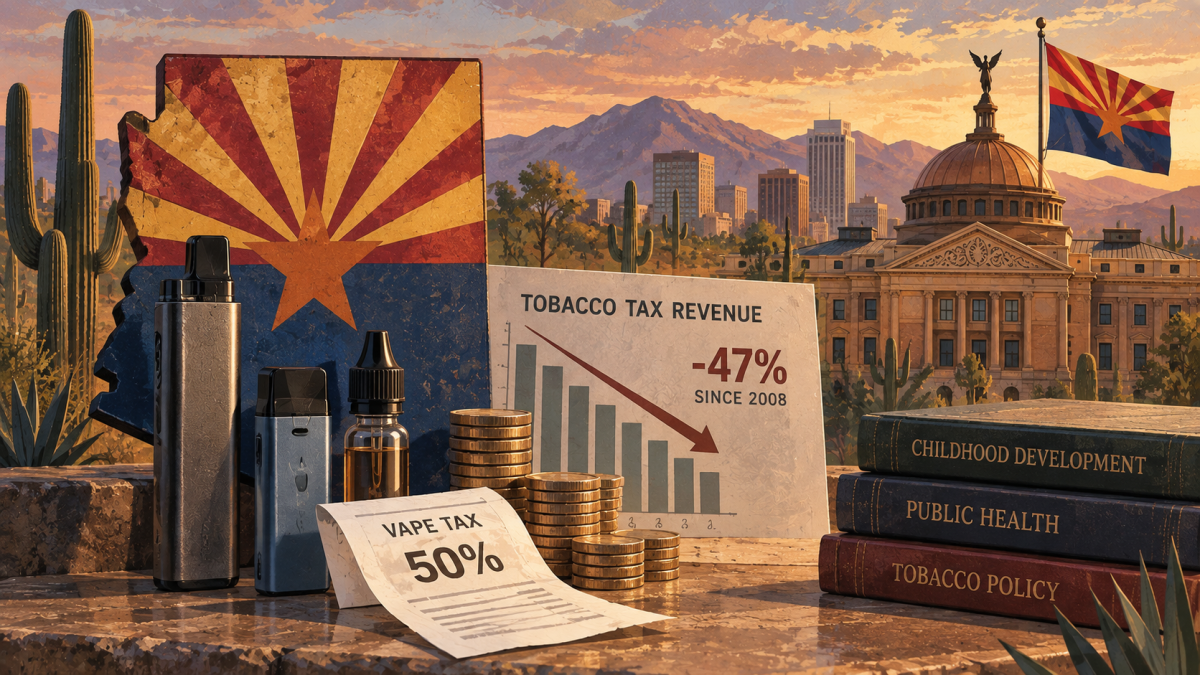
Arizona Turns to a 50% Retail Vape Tax as Tobacco Tax Revenue Falls 47% From 2008
Arizona's First Things First is pushing for an excise tax equal to 50% of the retail price of vaping products, estimating that the measure could generate about $100 million annually. The agency says its tobacco-tax revenue has fallen 47% from 2008 levels. Arizona has attempted to broaden its nicotine tax base in each of the past two years: a 2025 bill proposed a 50% wholesale-price tax, while a 2026 measure shifted to a 50% retail-price tax covering alternative nicotine products and vapor products. Separately, the state enacted HB 4001 this year to establish a new licensing and sales framework for alternative nicotine products.
Sep.21
China Tobacco Yunnan files patent for cellulose-free nicotine pouch scaffold to replace microcrystalline cellulose
China Tobacco Yunnan Industrial Co., Ltd. has filed a patent application for a cellulose-free scaffold material for nicotine pouches, proposing a combination of bioceramic material, polydextrose and sugar alcohols to replace conventional microcrystalline cellulose and cellulose derivatives. The filing aims to address issues including powdery mouthfeel, residue and limited release control, while also reducing reliance on existing cellulose-based patent portfolios. In patent examples, one fast-release formulation reached a nicotine release rate of 50% at 10 minutes and more than 90% at 20 minutes.
Sep.02
Malaysia Withdraws Appeal Against Liquid Nicotine Ruling as Vape Regulation Framework Enters New Phase
Malaysia’s government has withdrawn its appeal against a High Court ruling concerning the regulatory status of liquid nicotine used in vape and e-cigarette products, according to reports by New Straits Times, Free Malaysia Today and CodeBlue on August 18, 2026. The Kuala Lumpur High Court ruled on May 15 that the government’s decision to remove liquid nicotine from the scheduled poisons list under the Poisons Act 1952 was irrational and made without proper consultation with the Poisons Board. The withdrawal ends the government’s appeal process, while the future regulatory framework for nicotine vape products remains under discussion.
Aug.21
BAT Expands ITC Infotech Partnership Across Poland, Romania and India to Advance AI
ITC Infotech has expanded its multi-year strategic technology partnership with British American Tobacco (BAT), providing technology services across Poland, Romania and India while continuing to support BAT's newly launched Future Capabilities Centre in India and existing technology hubs in Malaysia and Mexico. The companies said the agreement will focus on AI-enabled innovation, technology capability building and greater operational efficiency. The partnership also aligns with BAT's broader Fit2Win transformation programme, under which the group is expanding the use of external technology and business-services partners to simplify its global operating model.
Aug.13
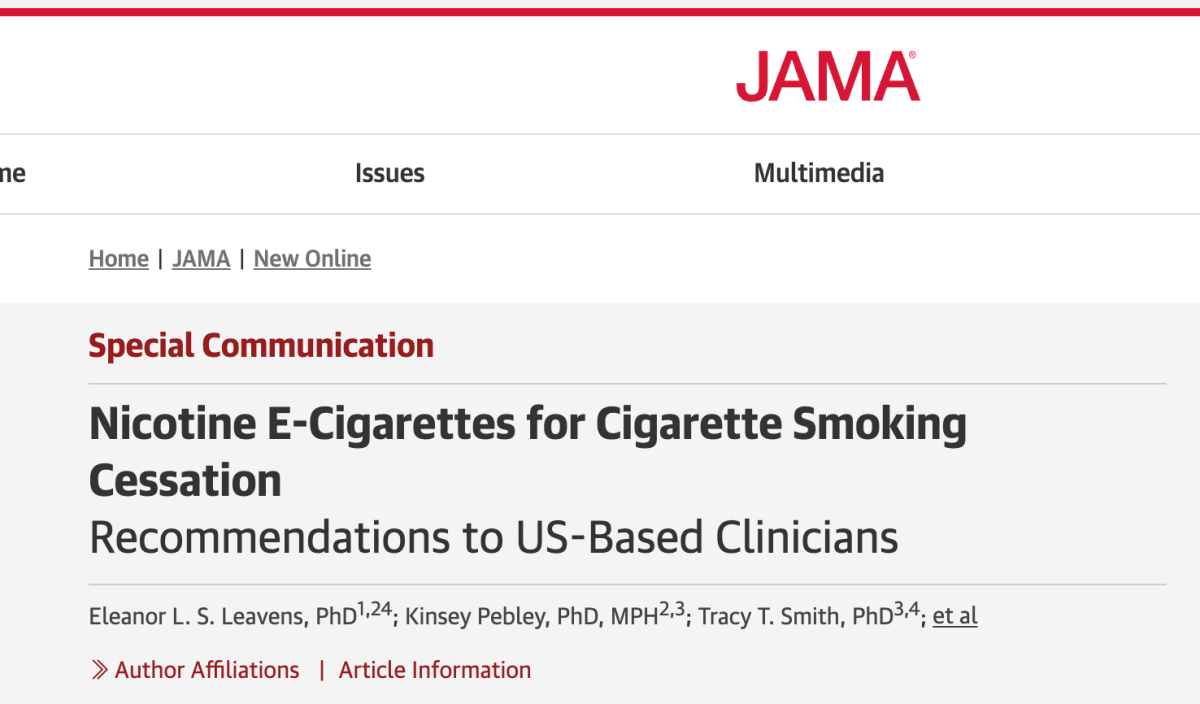
JAMA Issues First U.S. Clinical Guidance on Vaping for Smoking Cessation, Urging Complete Switch From Cigarettes
JAMA has published a Special Communication offering systematic recommendations for U.S.-based clinicians on the use of nicotine e-cigarettes in adult smoking cessation. Developed by the Harm Reduction Workgroup of the Society for Research on Nicotine and Tobacco’s Treatment Research Network, the paper recommends including e-cigarettes alongside FDA-approved cessation medications in risk-benefit discussions. It cites high-certainty evidence that nicotine e-cigarettes achieve higher quit rates than nicotine replacement therapy and evidence suggesting efficacy comparable to highly effective medications such as varenicline and cytisine. For adults who choose vaping to quit, the authors recommend FDA-authorized products, sufficient nicotine delivery and a rapid, complete transition away from cigarettes rather than prolonged dual use.
Aug.13
JUUL Purchasers Ask Ninth Circuit to Preserve Antitrust Classes in Case Over Altria’s $12.8 Billion Investment
Private antitrust litigation stemming from Altria's 2018 $12.8 billion investment for a 35% economic interest in JUUL is advancing before the U.S. Court of Appeals for the Ninth Circuit. Direct purchasers, indirect purchasers and indirect resellers of JUUL products filed answering briefs this week seeking to preserve class certifications granted by a California federal court in February. Altria and JUUL argue that individual consumers and large distributors differ too much in purchasing terms to remain in a single direct-purchaser class, while a separate dispute concerns whether California antitrust law can apply to indirect purchasers across 27 jurisdictions. A September trial has been put on hold during the appeal.
Sep.23