The Rise of Disposable Smart E-Cigarettes Targeting Teenagers

Aug.21.2024
The Rise of Disposable Smart E-Cigarettes Targeting Teenagers
Rise of high-tech disposable e-cigarettes targeting teenagers raises concerns about nicotine addiction among youth, warns California researchers.

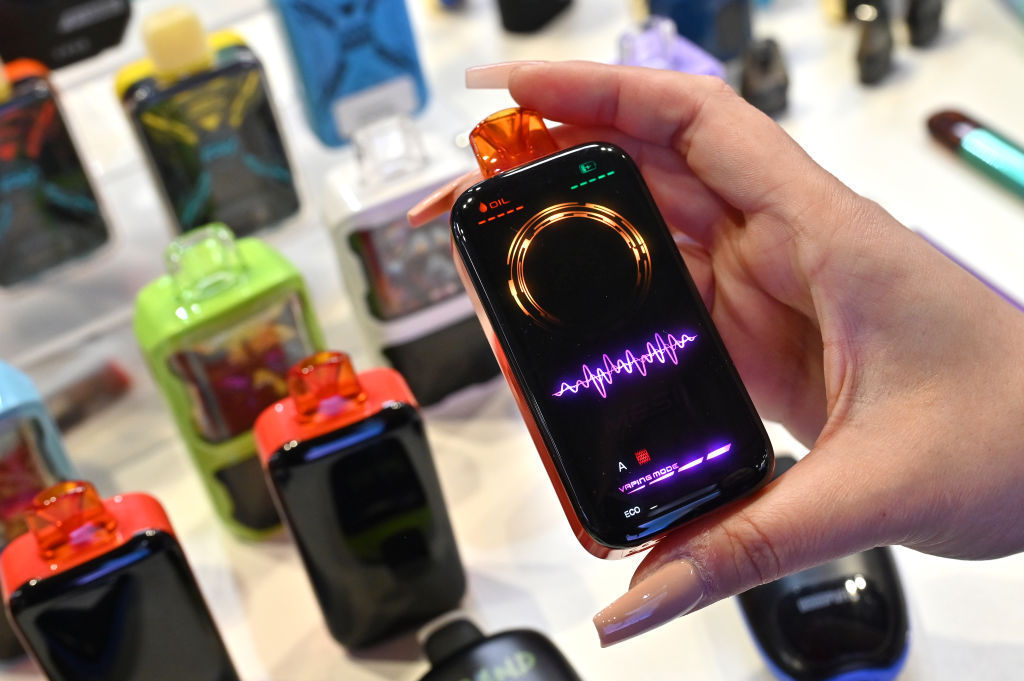
According to a recent report by the American media Times Union, a new emerging dangerous trend targeting teenagers has raised concerns as the new school year approaches: the rise of disposable "smart e-cigarettes" designed for teenagers.


These e-cigarettes are not ordinary products, they come equipped with high-definition digital screens and pre-installed video games, cleverly capturing the attention of teenagers. This could lead more young people into the world of nicotine addiction.


In a recent study, researchers from the University of California, Riverside, warned that...


Combining nicotine with existing adolescent behaviors such as video games and screen time may expand the intelligent e-cigarette market, attracting even those adolescents who were previously disinterested in nicotine products, while also reinforcing nicotine addiction in current users.


Of particular concern is the fact that these illegal devices come preloaded with games that offer digital prizes and progress based on the amount of e-cigarette liquid consumed. This predatory strategy targets adolescents' gaming habits, making these e-cigarettes not only more attractive, but also more addictive.


According to statistics released by the Centers for Disease Control and Prevention in the United States, illegal flavored disposable e-cigarettes are now the most popular product among middle and high school freshmen. This clearly indicates that despite the ban, these substances are still making their way into the hands of minors.


This is the latest evolution of these devices, all targeted towards teenagers, and they are still available on the market.


We welcome news tips, article submissions, interview requests, or comments on this piece.

Please contact us at info@2firsts.com, or reach out to Alan Zhao, CEO of 2Firsts, on LinkedIn


Notice

1.  This article is intended solely for professional research purposes related to industry, technology, and policy. Any references to brands or products are made purely for objective description and do not constitute any form of endorsement, recommendation, or promotion by 2Firsts.

2.  The use of nicotine-containing products — including, but not limited to, cigarettes, e-cigarettes, nicotine pouchand heated tobacco products — carries significant health risks. Users are responsible for complying with all applicable laws and regulations in their respective jurisdictions.

3.  This article is not intended to serve as the basis for any investment decisions or financial advice. 2Firsts assumes no direct or indirect liability for any inaccuracies or errors in the content.

4.  Access to this article is strictly prohibited for individuals below the legal age in their jurisdiction.


Copyright


This article is either an original work created by 2Firsts or a reproduction from third-party sources with proper attribution. All copyrights and usage rights belong to 2Firsts or the original content provider. Unauthorized reproduction, distribution, or any other form of unauthorized use by any individual or organization is strictly prohibited. Violators will be held legally accountable.

For copyright-related inquiries, please contact: info@2firsts.com


AI Assistance Disclaimer


This article may have been enhanced using AI tools to improve translation and editorial efficiency. However, due to technical limitations, inaccuracies may occur. Readers are encouraged to refer to the cited sources for the most accurate information.

We welcome any corrections or feedback. Please contact us at: info@2firsts.com

FDA Sued Over Allowing Some Unauthorized Vapes and Nicotine Pouches to Stay on Market
Public health groups, pediatricians and parents sued the U.S. Food and Drug Administration on July 14, 2026, challenging a May enforcement guidance that they say allows unauthorized e-cigarettes and nicotine pouches to remain on the market while applications are under review.
Jul.15
From Nicotine Pouches to Soft Candy Forms: China Tobacco Hubei explores adjustable-release oral nicotine products
China-based China Tobacco Hubei Industrial Co., Ltd. has filed a patent application covering an oral nicotine product and its preparation method. The patent proposes a soft candy-shaped oral nicotine product containing nicotine ingredients, gelling agents, sweeteners and alkaline pH regulators. Through formulation adjustments and homogeneous or dual-layer structures, the technology aims to achieve different nicotine release profiles. The filing reflects exploration of new oral nicotine product formats and controlled nicotine delivery approaches.
Aug.06
Japan’s Heated Tobacco Tax Changes Reshape Consumer Choices, Survey Reveals Impact of Price and Income
A consumer survey by Japanese heated tobacco information platform RELAZO found that rising tobacco prices and planned heated tobacco tax changes may influence smoking decisions among Japanese consumers. The survey covered 49,879 men and women aged 20 to 69 nationwide. It found that around 40% of respondents cumulatively indicated they may consider quitting when a pack reaches ¥600 (approximately US$4.1), while nearly 90% expressed potential quitting intentions at a ¥1,000 (approximately US$6.8) price level. The survey also found significant differences by income level, with lower-income respondents showing greater sensitivity to price increases.
Jul.24
Germany Plans Tobacco Tax Hike, With Cigarette Prices Nearing €12 Per Pack by 2030
Germany plans to raise tobacco taxes over the coming years, potentially pushing the average price of a 20-cigarette pack to about €11.78 by 2030. The proposal also covers fine-cut tobacco, cigars, pipe tobacco and e-cigarette liquids.
Jul.14
JT Plans ¥800 Billion Investment in Heated Tobacco Over Three Years, Betting on Ploom as Second Growth Engine
Japan Tobacco Inc. (JT) CEO Takehiko Tsutsui said the company plans to invest about ¥800 billion (approximately US$5.4 billion) in heated tobacco products over three years through 2028, aiming to establish Ploom as a second growth engine after combustible cigarettes. Tsutsui said Ploom AURA helped JT increase its share of Japan’s heated tobacco market to 15.8% in the first quarter of 2026. Ploom products are now available in 29 markets, with Ploom AURA sold in 25 markets including Japan. JT also plans to continue its cigarette business while positioning its food operations, particularly frozen noodle products in North America, as another growth opportunity.
Jul.23
China’s HTP Exports Fell 14.3% in H1 2026 as Russia and Belarus Accounted for 76% Lead
In H1 2026, China’s HS 24041100 exports stood at $1.32 million, down 14.3% YoY, with volume falling 17.2% to 55.33 tons. Market distribution shifted drastically amid overall export drops. Exports to Russia and Belarus totaled $1 million, taking 76.0% of all shipments versus 29.5% in H1 2025. Belarus became the top destination with export value jumping 177.5%, while the Philippines, Singapore and Indonesia’s combined share slumped from 49.3% to 11.2%.Domestically, Yunnan led exporter registrations; Jiangsu and Shanghai were key suppliers, yet Anhui and Sichuan had no exports. Heavy concentration means order or declaration changes for Russia/Belarus greatly affect national aggregate data. The data shows customs entry points (not end markets), covering tobacco consumables only, excluding heating equipment and the complete HTP supply chain.
Aug.11