In Istanbul's Kadıköy district, Kemal and his friends run a tekel, a shop that sells alcohol and tobacco. Nostalgic Turkish music from the 80s plays over the smoky speaker system. Today's specials include two different types of imported Spanish beer: Daura and Estrella. Illegal cigarettes are openly sold behind the counter.
When his colleague, a middle-aged retired man from the central Anatolian city of Kayseri, handled the daily operations, Kemal made sure everyone had a cup of tea and began explaining their sale of two types of illegal cigarettes.
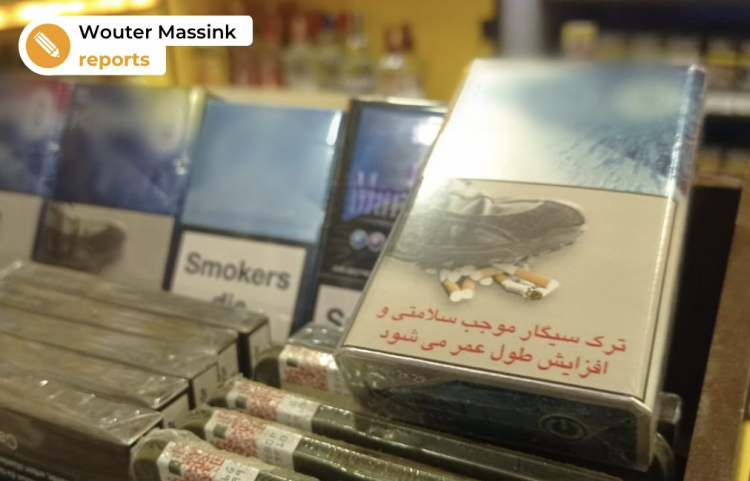
Expensive menthol cigarettes are being smuggled from Iran as Turkey banned them in 2020. Cheaper pre-rolled cigarettes have become more popular as they are priced at 14 lira (approximately 5.4 yuan), which is half the price of regular packaged cigarettes.
The recent economic crisis, characterized by an annual inflation rate between approximately 84.39% and an unofficial 170.70%, has forced people to look for alternative solutions.
Hirar, fresh out of film school, was taking a smoking break at a cultural center located two blocks away from Tekel in Kemer. Together with four other recent graduates, they established a non-profit venue that offers local youth free cultural opportunities.
Although she had cigarettes in hand, she has been preferring to smoke cheap Parley loose-leaf tobacco and buying cheap pre-rolled cigarettes regularly in recent days. When she started smoking, a pack of cigarettes cost 9 or 10 lira (equivalent to about 3.3-3.7 yuan). Nowadays, it has almost tripled in price, leading her to seek more affordable options. She is not the only one; her friends often purchase cigarettes smuggled from Iran or Iraq, but they have also seen price hikes, she commented.
200 billion cigarettes
Inflation and increased taxes have fueled the smuggling of cigarettes and the self-rolling or purchase of pre-rolled cigarettes. Between 2019 and 2020, Turkey's legitimate cigarette sales decreased by 2 billion units. The population smoked approximately 118 billion units of legally manufactured cigarettes, and burned around 20 billion units of hand-rolled and smuggled cigarettes.
According to Fuat Oğuz, an economics professor at Ankara Yıldırım Beyazıt University, illegal tobacco accounts for approximately 20% of all tobacco sales in Turkey, resulting in an annual tax revenue loss of 2.5 to 30 billion Turkish liras.
On December 10th, the government released a new amendment in order to combat the illegal tobacco trade. Individuals who sell tobacco without authorization may now face a maximum of 2 to 5 years in prison. Additionally, recent crackdowns and inspections throughout the country have resulted in numerous seizures and detentions.
Three weeks ago, authorities seized 650 kilograms of illicit tobacco, 4,200 cigarette packs, and 2,700 empty filters in Eşkişehir, located in the city center. One week later, in Istanbul, the police detained 17 individuals and confiscated 11.53 million packs of smuggled cigarettes and 214 kilograms of tobacco.
Cigarette smuggling has always existed.
However, Kamal is not worried about getting caught. Most tekels on the street sell illegal cigarettes, and the local authorities turn a blind eye to it. When a police car drives down the street looking for a parking spot, Kamal doesn't hesitate to make sure they can park in front of the store.
There has always been cigarette smuggling in Turkey," he explained. Prior to Turgut Özal's rise to power in 1983, foreign brands such as Marlboro were secretly brought into the country as importing cigarettes was illegal.
From 1983 to 1989, Turgut Özal served as the 26th Prime Minister of Turkey and implemented extensive neoliberal economic reforms. He appointed his son, Ahmed Özal, to assist in the opening up of the predominantly state-owned tobacco market. In 1983, he allowed the importation of foreign brand cigarettes, and in 1991, foreign companies were permitted to distribute and produce their own cigarettes in Turkey.
As a result, between 1990 and 2000, the consumption of foreign cigarette brands increased by 46 times in this country. In the same period between 1990 and 1999, cigarette consumption grew by 52%, making this country one of the largest cigarette consumers in the world. In contrast, global cigarette consumption declined by 4% during this period.
After the infiltration of multinational tobacco companies and the financial crisis, Turkey, historically one of the main tobacco-producing countries, began to rely on imported tobacco. In the 1990s, the government was forced to cut public welfare spending, such as subsidies for tobacco cultivation.
Turkey's share of global tobacco production has decreased from 4% in the 1990s to 1.7% in 2012, as a result of declining yields. In 2003, Turkish cigarette manufacturers used 42% locally grown tobacco, but this has now decreased to 11% because foreign companies have been choosing Virginia varieties over traditional Turkish tobacco. As a consequence, Turkey has experienced a tobacco trade deficit in 2020, exporting tobacco products worth $992 million while importing over $1.2 billion.
Galatasaray, Kayserispor, and NATO cigarettes.
The privatization of tobacco has significantly altered the products sold in local tobacco shops. With a strong sense of nostalgia, Kemal began naming countless local cigarette brands, such as Çamlıca, Maltepe, Tekel, Samsun, Bafra, Yenibahar, Sipahi, Asker, Birinci and İkinci, Meltem, Polis, and Tokat. His colleagues eagerly opened up Google to find pictures of Galatasaray, Kaseri Spor, and NATO cigarettes.
Today, the only packaging that reminds people of the past that is still sold frequently in shops is Tekel. However, this brand is no longer in the hands of the locals. The state-owned tobacco and alcohol company, Tekel, which means "monopoly" in Turkish, was sold to the British-American Tobacco Company in 2008 for a price of $1.72 billion.
Today, Marlboro Touch Blue is one of the best-selling cigarettes at Kemal's store, with a counter price slightly above 30 lira (approximately 11 yuan in Chinese currency).
Before the New Year's Day in 2021, cigarettes cost around 20 lira (approximately 7.47 RMB). However, in January 2021, the tax on cigarettes increased by 47%, causing concerns that a new price hike in 2023 will be given as a New Year's gift.
Kemal and his colleagues seem unconcerned. They continue to buy cigarettes as Kemal smokes and drinks tea. A recent survey conducted by NG research company confirms this, as three-quarters of people over the age of 15 admit that the increase in cigarette prices has not led to a decrease in smoking.
Disclaimer
This article is provided solely for professional research, industry discussion, and informational purposes. Any references to brands, companies, products, technologies, or policies are made for factual reporting and analytical purposes only, and do not constitute endorsement, recommendation, promotion, or advertising by 2Firsts.
Nicotine-containing products, including but not limited to cigarettes, e-cigarettes, heated tobacco products, and nicotine pouches, carry significant health risks. Readers are responsible for complying with all applicable laws and regulations in their respective jurisdictions, including age restrictions and access limitations.
The information contained in this article should not be regarded as investment, legal, medical, regulatory, or commercial advice. While 2Firsts strives to ensure the accuracy and reliability of its content, it does not assume liability for any direct or indirect loss arising from errors, omissions, inaccuracies, or reliance on the information contained herein.
This article is not intended for individuals below the legal age for accessing tobacco or nicotine-related information in their jurisdiction.
Copyright Notice
This article is either original content produced by 2Firsts or content reproduced, translated, summarized, or adapted from third-party sources with attribution where applicable. The intellectual property rights of the original content remain with 2Firsts or the respective original rights holders.
No individual or organization may copy, reproduce, distribute, republish, modify, translate, or otherwise use this content without prior authorization. Any unauthorized use may result in legal action.
For copyright-related inquiries, corrections, or removal requests, please contact: info@2firsts.com.
AI-Assisted Translation and Editing Notice
Portions of this article may have been translated, edited, or reviewed with the assistance of artificial intelligence tools to improve efficiency and readability. Due to the limitations of AI-assisted translation and editing, discrepancies, omissions, or inaccuracies may exist when compared with the original source.
Where applicable, readers are advised to refer to the original source for the most complete and accurate information. If you identify any errors or believe that any content infringes upon your rights, please contact us at info@2firsts.com, and we will review and address the matter promptly.