
Trade Data of E-Cigarette Export from China to France, December 2023

Industry Insight by 2FIRSTS Mincy
Feb.21.2024
Trade Data of E-Cigarette Export from China to France, December 2023
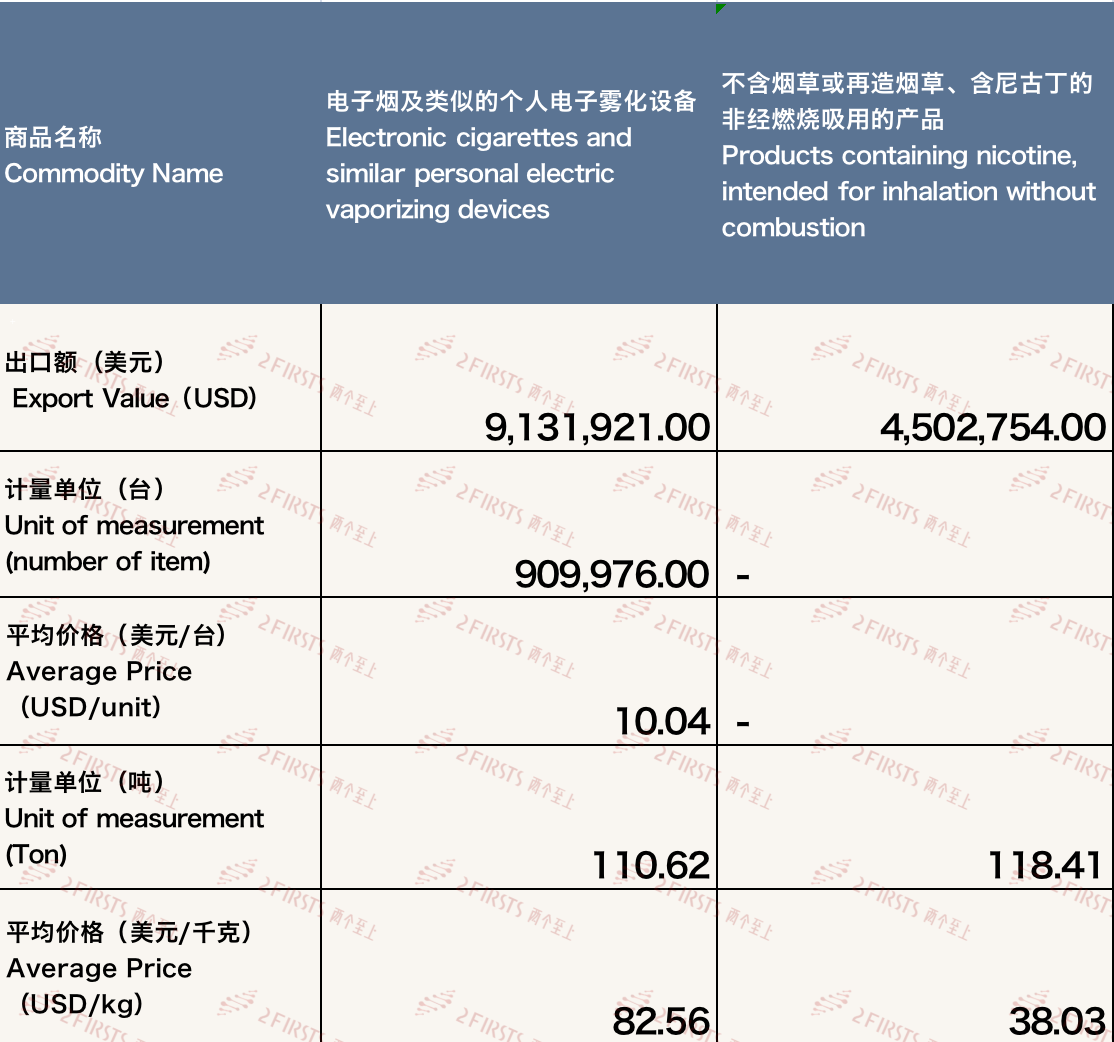
China's December e-cigarette exports to France drop, with value at $13.63 million and volume at 229 tons.

According to updated trade data from the General Administration of Customs of the People's Republic of China, 2FIRSTS has compiled the e-cigarette export data from China to France for December 2023. The details are as follows:
Trade Data of E-Cigarette Export from China to France, December 2023
Mapping: 2FIRSTS (Mincy)


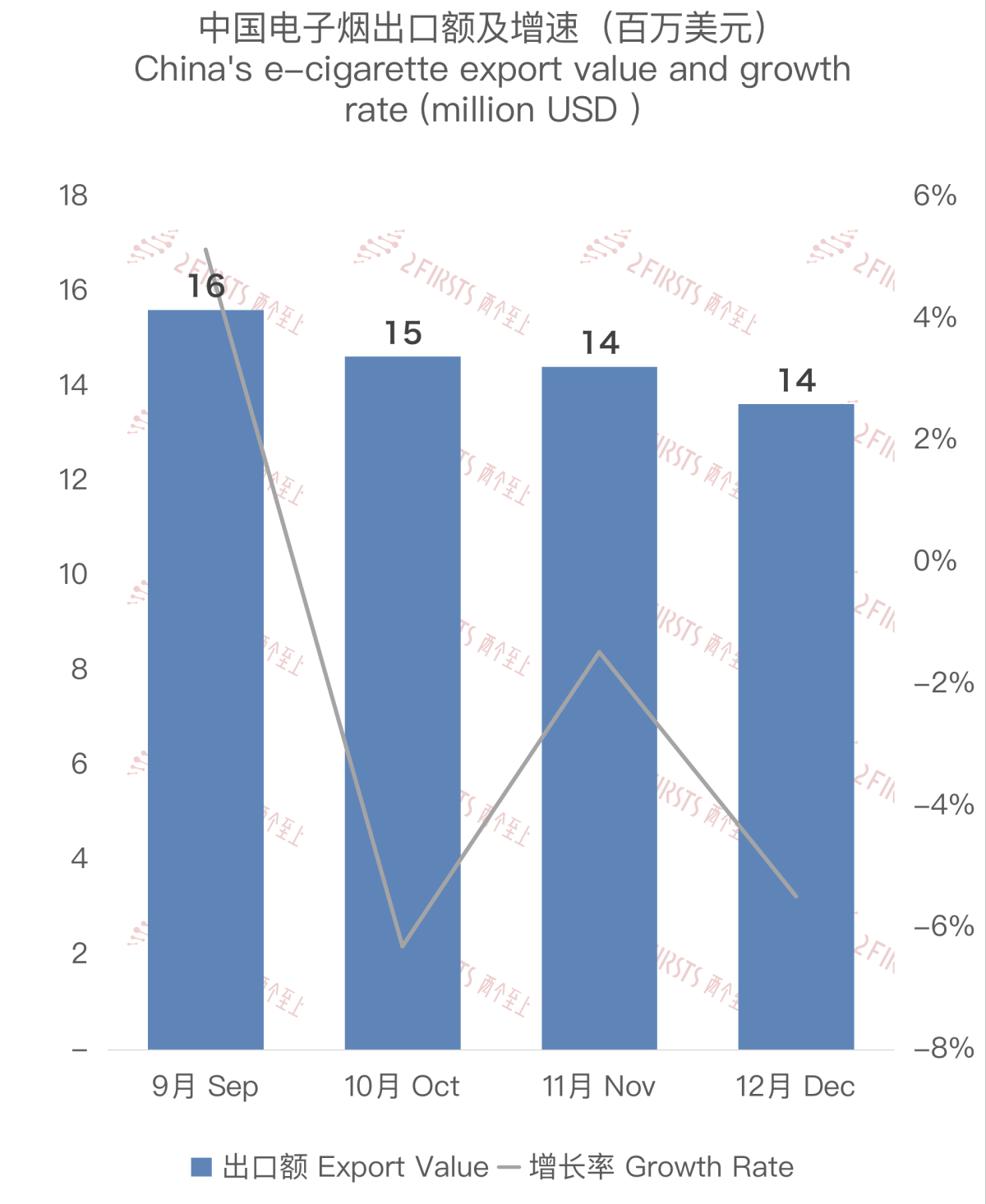
The export value was approximately 13.63 million US dollars, a decrease of 5.48% compared to the previous period and a 29.78% year-on-year decrease.
Trade Data of E-Cigarette Export from China to France, December 2023
Mapping: 2FIRSTS (Mincy)


The export volume was approximately 229 tons, with a month-on-month increase of 0.57% and a year-on-year decrease of 25.12%.


Trade Data of E-Cigarette Export from China to France, December 2023
Mapping: 2FIRSTS (Mincy)


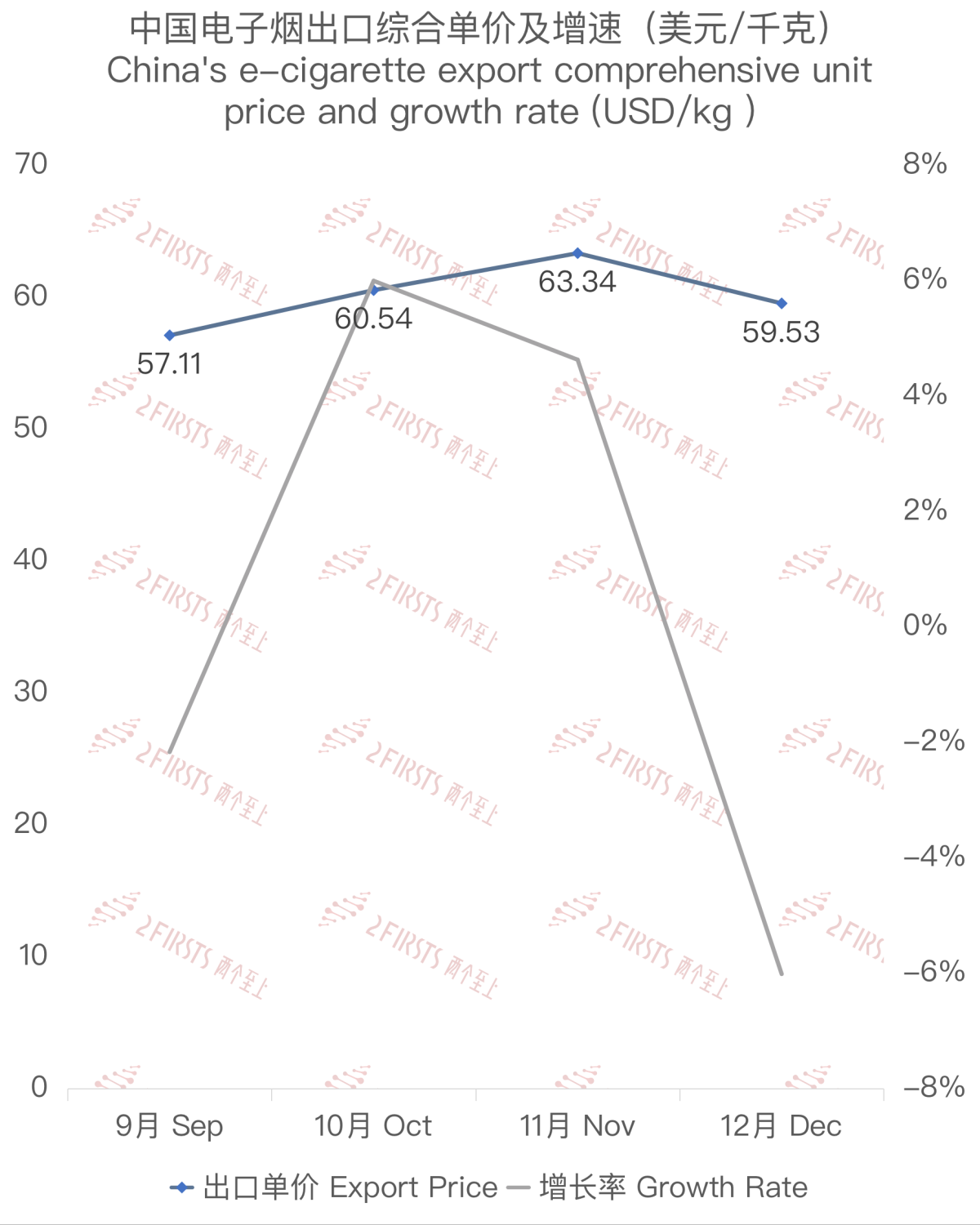
The export unit price is $59.53 per kilogram, a decrease of 6.01% compared to the previous period and a 6.22% decrease year-on-year; the average price for "e-cigarettes and similar personal electronic vaporization devices" is $10.04 per unit.
 

Trade Data of E-Cigarette Export from China to France, December 2023
Mapping: 2FIRSTS (Mincy)


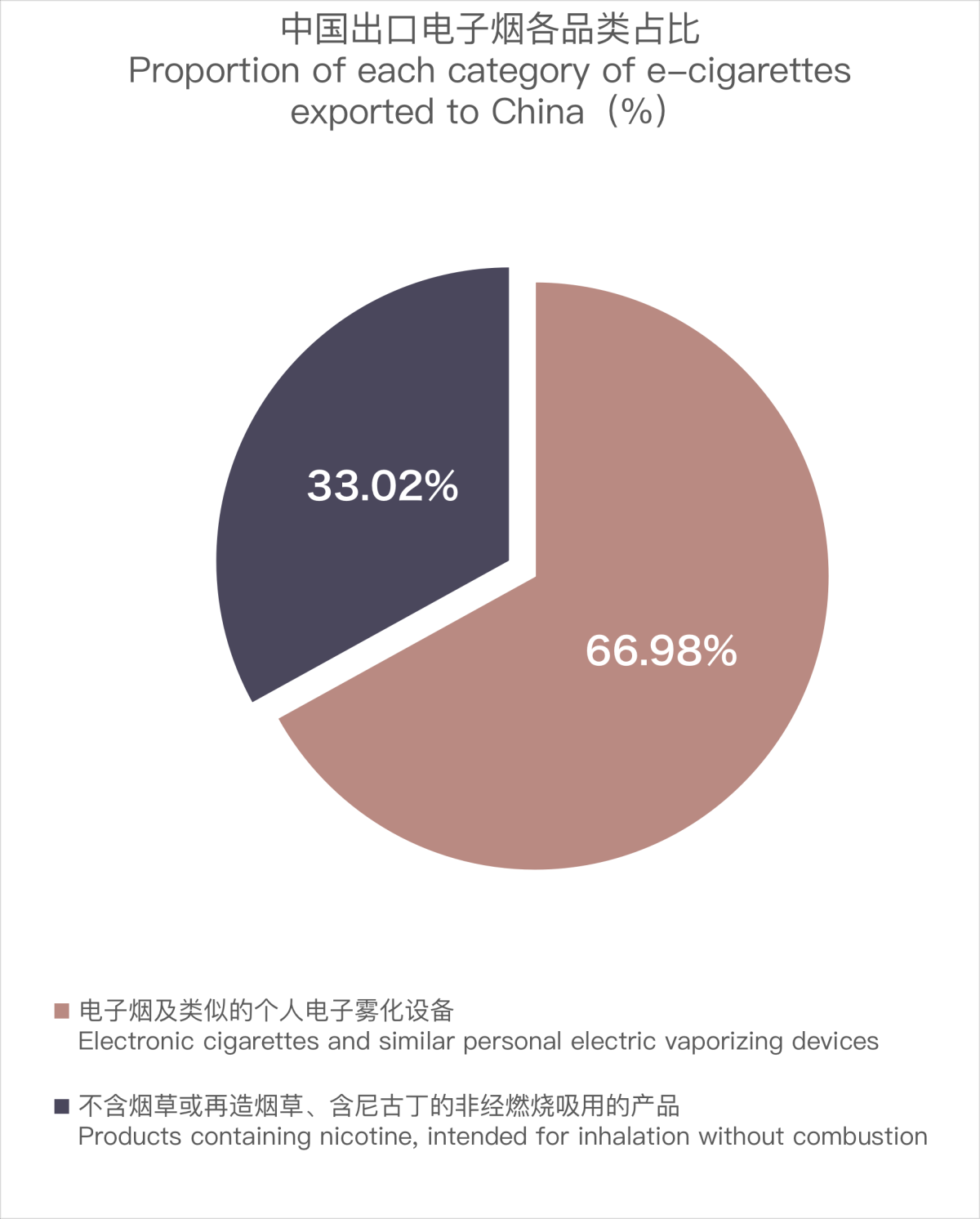
Among them, "e-cigarettes and similar personal electronic vapor devices" account for 66.98% of the export product category, while "non-combustible products containing nicotine that do not contain tobacco or reconstituted tobacco" account for 33.02%.
 

Trade Data of E-Cigarette Export from China to France, December 2023
Mapping: 2FIRSTS (Mincy)


We welcome news tips, article submissions, interview requests, or comments on this piece.

Please contact us at info@2firsts.com, or reach out to Alan Zhao, CEO of 2Firsts, on LinkedIn


Notice

1.  This article is intended solely for professional research purposes related to industry, technology, and policy. Any references to brands or products are made purely for objective description and do not constitute any form of endorsement, recommendation, or promotion by 2Firsts.

2.  The use of nicotine-containing products — including, but not limited to, cigarettes, e-cigarettes, nicotine pouchand heated tobacco products — carries significant health risks. Users are responsible for complying with all applicable laws and regulations in their respective jurisdictions.

3.  This article is not intended to serve as the basis for any investment decisions or financial advice. 2Firsts assumes no direct or indirect liability for any inaccuracies or errors in the content.

4.  Access to this article is strictly prohibited for individuals below the legal age in their jurisdiction.


Copyright


This article is either an original work created by 2Firsts or a reproduction from third-party sources with proper attribution. All copyrights and usage rights belong to 2Firsts or the original content provider. Unauthorized reproduction, distribution, or any other form of unauthorized use by any individual or organization is strictly prohibited. Violators will be held legally accountable.

For copyright-related inquiries, please contact: info@2firsts.com


AI Assistance Disclaimer


This article may have been enhanced using AI tools to improve translation and editorial efficiency. However, due to technical limitations, inaccuracies may occur. Readers are encouraged to refer to the cited sources for the most accurate information.

We welcome any corrections or feedback. Please contact us at: info@2firsts.com

Japan’s Heated Tobacco Tax Changes Reshape Consumer Choices, Survey Reveals Impact of Price and Income
A consumer survey by Japanese heated tobacco information platform RELAZO found that rising tobacco prices and planned heated tobacco tax changes may influence smoking decisions among Japanese consumers. The survey covered 49,879 men and women aged 20 to 69 nationwide. It found that around 40% of respondents cumulatively indicated they may consider quitting when a pack reaches ¥600 (approximately US$4.1), while nearly 90% expressed potential quitting intentions at a ¥1,000 (approximately US$6.8) price level. The survey also found significant differences by income level, with lower-income respondents showing greater sensitivity to price increases.
Jul.24
BAT Expands ITC Infotech Partnership Across Poland, Romania and India to Advance AI
ITC Infotech has expanded its multi-year strategic technology partnership with British American Tobacco (BAT), providing technology services across Poland, Romania and India while continuing to support BAT's newly launched Future Capabilities Centre in India and existing technology hubs in Malaysia and Mexico. The companies said the agreement will focus on AI-enabled innovation, technology capability building and greater operational efficiency. The partnership also aligns with BAT's broader Fit2Win transformation programme, under which the group is expanding the use of external technology and business-services partners to simplify its global operating model.
Aug.13
Australia’s TGA Places Nicotine Pouches Under Therapeutic Goods Rules From July 24, Blocking Imports of Unapproved Products
Australia is strengthening controls on nicotine pouches under its existing therapeutic goods regulatory framework. According to the Therapeutic Goods Administration (TGA), nicotine pouch products must meet regulatory requirements, and unapproved products cannot be legally imported. The move follows Australia’s broader approach of maintaining strict oversight of nicotine products, including nicotine-containing vapes. As nicotine pouches expand globally, Australia’s regulatory approach highlights growing differences in how countries manage emerging smoke-free nicotine products.
Regulations
Jul.27
North Carolina Adds $1,000 Vape Shop Tax and 21+ Age Verification Requirement
North Carolina’s new state budget introduces additional vape retail regulations, including a $1,000 tax on vape shops and mandatory age verification requiring customers to be at least 21.
Jul.08
South Korea Brings Synthetic-Nicotine E-Cigarettes Under Tobacco Rules From June 24, Targeting Online Sales and Evasion
South Korea began full enforcement of tobacco-style rules for synthetic-nicotine e-cigarettes on June 24, 2026, with fines of up to 100,000 won for use in non-smoking areas and enforcement focus on online sales, raw nicotine liquids and products falsely marketed as nicotine-free.
MarketNews
Jun.25 by 2Firsts Perspectives
Global Tobacco Control Faces Regional Adaptation Test as Nicotine Markets Evolve, Asian Specialist Says
As e-cigarettes, heated tobacco products and nicotine pouches expand across global markets, a central question is gaining urgency: can tobacco control rely on a universal policy model? In an interview with 2Firsts, Asian public health and addiction medicine specialist Dr. Rashidi Mohamed bin Pakri Mohamed says Western experience remains relevant, but policies must be adapted to local culture, healthcare systems, enforcement capacity, illicit markets and clinical evidence.
Jul.08