Key points:
1.The Trump administration is taking action to prevent unregulated Chinese e-cigarettes from entering the U.S. market.
2.FDA Commissioner Markari stated in an interview that the government is focusing on cracking down on "port shopping," referring to certain businesses or individuals who frequently switch import ports between different countries or regions in order to avoid trade restrictions and exploit regulatory loopholes.
3.A report from the national security think tank Polaris predicts that by 2030, the annual black market sales of e-cigarettes by Chinese manufacturers will reach $200 billion.
According to the Washington Observer newspaper, the Trump administration is taking measures to prevent unregulated Chinese e-cigarettes from entering the American market. The director of the Food and Drug Administration (FDA), Marty Makary, stated that this is a direct "assault" on American teenagers.
The Trump administration stated that they are taking deliberate actions to prevent unregulated Chinese e-cigarettes from entering the United States. FDA Director Marty Makary called it a "direct attack" on American teenagers.
According to data from the Centers for Disease Control and Prevention, the number of teenagers using e-cigarettes increased by approximately 20 times from 2011 to 2019. Although the rate has slightly decreased in the past five years, data shows that by 2024, over 1.63 million middle and high school students will still be using e-cigarettes daily.
Industry experts point out that the majority of e-cigarette products used in the United States are manufactured in China and smuggled into the country.
FDA director Mackari stated in an interview that the government is focused on cracking down on "port shopping" - referring to the illegal practice of e-cigarette products being found, sent back to the manufacturer, and then rerouted to other ports in the United States.
"After taking office, I discovered that we were simply returning these products to the manufacturer, who then shipped them to another port in the United States. The FDA can only inspect 2% to 5% of imported goods, meaning almost 100% can enter the country, making the border virtually meaningless. Therefore, our current goal is to confiscate and destroy these products."
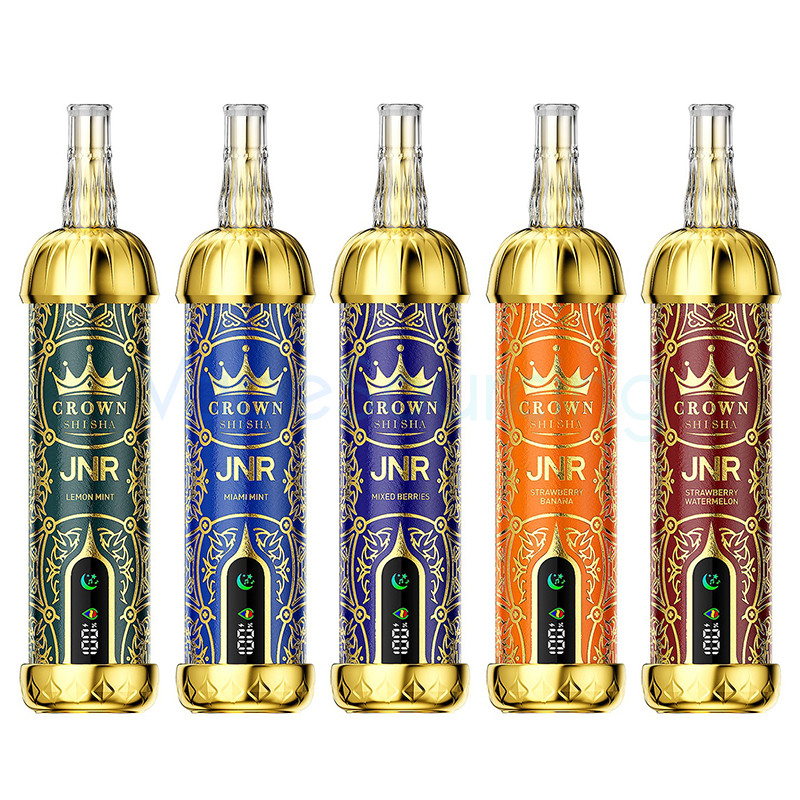
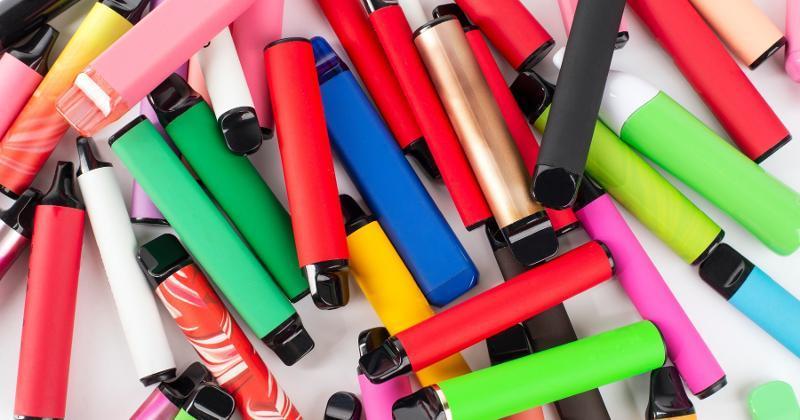
Although China banned the sale of flavored e-cigarettes in 2022, Ma Kali and industry insiders pointed out that these unregulated products are still targeting teenagers with their fruity flavors and vibrant designs, attracting young consumers.
Markari said that the FDA has even started confiscating "e-cigarette devices disguised as video games.
"They have built-in intake ports, with the intention of getting children addicted to both video games and e-cigarettes simultaneously, which is a threat. If another country treated the United States in this way, as is happening now, we would consider it an attack."
According to estimates, Chinese manufacturers control 70% to 90% of the underground e-cigarette trade in the United States. A report released last month by the national security think tank Polaris, founded by former U.S. Deputy Special Envoy for Middle East Affairs Morgan Otages, predicts that by 2030, the underground sales of e-cigarettes manufactured by Chinese companies could reach $200 billion annually.
In recent weeks, President Trump has been pressured by lobbying efforts from both within and outside his party to crack down on the Chinese black market for e-cigarettes. Trump has previously delved into e-cigarette regulation policies. In 2019, he proposed banning the sale of flavored e-cigarettes to curb the trend of youth vaping, but later softened and revised the rule, allowing manufacturers to circumvent the ban through the "tobacco premarket application process".
Furthermore, he also signed a bill raising the federal legal age to purchase tobacco products such as e-cigarettes from 18 to 21. During his 2024 reelection campaign, Trump actively participated in debates and repeatedly claimed that he wanted to "save e-cigarettes".
We welcome news tips, article submissions, interview requests, or comments on this piece.
Please contact us at info@2firsts.com, or reach out to Alan Zhao, CEO of 2Firsts, on LinkedIn
Notice
1. This article is intended solely for professional research purposes related to industry, technology, and policy. Any references to brands or products are made purely for objective description and do not constitute any form of endorsement, recommendation, or promotion by 2Firsts.
2. The use of nicotine-containing products — including, but not limited to, cigarettes, e-cigarettes, nicotine pouchand heated tobacco products — carries significant health risks. Users are responsible for complying with all applicable laws and regulations in their respective jurisdictions.
3. This article is not intended to serve as the basis for any investment decisions or financial advice. 2Firsts assumes no direct or indirect liability for any inaccuracies or errors in the content.
4. Access to this article is strictly prohibited for individuals below the legal age in their jurisdiction.
Copyright
This article is either an original work created by 2Firsts or a reproduction from third-party sources with proper attribution. All copyrights and usage rights belong to 2Firsts or the original content provider. Unauthorized reproduction, distribution, or any other form of unauthorized use by any individual or organization is strictly prohibited. Violators will be held legally accountable.
For copyright-related inquiries, please contact: info@2firsts.com
AI Assistance Disclaimer
This article may have been enhanced using AI tools to improve translation and editorial efficiency. However, due to technical limitations, inaccuracies may occur. Readers are encouraged to refer to the cited sources for the most accurate information.
We welcome any corrections or feedback. Please contact us at: info@2firsts.com